
Playground Maintenance Checklist for Schools, Councils and Childcare (Free Template)

Australian standards expect three tiers of playground inspection: routine visual checks, operational checks every one to three months, and an annual comprehensive inspection. Here is a checklist for each.
A compliant playground maintenance routine in Australia has three tiers: a routine visual inspection every week or before each session, an operational inspection every one to three months, and an annual comprehensive inspection by a competent person. This checklist follows AS 4685 and AS/NZS 4486.1 and was reviewed September 2026 by Tim Rand, a qualified playground inspector.
Why a written routine matters
Falls are the leading cause of playground injury, according to Kidsafe, and most serious incidents involve surfacing that has worn or compacted below its compliant depth, or hardware that loosened over time. A written checklist with dates and initials is also your evidence of duty of care if something goes wrong.
Tier 1: routine visual inspection (weekly or daily)
Walk the playground before children use it. Look for:
- Broken glass, syringes, animal waste and litter in the fall zone.
- Loose-fill surfacing kicked out under swings, slide exits and climbing points. Rake it back and note any low spots.
- Obvious damage: cracked slides, split timber, torn nets, missing caps or plugs.
- Vandalism, graffiti and burn marks on plastic.
- Wet or slippery decks, pooling water and blocked drainage.
- Fencing and gates closing properly.
Fix what you can on the spot. Tape off anything unsafe and log it.
Tier 2: operational inspection (every 1 to 3 months)
A closer look at wear and stability:
- Check every accessible bolt, nut and fastener for tightness and missing caps.
- Test swing hangers, chains and shackles for wear. Replace at 50 percent wear or earlier if the manufacturer says so.
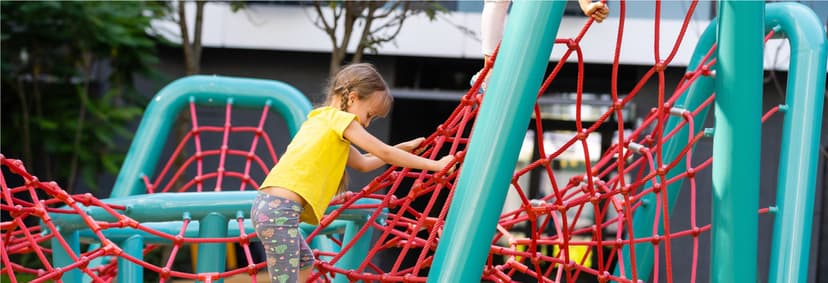
- Inspect rope and net for fraying, cut strands and stretched connectors.
- Push and shake posts and platforms for movement at the footing.
- Probe loose-fill depth at the highest-fall-height points and top up to the certified depth.
- Check wet-pour rubber and tiles for lifting edges, cracks and hard spots.
- Look inside tunnels and under decks for wasp nests, rot and rust.
- Confirm signage is present and legible.
Tier 3: annual comprehensive inspection
Once a year, have a competent person inspect the whole playground against AS 4685 and produce a written report:
- Structural integrity of footings, posts and welds, including subsurface corrosion checks.
- Entrapment testing of openings using probes for head, neck, finger and clothing hazards.
- Fall height and fall zone verification against the surfacing certificate.
- Surfacing impact testing where compaction or ageing is suspected.
- Review of the maintenance log and outstanding defects.
- Prioritised repair list with risk ratings.
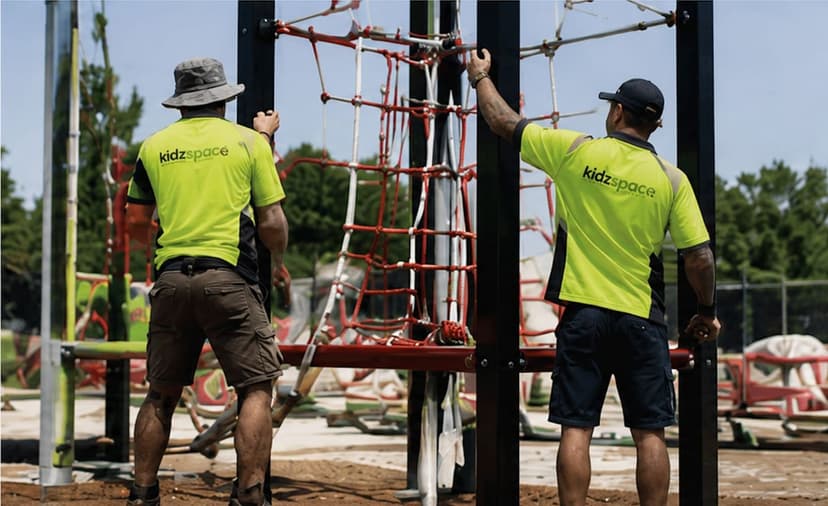
Independent inspectors can be found through Kidsafe and state playground associations. Kidzspace also inspects and maintains playgrounds it did not build.
Seasonal and site-specific checks
- Coastal sites: look for corrosion on fittings and under powder coat twice a year.
- Timber: check for splinters, checking and rot at ground level each spring.
- Shade sails: inspect stitching, tension and fixings before summer.
- Trees: trim branches that overhang equipment or drop debris into the fall zone.
Printable checklist summary
| Frequency | Who | What |
|---|---|---|
| Daily or weekly | Site staff | Hazards, litter, surfacing displacement, obvious damage |
| Every 1 to 3 months | Grounds or facilities | Fasteners, wear items, stability, surfacing depth, signage |
| Annually | Competent inspector | Full AS 4685 audit, entrapment, fall zones, written report |
Frequently asked questions
How often must a school playground be inspected in Australia?
AS/NZS 4486.1 recommends routine visual checks, operational inspections every one to three months, and a comprehensive annual inspection. Your state education department may set tighter intervals.
Who can do the annual inspection?
A competent person with playground inspection training, ideally independent of the equipment supplier. Look for Kidsafe or equivalent certification.
How deep should bark or mulch be?
Deep enough to meet the fall height on its AS 4422 test certificate, typically 300 mm or more after settling. Depth is lost quickly under swings and slide exits, so probe those points first.
What records should I keep?
Dated inspection sheets, photos of defects, repair invoices, surfacing certificates and the original compliance certificate. Keep them for the life of the playground.
Planning a playground?
Tell us about your site and we'll design something your community will love.
