
Frequently asked questions
Everything you need to plan with confidence. Can't see your question? Ask us.
Equipment
What equipment suits primary schools?
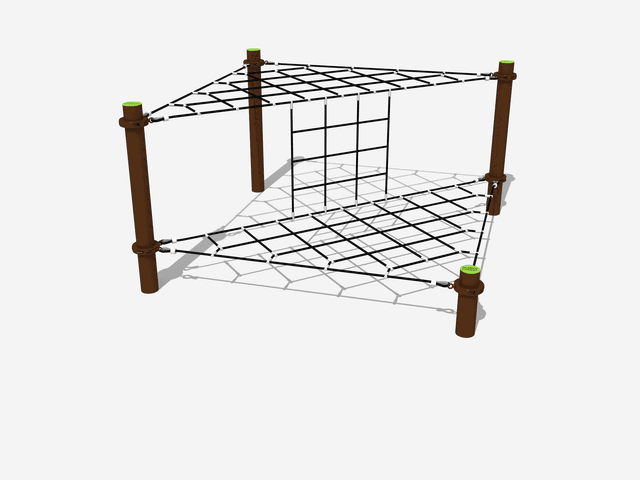
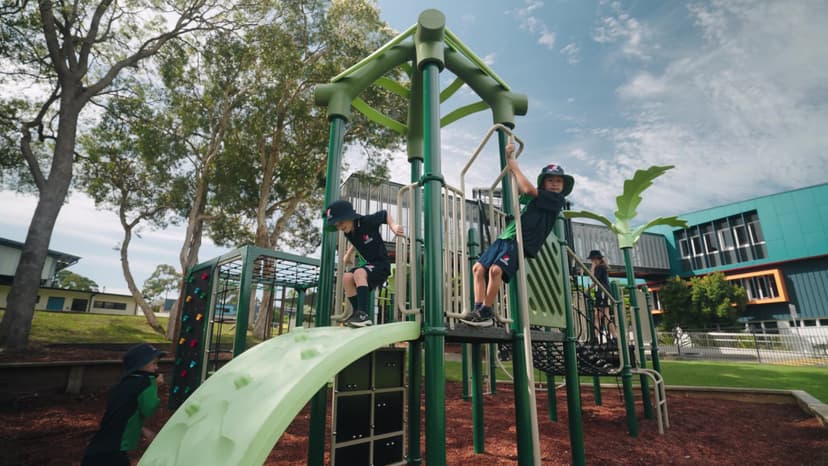
Multi-activity play systems that combine climbing, slides, monkey bars, balance beams and social spaces, suited to ages 5–12. Modular systems let you expand later.
What's suitable for toddlers?
Low-to-ground equipment with generous fall-zone surfacing — small climbers, spring riders, sensory panels, sandpits and low slides — designed to AS 4685.6 with no entrapment hazards.
Play system vs freestanding equipment?
Play systems are interconnected structures sharing a common fall zone (best use of space); freestanding items have independent footprints. Many sites combine both.
How long does it last?
Quality commercial equipment typically lasts 15–25 years with appropriate maintenance; timber components around 10–15 years.
Can it be themed?
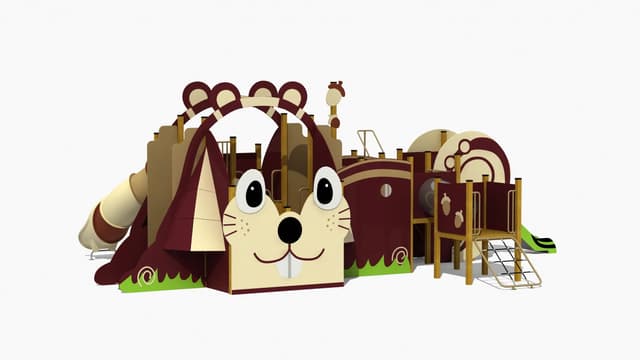
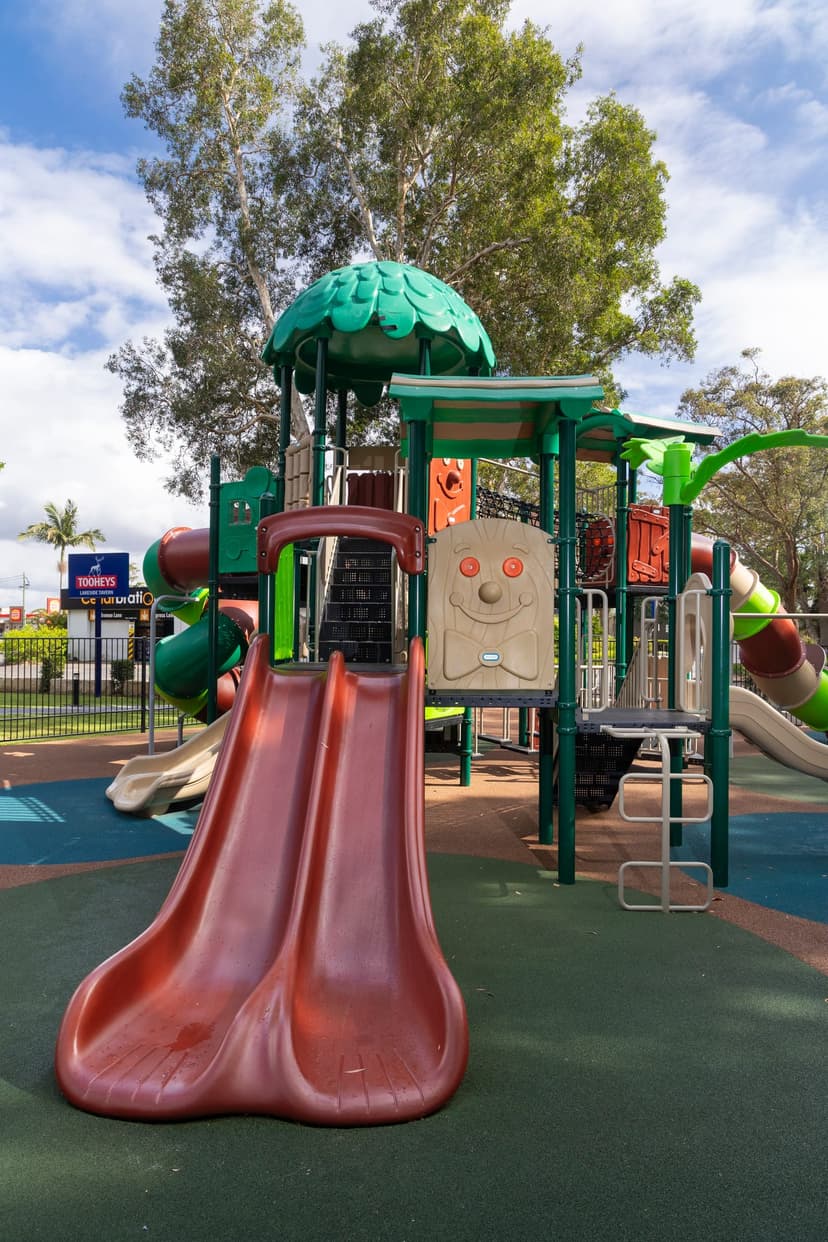
Yes — nature, nautical, space, Indigenous cultural and more, with custom panels and signage.
What's it made from?
Galvanised or powder-coated steel posts, UV-stabilised HDPE decks/panels/slides, and stainless-steel fasteners.
Safety & standards
Which Australian standards apply?
AS 4685 (Playground Equipment and Surfacing) and AS 4422 (Playground Surfacing — Specifications) are the primary standards referenced by education and local-government bodies.
What is AS 4685 and what does it cover?
AS 4685 is the Australian/New Zealand standard for playground equipment and surfacing, based on the European EN 1176. It's published in parts: Part 1 sets general safety requirements, Parts 2–7 cover specific equipment like swings, slides, carousels and rocking equipment, and Part 11 covers spatial requirements (fall zones). It defines critical fall height, entrapment, protrusion and entanglement hazards, and age-appropriateness. Compliance is essential for any commercial playground in Australia.
What is a fall zone?
The area around equipment where a child might land if they fall — at least 1.5m for equipment up to 1.5m fall height, increasing for taller structures.
What is 'free height of fall'?
The free height of fall is the highest point a child can reasonably climb to and fall from — measured from the highest accessible platform, handhold or foothold to the surface below. It determines how deep and how high-performing the softfall beneath the equipment must be: the greater the fall height, the more protection required. Early-childhood equipment is generally limited to lower fall heights than school-age equipment.
Who is responsible for playground safety?
Facility owners (principals, school councils, approved providers) have a duty of care under WHS legislation to ensure compliance and conduct regular inspections.
Do I need a permit to install?
Building-permit requirements vary by state and council, and development approval may be required. We guide clients through the relevant approvals.
Surfacing & softfall
What is soft fall?
Impact-attenuating material under and around equipment that reduces the risk of serious head injury — mandatory where the free height of fall is over 600mm.
How deep does it need to be?
Minimum compacted depth around 300mm for fall heights up to 2m, increasing to 400mm+ for taller equipment. Wet-pour rubber thickness is set by impact testing.
What types are there?
Certified playground mulch (natural, affordable), sand (early childhood), wet-pour rubber (seamless, custom colours), and synthetic turf with a shock pad.
What does AS 4422 require?
Performance, installation and testing requirements for surfacing — a Head Injury Criterion (HIC) of 1000 or less at the nominated critical fall height.
Can synthetic turf be used as softfall?
Yes — synthetic turf over a shock-absorbing underlay pad can be compliant softfall, provided the turf-and-pad system is tested together to AS 4422 and achieves an acceptable HIC at the required critical fall height. Not all turf qualifies on its own. It's popular in schools because it gives a consistent, accessible, all-weather surface that doubles as an activity area.
How often does softfall need replacing?
It depends on the material and how hard the playground is used. Loose-fill like sand and mulch needs topping up (often yearly) as it displaces and compacts, with full replacement every 5–10 years. Wet-pour rubber and synthetic turf can last 10–15 years, though UV and heavy use gradually reduce impact performance. An annual inspection confirms the surface still meets AS 4422 at depth.
Force attenuation & HIC
What is impact attenuation?
Impact attenuation is a surface's ability to absorb and reduce the force transmitted to a child's head during a fall. A good surface slows the deceleration, spreading the impact over more time and lowering peak force — the core mechanism by which softfall reduces head-injury severity. It's measured using the Head Injury Criterion (HIC) and Gmax from standardised drop tests.
What is a HIC score?
HIC stands for Head Injury Criterion — a number derived from the acceleration-time history of an impact that indicates the potential for head injury. It's calculated by integrating the deceleration recorded in a standardised drop-hammer test over the most critical interval. A lower HIC means better impact absorption and lower injury risk. All Australian playground surfacing is tested using the HIC method in AS 4422.
What HIC score is acceptable in Australia?
Under AS 4422, softfall must achieve a HIC of 1000 or less when tested at the equipment's critical fall height. A HIC of 1000 is the threshold above which serious, life-threatening head injury becomes likely. Many manufacturers test to a lower value (e.g. 700) for a safety margin, since surfaces degrade over time. In-situ drop testing during annual inspections confirms in-service surfaces still meet HIC ≤ 1000 at the installed depth.
What is critical fall height?
Critical fall height (CFH) is the maximum height from which a surface still provides adequate protection — the height at which it records a HIC of exactly 1000 in testing. A surface's CFH must equal or exceed the free height of fall of the equipment above it. For example, a climber with a 2.0m free height of fall needs softfall with a CFH of at least 2.0m.
How is critical fall height tested?
By a standardised drop test (AS 4422 / ISO 9239). A hemispherical missile of known mass, fitted with an accelerometer, is dropped onto the surface from increasing heights. The deceleration profile gives the HIC at each height; testing continues until HIC exceeds 1000, and the last height at or below 1000 is the critical fall height. Both lab testing (product certification) and in-situ field testing (installed surfaces) use this method.
Planning & cost
How much does a playground cost?
As a guide, delivered and installed: early-years spaces about $30,000–$60,000; school multi-activity systems about $60,000–$120,000; council and destination playgrounds from $120,000, with large feature playgrounds regularly exceeding $500,000. These are whole-project figures — equipment, compliant softfall, site preparation, installation and certification — so you can compare them like for like against other quotes. Surfacing alone can run $70,000+ on a large area, which is why equipment-only prices are misleading.
How much space do I need?
A modest primary-school play system needs roughly 10m × 8m (80m²) including fall zones — though it depends on the equipment chosen.
How long does it take?
Typically 8–16 weeks from enquiry to completed installation; the install itself is usually 3–14 days.
What's the typical timeline from enquiry to opening day?
We'll turn around a free 2D/3D concept design within a week or two of your brief. Custom-manufactured equipment then typically takes around 10–12 weeks to build — our in-stock Quick Supply range skips that wait entirely. Installation itself usually takes 3–14 days depending on the scope. All up, most projects run 8–16 weeks from enquiry to completed installation.
How do I plan a playground?
Start with a needs assessment (ages, abilities, space, budget, site), add community consultation, then we provide concept designs and specifications.
Grants & funding
Are grants available?
Yes — federal, state and local programs plus private and community grants. We assist with applications.
What's available in Queensland?
Works for Queensland, the Gambling Community Benefit Fund (GCBF), Get Playing Plus, Advance Queensland community grants, and local council programs.
Can NDIS funding be used?
It can potentially contribute to inclusive equipment that supports therapeutic or developmental goals, though broad community projects typically aren't funded.
Maintenance & warranty
How often should it be inspected?
Routine visual checks (daily/weekly), operational inspections (1–3 monthly), and an annual main inspection by a qualified inspector.
What are the three types of playground inspection?
Routine visual inspection — a quick daily or weekly check for obvious hazards like vandalism, broken parts, sharp edges or missing softfall. Operational inspection (monthly to quarterly) — a hands-on check of structural integrity, fastener tightness, wear and softfall depth, documented as you go. Annual main inspection — a comprehensive assessment by a qualified inspector covering full AS 4685 compliance, structure and in-situ surfacing impact testing, with a written report.
Who does compliance certification?
A suitably qualified Level 3 (L3) / RPII-accredited playground inspector, or equivalent competent professional.
What does a playground maintenance checklist include?
A good checklist covers structural integrity of posts, beams and connections; fastener condition (no loose, corroded or missing bolts); wear on moving parts like swing chains and bearings; the condition of decks, slides and handrails; softfall depth and coverage across fall zones; signage, drainage and fencing; and any vandalism or graffiti. Record the date, who inspected and any actions taken. We can supply a checklist matched to your installed equipment.
What warranty do you offer?
25 years on hot-dip galvanised structural steel, 15 years on powder-coated steel, HDPE, HPL and timber, 10 years on stainless steel and platforms, 5 years on plastic, rubber, rope and springs, and 2 years on moving parts and bearings.
Do you inspect or service playgrounds you didn't build?
Yes. We offer safety inspections for any existing playground — any brand, any age, any site — and can quote a full AS 4685 inspection or repairs from there. Enquire via our playground inspections & maintenance page.