
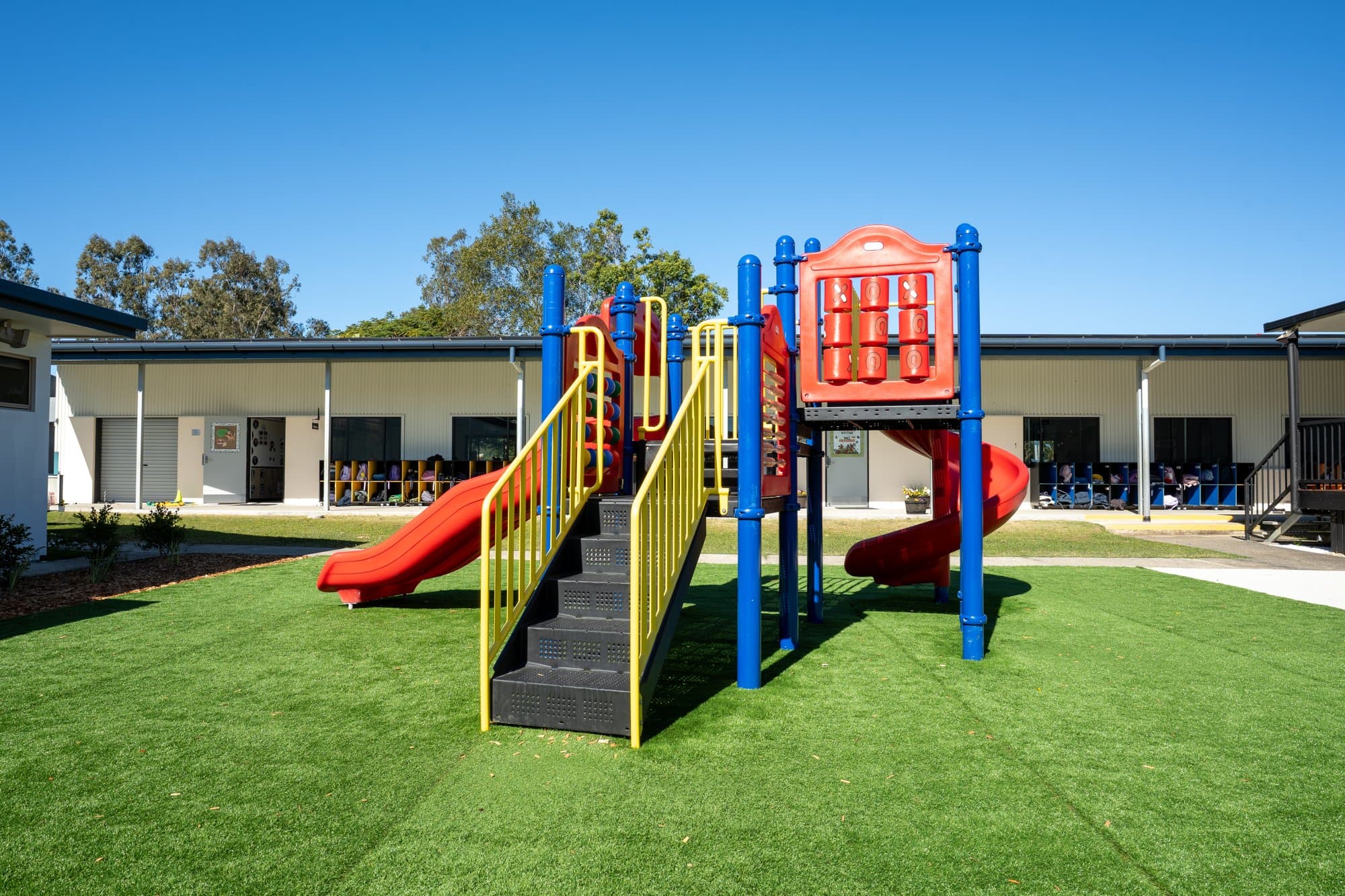
Commercial playground surfacing
The surface under a playground is the single most important safety decision on site — most serious injuries come from falls onto hard ground, and the right softfall absorbs that impact.
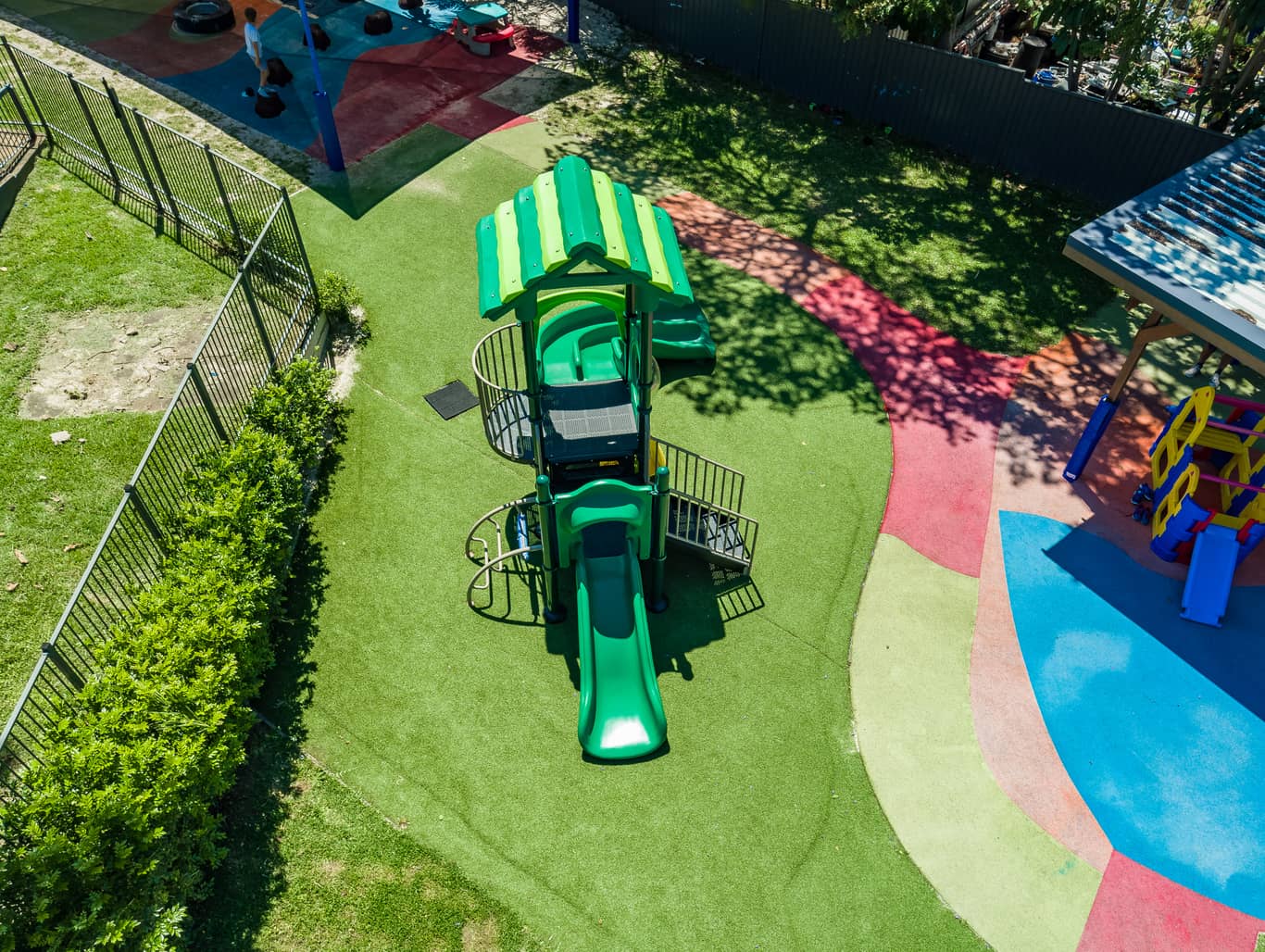
In Australia it's governed by AS 4422: the surface is matched to each item's critical fall height to keep the Head Injury Criterion at 1000 or below. There's no single 'best' surface — mulch, sand, synthetic turf and wet-pour rubber each balance cost, feel, accessibility and upkeep differently, and many sites use more than one.
Types of surfacing
Many playgrounds mix and match surfaces across the one site, while others stick to a single option — it comes down to your budget, the play value you're after and how the space is used. Read more about each option below.
Your options at a glance
| Surface | Cost | Accessibility | Lifespan | Upkeep |
|---|---|---|---|---|
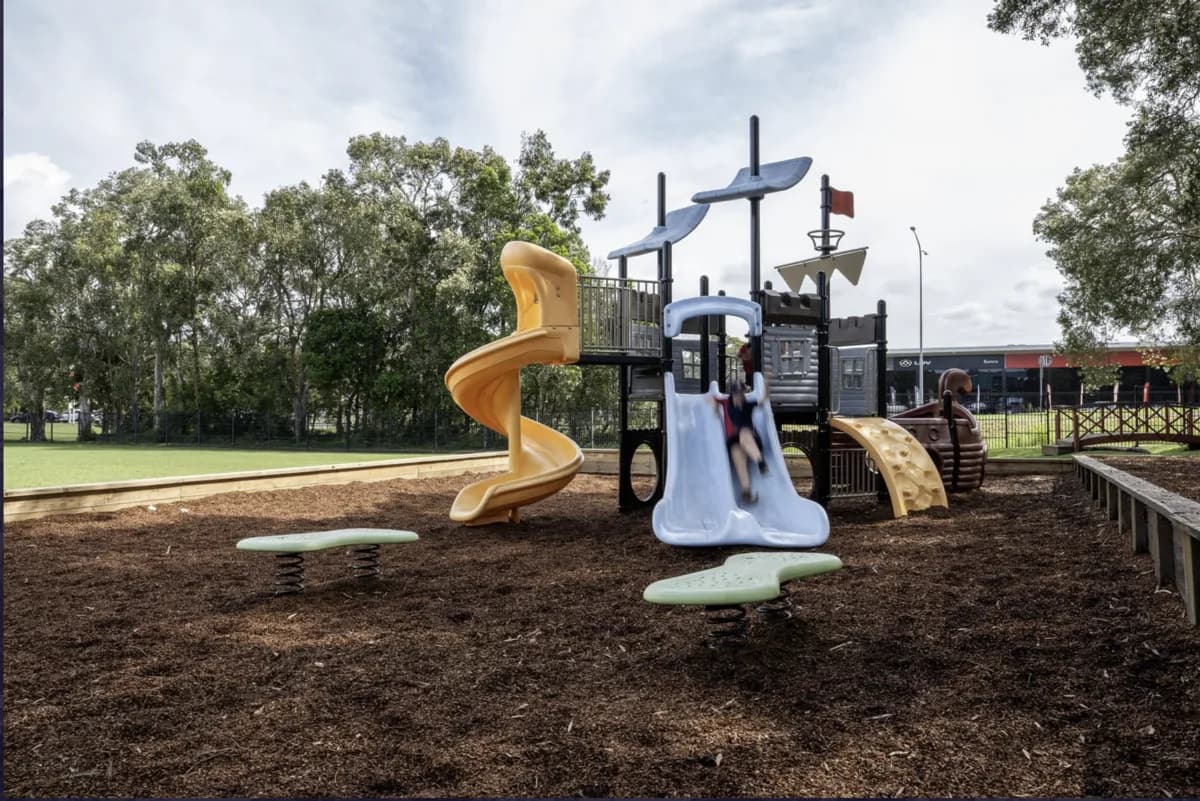
| Certified mulch or sand | $ | Limited — loose material, not a firm surface | Topped up every 1–2 years, fully replaced ~5–7 years | Regular raking and topping up to hold compliant depth |
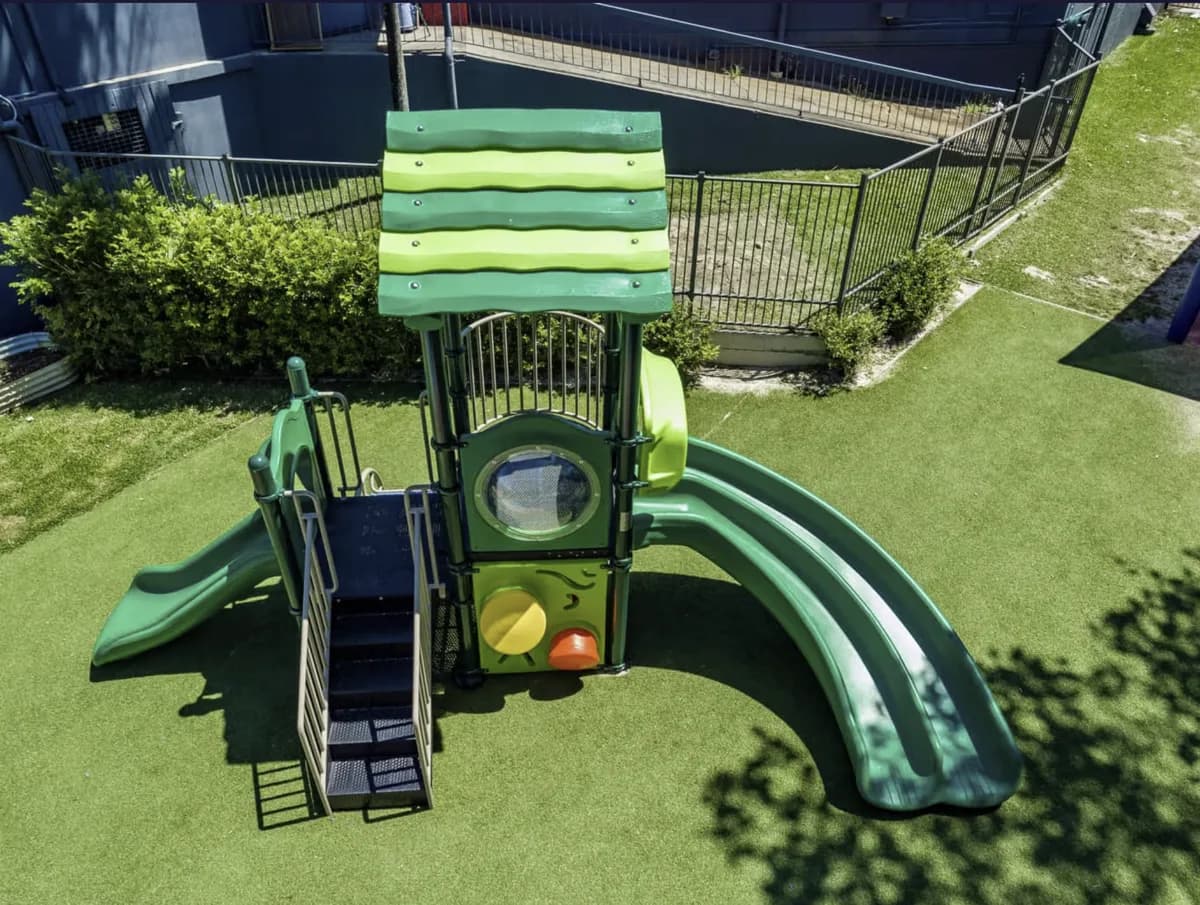
| Synthetic turf on shock pad | $$ | Fully accessible — firm and level | 10–15 years | Low — occasional brushing, rinsing and topping up the sand infill |
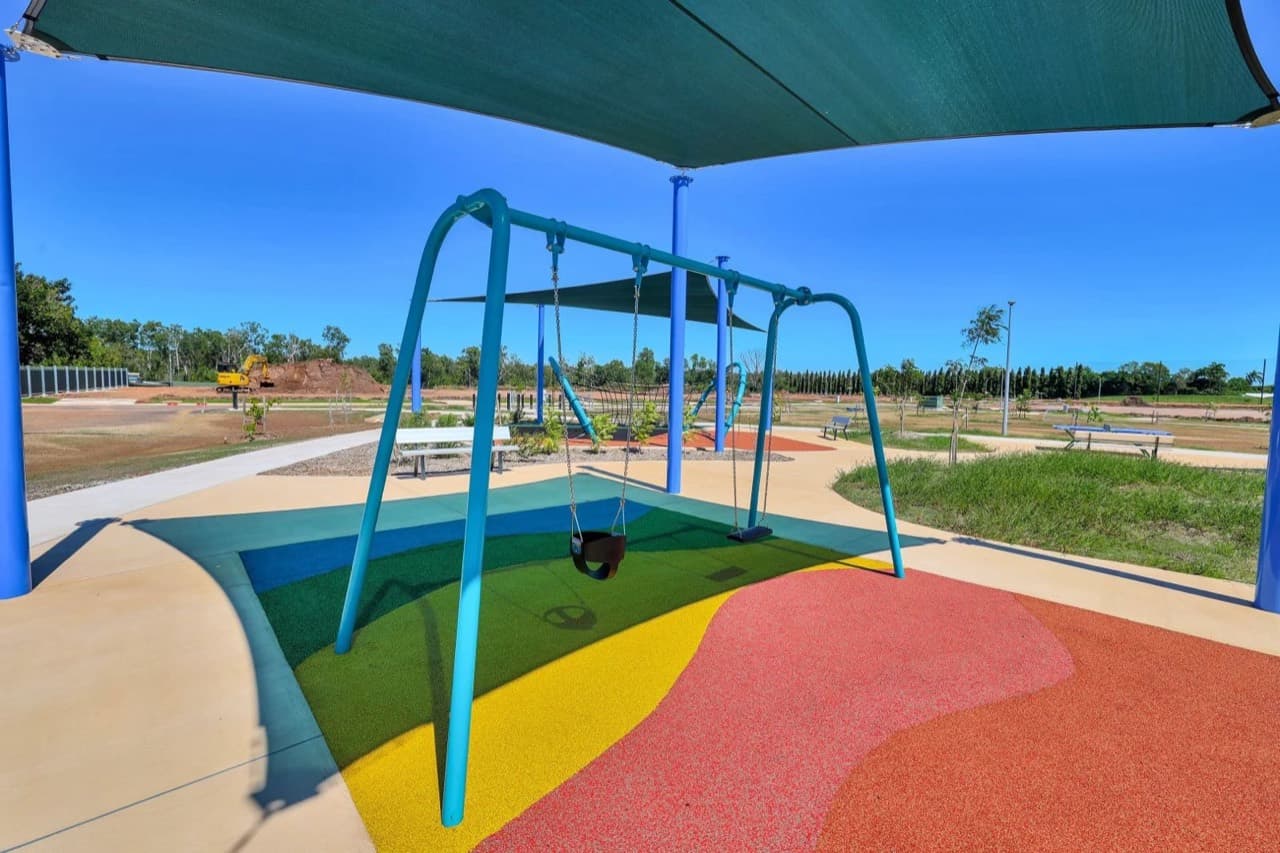
| Wet-pour rubber | $$$ | Fully accessible — seamless, no joins | 10–15 years | Very low — hose down as needed |
1. Safety & durability
Beyond keeping children safe, a surface has to last. The options differ in how long they last and how much upkeep they ask of you. Loose-fill like mulch and sand is the cheapest to install but needs regular raking and topping up to hold a compliant depth. Wet-pour rubber and synthetic turf cost more upfront but ask very little afterwards. Over a playground's life, the cheapest option isn't always the lowest total cost — so it's worth weighing both.
2. Fall height protection
How deep or thick a surface needs to be is driven by the equipment's critical fall height — the greatest height a child could fall from. Under AS 4422 the surface must keep the Head Injury Criterion (HIC) at 1000 or below at that height. Loose-fill like mulch and sand is installed at 300mm or more and compacts over time, so it needs topping up; wet-pour rubber is laid thicker as the fall height increases, with the exact build-up confirmed by impact testing.
3. Australian safety standards
Two standards apply to every commercial playground. AS 4685 covers the equipment; AS 4422 covers the impact-absorbing surface beneath and around it. Every Kidzspace project is designed and built to both, and we can supply independent compliance certification at handover so you have the documentation for your records and your work health and safety duty of care.
4. Installation
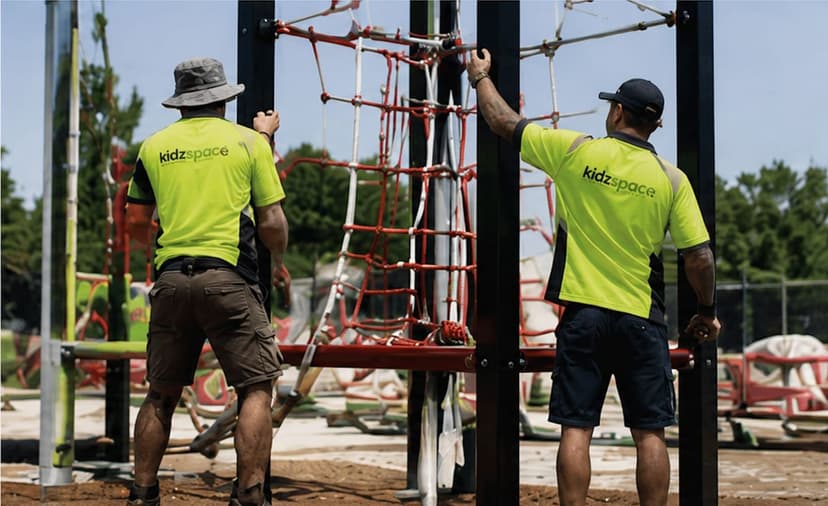
A compliant surface is as much about what's underneath as the surface itself. Our crews prepare and level the site, lay and compact the base, install the surface to the depth your fall heights require, and finish the edges and drainage. Getting the base and drainage right is what keeps a surface safe, firm and looking good for years.
5. Design & colour
Surfacing isn't only about safety — it can set the whole look of a space. Wet-pour rubber in particular can be blended from any mix of coloured granules, with patterns, pathways, games markings or logos poured straight into the surface. Try combinations yourself in our Rubber Colour Blender, or we'll help match a palette to your brand, school colours or theme.
6. Accessibility & drainage
If inclusive access matters, firm surfaces like wet-pour rubber and synthetic turf let prams, walking frames and wheelchairs move right up to and through the playground, where loose-fill is harder to cross. Whatever you choose, proper base preparation, drainage and edging keep the surface firm and well-draining after rain. We'll specify the right surface for your equipment, site and budget as part of your design.
Sources
Surfacing depth and impact attenuation are governed by AS 4422 and AS 4685. For background on the standards themselves: