
Outdoor fitness equipment for parks: a buyer's guide

How to plan an outdoor fitness area that suits your park and budget — covering layout, equipment mix, durability, accessibility and the maintenance that keeps it safe for years.
Outdoor fitness areas have become a fixture in Australian parks, foreshores and community reserves — and for good reason. They are free to use, open at all hours and welcome everyone from teenagers to grandparents. But a good fitness installation is more than a row of steel stations bolted to a slab. The best ones are planned around how people actually move through a park, who lives nearby, and how the site will be looked after over the next decade. This guide walks through the decisions that matter, so you can brief a supplier with confidence.
Start with layout and the user journey
Before you choose a single station, think about flow. A fitness zone works best when people can move between stations in a natural circuit, with enough space to use each one safely without queuing or colliding. Position the area where it is visible and feels safe — passive surveillance from a path or car park discourages misuse — but not so close to a playground that exercising adults and young children get tangled up.
- Allow generous clearance around each station so users have room to move and others can pass
- Group stations into a logical circuit rather than scattering them across the reserve
- Consider shade, seating and a water source nearby — people stay longer when they are comfortable
- Keep sightlines open from surrounding paths for safety and a sense of welcome
Getting the equipment mix right
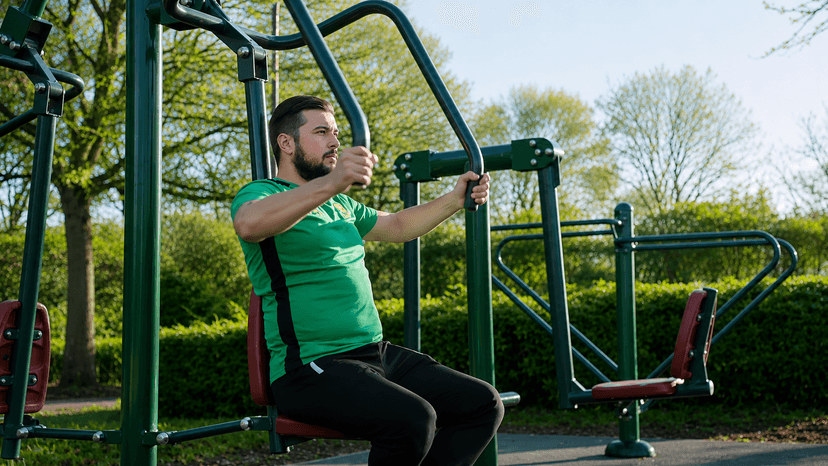
A balanced area covers the main movement types rather than doubling up on one. Think cardio, strength, mobility and stretching, with a few stations that suit complete beginners alongside ones that challenge regular gym-goers. Bodyweight stations — pull-up and dip bars, parallel bars, step-ups — are robust and intuitive. Resistance and calisthenics rigs add range for confident users. Low-impact options such as cross trainers or gentle stretching posts make the space usable for older residents and those returning from injury.
If your park also serves families, a separate play space can complement the fitness zone so the whole household has somewhere to be. You can see the breadth of options across our fitness range and broader equipment catalogue, and we are happy to tailor a mix to your community's age profile.
Durability: built for weather and constant use
Park fitness gear lives outdoors and gets used hard, so material quality is where your budget earns its keep. Look for hot-dip galvanised or powder-coated steel that resists corrosion, UV-stable components, and tamper-resistant fixings. Coastal sites need extra attention to corrosion because salt air is unforgiving. Reputable equipment should be manufactured and certified to the relevant Australian Standards, and a clear, written warranty tells you the supplier stands behind it.
Our equipment is built to last in Australian conditions and certified to AS 4685, with installations independently certified at handover. It is worth reading the detail on warranties before you compare quotes — the cheapest line item is rarely the cheapest over ten years.
Accessibility and inclusive design
An inclusive fitness area invites the widest possible community to take part. That means a firm, even approach path, stations that can be used while seated or with limited mobility, and clear instructional signage so first-time users know what to do. Thoughtful spacing also helps wheelchair users and carers move comfortably between stations. Designing for inclusion from the outset is far simpler than retrofitting it later — it is a principle we build into every concept.
A fitness area that only suits the already-fit has missed the point. The aim is to lower the barrier so everyone gives it a go.
Surfacing and maintenance
The surface under and around your equipment affects safety, accessibility and ongoing upkeep. Softfall surfacing to AS 4422 cushions falls where it is needed, while firm surfaces support wheel access. Whichever you choose, plan for the long term: routine inspections, occasional re-tightening of fixings, surface top-ups and prompt repairs all keep an area safe and inviting. Budgeting for maintenance from day one avoids unwelcome surprises down the track.
- Match the surface to the use — softfall under dynamic stations, firm paths for access
- Schedule regular inspections and keep a simple maintenance log
- Order in any spare parts or wear items your warranty recommends
- Read our guides on surfacing and compliance for the detail
Planning, approvals and budget
Most park projects involve council approval, and getting the documentation right early keeps things moving. It also pays to scope your numbers honestly: equipment, surfacing, site works and installation all contribute to the total. Our cost guide breaks down what drives the figure, and if you are a council or community group, the funding guide covers grants and other avenues worth exploring before you commit.
Talk to us about your park
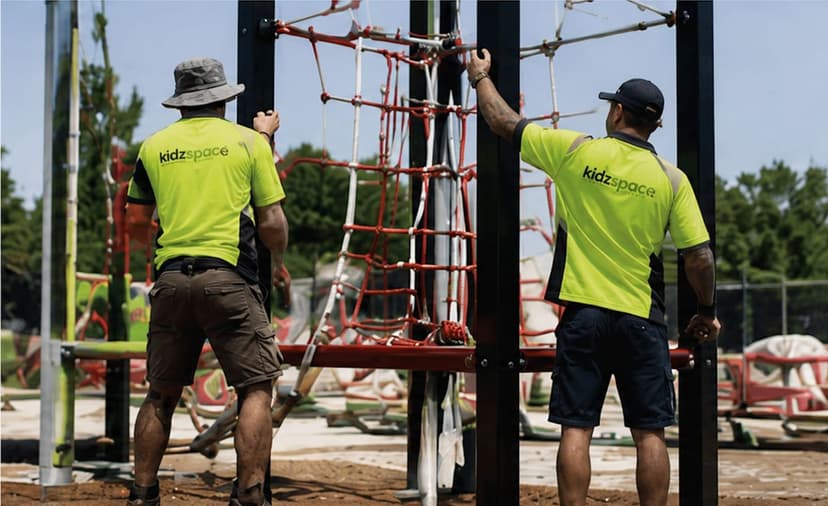
Every site is different, and the right fitness area is the one shaped around your community, your budget and how the space will be used. Kidzspace has delivered more than 1,000 projects across Australia since 2015 — from local reserves to large council and developer sites — with free 2D and 3D concept design and fixed-price, itemised quotes. To get started, request a free quote or call us on 1300 543 977 and we will help you plan a space your community will use for years.
Planning a playground?
Tell us about your site and we'll design something your community will love.

