
Nature play: the benefits and how to design for it

Nature play builds resilience, creativity and physical confidence. Here is why it matters, the core elements, and how to blend natural features with traditional play equipment in an Australian setting.
Nature play has moved from a nice idea to a genuine expectation. Parents, educators and councils increasingly want spaces that connect children with the outdoors rather than a single coat of bright plastic. The good news is that nature play and traditional equipment are not rivals. Done well, they work together to create richer, more engaging spaces. Here is why nature play matters, the elements that bring it to life, and how to blend it with structured equipment on a real Australian site.
Why nature play matters
Traditional equipment is brilliant at building gross motor skills, but it tends to script how children move: climb up, slide down, repeat. Nature play opens things up. Loose parts, slopes, water and planting invite open-ended play, where children invent the rules and the outcome changes every visit. That variety is where a lot of the developmental value sits.
- Creativity and problem-solving — sticks become tools, logs become bridges, and there is no single correct way to play
- Physical confidence — uneven ground, stepping stones and clambering logs build balance and risk assessment
- Calm and focus — greenery, shade and sensory variety give children space to regulate and settle
- Connection to place — native planting and natural materials help children understand the local environment
The core elements of a nature play space
You do not need a forest to deliver nature play. Most of these elements work on a suburban school oval, a childcare courtyard or a pocket park, and many can be layered into a space you already have.
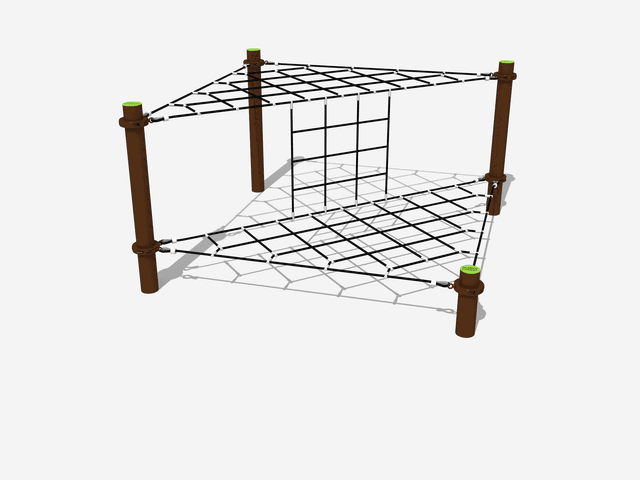
- Mounds and slopes for rolling, climbing and clambering, often with embedded slides or scramble nets
- Logs, boulders and timber stepping elements for balance and informal seating
- Sand and water play, including hand pumps, channels and dry creek beds
- Native and sensory planting — grasses, bush tucker species and textured foliage that change with the seasons
- Loose parts and natural materials that encourage building and imaginative play
- Quiet, shaded nooks for cubbies, storytelling and a moment away from the busy zones
Blending nature play with equipment
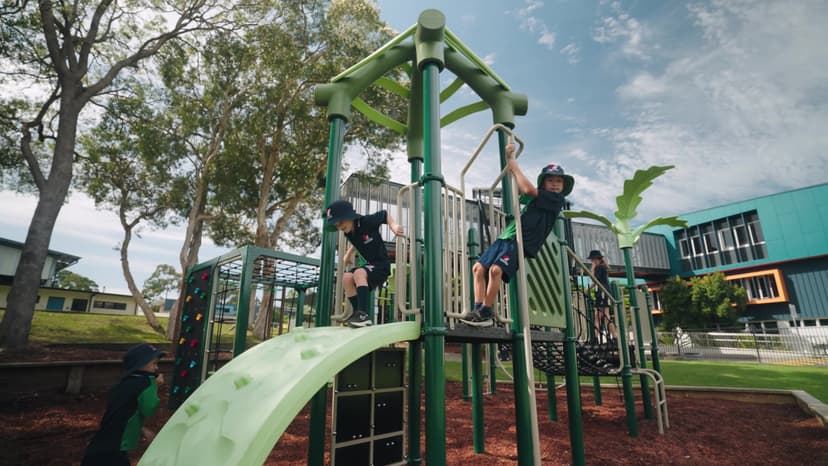
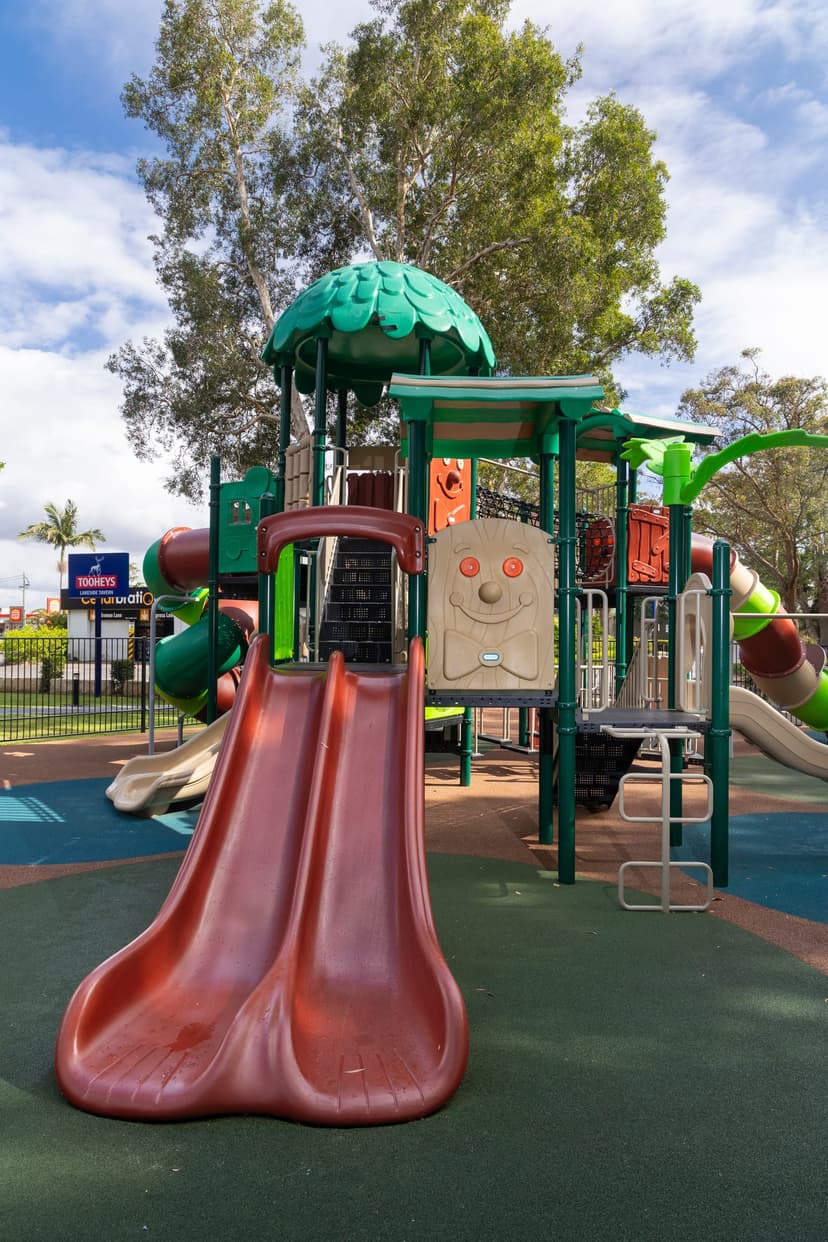
The most successful spaces are hybrids. A structured climbing tower or a play system anchors the energetic, high-traffic play, while natural elements wrap around it to add texture, calm and open-ended exploration. Think of equipment as the spine and nature play as everything that softens and connects it.
The best playgrounds give children somewhere to test themselves and somewhere to slow down, often within a few steps of each other.
Zoning is the practical key. Group the active, supervised equipment together, then let nature play flow through the edges and transitions. Our free 2D and 3D concept design process maps this out before anything is built, so you can see how the active and natural zones sit alongside each other and how children will move between them.
Getting safety and surfacing right
Natural-looking does not mean unregulated. In Australia, play equipment is certified to AS 4685 and impact-attenuating surfacing to AS 4422, and that applies just as much under a clambering log as under a slide. Mounds, embankment slides and elevated stepping elements all have fall heights that need the right surfacing underneath.
- Match surfacing to fall height — see our guide to softfall surfacing for the options and how they compare
- Plan for drainage early, especially around water play and at the base of mounds
- Keep the space inclusive so children of all abilities can reach and use the natural features
- Confirm the project is independently certified at handover — see compliance
Planning and budgeting your project
Nature play can be very cost-effective because mounds, planting and timber elements often cost less than an equivalent area of manufactured equipment, but the figures vary widely with earthworks, planting and surfacing. Our cost guide walks through the main drivers, and if you are a school or community group, the funding guide covers grants worth exploring. For schools, childcare and councils alike, the earlier nature play is considered, the easier it is to design well rather than bolt on later.
Ready to design a nature play space?
We have delivered more than 1,000 projects across Australia, and we love the ones that mix equipment with genuine nature play. If you would like a free, fixed-price and itemised quote with a concept design to match, get in touch with our team or call 1300 543 977. Tell us about your site and the children who will use it, and we will help you shape a space that is engaging, compliant and built to last.
Planning a playground?
Tell us about your site and we'll design something your community will love.

