
Rubber vs mulch softfall: which playground surface is right for you?

A plain-English comparison of rubber softfall and timber mulch for Australian playgrounds, covering cost, maintenance, accessibility, lifespan and AS 4422 compliance, so you can choose with confidence.
Choosing a softfall surface is one of the bigger decisions you will make when building a playground, and it usually comes down to two contenders: poured rubber softfall and loose-fill timber mulch. Both can be perfectly safe and compliant, but they behave very differently over the life of a playground. This guide walks through cost, maintenance, accessibility and lifespan in plain English, so whether you are a school, childcare centre, council or developer, you can make a confident call.
First, the safety standard both must meet
Whatever surface you choose, it has to do the same job: cushion a fall from the highest point a child can reach on the equipment. In Australia that is governed by AS 4422, the standard for playground surfacing impact attenuation. The key number is the equipment's free height of fall, which sets the depth and type of surfacing you need underneath it.
This is why surfacing is never an afterthought. A swing or tall tower needs more protection than a low toddler unit, and your surface choice has to be matched to the equipment from the design stage. You can read more on our surfacing guide and how it ties into compliance.
Upfront cost
Timber mulch almost always has the lower upfront price. It is a loose-fill material, quick to spread, and needs less site preparation. For a tight budget or a larger area, that difference can be significant.
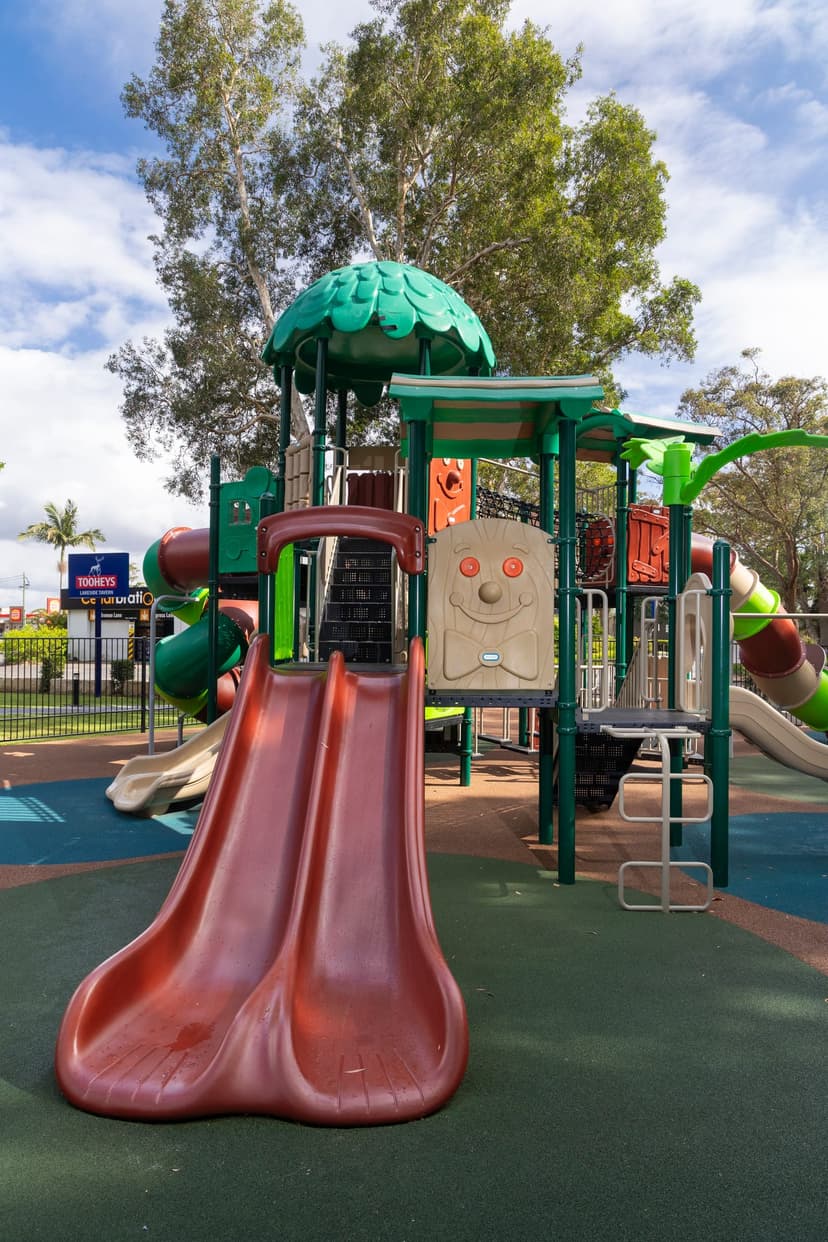
Rubber softfall costs more to install because it is a poured, bonded system that needs a prepared base and skilled installation. The trade-off is that you are paying once for a finished surface rather than topping up over the years. When you compare the two, it pays to think in terms of total cost over the playground's life rather than day-one price alone. Our cost guide and funding options can help you frame the budget.
Maintenance and ongoing care
This is where the two surfaces diverge the most.
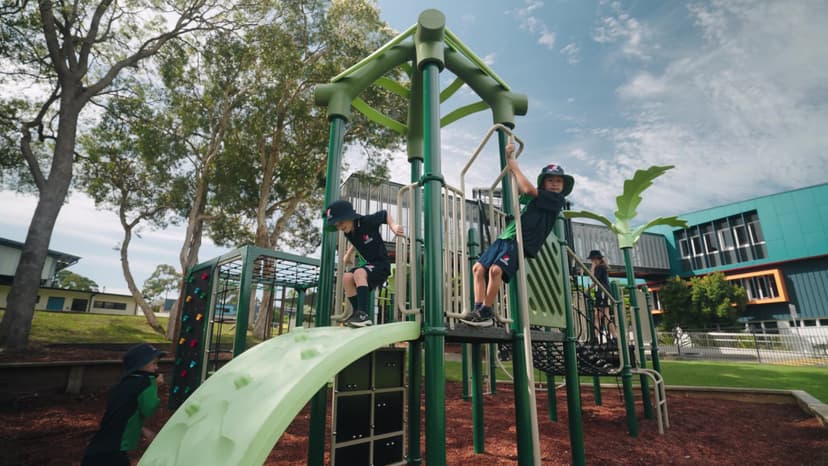
- Mulch is loose, so it scatters, compacts and decomposes over time. It needs regular raking to keep depth even, especially under swings and slide exits where kids kick it away, plus periodic top-ups to maintain the AS 4422 depth.
- Rubber is a fixed surface with very little routine upkeep. The main jobs are keeping it clean and inspecting for wear or damage, with occasional repairs to localised spots if needed.
- Mulch can hide foreign objects and hold moisture; rubber drains freely and leaves nowhere for litter to disappear into.
- Mulch depth checks should be part of your regular inspection routine; with rubber the depth is built in and stays put.
If you do not have staff or contractors able to rake and top up regularly, mulch can quietly drift out of compliance. Rubber removes that ongoing obligation, which is often why busy centres lean towards it.
Accessibility and inclusion
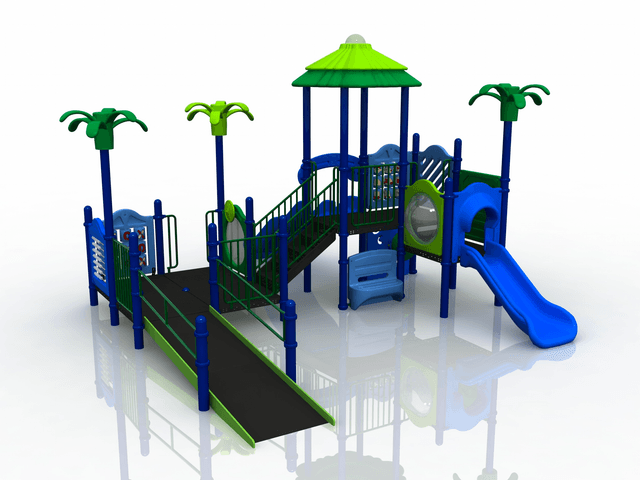
For inclusive play, rubber has a clear edge. Its firm, even surface lets a wheelchair, walker or pram travel across the playground and right up to equipment. Loose mulch is much harder to move across and can stop a wheel or a frame entirely.
If you want every child to reach the play, the surface under their feet matters as much as the equipment above it.
Many councils and schools now choose rubber, or a rubber pathway through a mulch area, specifically to meet inclusion goals. Building accessibility in from the start is far easier than retrofitting it, which we factor into every concept design.
Lifespan and appearance
Mulch is a consumable. It breaks down and needs replenishing on an ongoing basis, so while each top-up is cheap, the costs recur for as long as the playground exists.
Quality rubber softfall is designed to last many years with proper care, holding its shape, colour and impact protection. It also opens up design options, since it can be poured in colours and patterns to mark pathways, games or zones. If long service life and a polished finish matter, rubber usually wins; details on cover are in our warranties guide.
So which should you choose?
As a rough rule of thumb: mulch suits tighter budgets, larger natural-style spaces and sites with people on hand to maintain it. Rubber suits high-traffic settings, inclusive playgrounds, and anyone who wants lower ongoing maintenance and a longer-lasting finish. Plenty of projects use both, with rubber under swings and along accessible paths and mulch through the rest.
The right answer depends on your equipment heights, your budget, your maintenance capacity and your inclusion goals. We are happy to talk it through and put it all into a fixed-price, itemised quote. Get in touch for a free concept and quote on our contact page, or call us on 1300 543 977.
Planning a playground?
Tell us about your site and we'll design something your community will love.

