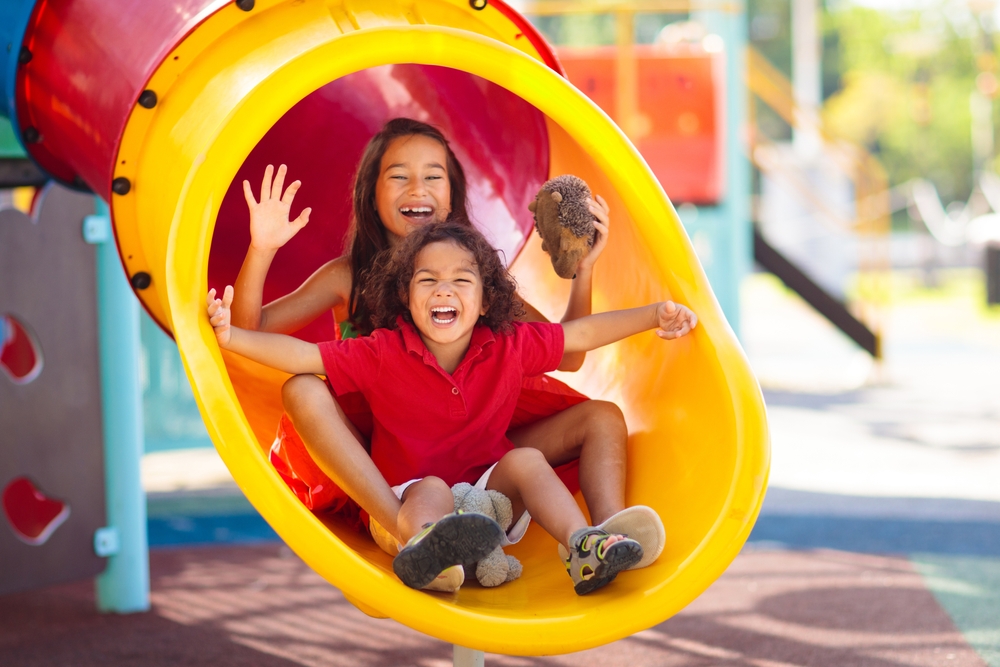
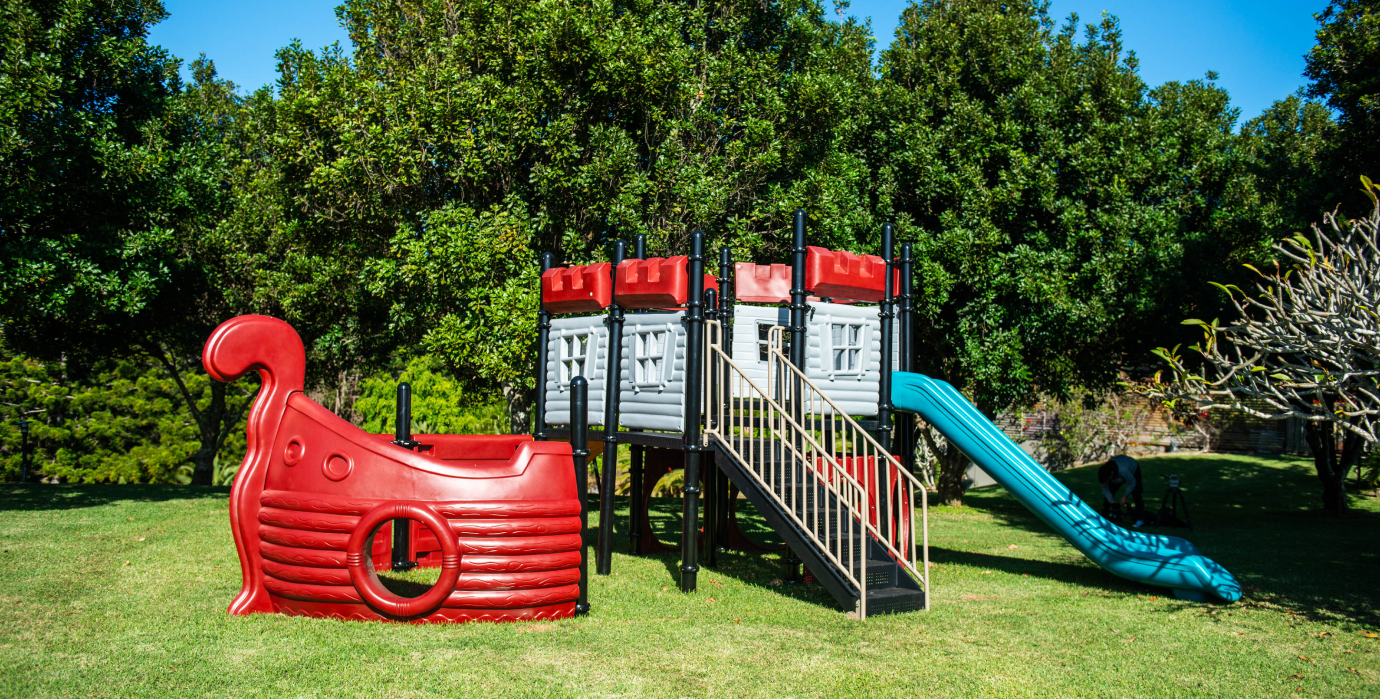

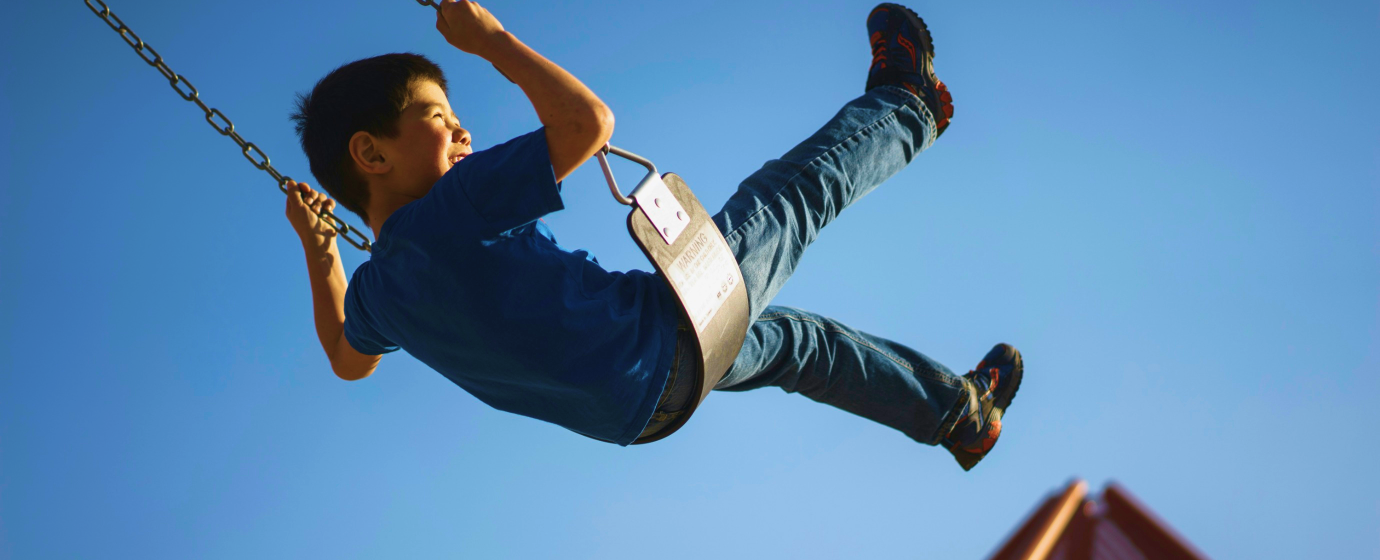
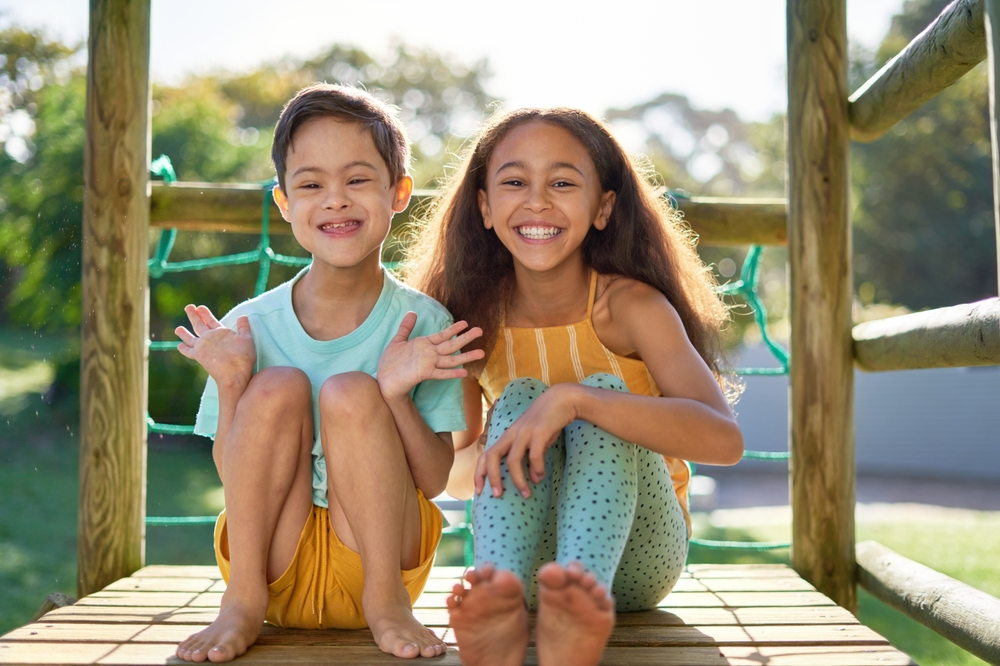

At 3:15 on a weekday, the pattern is easy to spot. A few children make straight for the slide or court. Others hover at the edge, unsure where they fit. Parents and staff can see the problem even when the equipment still passes inspection. The site functions, but it does not serve the full community well.
That is often the starting point for WA schools, councils, and community groups. Some are trying to improve an ageing play area. Others are planning a new one and want to know what nature play involves beyond the brochure language. They are not looking for a fashionable idea. They are looking for a play space that suits Western Australian conditions, supports development, can be managed safely, and continues to justify the investment years after opening.
A good nature playground answers those questions because it works more like a flexible play setting than a fixed piece of equipment. Children can climb, balance, build, retreat, observe, and invent their own games in ways that suit different ages, confidence levels, and sensory needs. For decision-makers, that difference matters. A space with more than one way to play usually serves more children, for longer periods, and with fewer barriers to participation.
This guide is written for that practical decision-making process. It is designed to help WA organisations move from early interest to clear project choices, with special attention to inclusion and accessibility. That focus is often missing from the current information available, even though it shapes whether a playground belongs to the entire community.
The goal is simple. Create places where more children can take part, more families feel welcome, and boards or committees can approve a project with confidence in its safety, value, and long-term use.
A school principal walks a site with the board. The old play area still functions, but the pattern is familiar. A few children climb and slide. Others wait for a turn. Some drift to the edges because the space gives them little to do unless they want the same kind of movement, in the same order, every time.
A nature playground changes that pattern.
Instead of directing children through a fixed sequence, it offers a setting with many entry points. A log can be a balance challenge, a meeting place, a stage, or the edge of an invented world. Sand can support digging, construction, sensory play, and cooperative games. Planting and landform can create quieter zones for children who need to observe first before joining in. The result is not merely a different look. It is a different play model.
That distinction matters for WA organisations making capital works decisions. Councils, schools, and community groups are usually not asking for a trend. They are asking whether a new play space will serve more children well, remain manageable for staff, and continue to justify maintenance and renewal costs over time.
Boards and committees often come back to three practical tests:
Nature play can perform strongly on all three, but only if it is designed with purpose. The strongest projects do not scatter a few natural elements around a standard play area and call it done. They organise the site the way a good school campus is organised. There are active zones, quieter spaces, clear paths, places for social connection, and a layout that supports independence without losing sightlines.
That is where many WA projects either succeed or fall short. A nature playground should not only be adventurous. It should also be usable by children with different physical abilities, sensory profiles, confidence levels, and ways of playing. If a child can reach the playground but cannot meaningfully participate once there, the design has solved access only at the gate.
For that reason, inclusion should be part of the concept from the first sketch, not added after the exciting features are chosen. Accessible paths, graduated challenge, sensory variety, shaded retreat spaces, social play opportunities, and elements that support supported or independent use all shape whether the playground belongs to the whole community.
A useful test for decision-makers is simple. Do not compare a nature playground with one swing bay or one climbing unit. Compare it with the full range of experiences your site needs to support, including active play, quiet retreat, social interaction, imaginative play, and access for children who are often excluded by standard layouts.
In Western Australia, that broader view matters. Climate, vegetation, coastal conditions, inland heat, and local community expectations all influence what will perform well. The best nature playgrounds respond to place and to people at the same time. That is what turns a play area into a lasting community asset.
A nature playground is not just a standard playground with a few logs added around the edges.
It is a play environment built around natural materials, natural processes, and open-ended play. That can include timber, boulders, sand, water, planting, landform, stepping elements, cubbies, digging zones, dry creek beds, and spaces where children can move loose items and change their surroundings.
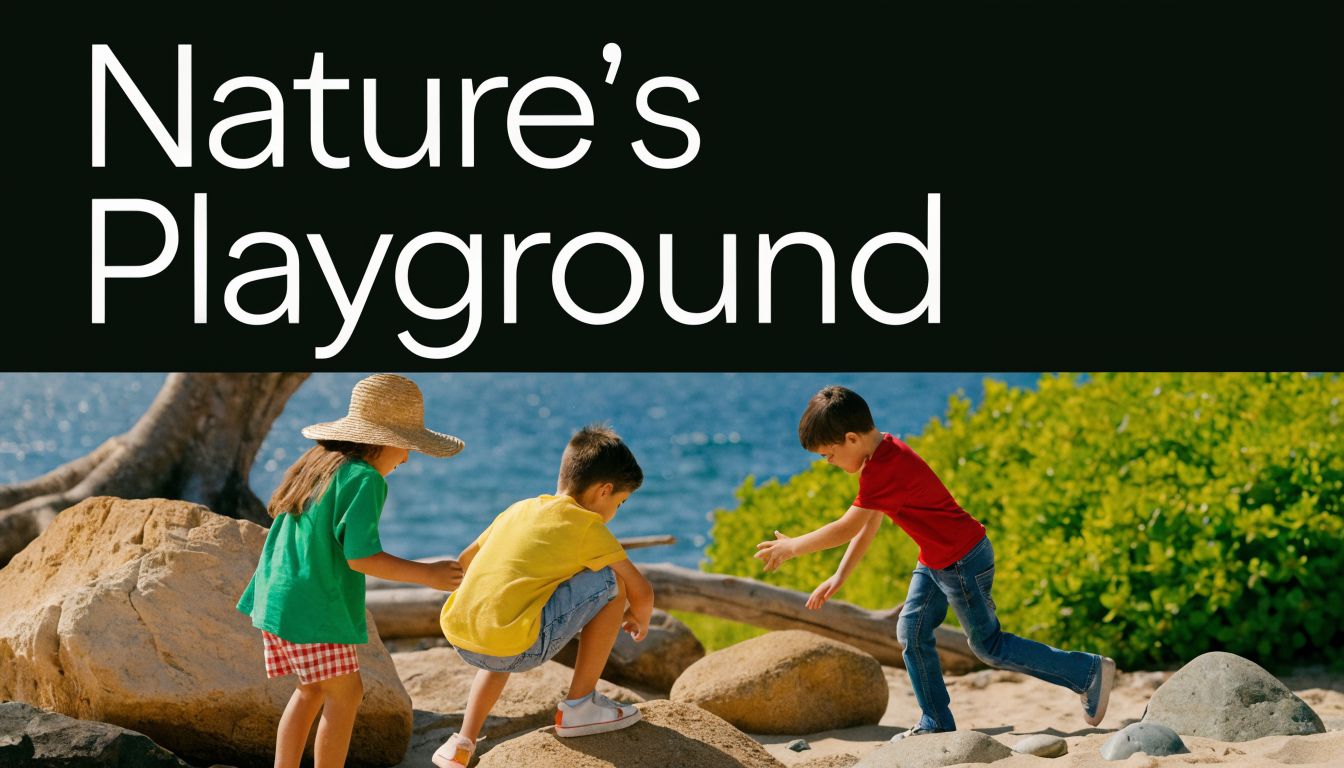
A traditional playground is often like a book with one story. It can be enjoyable, but the plot is already written. Children repeat the same sequence because the equipment tells them what to do.
A nature playground is more like a library of building blocks. The child writes the story. The site offers ingredients rather than instructions.
That difference is why adults sometimes underestimate nature play at first glance. They see fewer bright moulded parts and assume there is less to do. Children usually see the opposite. They see more room to decide, combine, experiment, and collaborate.
In a WA setting, nature playgrounds might bring together:
These spaces don’t need to feel rustic or unfinished. The strongest designs are intentional. They shape circulation, views, supervision, and challenge levels carefully, even when the final result feels relaxed and organic.
A short video makes that easier to visualise in real life.
Open-ended environments give children more chances to practise judgment. They decide whether a route feels stable, whether a branch can become part of a game, or whether they want to play in a group or on their own nearby. That supports independence in a way highly scripted equipment often can’t.
A strong nature playground doesn’t remove structure completely. It gives children enough structure to feel secure, and enough freedom to make play meaningful.
For schools, that can complement learning around science, storytelling, cooperation, and observation. For councils, it helps create a place families return to because the experience changes with age, season, weather, and imagination. For early learning centres, it supports sensory engagement and repeated discovery without needing constant novelty.
Good nature playgrounds WA communities use well don’t happen by accident. They come from a clear design brief and a strong reading of the site. Climate, supervision, age range, circulation, drainage, maintenance capacity, and local character all matter.
The visual priorities are simple. The design priorities are not.
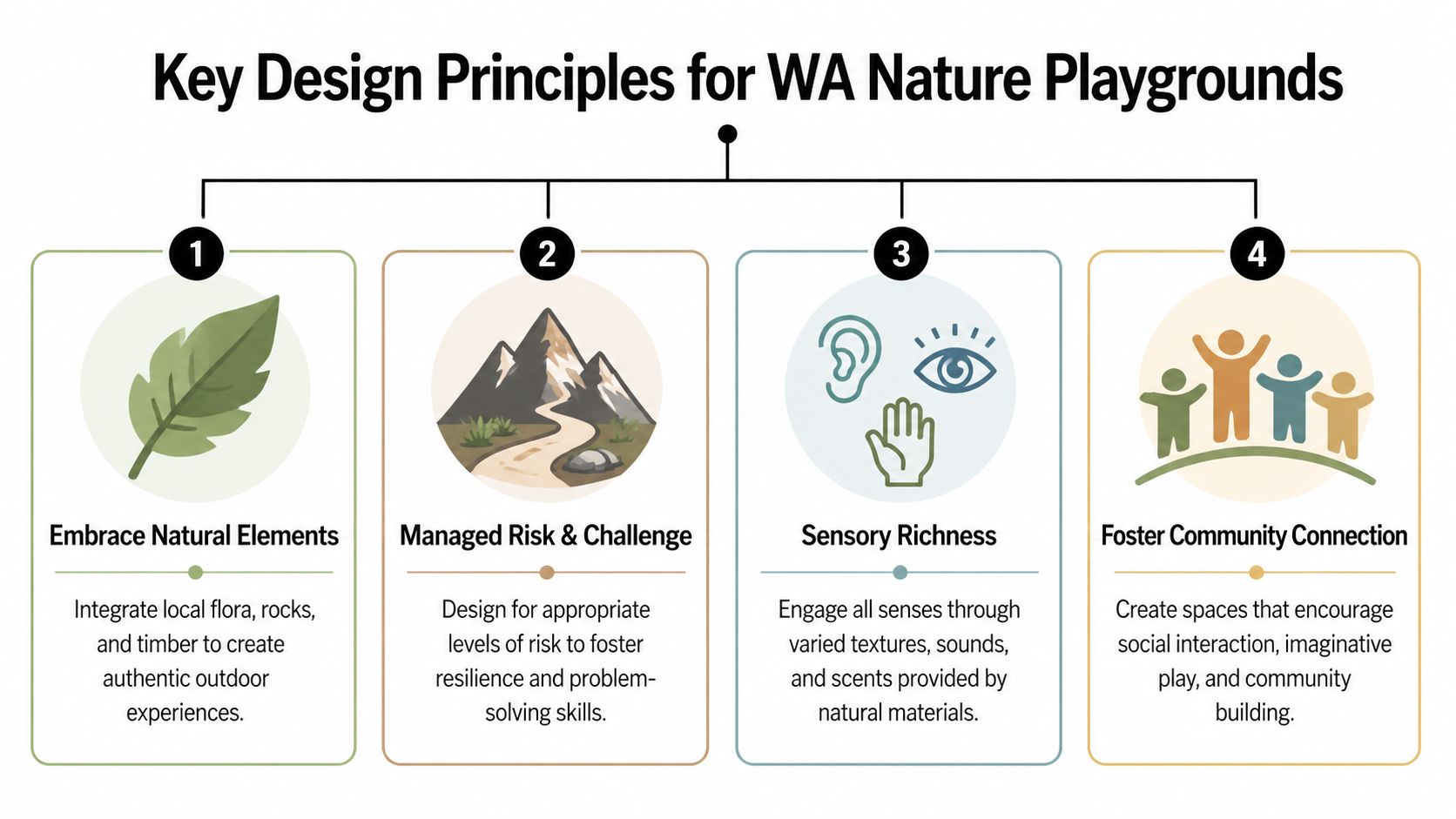
Western Australia asks a lot of outdoor spaces. Sun exposure, heat, wind, seasonal wear, and heavy use can quickly expose weak design decisions. A nature playground should respond to those realities from the start, not treat them as add-ons.
That usually means thinking hard about shade, drainage, durable materials, water movement, and how the site will look in summer when children and carers need relief from heat. A beautiful space that offers little shelter will often be underused at the times it should be most valuable.
A WA-appropriate design also respects the local environmental context. Coastal sites may call for driftwood tones, dune planting, and open views. Inland settings may suit boulders, earth forms, textured paths, and stronger shade structures. A school in a dense urban area may need a compact nature play response that layers experiences into a tight footprint.
Nature play works best when it gives children several ways to participate. Not every child wants the highest climb or the fastest route. Some prefer balancing at ground level, collecting materials, making things, or watching first and joining later.
That’s why the idea of graduated challenge matters. A site should offer easy entry points, moderate challenge, and more demanding elements without forcing every child into the same path.
A practical design mix might include:
One of the clearest lessons from WA is that public recreation spaces can unintentionally exclude people, especially girls.
A Nature Play WA survey reported in The West Australian observed more than 6,500 people across 250 outdoor recreation locations in Perth and regional WA, and found teenage girls made up just 6% of users, while teenagers overall accounted for 17% of visitors. The same reporting noted girls often prefer jetties, grassed areas, open space, or seating, and that inclusive features such as communal seating, shade, raised perching structures, and large shared swings can help make spaces more welcoming.
That has direct design implications. If a playground or recreation zone centres only on BMX, skate, or hard-court dominance, some users will read the message immediately. This space is for someone else.
Design question: Where can a child go if they want to talk, watch, hover, or join in slowly instead of competing for the central feature?
Surfacing decisions shape cost, maintenance, accessibility, and the look and feel of the whole space. The right answer depends on fall heights, circulation routes, mobility needs, drainage, and how much loose natural material the site uses. A useful reference point is this guide to playground surfacing materials for schools and parks, which helps frame the trade-offs between natural and manufactured options.
A short design comparison can help committees sort priorities early:
| Design priority | Common nature play response |
|---|---|
| Social use | Seating clusters, edge spaces, shared swings, open lawn connections |
| Sensory variety | Sand, planting, textured paths, water, loose natural materials |
| Local identity | Native species, regional materials, landform, site-specific themes |
| Long-term use | Durable timber, robust detailing, manageable maintenance zones |
The best projects don’t choose between beauty, challenge, and practicality. They organise all three.
Safety is where many otherwise enthusiastic projects stall. That’s understandable. Schools, councils, and early learning services carry responsibility for children, staff, and the public. If a playground includes rocks, logs, slopes, and timber climbing elements, some committee members will immediately ask whether “natural” means harder to certify or riskier to manage.
It doesn’t have to.
Natural play can sit comfortably within Australian safety requirements when the design team understands the standards and applies them properly. The issue is not whether a material looks natural. The issue is how the element functions, what the likely fall height is, what surfacing is needed, and how the overall play value balances with risk.

The main technical phrase to understand is Free Height of Fall, often shortened to FHoF. In simple terms, it is the height from which a child could fall from a piece of equipment to the surface below.
That measurement matters because it helps determine whether impact-attenuating surfacing is required and what standard that surfacing must meet. If you understand that early, you avoid two common mistakes. One is overspending on unnecessary surfacing. The other is under-specifying a zone that needs more protection.
According to the Guide to the 2021 Playground Standards published by Nature Play WA, under AS 4685 equipment with an FHoF below 600mm may not require a specific impact-attenuating surface. That often applies to low-level natural elements such as logs and boulders, provided the design is assessed appropriately.
For committees, the practical lesson is straightforward. Not every part of a nature playground needs the same surfacing response.
A low timber balance trail may be handled differently from a taller climbing item. A sand zone near ground level may call for one approach, while a slide run-out or a higher access point may require another. Good design separates those conditions clearly.
Specialist advice is particularly important. A designer or compliance professional should assess:
For a broader compliance overview, this summary of school playground safety standards in Australia is a useful starting point for non-technical stakeholders.
Safety doesn’t come from flattening every challenge. It comes from matching the challenge to the child, the site, the surface, and the standard.
A strong safety outcome in a nature playground also depends on ongoing management. Timber needs inspection. Loose materials need boundaries and replenishment plans. Planting must avoid creating hidden supervision problems. Drainage needs to work after heavy use and weather shifts.
A simple decision guide helps:
| If the element is | Ask this first |
|---|---|
| Low and informal | What is the FHoF, and does the standard require impact surfacing here? |
| Climbable and elevated | Where are the likely fall paths, and is the fall zone clear? |
| Sensory or loose-part based | How will staff supervise, store, and refresh materials? |
| Planted or shaded | Will roots, irrigation, and sightlines stay manageable over time? |
The safest projects are usually the ones that make these decisions early, not after the concept has already been sold to the community.
Many playground briefs say “inclusive.” Far fewer explain what that should look like on the ground.
That gap is especially important in WA, where there is still minimal publicly available, region-specific guidance on nature play spaces that are inclusive and accessible for children with disabilities, as noted by Nature Play WA’s broader accessibility information gap. For schools and councils, that means the burden often falls on the project team to ask better questions than the brief initially contains.
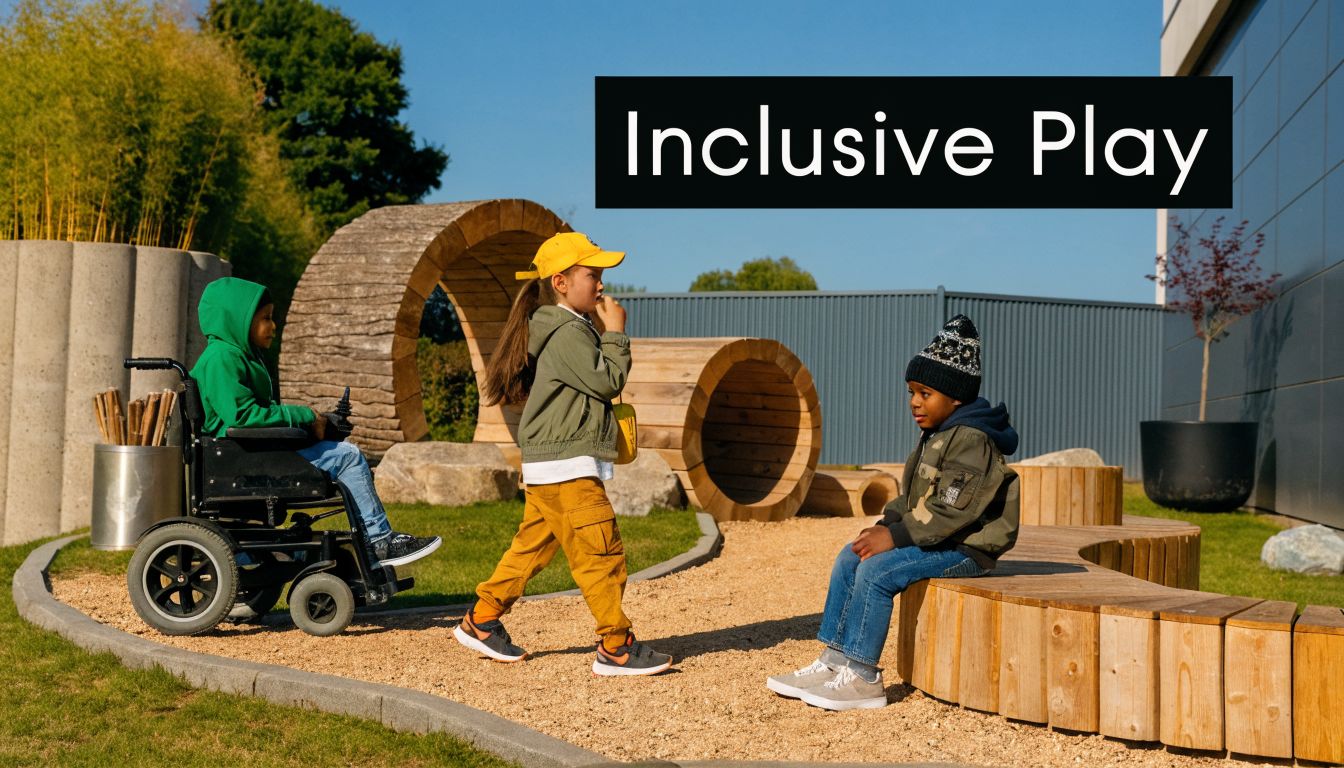
Physical access matters. Path widths, gradients, transitions, transfer points, and accessible routes to key features all affect whether a child can participate with dignity. But inclusive nature play goes further than that.
Some children need a place to observe before joining in. Some become overwhelmed by noise, movement, glare, or unpredictable contact. Some seek strong sensory input. Others avoid it. A playground that works only for confident climbers or fast-moving groups is not inclusive, even if the entry path is technically compliant.
A more useful design lens asks whether the site supports different bodies, different sensory profiles, different communication styles, and different ways of socialising.
An inclusive nature playground might include:
A good inclusive design brief earns its keep. If the committee only asks for “a nature playground with access,” the result may be a path to the edge of an otherwise exclusionary space. If the committee asks how children with different needs will arrive, orient, participate, pause, and reconnect, the design response changes.
A practical companion to that thinking is this guide on what to install in an inclusive playground, which helps translate inclusion from principle into actual site elements.
Inclusive design creates belonging before the first child even starts to play.
These questions often produce better outcomes than generic accessibility statements:
Who is missing from our current space?
Talk to families, therapists, educators, and support staff. They usually identify barriers quickly.
Can a child engage without climbing, running, or competing?
If the answer is no, the site is too narrow.
Where can children regulate?
Include calm zones, shade, seating, and visual shelter.
Can carers stay close without blocking play?
Inclusive spaces need comfortable supervision positions too.
The strongest nature playgrounds WA communities build aren’t just compliant. They are hospitable.
Most stalled playground projects don’t fail because the idea is poor. They fail because the process becomes muddled. The brief grows without focus, consultation happens too late, budgeting is disconnected from site realities, or maintenance is treated as someone else’s problem.
A better approach is to move in clear phases.
Before anyone talks about feature pieces, gather a small working group that includes the people who will live with the result. For a school, that might mean leadership, teaching staff, grounds staff, and parent representatives. For a council project, it may include parks staff, community development, asset management, and local users.
Walk the site together. Look at shade, drainage, sightlines, bottlenecks, existing trees, access points, fencing, and where children already gather even without equipment. Existing behaviour often tells you more than a wish list does.
A useful early discussion should cover:
Committees often jump straight to “What should we install?” The better question is “What experiences should this space support?”
That keeps the project from becoming a catalogue exercise. A site that needs social play, quiet retreat, nature contact, and lower-height challenge should not be dominated by one large hero item at the expense of everything else.
Committee advice: Approve the play outcomes first. Approve the equipment mix second.
A practical brief usually includes three layers:
| Layer | What to define |
|---|---|
| Users | Ages, abilities, supervision needs, likely peak periods |
| Outcomes | Climbing, socialising, sensory play, nature connection, retreat, circulation |
| Constraints | Budget, approvals, drainage, access, maintenance, staged delivery |
Initial cost matters, but so does what the project asks of your team later. A nature playground can deliver strong long-term value when materials, planting, surfacing, irrigation, and maintenance are coordinated from the start.
Ask hard questions early. Will loose materials need regular replenishment? Is the planting palette realistic for the maintenance team? Will shaded gathering areas reduce heat stress and increase stay time? Has the surfacing strategy been aligned with actual fall heights rather than broad assumptions?
Boards and councils usually make better decisions when they compare options across more than purchase price alone. A cheaper element that needs frequent replacement or creates supervision trouble may not be cheaper in practice.
Approvals are smoother when safety, access, and asset questions are addressed during concept development rather than after community expectations are already set.
Depending on the site, approvals and internal sign-off may involve:
If your organisation uses external designers, ask them to explain clearly how they are handling fall heights, circulation, accessible routes, edge treatments, drainage, and maintenance access. Those details should not sit in a black box.
Many WA sites remain active during upgrades. Schools still need safe circulation. Public parks still need fenced work zones and clear communication. Early learning services need especially careful staging because routines and supervision arrangements are tightly linked.
A sensible construction plan should spell out:
This is also the point where practical detailing matters. Timber edging, path joins, irrigation layout, drainage pits, seating orientation, and plant protection all affect how finished the playground feels once children arrive.
Nature playgrounds are not maintenance-free. Neither are conventional playgrounds. The difference is that some maintenance tasks are living-system tasks rather than only hardware tasks.
That may include pruning, mulching, checking log condition, topping up loose materials, monitoring trip edges, and reviewing wear patterns where children create their own preferred routes. None of that is a problem if it is planned. It becomes a problem when the asset owner inherits a space without a realistic care plan.
A good handover should include a simple maintenance schedule and clear inspection responsibilities. Grounds teams should know which elements are intended to weather naturally and which changes signal a real issue.
When the roadmap is handled well, the result is not just a new play area. It is a durable community asset that feels rooted in place and ready for everyday use.
A concept becomes easier to support when you can picture it in a real setting. These examples are not fixed templates. They show how the same design thinking can produce very different outcomes depending on site, climate, and community.
This playground sits beside open grass and a family picnic area near the coast. The design uses sand, weathered timber, boulders, and low climbing nets arranged around sheltered seating and broad edges where children can sit, gather, and watch before joining in.
The strongest move is not the climbing piece. It is the way the whole site works as a social environment. Carers can supervise easily, children can flow between active and quiet play, and the coastal palette feels right for the location rather than imported from a generic park manual.
Here the site takes cues from local bush character. Timber steppers, rough-hewn posts, nature trails, cubby zones, and planting create a denser, more exploratory feel. Rather than presenting one central object, the playground unfolds in layers.
Children move through clearings, climb short routes, collect loose natural materials, and settle into shaded corners. The design succeeds because it uses atmosphere as part of play. It feels grounded in region and gives repeated reasons to return.
This school has limited space and heavy daily use. The answer is not to mimic a large public reserve. It is to use every square metre carefully. A looping path, raised garden beds, low balance elements, textured ground treatments, and a small shaded retreat zone transform a tight footprint into a varied play setting.
This kind of project often changes behaviour more than people expect. Children who previously had little to do except circulate around fixed equipment begin finding quieter forms of play, collaborative games, and sensory experiences within the same yard.
That is the promise of good nature playgrounds wa projects. They don’t need to look the same. They need to belong to their place.
Sometimes they are. Sometimes they aren’t. Cost depends on the mix of custom work, earthworks, planting, surfacing, drainage, accessibility requirements, and fabricated equipment. The better question is whether the design gives long-term value for the site. A simple, well-resolved nature play space can be more useful than a more expensive conventional layout that offers fewer play types.
Yes, when they are age-appropriate and carefully supervised. For younger children, low-height challenge, sensory play, accessible paths, shaded seating, and clear sightlines are often more important than large-scale adventure features. The site should support confidence and discovery without forcing children into experiences beyond their developmental stage.
There is no single timeline. The duration depends on consultation, approvals, procurement, site conditions, and whether the work is staged. Projects move more smoothly when the brief is clear early, compliance questions are handled upfront, and maintenance responsibilities are settled before construction starts.
Often, yes. Many successful projects begin as targeted upgrades. That might mean introducing planting, natural balance elements, sand and water play, seating, shade, or quieter inclusive spaces around existing infrastructure. Retrofitting works best when the new elements are planned as part of a coherent layout rather than scattered additions.
That is exactly why inclusive planning needs to happen early. Tight sites, existing levels, old paths, and legacy equipment do not rule out inclusion, but they do require deliberate design choices. Start by mapping routes, decision points, rest areas, and sensory pressures before selecting features.
Choose materials and plant species that match local conditions and the maintenance capacity of the asset owner. Then set inspection routines that cover both built elements and natural elements. A nature playground should age with character, not drift into disorder.
If you’re planning a new school, council, or community play space, Kidzspace can help you shape a practical brief, explore inclusive design options, and turn early ideas into a durable playground that fits your site, budget, and community needs.


Copyright © Kidzspace. All Rights Reserved.
Copyright © Kidzspace. All Rights Reserved.