



A school principal is standing at the edge of an underused oval. A council planner is reviewing a park renewal budget. An early learning operator has a shaded corner that could become the most popular part of the yard. In each case, the same question comes up fast. What should go there, and how do we make sure it’s safe, durable, and worth the spend?
A timber swing set often becomes the centre of that conversation because it does more than fill space. It draws children across age groups, gives carers and staff an easy focal point for supervision, and turns a plain area into somewhere families stop, use, and return to. That only happens when the procurement decision is handled properly.
In Australian projects, a timber swing set isn’t just a choice of frame and seats. It’s a decision about compliance, surfacing, anchoring, maintenance, weather exposure, user mix, and long-term asset performance. If any of those elements are handled poorly, the result can look acceptable on handover day and become a problem not long after.
The strongest projects start with a simple approach. Match the design to the users. Match the materials to the site. Match the installation method to the ground conditions. Then insist on evidence, not vague supplier claims.
A school can have a generous open area and still struggle to make it usable at recess. A council can renew a park and still miss the one element that keeps families there longer. In both cases, a timber swing set often becomes the piece that changes how the space is used because it gives children an immediate reason to move into it, return to it, and share it.
Swings have been part of public play for generations, and they have stayed relevant for a simple reason. They are easy to understand, they suit a wide age range, and they continue to perform well in Australian schools and parks when the specification is right. For councils and schools, that matters more than novelty. A familiar item with strong throughput, clear supervision lines, and dependable day-to-day use usually delivers better value than a feature that looks impressive on concept plans but gets less use after handover.
Used well, a timber swing set does more than fill a gap in the layout. It can:
The procurement view is straightforward. If a swing set is going into a public or school setting, it needs to work as an asset, not just as a product.
That changes the brief. The question is not only whether children will enjoy it on day one. The better question is whether the structure will still perform after years of UV exposure, wet weather, inspections, heavy circulation, and changing community expectations around inclusion and risk management. In Australia, that also means checking whether the design can be specified and installed in a way that aligns with AS 4685, local surfacing requirements, and the site’s actual ground conditions rather than idealised assumptions.
Early decisions shape the whole-life result. A timber swing set installed in reactive clay, sandy coastal ground, or a high-wear school yard will not all be anchored the same way. Shade patterns, drainage, corrosion exposure, clearance zones, and access paths all affect whether the finished space becomes a reliable community hub or a maintenance problem.
At Kidzspace, we see the strongest outcomes when clients treat the swing setting as part of the wider place strategy. Done properly, it helps convert spare ground into a destination, supports repeat use, and justifies its cost over the long term.
The phrase timber swing set sounds straightforward, but it covers a wide range of build quality. Two proposals can both describe a timber structure and perform very differently once they’re installed in a school or public park. The key differences usually sit in the timber species, treatment level, and structural layout.
The first split is usually treated softwood versus hardwood.
Treated pine is common because it’s easier to machine, easier to replace, and often suits projects where budget pressure is real. It can be a practical choice for lower-intensity sites or staged rollouts where multiple items are being delivered at once. But it needs careful detailing. If water sits around connections, end grain, or ground interfaces, maintenance pressure rises quickly.
Australian hardwoods such as Spotted Gum or Ironbark are a different proposition. They’re heavier, denser, and generally better suited to demanding sites where visual quality and long-term durability matter. They often suit civic parks, coastal settings, premium school environments, and projects where the client wants the equipment to sit naturally within a broader natural environment.
A simple way to think about it is this:
Practical rule: Ask suppliers what timber treatment class is being used, where each member sits above or below ground, and how water is kept away from vulnerable connection points.
The next decision is frame type. This matters more than many buyers expect because it changes footprint, capacity, sightlines, and structural behaviour.
A-frame swings are the most recognisable option. They’re familiar, efficient, and often the easiest for schools and councils to integrate into standard playground layouts. They suit many projects well, especially where clear side zones and straightforward installation access are available.
Single-post or cantilever forms can be useful where a client wants a more sculptural look or a different circulation pattern under and around the swing. They can also reduce visual clutter. But they demand stronger engineering discipline because the load path is less forgiving.
Multi-bay configurations suit busier public sites. They create more swing positions and help separate age groups or seat types. They also need more deliberate spacing, more considered surfacing design, and stronger thinking around queuing, supervision, and access routes.
Some procurement mistakes are predictable:
A well-specified timber swing set should look simple because the hard decisions have already been made in design. If a supplier proposal can’t clearly explain timber type, treatment approach, frame logic, and seat configuration, it isn’t ready for procurement review.
A council can approve budget for a timber swing set, the supplier can deliver on time, and the project can still stall at handover if the compliance file is weak. I see this regularly in school and local government procurements. The problem is usually not the frame itself. It is the gap between a product brochure and what AS 4685 requires on the actual site.
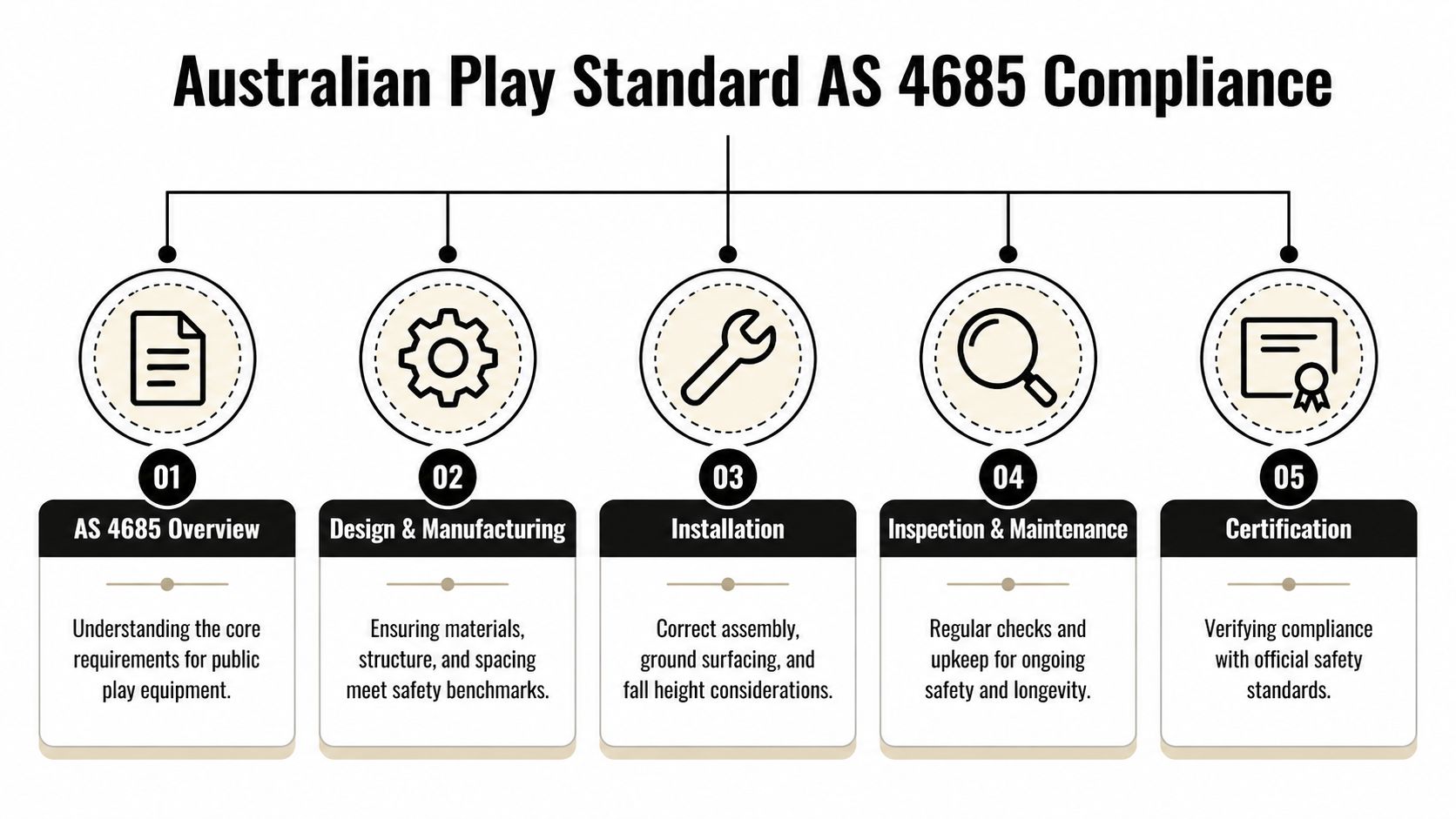
For Australian schools and councils, compliance starts well before installation. AS 4685 affects the swing frame, the suspension system, the clearances, the impact area, and the inspection regime that follows handover. A supplier saying a unit is "built to standard" is not enough. Buyers need to see what was assessed, what site assumptions were made, and what remains the client’s responsibility.
That matters even more in Australia because local conditions change the risk profile. Reactive clay, sandy coastal sites, high UV, salt exposure, and heavy rain events all influence how a compliant design performs over time. A timber swing set that works on one site may need different footing details, different corrosion protection, or a different surfacing specification on another.
One term that procurement teams should understand is Head Injury Criterion, or HIC. Under AS 4685, impact attenuating surfacing has to suit the equipment’s critical fall height so the installed play space performs as a complete system. That is why the frame and the surface beneath it should be specified together, then certified together where required.
This is often where tenders go soft. The equipment allowance looks clear, but the surfacing scope is provisional or pushed into another package. That creates real risk at approval stage and at practical completion.
For clients reviewing specifications, school playground safety standards in Australia provide a useful overview of how fall height, surfacing, and compliance responsibilities fit together.
Procurement documents should press suppliers on points that affect both safety and long-term asset performance:
Short or vague answers usually mean more work for the client later.
Minimum compliance is only the starting point for a school or council asset. Swings are exposed to repeated dynamic loading, inconsistent user behaviour, and heavier use than many clients first assume. Good suppliers account for that in the engineering, connection detailing, and material selection, even when the tender only asks for baseline compliance.
Kidzspace generally advises clients to look for evidence of conservative engineering judgment rather than chasing the cheapest frame that can be described as compliant. In practice, that means checking how the supplier has handled connection wear, moisture traps, corrosion risk around fixings, and the interaction between timber movement and hardware over time. Those decisions affect inspection frequency, replacement cycles, and whether the asset still performs after years of school or public use.
A timber swing set does not stay compliant by default. Wear parts need inspection. Surfacing levels change. Chains elongate, fixings loosen, and drainage issues can reduce surface performance if they are left alone.
For principals and council asset teams, the safest procurement position is simple. Require clear compliance documentation at purchase, require a defined inspection and maintenance plan at handover, and treat the swing, surfacing, and site conditions as one system. That approach reduces disputes, supports safer operation, and gives the asset a better chance of delivering long-term value.
A school can approve a timber swing set in June, install it in August, and still be dealing with puddling, worn grass access tracks, or footing movement by the first wet term. Those problems usually begin in site planning, not in the frame itself. For councils and schools, the practical job is to treat the swing, surfacing, drainage, access, and anchoring as one asset from day one.
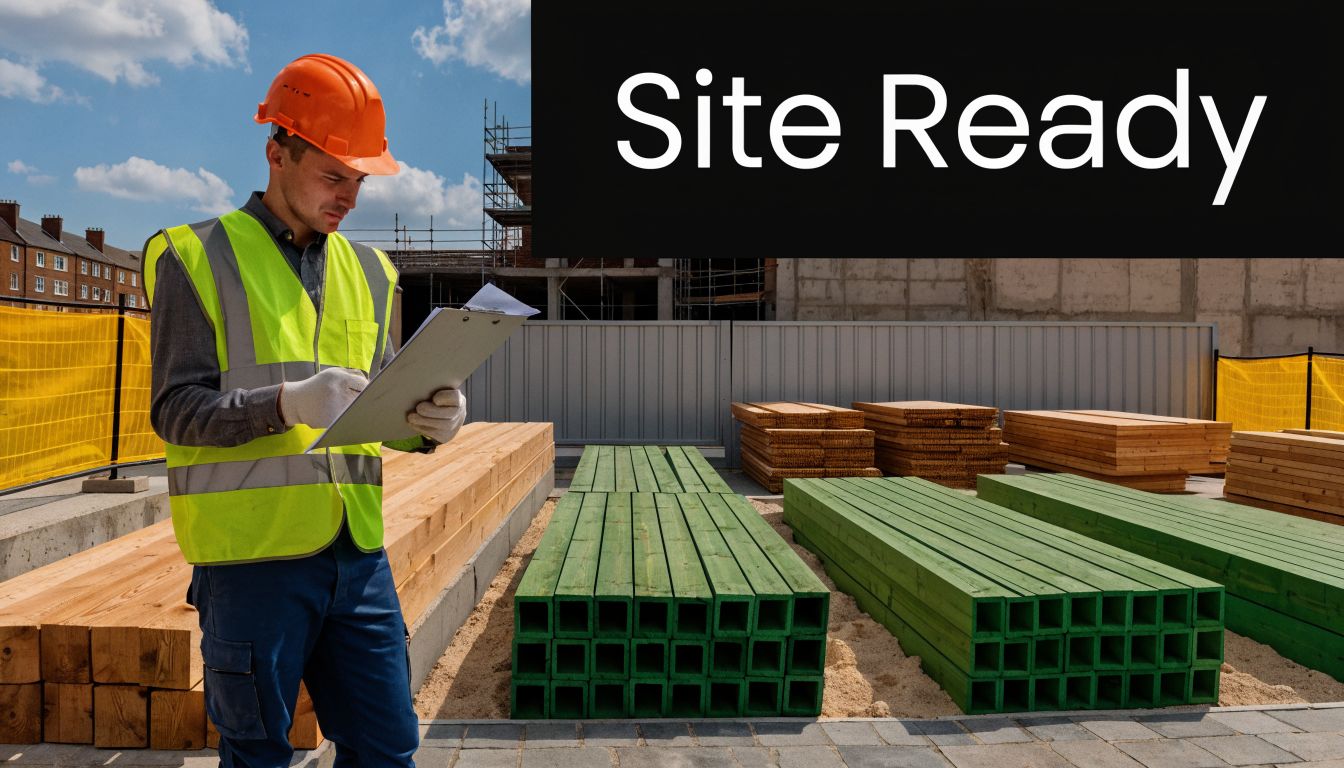
A vacant corner is not automatically a good swing location. Swings create a moving use zone, and that has to work with the way children, carers, teachers, and maintenance staff already move through the site.
For schools, recess traffic matters. Students do not arrive one at a time. They arrive in groups, often from several directions, and supervision lines need to stay clear from adjacent play areas and buildings. For councils, the same check looks slightly different. Paths, pram parking, picnic edges, and informal gathering points should sit outside the active swing path and outside likely run-out areas.
Good early planning usually covers these points before procurement is locked in:
Australian conditions quickly separate a good specification from a generic one. AS 4685 requires the installed equipment to remain stable in use, but the right anchoring method depends on the soil profile, moisture conditions, fall zone build-up, and how the site will be maintained.
Sandy coastal sites, filled ground, and reactive clay all behave differently. I have seen standard concrete footing details perform well on one site and create movement, cracking at the interface, or difficult reinstatement on another. Bushfire-prone areas, remote sites, and projects with restricted wet trades can also push the decision toward a different footing system.
The safest procurement approach is straightforward. Ask for the anchoring method to be nominated against the actual site conditions, not copied from a standard brochure drawing. If geotechnical advice, existing civil records, or local maintenance history point to ground movement or poor drainage, that should be reflected in the installation detail before the order is placed.
Concrete footings are common. They are not automatically the best option. The best option is the one that suits the soil, the imposed loads, the surfacing build-up, and the local approval process.
Projects tend to run better when procurement teams make decisions in a practical sequence rather than trying to solve everything on installation day.
One missed step can create avoidable cost later.
A useful build demonstration sits below. It’s not an Australian compliance document, but it does help visualise sequencing and why installation quality matters.
Good installation crews do more than place posts in holes. They check levels across the full bay, confirm that drainage falls still work after excavation, verify finished surfacing depths, and resolve clashes with roots, edging, irrigation, or underground services before the frame is fixed.
That matters more than many buyers expect. A swing can look fine at handover and still create ongoing maintenance issues if the post set-out is slightly out, if water is directed into the fall zone, or if the surfacing build-up leaves awkward edges for wheel access and mowing equipment.
Kidzspace generally advises schools and councils to ask one simple question during procurement. Who is taking responsibility for the site as an installed system? The strongest outcomes usually come from suppliers who can address set-out, anchoring, surfacing coordination, and compliance together, rather than leaving those decisions split across several parties on install day.
A swing set in an Australian school or council reserve takes punishment that a domestic unit never sees. It runs through hot summers, sudden downpours, high UV, heavy daily cycles, and maintenance intervals that can stretch when budgets tighten. That is why lifecycle cost matters more than the purchase price on page one of the quote.
Durability usually comes down to decisions made before fabrication starts. Timber species, hardware grade, joint detailing, drainage, and how the frame controls movement under load will all shape how the asset performs five or ten years from now. At Kidzspace, we see the same pattern repeatedly. Projects that look economical at tender stage often become expensive once cracking, corrosion, loose fixings, or premature timber breakdown start showing up in service.
Frame movement is a good example. A swing set is a dynamic structure, and repeated side loading will expose any weakness in bracing, connection design, or post footing performance. Excessive sway increases wear at joints, loosens hardware faster, and changes how the equipment feels in use. In a public setting, that often leads to earlier call-outs, more frequent inspections, and a shorter service life for parts that should have lasted longer.
This matters in Australia because site conditions vary so much. A coastal reserve may need a different hardware schedule from an inland school. Reactive clay, sandy soil, and filled ground all affect how posts and anchors behave over time. AS 4685 compliance is part of the picture, but a compliant design still needs to be detailed for the actual site if you want lower maintenance over the long term.
In practical terms, longer service life usually comes from a few plain decisions done properly:
A lower quote can still be the right choice on a lightly used site with a capable grounds team and a clear maintenance program. Many councils and schools are not in that position. They need equipment that stays serviceable with predictable inspections and fewer reactive repairs.
That changes the procurement question.
Instead of asking which timber swing set costs less to buy, ask which one is less likely to need shut-downs, part replacement, recoating, or structural attention during its working life. That is where material choice starts to matter.
| Timber Type | Typical Lifespan (with maintenance) | Maintenance Needs | Best For |
|---|---|---|---|
| Treated pine | Depends on exposure, detailing, and maintenance quality | More frequent inspection of coating wear, moisture-prone areas, and connections | Budget-conscious projects, staged upgrades, lower-intensity settings |
| Spotted Gum | Long-term performance can be strong when properly specified and maintained | Routine inspection, usually focused on surface weathering and hardware interfaces | Schools, civic parks, premium landscape projects |
| Ironbark | Often selected where heavy-duty presence and durability are priorities | Ongoing inspection still required, with attention to fixings and movement points | High-use public sites, natural-style playgrounds |
No species is maintenance-free. Dense hardwoods can perform very well, but they still need correct detailing around fixings, end grain, and ground interface points. Treated softwood can also perform well if the design manages water properly and the maintenance schedule is realistic. The wrong choice is usually the one that does not match the site conditions, usage level, or available upkeep.
A supplier should be able to answer practical questions clearly, without falling back on generic product language.
Well-bought equipment usually costs more at the start because the difficult details have already been resolved.
That is usually money well spent. Fewer closures, fewer replacement parts, and a frame that still feels solid after years of use will nearly always outweigh a cheaper initial quote.
A timber swing set doesn’t need to be generic. In well-planned projects, it can support the identity of the site and widen who gets to participate in play. That’s where customisation and accessibility stop being optional extras and become part of good public design.
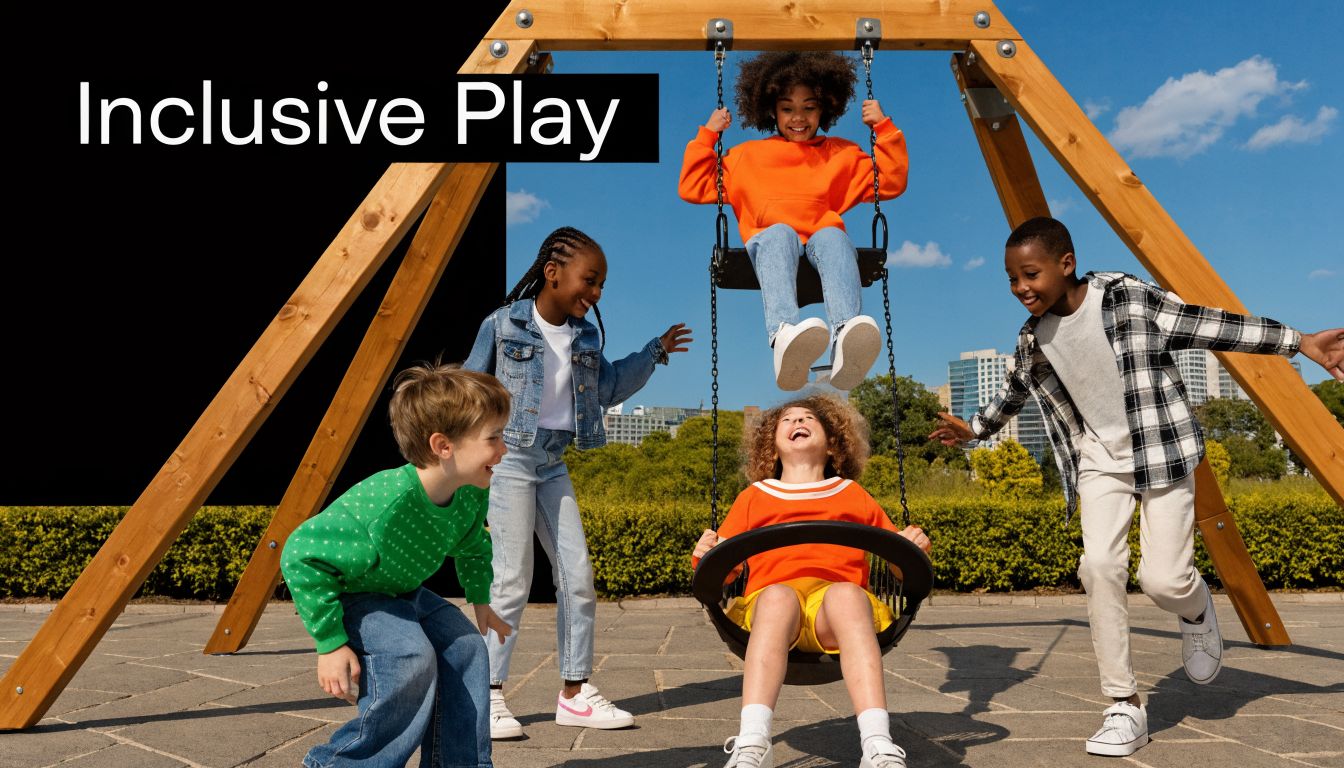
The most effective customisation usually isn’t ornamental. It helps the swing area feel like it belongs to the broader place. A bushland reserve might suit a natural timber language and understated detailing. A school with a strong imaginative-play brief may prefer forms or colours that connect to a wider theme such as forest, animals, vehicles, or adventure play.
Accessibility choices deserve the same level of thought. Different seat types can support very different users and supervision patterns. A standard flat seat, a more supportive harness seat, or a nest-style option each changes who can use the space confidently and how children play together.
The weakest approach is to add one “special” seat at the edge and call the project inclusive. Better projects integrate accessibility into the whole layout. That means thinking about approach paths, transfer space, surfacing transitions, carer positioning, and whether the swing area feels shared rather than separated.
A few practical examples:
Many tenders fail because the brief is too thin. If you want a timber swing set that supports accessibility and custom outcomes, spell those expectations out.
Include:
A good brief doesn’t narrow creativity. It filters out proposals that were never right for the site in the first place.
A timber swing set looks simple once it’s built. Getting to the right outcome isn’t simple at all. The project has to balance compliance, site realities, user needs, material performance, and long-term maintenance. That’s why experienced project support matters.
The strongest results usually come from treating the playground supplier as a project partner rather than a catalogue vendor. Good collaboration starts early, while there’s still time to adjust the brief, test different layouts, and align the equipment choice with budget and site constraints. It continues through design, documentation, manufacturing, and delivery.
Kidzspace works well in that role because the business isn’t limited to supplying standard pieces. The team designs and manufactures playground equipment and outdoor fitness solutions with a strong focus on active, imaginative, and inclusive play. That matters when a school or council needs more than a default off-the-shelf answer.
Their process also suits the way real projects unfold. Clients can begin with a free consultation to clarify goals, budget, and timing. From there, the work can move into collaborative design, customisation, and practical project support. The emphasis on quality materials, rigorous testing, and equipment built for Australian conditions gives procurement teams a more reliable foundation for decision-making.
If the goal is a timber swing set that becomes a well-used, durable part of the site rather than a future maintenance problem, expert guidance pays for itself in avoided missteps.
Neither material is automatically better in every project. Timber is often chosen because it sits naturally in outdoor settings and can create a warmer, less institutional feel. It also works well in nature-play and civic park environments where visual integration matters.
Steel can be a strong option where a client wants a different aesthetic or a different maintenance profile. The better question is which material suits the site conditions, expected use, maintenance capacity, and design intent. For many Australian schools and councils, a timber swing set is preferred because it balances appearance, play value, and a strong connection to the surrounding environment.
Public playground equipment should be inspected routinely, with the frequency matched to the level of use and exposure. High-use sites, coastal sites, and sites with heavy leaf litter or drainage issues usually need a more vigilant approach.
Inspection should focus on timber condition, movement at joints, wear in chains and seats, hardware tightness, surfacing condition, and any signs that water is being trapped where it shouldn’t be. The most useful approach is to combine regular visual checks with scheduled formal inspections so small issues are caught before they become closures or repair jobs.
Sometimes yes, but only after a careful review. If the existing location works, the ground conditions are manageable, and the surrounding circulation still makes sense, parts of the site may be worth retaining. In other cases, keeping too much of the old layout locks the project into old problems.
Assess the existing area in terms of structure, compliance pathway, surfacing condition, access, and future maintenance burden. If upgrading means carrying forward poor spacing, weak drainage, or unsuitable anchoring, replacement is often the cleaner long-term decision.
When an older swing area is worth keeping, it’s usually because the site planning was sound to begin with.
Kidzspace helps schools, councils, early learning services, and community organisations turn early ideas into practical, compliant play outcomes. If you’re planning a new timber swing set or reviewing an existing site, start with a conversation through Kidzspace to clarify the brief, test the options, and move forward with confidence.



Copyright © Kidzspace. All Rights Reserved.
Copyright © Kidzspace. All Rights Reserved.