
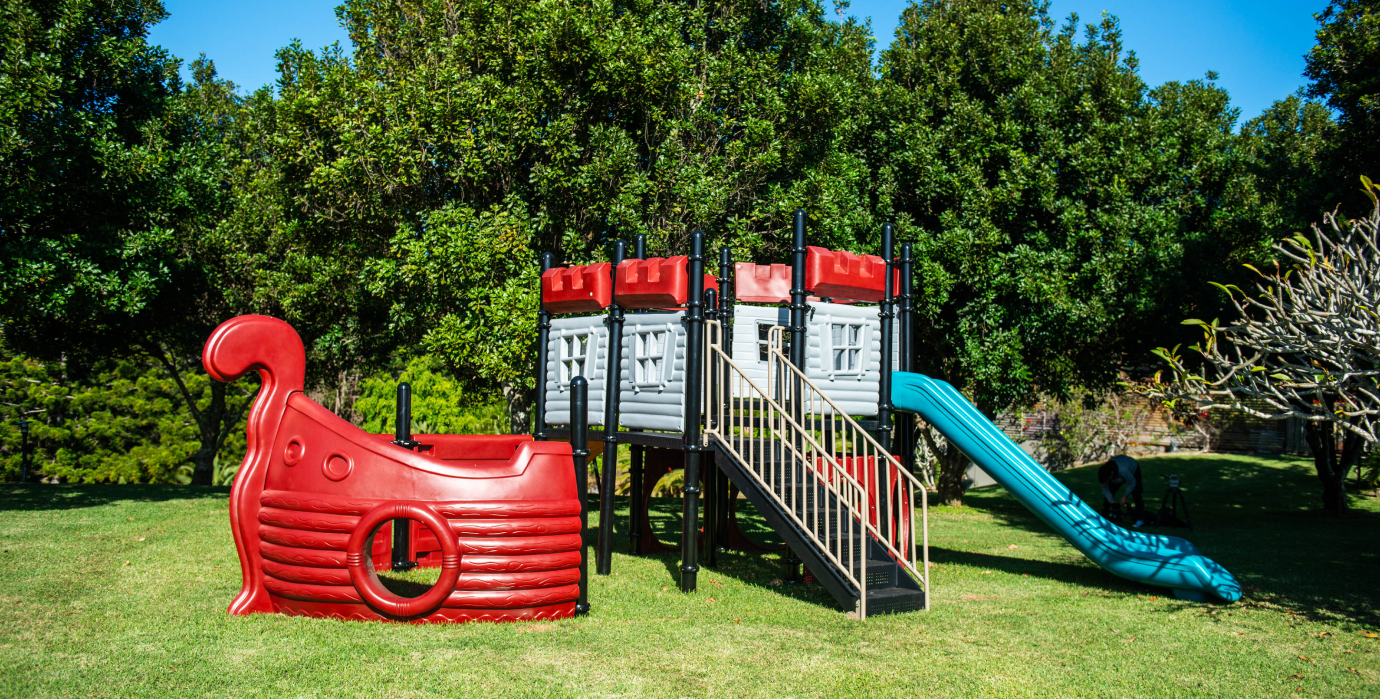





You've probably got a space like this already. A strip of turf behind a classroom, a dead corner near the fence line, or a planting bed that looked good on handover day and hasn't done much since. It isn't unsafe, but it isn't useful either.
That's where a little learning garden can earn its place. Not as a decorative extra and not as a one-term gardening project, but as part of the school's outdoor learning infrastructure. For principals, facility managers, and council planners, that distinction matters. Infrastructure gets designed for daily use, supervision, access, safety, maintenance, and curriculum value. Hobby gardens usually don't.
In Australian settings, that difference shows up quickly. A lovely sketch with delicate plants and narrow paths might suit a brochure. It won't necessarily survive a hot term, muddy shoes, enthusiastic digging, limited staff time, and years of weather exposure. The best learning gardens are organised for hard use. They welcome classes, support structured activities, and stay manageable when the novelty wears off.
An unused patch of lawn often looks harmless. In practice, it can become one of the least productive assets on a school site. It still needs mowing, still attracts foot traffic, and still occupies space that could be doing far more for students and staff.
A well-planned little learning garden changes that equation. It turns passive ground into a place where children can observe change, handle natural materials, work in groups, and connect lessons to something physical. That's why it's worth treating the space as a teaching asset, not just a beautification job.

There's a solid educational case for this. Cornell's summary of school garden research reports that primary school students who participated in school gardening activities scored significantly higher on science achievement tests than students with no garden-based learning experience. The same resource notes more positive attitudes toward environmental issues among elementary and junior high students involved in school garden programs.
Those findings matter because they shift the conversation. The question stops being, “Should we add some garden beds?” and becomes, “How do we create an outdoor space that teachers can effectively use to support learning?”
That's the right frame for a principal writing a budget request or a council planner assessing long-term value.
Practical rule: If the space can't support repeated class use, supervision, and simple upkeep, it's a garden feature. It isn't yet a learning environment.
Once you call the project infrastructure, the design brief gets sharper. You start asking better questions:
That's why many schools now look beyond decorative landscaping and towards outdoor learning spaces for schools that combine curriculum use with durable site planning.
The common weak version is easy to spot. A few timber boxes are dropped into a spare corner, a planting day is organised, and no one defines how the area will be used after that. Access is awkward. Water is too far away. Plant choice is optimistic. Within a year, the space looks tired and staff stop booking it.
A successful little learning garden does the opposite. It starts with a clear purpose, supports teaching, and is built to stay functional well after the launch photos are taken.
Before anyone chooses plants or orders sleepers, the site needs a proper brief. Most problems in school gardens aren't caused by bad intentions. They come from skipping the groundwork.
A learning garden works best when the school defines how the space will be used, who will maintain it, and what success looks like once students are in it every week.
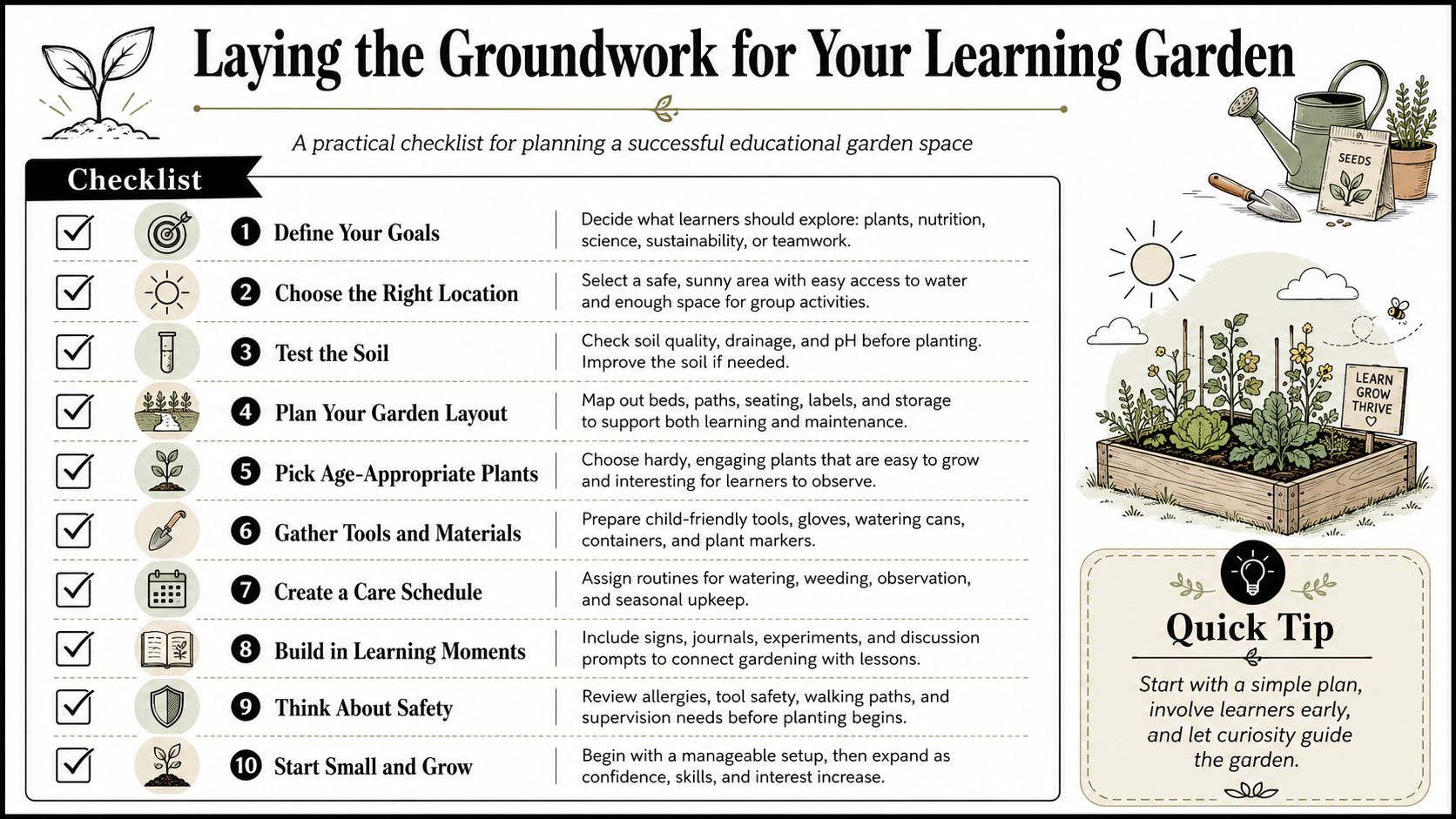
Walk the area at different times of day. Don't assess it from a plan alone. A location can look ideal on paper and fail once you notice how children move through the grounds.
Check these points first:
Sun and shade
Look at morning and afternoon conditions. A bed in full western sun may be punishing in warmer months, especially for younger children and staff supervising lessons.
Water access
If watering requires dragging a hose across a busy path, the space will become harder to maintain than it needs to be.
Drainage
After rain, some corners hold water for too long. That affects both plants and usability.
Access routes
Students, prams, maintenance teams, and mobility aids all need practical access.
Sightlines
Staff should be able to supervise the whole area without hidden pockets.
Existing behaviour patterns
If children already cut through the site, design for that movement or redirect it clearly. Don't pretend it won't happen.
The strongest projects don't stop at “build a garden”. They define what the garden is supposed to do. A learning garden pilot framework treated the space as a monitored program with KPIs, including goals to increase children's exposure to the garden by 20% and awareness of fresh fruits and vegetables by 20%. That framework is useful because it measures success through use and outcomes, not just installation.
For schools and councils, that means writing a more practical brief. Include items such as:
A garden that isn't programmed tends to drift into occasional use. A garden with a timetable, simple teaching prompts, and assigned responsibilities stays alive.
The fastest way to lose momentum is to present a finished idea and expect everyone else to adopt it. Better results come when the people using the garden help shape the brief.
Teachers need practicality more than romance. Ask what would help them run a class outdoors without extra friction. They'll usually point to seating edges, shaded gathering spots, easy handwashing access, storage for tools, and activities that tie back to existing units of work.
Students are good at identifying dead space and awkward circulation. They'll also tell you what feels inviting and what feels like “look but don't touch”. That distinction matters.
Families can be a great support, but volunteer enthusiasm should never be the only maintenance plan. Use it as a bonus layer, not the operating model.
Bring them in early. They know where water sits, which corners get battered by weather, and what materials have failed elsewhere on site.
Good learning garden design does three jobs at once. It needs to invite curiosity, support access for a wide range of users, and stay safe under daily school conditions. If one of those fails, the whole space becomes harder to use.
That's why layout matters more than many people expect. A little learning garden doesn't need to be large, but it does need to be legible. Children should understand where to gather, where to plant, where to move, and where not to climb.

Some layouts look impressive in a concept rendering but become awkward once children arrive with bags, hats, and tools. Curves can be excellent when they guide movement or create smaller teaching pockets. They're less useful when they produce narrow pinch points or inaccessible edges.
Practical layouts often include:
Universal access isn't a later add-on. It needs to be part of the concept from day one. That includes path widths, turning space, threshold details, surface stability, and the reach range to planting areas.
A garden with only low in-ground planting excludes some users immediately. Mixed bed heights, edge seating, simple orientation cues, and clear wayfinding make the area more usable for everyone, not just those with identified access needs.
Design note: Children don't all engage with a garden in the same way. Some want to dig. Others want to observe, sort, sketch, smell, measure, or sit quietly. The layout should support all of that.
For Australian schools and early learning centres, the bigger trade-off is often play value versus maintenance burden. The most effective spaces are compliant, low-maintenance, multi-sensory zones designed to withstand heavy use and harsh weather conditions, rather than purely decorative gardens, as discussed in the background on this gap in existing guidance at Little Angels content reviewed for search intent comparison.
In practice, that means paying attention to:
Loose and unstable surfaces can create mobility and maintenance problems. Hardwearing, accessible paths usually perform better around active garden zones.
Avoid details that create splinter risks, trip points, or hidden corners where debris collects.
Keep thorny, irritating, or fragile species away from circulation paths and active play edges.
Adults should be able to scan the whole space easily, especially in mixed-use schoolyards.
Many schools blending gardens with active outdoor environments borrow ideas from broader nature playground design in WA because those projects already deal with movement, sensory engagement, durable materials, and supervision.
Space constraints don't rule out a strong result. Vertical planting, compact sensory beds, narrow edible strips along a fence, and corner gathering nodes can all work if the circulation is clear and the maintenance load stays reasonable.
What matters isn't visual complexity. It's whether the garden can handle repeated use without becoming a supervision problem or a maintenance drain.
Many little learning garden projects either settle into long-term success or start collecting headaches at this stage. Plant and material selection decides how the space feels after the first season, after the first summer, and after the first few years of school use.
The key is scope. The term learning garden sounds simple, but it covers very different settings. A preschool in Orleans, Massachusetts, listed in its handbook as serving children aged 2.9 to 7 and operating weekdays from 8:00 am to 5:00 pm, illustrates how age range directly affects design decisions, supervision style, and suitable components in a garden space, as noted in The Learning Garden parent handbook. A garden for very young children needs a different risk profile, edge detail, and plant mix from one intended for older students.
In high-use education settings, the best plants usually share a few traits. They're resilient, easy to recognise, safe for regular contact, and interesting enough to support repeated observation.
Good selection criteria include:
A common mistake is overloading a small garden with too many species. Fewer, better-chosen plants usually create stronger learning and easier upkeep.
Raised beds, edging, seating, and retaining elements need to cope with more than weather. They'll get leaned on, stepped on, sat on, bumped by tools, and tested by children every day.
Here's a practical comparison for the main bed materials.
| Material | Durability | Upfront Cost | Safety (Splinters/Chemicals) | Maintenance |
|---|---|---|---|---|
| Treated pine timber | Moderate | Lower | Needs careful specification and monitoring for wear | Ongoing checks, eventual replacement |
| Hardwood timber | Good | Higher | Can still weather and splinter over time | Regular inspection and refinishing as needed |
| Recycled composite boards | Good to very good | Moderate to higher | Generally low splinter risk when properly finished | Lower routine maintenance |
| Galvanised steel raised beds | Good | Moderate | Smooth edges and heat exposure need attention | Low maintenance if correctly installed |
| Masonry or concrete edging | Very good | Higher | Stable if detailed well, but edge profile matters | Low maintenance |
Beds with broad, stable edges often do double duty as informal seating. Composite or well-finished durable materials can reduce ongoing repair demands. Purpose-built zones also help. One bed for herbs, one for seasonal edibles, one for sensory foliage, one for habitat planting.
Thin decorative edging fails fast. Low-cost timber can look acceptable at install and deteriorate under irrigation and sun. Deep beds without a clear reach zone become hard for younger children to use. Fragile feature plants near the main path won't last.
Choose materials the same way you'd choose outdoor furniture for a school. If it can't handle constant contact, it doesn't belong in the busiest part of the garden.
A little learning garden proves its worth when teachers start using it without needing a special event. The strongest spaces support ordinary school days. A class steps outside, spends time in the garden with a clear task, and comes back with something observed, measured, discussed, or made.
That's where curriculum-linked activity design matters. A garden becomes far more than a pleasant backdrop when teachers can run repeatable lessons there.

A teacher takes a small group outside with clipboards. One student tracks leaf shape changes. Another checks which plants are flowering. A third watches insect movement around a habitat patch. The lesson doesn't need complicated equipment. It needs a space that offers visible change and enough order that students can focus.
That kind of use aligns with the findings from the Science in the Learning Gardens study, which found that students' motivational experiences in the garden, including engagement and autonomy, were a positive predictor of science learning and grades.
You can build simple recurring science tasks around:
A small garden gives maths teachers more than measurement practice. Students can estimate area, compare bed shapes, track germination, count harvest items, sort leaves by size, or record patterns over time. Because the work is hands-on, many students engage differently than they do with worksheet-only tasks.
Literacy fits just as well. Early years students can build vocabulary from textures, colours, scents, and actions. Older students can write procedural texts, observation notes, persuasive pieces about sustainability, or reflective journal entries after practical sessions.
Some of the best outdoor lessons are quiet ones. A child kneels beside a bed, notices something new, and has enough time to describe it properly.
Not every worthwhile activity needs a science objective attached. Schools often get strong value from tasks that build attention, calm, and sensory awareness.
A practical garden might support:
Leaf rubbings, shape tracing, colour matching, temporary arrangements with fallen materials, or observational drawing.
Comparing scents, textures, temperatures, and sounds across different parts of the garden.
Younger children often engage more fully when the garden sits alongside tactile outdoor elements. Integrated outdoor environments that pair planting with sand and water play can support richer exploration than isolated garden beds alone.
One-off planting days are enjoyable, but routine use is what builds educational value. The garden should support short, repeatable activities that fit real timetables. Ten minutes of observation before lunch can matter more than a big annual event.
That's also why the physical layout and the teaching plan have to work together. If every lesson starts with moving furniture, locating tools, and reminding students where not to stand, staff will use the space less often.
Most school gardens don't fail because the original idea was poor. They fail because no one converted the idea into a manageable operating system.
The build method matters first. A community working bee can help with ownership and visibility, but it can also create inconsistencies in finish quality, edge detail, and long-term durability if the scope is too technical. Professional installation usually makes more sense for structural elements, access paths, edging, drainage, and any component that needs to meet a high-use standard. Community involvement works best in planting days, signage, seasonal refreshes, and supervised add-ons.
A working little learning garden needs a simple schedule that people can follow even during busy terms. Keep it boring enough to survive staff changes.
A reliable framework usually includes:
Shared ownership only works when responsibilities are still named. “Everyone” isn't a maintenance plan.
A practical split might look like this:
Long-view advice: Treat the garden the same way you treat any valued school asset. Inspect it, budget for it, refresh it, and review whether it's still serving the students it was built for.
The easiest way to protect the garden long term is to keep evidence of use. Save photos of lessons, collect teacher feedback, note which zones work well, and record what needed replacement sooner than expected. That information helps justify future improvements and avoids repeating weak decisions.
A little learning garden lasts when the school sees it as part of everyday operations. Not a side project. Not a nice extra. A real outdoor classroom that's built to cope with Australian conditions and still be worth using year after year.
If you're planning a little learning garden and want the space to hold up under real school or council use, Kidzspace can help you think beyond planting beds alone. Their team works on durable, inclusive outdoor environments built for heavy use, safety, and long-term value in Australian conditions.



Copyright © Kidzspace. All Rights Reserved.
Copyright © Kidzspace. All Rights Reserved.