




If you're planning a first major water play project, you're probably looking at a patch of space that isn't doing enough. It might be a hot corner of a school yard that children rush past in summer, or a park zone that looks fine on the masterplan but never becomes the place families stay. The brief often starts with "something engaging" and quickly turns into harder questions about safety, water use, maintenance, shade, drainage, supervision, and whether the whole thing will still look good in five years.
That’s where water play stations stand apart from standard add-ons. Done well, they don’t just fill a gap. They change how a site is used, how long families stay, and how different age groups share a space. Done poorly, they create operational friction, compliance headaches, and a maintenance list no one budgeted for.
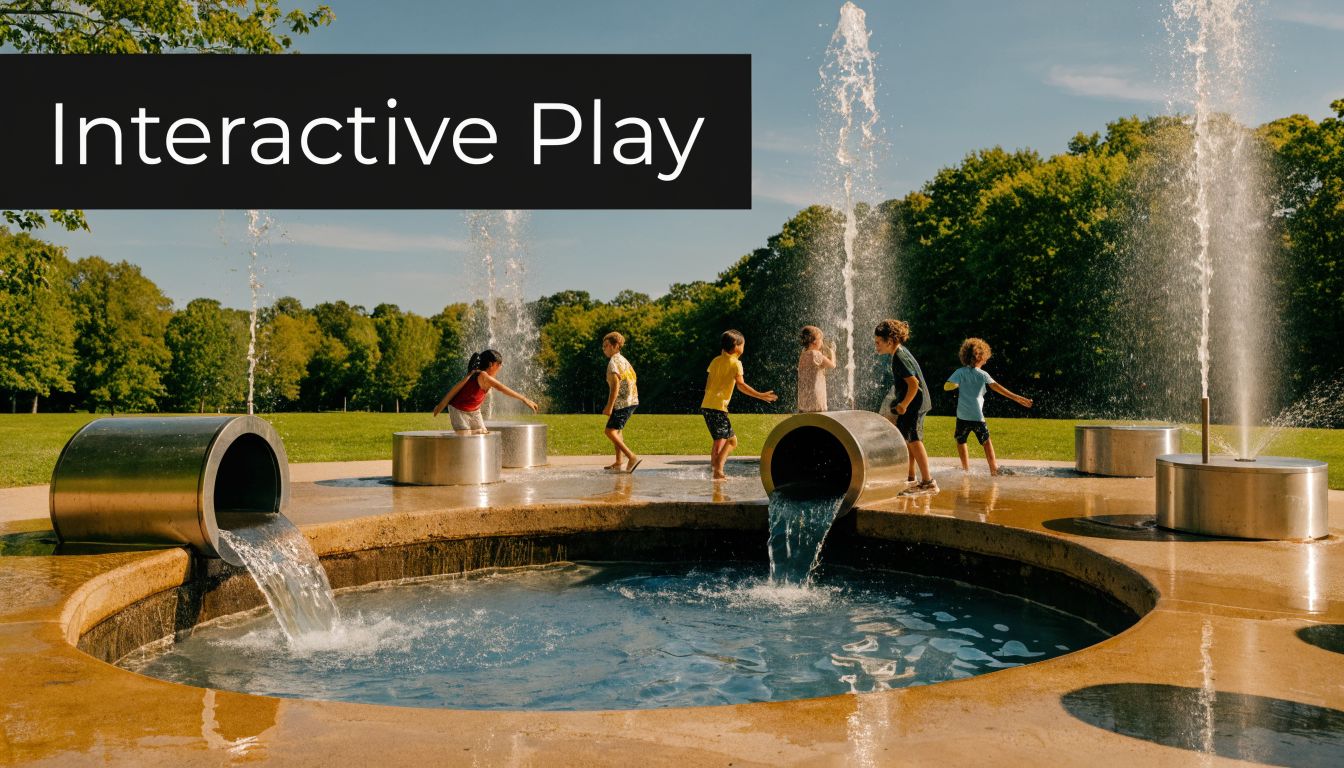
A quiet lawn edge or a tired rubber corner can become the most active part of a site once water enters the layout. Children don’t need much prompting. A ground jet, a hand pump, a shallow channel, or a simple basin creates movement, curiosity, and cooperation almost immediately. In public settings, that shift is visible fast. Parents move closer, siblings join in, and the area becomes a social anchor rather than a pass-through zone.
In Australia, that demand isn't niche anymore. By 2023, 85% of local government areas maintained or expanded recreational facilities including water features, up from 72% in 2018, with more than AUD 1.2 billion invested in post-COVID playground upgrades, according to the Australian Bureau of Statistics Parks and Recreation Expenditure Survey 2023.
The strongest projects usually begin with a practical problem, not a feature wish list. A school needs a better summer play option. A council wants to reactivate a park after a broader upgrade. An early learning centre needs sensory-rich outdoor play that doesn't rely on large structures.
Water play stations work because they solve several site problems at once:
Practical rule: If the site already struggles with passive edges, poor circulation, or low summer use, water can be a place-maker as much as a play element.
Many first-time clients start by asking about jets, sprays, and themes. Those matter, but the early wins come from planning the project as infrastructure. The right questions are usually simpler and more useful.
When those basics are settled early, the design choices become clearer. The result is a water play station that feels natural on the site, complies with local requirements, and keeps working long after the opening day photos are taken.
Children don't approach water play stations as a single activity. They test, repeat, redirect, compare, and collaborate. That’s why the strongest installations do more than cool people down. They support learning through action, which is exactly what schools, councils, and early years settings often want from a high-value outdoor investment.
Water is one of the most flexible sensory materials available in a public play setting. It changes sound, speed, pressure, direction, and texture from one moment to the next. A child can feel spray on their hands, hear water hitting steel or stone, watch flow move through channels, and adjust outcomes by blocking or redirecting it.
That kind of feedback loop matters. It supports trial and error without requiring formal instruction. For younger children in particular, sensory-rich play often leads to longer engagement because the environment keeps responding to what they do. Teams planning for early years or mixed-ability use often pair water with tactile controls, basins, gates, textured surfaces, and quieter side zones for that reason.
For a broader look at how sensory-rich environments support development, Kidzspace’s guide to the importance of sensory play is a useful reference point.
Water shows consequences clearly. Open a gate and the channel fills. Turn a wheel and the spray pattern changes. Build a small dam and flow backs up until pressure pushes through. Those interactions give children live demonstrations of sequence, force, and basic system thinking.
In practice, that means water play stations can support:
Simple equipment often outperforms overdesigned equipment. A row of interactive controls with no room for experimentation can become repetitive quickly. A modest arrangement of channels, valves, tables, and jets usually creates more varied play because children control the sequence.
Water works well in public play because it rewards curiosity immediately. Children don't need instructions to start learning from it.
A slide is often turn-based. Water is usually collective. Several children can influence the same stream, basin, or channel at once, which naturally creates conversation and negotiation. One child pumps, another blocks, another redirects. The play becomes social because the system is shared.
That matters for mixed-age and inclusive environments. Water play stations can reduce the pressure of competitive play and open up room for parallel play, cooperative play, and low-barrier participation. A child who doesn't want to run through sprays may still engage at a side table or with a hand-operated feature. A child who prefers observation can watch patterns before joining in.
Water play can be energetic or calm. It can support dramatic play, loose problem-solving, sensory regulation, and group interaction in the same footprint. That range is what gives it long-term value.
For councils and schools, the practical takeaway is straightforward. If you're assessing return on investment, don't judge water play stations only by spectacle. Judge them by how many different children can use them, how many styles of play they support, and how often the space stays relevant outside the first season.
Most clients begin with a mental image of fountains or ground sprays. That’s only one end of the spectrum. Water play stations can be understated and compact, or they can anchor a broader destination playground with strong visual identity. The right answer depends less on what looks exciting in a catalogue and more on how the site needs to function day to day.
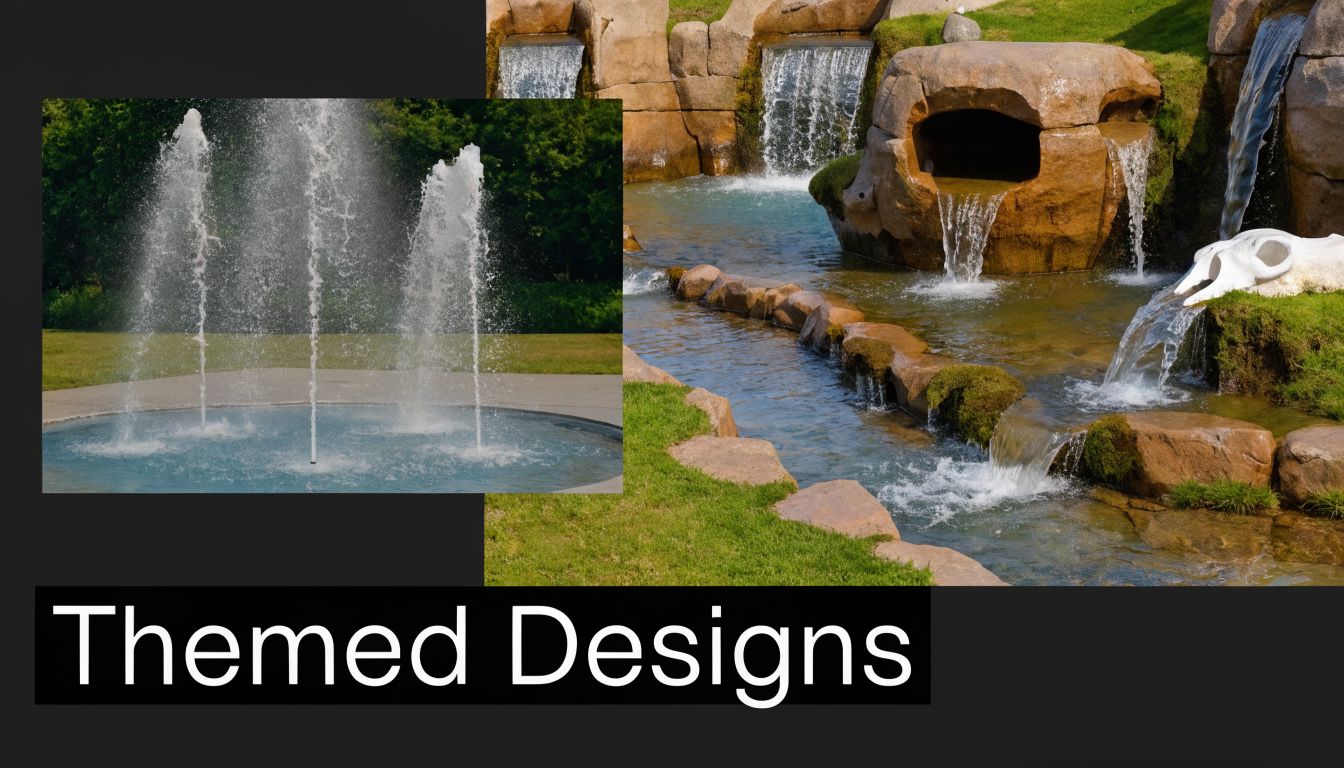
These are often the cleanest fit for civic spaces, aquatic adjacencies, and parks with broad age ranges. Ground-level layouts are easy to approach, visually open for supervision, and effective in high-throughput locations. They also avoid some of the access barriers that can come with raised structures.
They work best when the jet sequence isn't the only attraction. Good layouts combine vertical sprays with changeable effects such as mist, directional nozzles, flush jets, activation points, and edge experiences where children can interact without fully entering the splash zone.
Ground-level systems usually suit sites that need:
These stations support a different style of engagement. Instead of running through spray, children manipulate water directly through gates, weirs, basins, pumps, wheels, and shallow runs. This format is strong in schools, early learning settings, and parks where sensory and collaborative play matter as much as cooling.
It also allows more layered design. You can set a low table for younger users, add standing-height interaction points for older children, and build in side access for wheelchair users. The station becomes a small system to explore rather than a single effect to experience.
A themed play environment often starts here because channels and structures can be shaped into narratives. For inspiration on storytelling through equipment and surroundings, Kidzspace’s article on creating a themed playground is worth reviewing.
Themed water play works when the theme clarifies the experience. It fails when decoration overwhelms circulation, supervision, or maintenance. A pirate ship with pumps and deck sprays can be brilliant if children can move through it easily and adults can still read the whole space. A creek-bed theme can create calmer, exploratory play if channels, rocks, and planting are detailed for safe access and easy cleaning.
Common theme directions include:
The question isn't "What theme do we like?" It’s "What theme helps this space feel coherent and usable?"
Design test: If the themed element makes supervision harder, creates pinch points, or adds maintenance with no play value, remove it.
Fully bespoke builds can be excellent, but they also carry more design coordination, longer approvals, and more procurement complexity. For many schools and councils, a modular approach is the smarter path. Standardised jets, arches, buckets, valves, tables, and spray forms can be configured to suit the footprint while keeping engineering and replacement parts manageable.
That doesn't mean the result looks generic. A good designer can combine modular water elements with custom site design, colour selection, signage, planting, and shade to create a site-specific result.
A practical way to narrow options is to choose one lead experience and one supporting experience. For example:
| Lead experience | Supporting experience | Best suited to |
|---|---|---|
| Ground sprays | Quiet edge basin | Parks with broad public use |
| Hand pump and channels | Low jet cluster | Schools and early years settings |
| Themed central structure | Peripheral tactile elements | Destination parks |
| Water table sequence | Mist and runoff play | Inclusive sensory-focused spaces |
Video can help teams visualise how movement and spacing affect the final result:
The most successful water play stations don't try to include everything. They choose a clear play character, support it with the right components, and leave enough room for children to invent the rest.
When a water play project goes wrong, it's rarely because the concept was too ambitious. It’s usually because the team treated safety and access as a sign-off item instead of a design driver. In Australian projects, that approach doesn't hold up. Compliance decisions affect the surface, the hydraulics, the hardware, the fall zones, the maintenance regime, and the way children of different abilities use the space.
Certified water play installations in Australia recorded an incident rate of 0.02 per 100,000 users, compared with 0.15 for dry playgrounds, according to the ACCC Annual Playground Safety Report 2025. That result matters because it shows what happens when design, certification, and maintenance are taken seriously. It isn't an argument for complacency. It's an argument for doing the fundamentals properly from the start.
In practice, safety review should begin before any feature selection. Ask what children can climb, where they can fall, what becomes slippery when saturated, where adults will stand, and how the site behaves during peak use. Once the water is on, every small detailing decision matters more.
The core compliance lens for water play stations in Australian playground contexts includes AS 4685.6-2017. One important implication is surfacing and impact performance. Where structures exceed relevant height thresholds, impact attenuation isn't optional. The standard links directly to injury reduction through correctly specified surfacing, and poor surface choice can push deceleration forces outside safe limits.
A water play zone must handle two conditions at once. It needs grip under constant wet use, and it must still perform if falls occur. Those are not the same thing.
The strongest results usually come from selecting surfaces that are:
Playground Association Australia field testing in 2022 found that compliant impact-attenuating surfaces directly reduced head injury risk in falls, with certified wetpour or rubber tile systems maintaining safer force levels in wet conditions on tested installations. That’s why surfacing needs to be specified as part of the play system, not as a late-stage ground treatment.
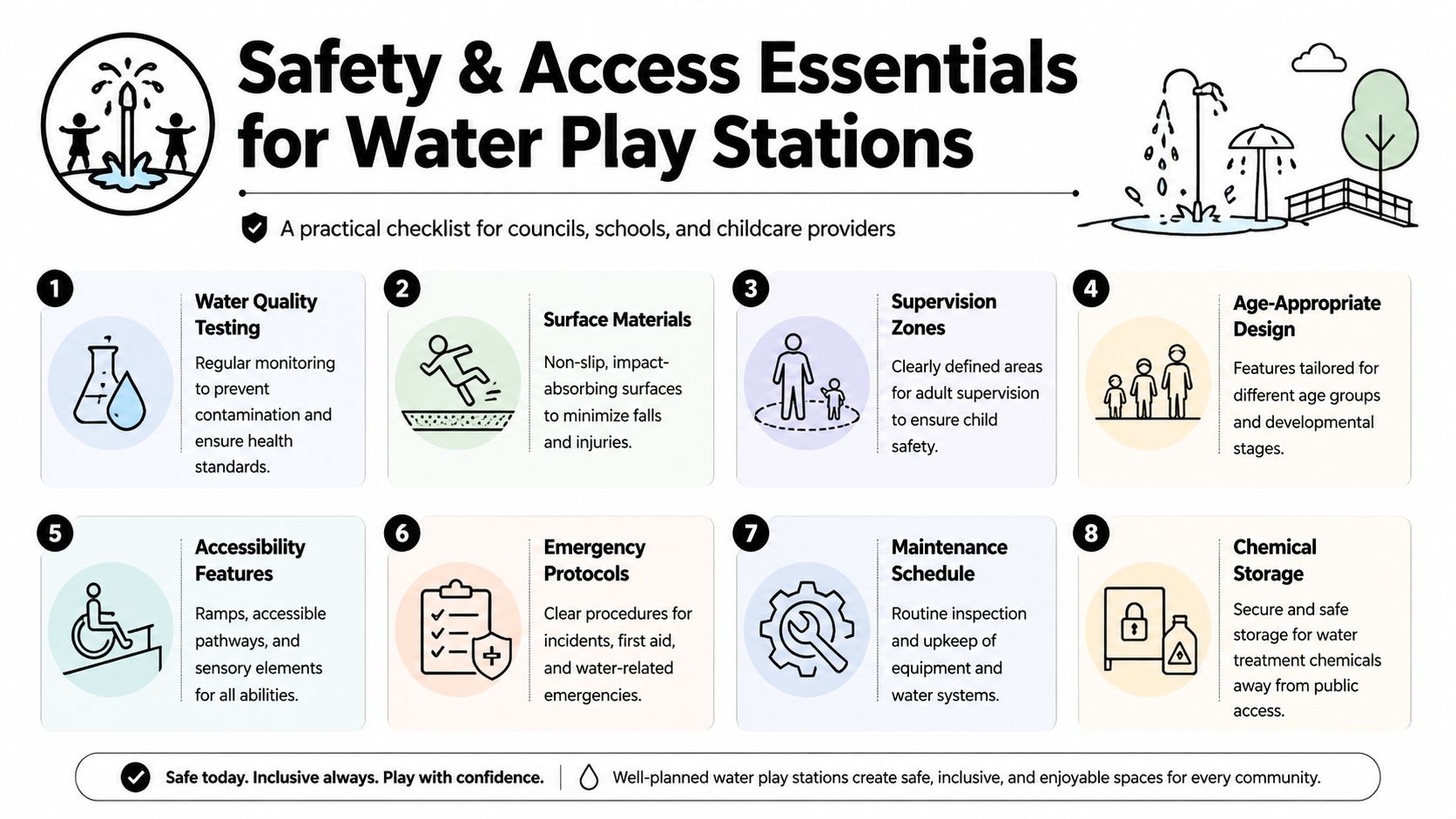
Inclusive water play isn't achieved by adding one accessible route and stopping there. A layout that welcomes all gives children different ways to participate. Some will seek high-energy sprays. Others want side-entry interaction, quieter sensory input, or a seated position with meaningful reach to controls and water effects.
A stronger inclusive design brief usually includes:
A water play station becomes more inclusive when children can choose how to engage, not when everyone is pushed through the same experience.
Good supervision isn't only about staffing levels. It's a design outcome. Dense structures, hidden corners, decorative walls, and level changes can all interfere with clear sightlines. Open plans, perimeter seating, and obvious entry points usually perform better in schools and public parks.
Operational safety also depends on routines. Councils and schools should establish written processes for shutdowns, inspections, water quality checks, surface cleaning, and incident response. If chemicals are part of the treatment system, storage and handling need to be separated from public zones and managed under the site's broader safety framework.
A practical pre-opening checklist should cover:
The safest water play stations don't feel clinical. They feel effortless because the risk has been designed out before the first child arrives.
Material selection decides whether a water play station ages gracefully or becomes a maintenance problem with good branding. In Australian conditions, that decision is sharper because UV, heat, chlorinated water, windborne salt, and heavy public use all attack the same installation at once. The cheapest material on day one often becomes the most expensive line item over the asset life.
For public water play, corrosion resistance isn't a luxury feature. It's a baseline requirement in many settings, especially near the coast or where chlorinated water is part of the operating system. The Australian Building Codes Board NCC Volume 1 requires IPX5 water ingress protection and SS316 stainless steel fittings for public water play applications, and Standards Australia testing in 2024 found a 98% failure rate in galvanised alternatives after 18 months at coastal QLD and NSW sites, compared with less than 2% for SS316, as noted in the ABCB and Standards Australia 2024 guidance.
That result lines up with what many asset managers already know from broader parks infrastructure. Galvanised components can look acceptable at handover, then deteriorate rapidly once chlorides, constant moisture, and cleaning cycles take hold. Pitting, staining, and coating breakdown aren't just cosmetic. They create hygiene and structural concerns, and they drive premature replacement.
Australian water play stations spend their lives exposed. Plastics that perform adequately indoors or in mild climates can become brittle, faded, or surface-chalked under sustained sun. That's why UV-stabilised HDPE remains a strong material choice for panels, guards, and some interactive forms.
The benefit isn't only colour retention. Stable material reduces cracking, sharp edge formation, and the gradual decline in perceived quality that often makes a newer asset look tired before its time. In practical terms, a water feature that still presents well after repeated summers is more likely to keep public confidence and require fewer reactive repairs.
There’s often strong demand for stone-look edges, creek-bed forms, or sculptural thematic pieces. These can be effective, but they deserve close review. Surface texture, sealing method, repairability, and slip behaviour under algae or residue all need to be understood. A beautiful finish that can't be cleaned easily or patched cleanly becomes a liability.
When specifying decorative components, ask:
Specifier’s note: The most durable finish is the one the maintenance team can actually inspect, clean, and repair without specialist drama.
| Material | Primary Use | Corrosion Resistance | UV Stability | Maintenance Level |
|---|---|---|---|---|
| SS316 stainless steel | Spray arches, fittings, nozzles, structural elements | Excellent | Strong in exposed conditions when correctly finished | Low |
| Galvanised steel | Budget structural or support elements | Poor in demanding wet or coastal conditions | Variable | High |
| UV-stabilised HDPE | Panels, guards, interactive forms | Good where metal corrosion isn't the main issue | Excellent when properly specified | Low |
| Rubber wetpour and compliant tiles | Surfacing in active play zones | Not applicable as structural corrosion measure | Varies by formulation and installation quality | Moderate |
| Decorative concrete or stone-look composites | Themed basins, edging, creek forms | Depends on reinforcement and finish system | Generally stable, but finish quality matters | Moderate to high |
The durable choice is usually a combination, not a single hero material. SS316 where water and corrosion risk are highest. UV-stabilised HDPE where touch, colour, and form matter. Proven compliant surfacing under and around active zones. Decorative materials only where their maintenance burden is justified by actual play value.
Procurement teams should ask suppliers for test evidence, finish details, replacement part strategy, and cleaning guidance. If a specification is vague on grade, coating, or ingress protection, assume the asset life will be shorter than the brochure suggests.
A water play station can look simple on a concept sketch and become complex the moment the services engineer, certifier, site contractor, and maintenance team get involved. That’s normal. These projects sit at the intersection of play design, hydraulics, drainage, electrical coordination, and public risk management. The cleanest installations are the ones that settle those constraints early.
Before locking in features, assess how the ground, services, and surrounding circulation will affect the final build. A well-designed station can still underperform if drainage falls are wrong, nearby paths create runoff issues, or plant beds receive overspray they weren't designed to handle.
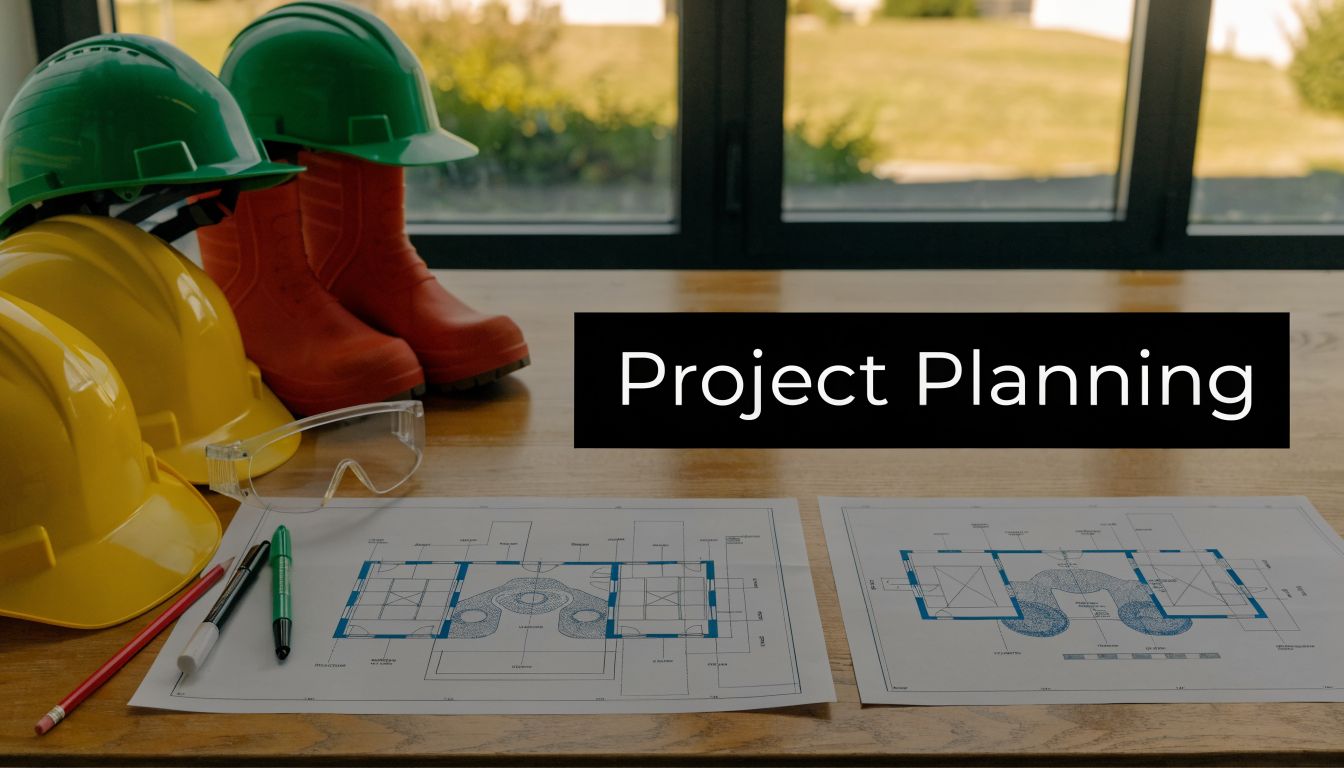
Early planning should cover:
A common mistake is hiding plant and controls too well. If maintenance staff can't access pumps, filters, valves, and isolators comfortably, routine servicing gets delayed and downtime rises.
The major operational decision is whether the station will use a flow-through arrangement or a recirculating system. Neither is universally better. The correct choice depends on site constraints, local rules, staffing capability, and how often the station will operate.
A practical comparison looks like this:
| System type | Where it works well | Main advantage | Main trade-off |
|---|---|---|---|
| Flow-through | Smaller sites, simpler operational models | Simpler plant and treatment setup | Higher water demand and tighter restriction exposure |
| Recirculating | Larger or heavily used installations | Better long-term water control and operational resilience | More complex treatment, monitoring, and plant requirements |
Water conservation now shapes that decision more than it once did. The Australian Water Association reported in 2025 that 68% of councils face challenges integrating interactive water features under tightening restrictions, and newer splash pad projects after 2024 have prioritised greywater recycling and low-flow pumps to align with rules such as NSW’s Water Management Act 2000, as outlined in the Australian Water Association 2025 water feature guidance.
That doesn't mean every site needs a complex recycling setup. It does mean water use must be addressed in the concept phase, not left for value management at the end.
If no one owns the operating model, small problems become long shutdowns. Pumps need inspection. Filters need cleaning. Surfaces need washing. Jets need checking for blockage or damage. Activation controls need testing. Seasonal changes also matter because schools, councils, and community facilities rarely run the same schedule year-round.
A sensible maintenance framework usually includes:
Daily or pre-use checks
Look for visible damage, trip points, blocked drains, unusual noise, and water clarity issues.
Routine plant inspections
Confirm pumps, valves, controllers, and treatment equipment are functioning as intended.
Surface and fixture cleaning
Remove residue, debris, and biofilm before slip performance declines.
Scheduled safety inspections
Check hardware condition, fasteners, edging, wear points, and access routes.
Seasonal review
Adjust operating hours, shutdown processes, and cleaning frequency to match local climate and usage patterns.
For teams building their internal processes, Kidzspace’s playground maintenance checklist is a practical starting point for broader asset care.
The best maintenance plan is boring. It’s clear, repeatable, assigned to real people, and built into the site's normal operations.
Projects tend to perform well when they keep the operating logic simple. Clear activation methods, straightforward drainage paths, accessible plant, and effective shutoff procedures all reduce disruption.
Projects struggle when they combine ambitious effects with limited staffing, no written maintenance ownership, or unresolved water restrictions. That mismatch is avoidable. A slightly simpler station that stays open consistently will outperform a complex one that spends too much time offline.
A water play station shouldn't be treated as a decorative extra. In the right setting, it becomes a functional piece of community infrastructure. It can cool a site, broaden play value, support sensory and social development, and turn underused space into a destination. That only happens when the project is planned with the same discipline you'd apply to any long-life public asset.
The strongest decisions are rarely the flashiest ones. Good projects match the play style to the site, choose materials that can survive Australian conditions, and resolve compliance early instead of trying to fix it at the end. They also respect the operating reality. Water use, treatment, inspections, shutdowns, and cleaning all need an owner before the equipment is ordered.
If you're assessing options, focus on a short procurement checklist:
That’s how councils, schools, and early learning providers avoid the common trap of buying on appearance alone.
A smart water play project doesn't need to be oversized to be successful. It needs to be well resolved. When compliance, durability, and day-to-day practicality sit at the centre of the brief, the final result tends to do what clients want. It stays open, stays safe, and stays valued by the community.
If you're weighing up a new water play project, Kidzspace can help you turn the early questions into a buildable brief. Their team works with schools, councils, and community organisations on practical playground planning, customisation, and delivery, with a strong focus on durability, safety, and inclusive outdoor environments for Australian conditions.




Copyright © Kidzspace. All Rights Reserved.
Copyright © Kidzspace. All Rights Reserved.