




If you're planning a new school playground or upgrading a council play area, the pressure usually lands in the same place. You need equipment that looks right, survives Australian weather, satisfies safety expectations, and still delivers genuine play value years after installation. That’s where many buying decisions go wrong. Committees compare brochure images and upfront prices, but the ultimate outcome depends on material specification, compliance detail, surfacing, and how well the frame suits the children who’ll use it.
Wooden childrens climbing frames remain one of the most practical options when they’re specified properly. They can sit comfortably in natural surroundings, support a wide range of play types, and avoid the disposable feel that cheaper imported systems often bring. The catch is that timber choice, treatment method, installation method, and standards compliance matter far more in Australia than many generic buying guides admit.
Wood has been part of organised play for a long time, and that history matters when you're specifying equipment for public or educational settings. The jungle gym concept goes back to Sebastian Hinton’s climbing structure, patented in 1920, and companies such as Creative Playthings commercialised wooden play structures for schools and centres from 1945, giving the category an 80-year legacy of continuous development in institutional environments, as outlined in the history of Jungle Gym and early climbing frame development.
That legacy tells us something practical. Wood isn’t a novelty material in play. It’s a proven one.
For schools and councils, the appeal usually comes down to four decisions:
Practical rule: If the frame has to satisfy educators, facilities teams, landscape architects, and risk managers at the same time, timber usually gives the broadest agreement.
We also find timber especially effective when a project wants to support a stronger connection with outdoor environments rather than treating the playground as a bolt-on object. That matters for schools moving toward nature-based play principles, which align closely with the thinking outlined in why nature play is important.
The material alone doesn’t make the project successful. Good outcomes come from matching the frame to age group, choosing timber and treatment suited to Australian conditions, checking compliance against local standards rather than overseas assumptions, and planning surfacing and layout as part of the same decision.
That’s where wooden childrens climbing frames either perform brilliantly or disappoint. The difference isn’t style. It’s specification discipline.
The best climbing frame isn’t the biggest one. It’s the one that asks the right level of challenge from the children using it.
A common mistake in procurement is buying for visual impact rather than developmental fit. A frame that’s too simple gets ignored quickly. A frame that’s too advanced creates supervision issues, bottlenecks, or misuse. Good design starts with the age band, then works outward to circulation, grip points, access options, and the kinds of movement the structure encourages.
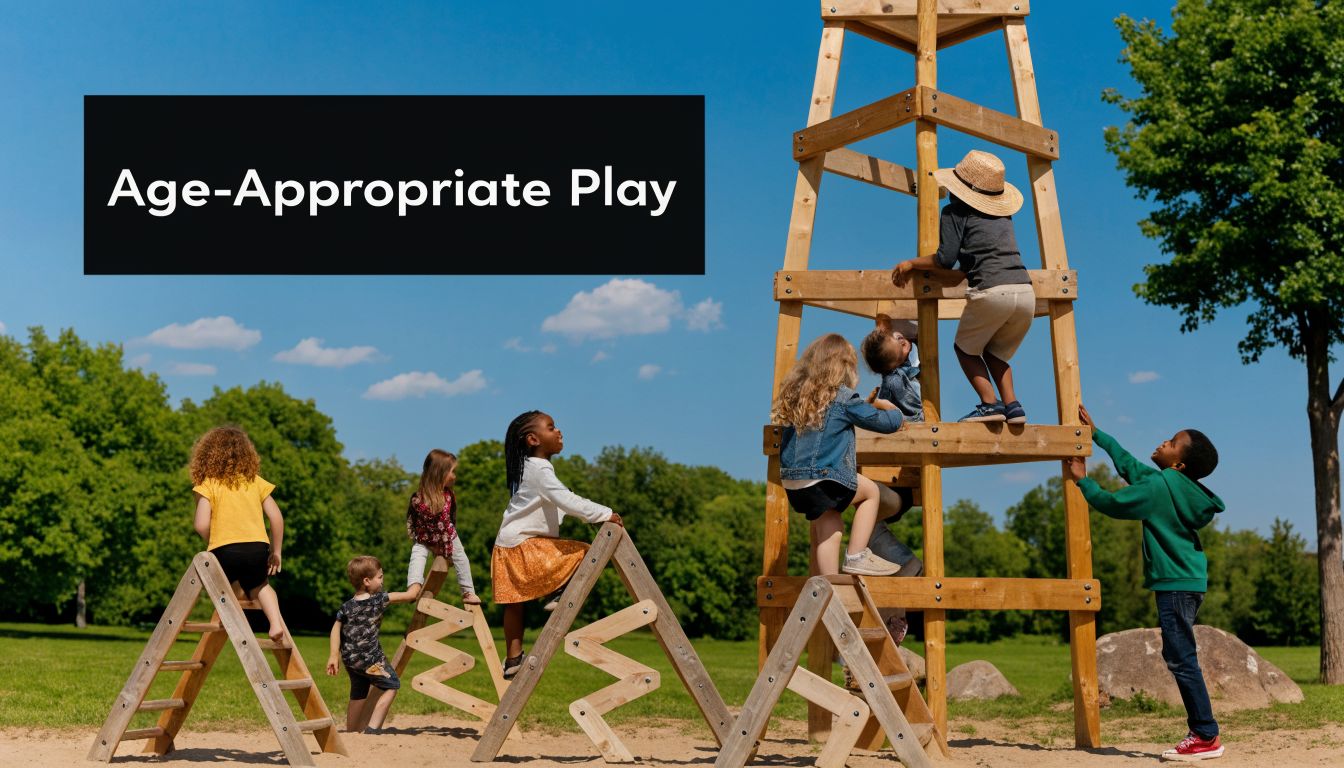
For early learning settings, the strongest designs usually keep the first challenge obvious and achievable. Children need routes they can read easily. Ramps, short ladders, low decks, shopfront-style openings, and wide transfer points tend to work better than tightly packed obstacles.
At this stage, the design should favour:
Younger children don’t just need “safer” equipment. They need equipment that matches how they judge risk.
Once the user group shifts older, the design brief changes. Children want challenge, but challenge needs to be graduated. That means different entry routes, varying levels of difficulty, and enough internal complexity that the frame supports repeated use without becoming chaotic.
For children aged 3+, climbing frames are typically engineered for a daily use weight of 60 kg and tested to a maximum load of 100 kg, with dynamic play capable of generating forces 2 to 3 times a child’s static weight, according to the children’s climbing frame load specification. That matters because the frame isn’t just carrying standing weight. It’s absorbing jumping, swinging, scrambling, and sudden directional change.
In practice, that means we don’t judge a school frame by deck height alone. We look at how the load moves through the whole system.
A strong primary school frame often combines different movement types rather than repeating the same one.
The frame should offer more than one way to succeed. That keeps capable children engaged without excluding those who build confidence more slowly.
Before looking at specific layouts, it helps to see how different play components affect behaviour in real use:
Procurement teams often ask whether they need one large unit or several smaller ones. The answer depends less on the brochure and more on how the cohort uses space.
A school with broad age spread usually benefits from zoning challenge. That could mean one lower, more accessible frame near junior areas and a more complex modular arrangement for older students. A single all-purpose structure can work, but only if it includes clearly legible routes with different challenge levels. Otherwise, older children dominate the difficult elements and younger children retreat to the edges.
When we assess wooden childrens climbing frames, we usually test them against these questions:
Some layouts look impressive but fail quickly in daily use.
A narrow tower with a steep entry and one dramatic exit usually creates queues. Overly vertical structures can also encourage children to invent riskier routes because the intended route doesn’t satisfy them. At the other extreme, a low and repetitive frame may meet a budget but won’t hold attention in a primary school.
The best designs don’t rely on novelty. They rely on progression, circulation, and repeatable challenge.
Timber selection is where many projects either protect their investment or undermine it before installation starts. In Australian conditions, durability isn’t just about whether a frame looks weather-resistant in a brochure. It’s about how that timber performs in UV, rain, heat, humidity, coastal air, and pest pressure over time.
For outdoor installations, chrome-free pressure-impregnation treatment provides a critical barrier against rot, insects, mildew, and fungi, and it removes the need for ongoing painting or staining while supporting all-weather resistance, as described in the Jungle Voyager timber treatment specification. That’s the kind of treatment detail specifiers should ask for early, not after the frame is already selected.
There isn’t one perfect timber for every project. There is only the right timber for the site, budget, maintenance model, and procurement expectations.
Treated pine remains common because it’s widely available, familiar to contractors, and suitable for many school and park applications when it’s treated correctly. It can be a solid choice when the treatment quality is right and the detailing prevents water traps, end-grain exposure, and premature wear at high-contact points.
Native hardwoods enter the discussion when a project places more emphasis on natural durability, appearance, or sustainability narratives tied to Australian environments. They can be especially relevant where councils want a stronger local material story or where the palette needs to blend seamlessly in a more natural reserve or parkland setting.
A good example of timber-led design thinking appears in raised nature play systems such as the timber treetop range, where the structure has to perform visually and structurally in equal measure.
| Timber Type | Durability & Pest Resistance | Maintenance Needs | Upfront Cost | Sustainability |
|---|---|---|---|---|
| Pressure-treated pine | Good when correctly treated for exterior use and detailed well against moisture | Lower routine coating demands when chrome-free pressure-impregnated | Often lower than hardwood options | Stronger when sourced from responsibly managed forests |
| Native hardwood such as Blackbutt | Well suited where termite resistance and bushfire-conscious specification matter | Depends on finish approach and exposure conditions | Often higher upfront | Strong option for projects prioritising local material narratives |
| Untreated softwood | Poor fit for exposed public play settings | High maintenance burden and shorter service confidence | May appear cheaper at purchase | Weak long-term choice because replacement risk rises |
The questions matter more than the species name on its own. We advise checking the following before sign-off:
Cheap timber rarely stays cheap once maintenance crews start chasing splinters, movement in joints, or recurring surface deterioration.
Generic overseas advice often treats “outdoor use” as a single category. Australian sites don’t work like that. A coastal reserve, an inland school, and a bushfire-prone regional council site create very different demands.
That’s why climate-appropriate specification matters. In some projects, the priority is moisture resistance and stability. In others, termite resistance or bushfire-aware material selection becomes central. If a project sits in a sensitive natural setting, the timber may also need to support local biodiversity and sustainability expectations rather than merely surviving the weather.
Three specification habits usually lead to better outcomes:
What doesn’t work is choosing timber by appearance alone. The warm look of wood is valuable, but it isn’t a durability strategy.
Compliance should never be treated as paperwork at the end of the project. For wooden childrens climbing frames in Australia, it has to shape the decision from the start. The reason is simple. Local conditions, local liability, and local standards all matter more than an overseas certificate attached to an imported product.
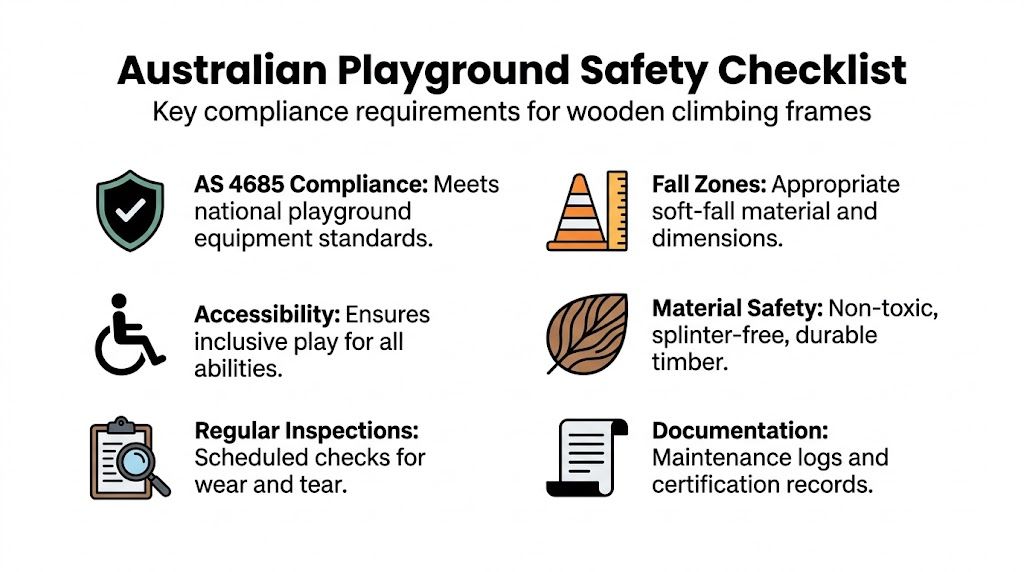
Many generic guides barely mention AS 4685, yet Australian data makes the stakes clear. There are over 1,200 playground-related injuries annually in Australia, with 28% from climbing equipment falls, and up to 65% of imported wooden frames fail local audits, which is why certified local builds matter, as noted in the Australian climbing frame compliance context.
The most expensive playground problems usually start with assumptions. A buyer sees a compliant-looking frame online, notes that it has testing to another standard, and assumes adaptation for Australia will be minor. It often isn’t.
AS 4685 affects how we think about:
These aren’t abstract technicalities. They influence whether a frame can be safely installed on your site in the form advertised.
For a clearer overview of how Australian compliance expectations apply across school settings, the school playground safety standards guide is a useful reference point.
A safe product isn’t just one that was built well. It’s one that arrives with evidence.
If a supplier can’t explain fall zones, surfacing assumptions, and inspection expectations in plain language, the risk doesn’t disappear. It shifts to the school or council.
Accessibility is often misunderstood as just adding a ramp. Inclusive play is broader than that. It means children with different physical, cognitive, sensory, and social needs can participate meaningfully in the space, even when they don’t use every raised element the same way.
That affects how the frame connects to the site around it.
Provide graduated access
Include low entry points, easy-transfer elements, and activities that start at ground level rather than making elevation the only valuable experience.
Design for participation nearby
Deck-level access is useful, but so are adjacent tactile panels, role-play points, balance elements, and social spaces that let children join shared play without waiting on one difficult route.
Use clear circulation
Children benefit when routes are visually legible. So do supervising adults, support staff, and carers.
Choose surfacing with access in mind
A surfacing system that works for impact attenuation but limits mobility access can undermine otherwise good inclusive design.
The recurring problems are predictable.
Some projects buy the frame first and ask surfacing questions later. Others focus on deck height and forget how children fall, run, and gather around the equipment. Another frequent issue is failing to consider nearby hazards such as edges, fencing conflicts, tree roots, poor drainage, or pinch points created by surrounding furniture.
A compliant frame on a poorly prepared site is still a poor outcome.
Schools and councils are in a better position when they ask detailed questions early and insist on local suitability. That doesn’t mean every imported product is unusable, but it does mean the burden of proof must sit with the supplier, not the client.
Compliance is not optional. It’s the framework that protects children, site managers, and the organisation responsible for the space.
A good climbing frame can still fail operationally if the site layout is careless. Placement affects supervision, drainage, circulation, wear patterns, and how safely children enter and leave the equipment. Installation should be treated as part of the design, not a final logistics task.
Research tracking climbing frame injury trends over a 14-year period found that falls from publicly owned climbing equipment were the major cause of injury, with a notable increase in lower arm injuries, according to the playground injury trend study on PubMed. For specifiers, the lesson is straightforward. Surfacing, fall zones, and layout decisions carry real consequences.
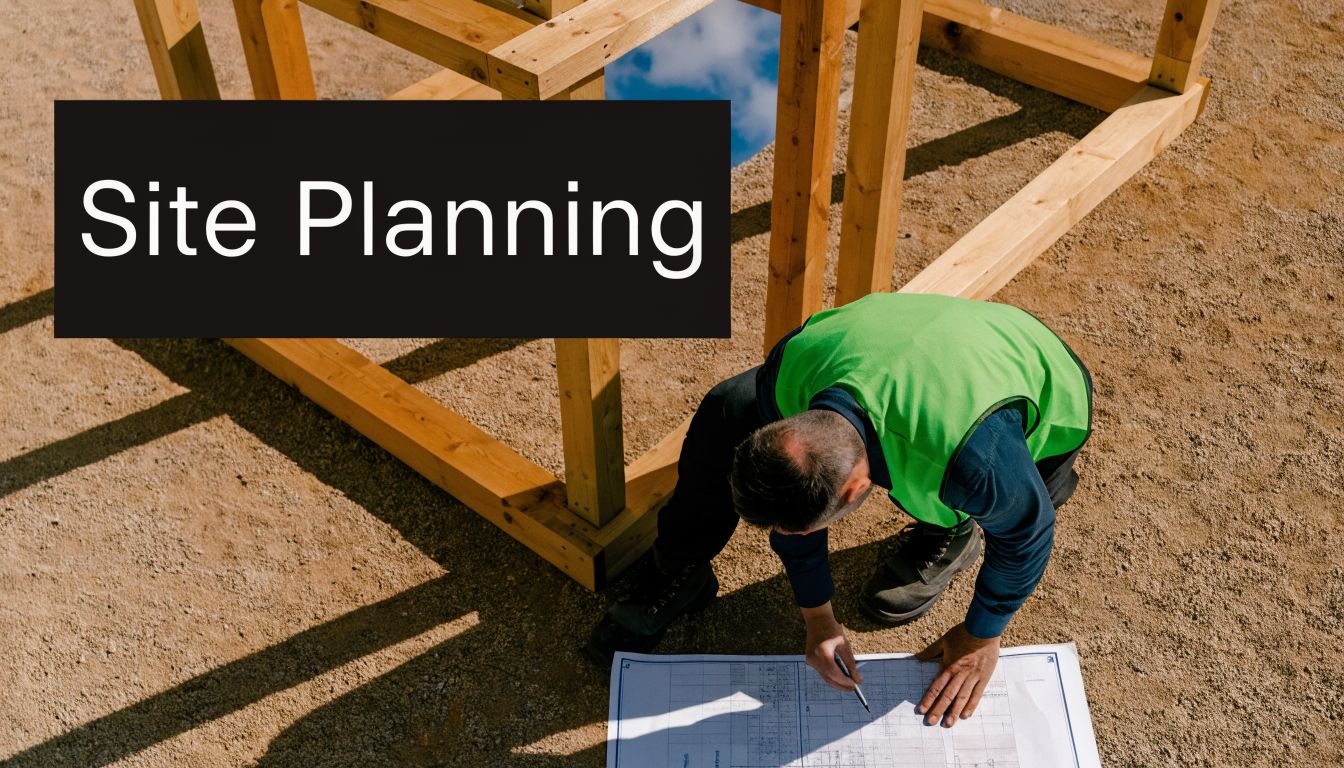
The first step is to assess how the play area functions across a normal day. We look at sun exposure, drainage lines, wind, approach paths, and where adults naturally stand during supervision. A frame placed in the wrong location will create issues even if the product itself is excellent.
Key site questions include:
Impact attenuation is the obvious safety issue, but the surfacing decision also affects maintenance workload, accessibility, and visual quality.
A neat-looking surface at handover isn’t enough. The right question is how that surface will perform after heavy use, rain, and school maintenance routines.
Many avoidable issues happen because the works are sequenced badly. Footings, drainage, edging, surfacing depth, and equipment clearances need to line up with the design intent.
A practical installation sequence usually looks like this:
Three things come up repeatedly. First, placing the frame where natural drainage is poor. Second, underestimating the space children use around the frame, not just on it. Third, ignoring shade, which can affect comfort, supervision patterns, and surface temperature.
The strongest playground layouts feel obvious once built. Children move through them naturally, adults can supervise without chasing blind spots, and maintenance teams can access the area without constant repair work.
The most successful playground purchases keep working long after the opening photos are taken. That comes from linking three decisions that are often treated separately. Play value, maintenance planning, and total cost of ownership belong in the same conversation.
A frame that supports only one type of movement won’t hold interest. A frame that’s imaginative but difficult to maintain becomes a facilities problem. A frame that looks cheap and generic can also make it harder to meet broader placemaking or curriculum goals.
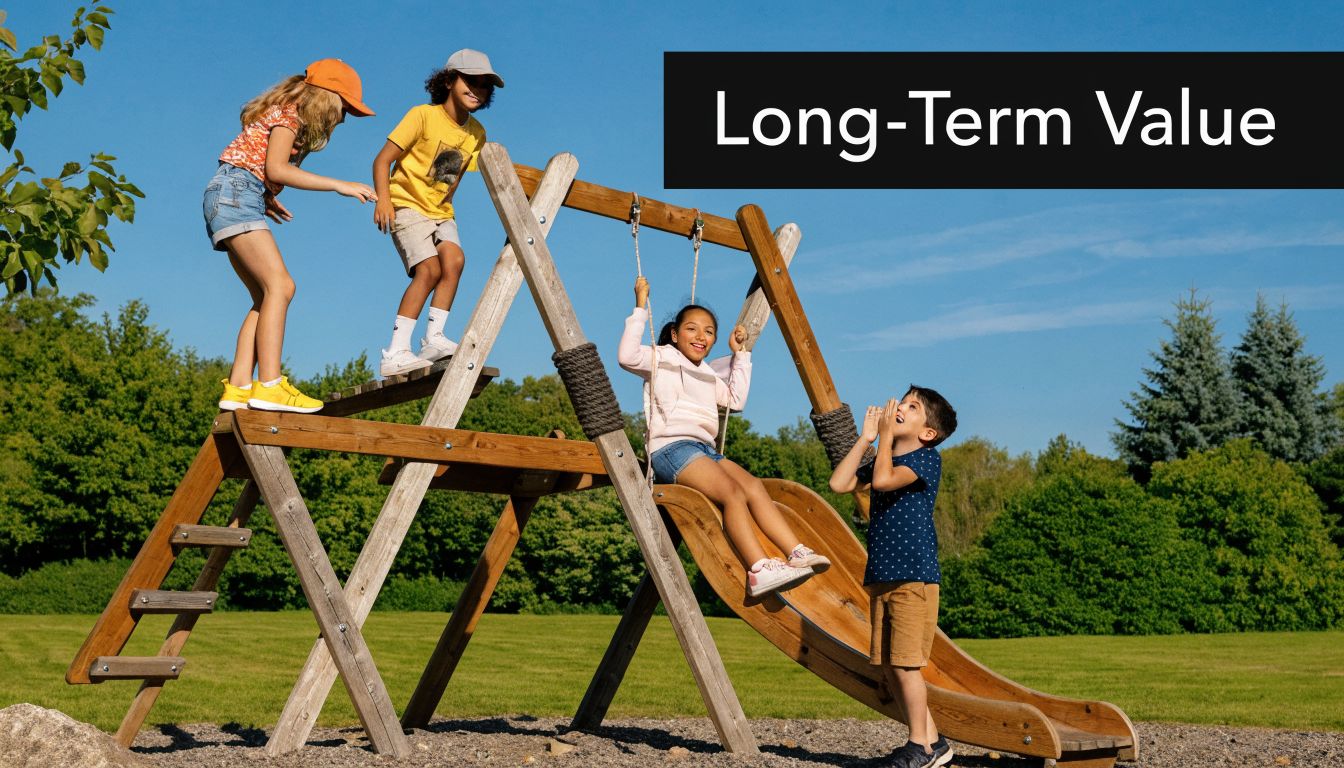
Wooden childrens climbing frames perform best when they’re more than a climbing task. The stronger projects combine physical challenge with role play, lookout points, hide spaces, bridges, tactile moments, and integration with the outdoor surroundings.
That’s why themed and nature-based designs often last better in real use. They don’t depend on novelty alone. They give children multiple ways to interpret the space.
Routine management shouldn’t be complicated, but it should be deliberate.
The cheapest frame on purchase day can become the most expensive frame to own if every wet season creates another maintenance job.
An emerging trend for 2026 is the use of native Australian timbers and biodiversity-compliant designs, driven by sustainability mandates. Specifying locally sourced, termite-resistant hardwoods such as Blackbutt can align with council environmental goals and may support eligibility for Green Infrastructure grants, as noted in the verified project brief.
That matters because sustainability now influences more than material selection. It also shapes grant applications, design storytelling, and how a council or school presents the value of the project to its community.
When a project team thinks in lifecycle terms, the brief improves. Instead of asking, “What can we afford right now?”, the better question becomes, “What will still be performing, looking right, and supporting good play years from now?”
There isn’t a single universal lifespan because performance depends on timber specification, treatment quality, site exposure, installation quality, maintenance discipline, and how heavily the frame is used. In practice, properly specified commercial timber equipment should be selected with long-term operation in mind, not short replacement cycles. The safer approach is to assess durability through material treatment, joinery quality, replaceable parts, and documented maintenance requirements.
For commercial and public settings, DIY installation usually creates unnecessary risk. The issue isn’t just assembly. It’s footing accuracy, fall zone setup, surfacing integration, compliance evidence, and future liability. Schools and councils are far better protected when qualified installers complete the work and documentation is retained properly.
Ask for clear evidence on Australian standards suitability, installation method, surfacing assumptions, timber treatment, maintenance requirements, and replacement-part support. If the answers stay vague, the procurement risk rises quickly. A serious supplier should be able to explain the practical consequences of each requirement without hiding behind marketing language.
Start by broadening the definition of participation. Inclusive design isn’t only about getting every child to the highest deck. It’s about offering meaningful play at different heights, with different challenge levels, and through different sensory and social experiences. Ground-level activities, transfer-friendly access, clear circulation, and thoughtful surfacing all help.
The usual delays come from late design changes, unresolved surfacing choices, unclear site conditions, and compliance questions raised after procurement instead of before it. Projects move more smoothly when the site layout, drainage assumptions, material specification, and standards review are all settled early.
If the setting is a school, council, or childcare site, durability and compliance should come first. Appearance matters, but appearance without local suitability won’t age well. The strongest value usually comes from choosing a frame that meets standards, fits the users, handles Australian conditions, and supports manageable maintenance over time.
If you're weighing options for a school, council, or community play project, Kidzspace can help you assess site conditions, compliance priorities, custom design options, and long-term value before you commit to a build. A practical consultation early in the process often prevents the expensive mistakes that show up later.


Copyright © Kidzspace. All Rights Reserved.
Copyright © Kidzspace. All Rights Reserved.