


Picking the right slide is about so much more than its shape or colour. It's one of the most critical decisions you'll make for any play space, directly impacting safety, accessibility, and whether the playground becomes a true community asset. A well-chosen slide for a playground can be the difference between a good playspace and a great one.
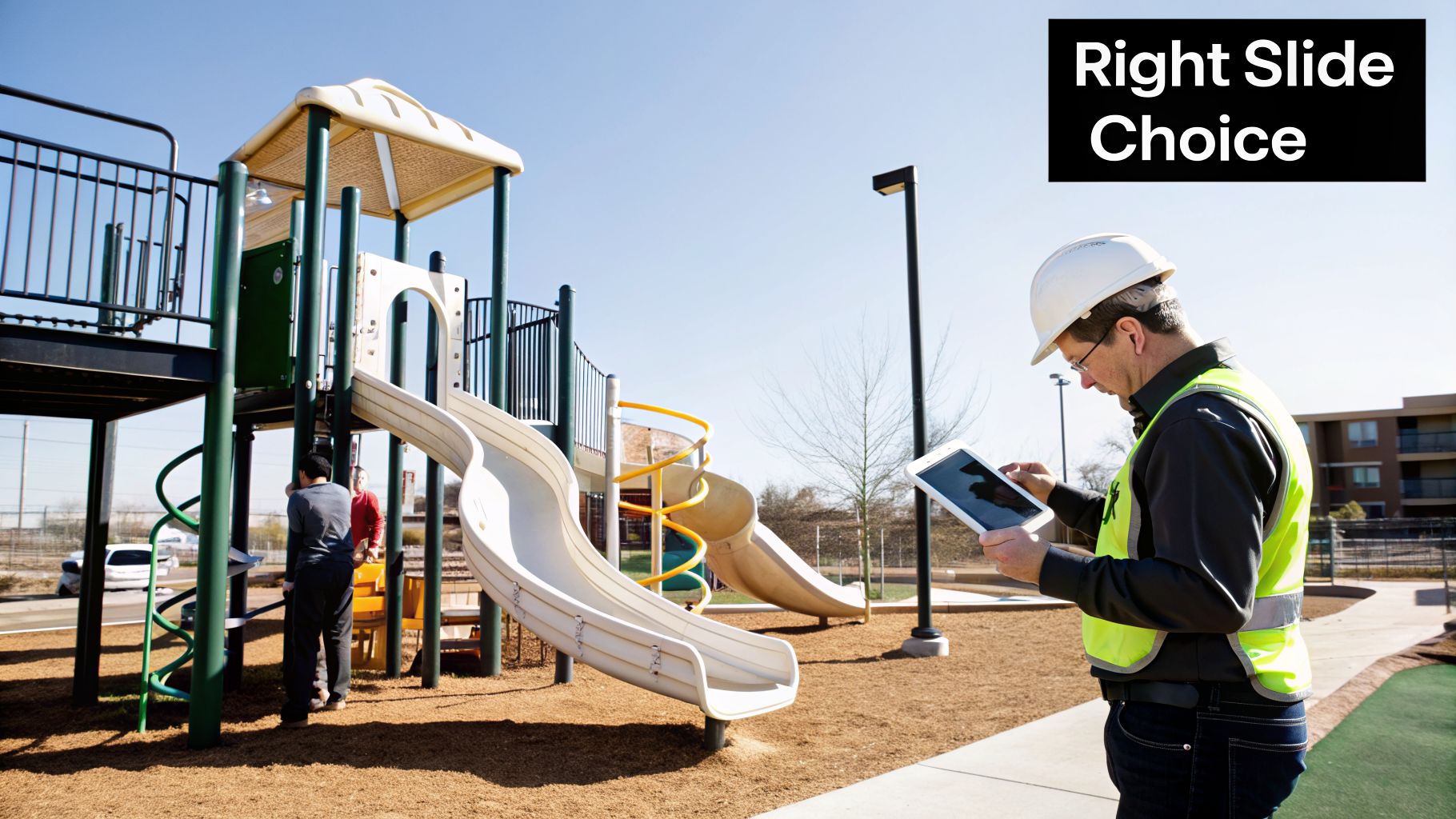
As a professional working on projects for schools, councils, or public spaces, you know the slide is often the hero piece. It’s the first thing kids run to and the feature that creates lasting memories. Get this decision right, and you foster imaginative, active, and inclusive play for every single child who visits.
This guide is designed to walk you through the practical details that matter. We'll dig into how every element—from the material finish and the angle of descent to the design of the entry point—shapes the final experience. Our goal is to give you the confidence to make smart, informed choices that match your project's specific needs.
We’re going to tackle the key questions and considerations that come up on every project, from the initial concept right through to long-term upkeep. This will help you ensure your investment not only looks fantastic on day one but also delivers value for years to come. Here’s a look at what’s inside:
By the end, you'll have a clear roadmap for specifying playground slides that don't just tick the safety boxes, but become a beloved centrepiece of your community—a place that genuinely supports healthy development and social connection.
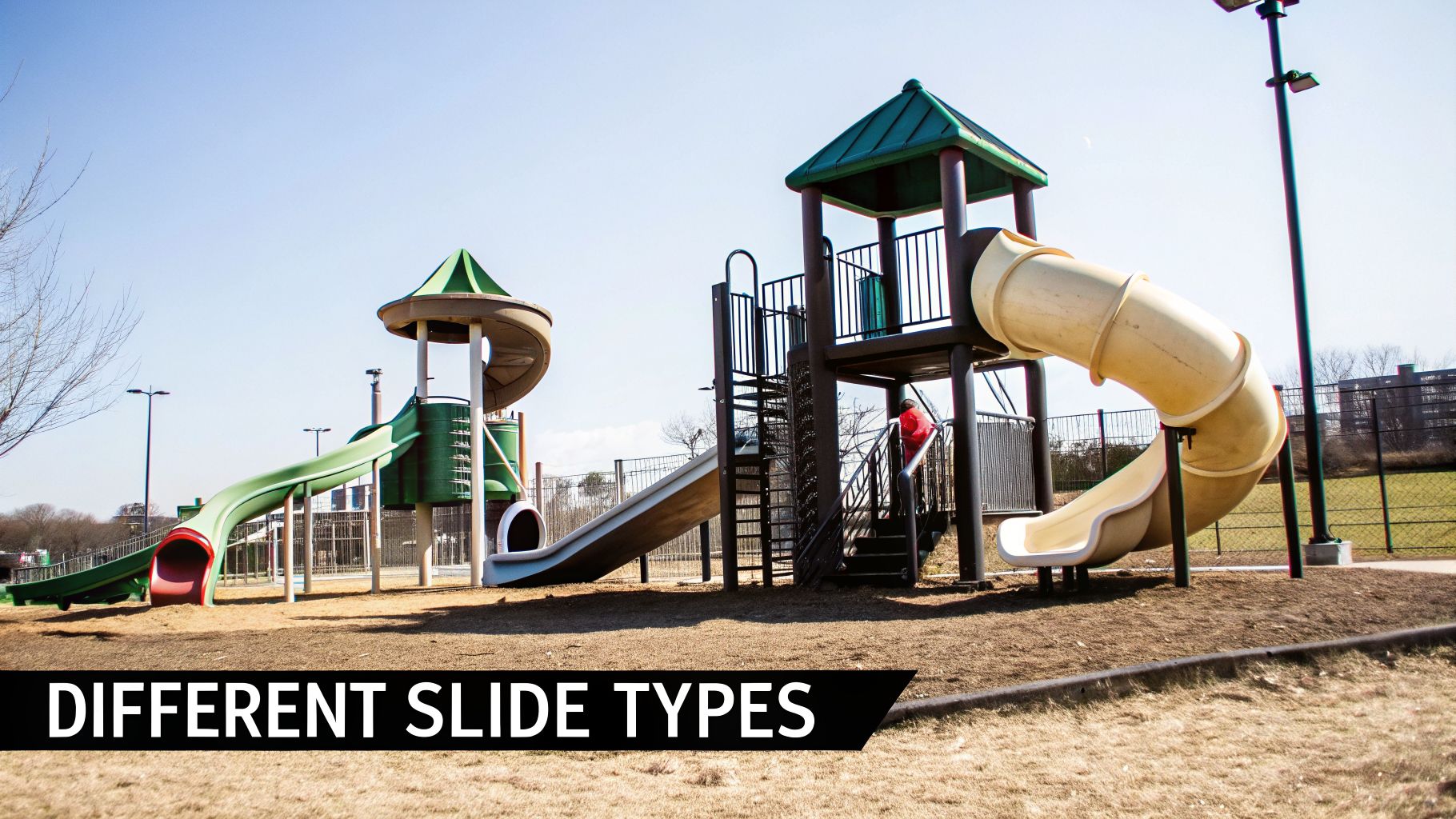
The world of playground slides is far more varied than you might think. Every different shape and style offers a unique physical and sensory ride. When you’re specifying a slide, you aren't just picking a piece of equipment; you're matching its design to your users' age, your site's footprint, and the kind of play you want to encourage.
A good way to think about it is like curating rides for a theme park. You need something for everyone. A simple, straight slide is your classic carousel—safe, predictable, and fantastic for building confidence in the littlest visitors. A towering spiral slide, on the other hand, is the star rollercoaster, delivering a fast, thrilling ride for older, more adventurous kids.
Getting this mix right is the key to a play space that feels both exciting and inclusive. Let’s dive into the most common slide types you’ll come across.
This is the slide everyone pictures first. The straight slide is a true playground icon for a reason. Its simple, direct path from top to bottom is perfect for younger children still finding their feet and getting comfortable with heights and speed. The experience is predictable, which takes the anxiety out of that first push-off.
Because of their simple design, straight slides are often lower to the ground, making them a natural fit for play structures in early learning centres and junior schoolyards. They’re a dependable, essential part of any play space, giving kids a solid foundation before they move on to bigger challenges.
When you want to dial up the fun factor, nothing beats a spiral slide. These slides twist around a central pole, packing a much longer, more exciting ride into a very small footprint. This makes them a brilliant choice for adding major play value to sites where you're short on ground space.
Spiral slides really come into their own on taller play structures, where the extra height generates the momentum for a genuinely thrilling descent. The twisting motion is great for a child's vestibular system, helping develop their sense of balance and spatial awareness. They’re definitely geared towards older kids who have mastered the basics and are looking for more of a challenge.
When specifying a spiral slide, pay close attention to the rotation and where it ends. The design must guide children into a wide-open safety zone, well clear of other equipment or foot traffic.
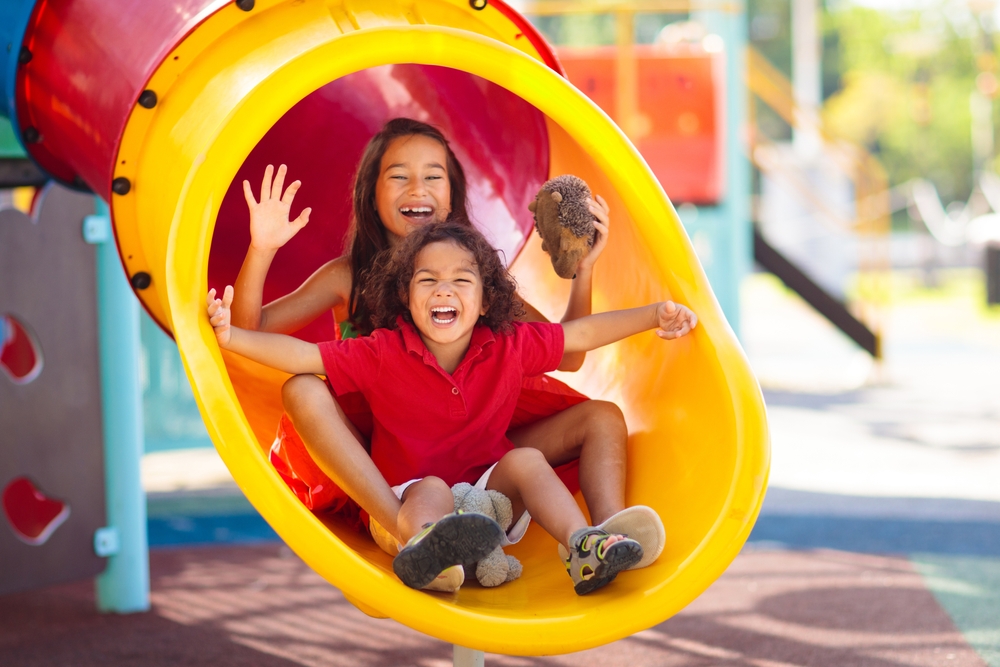
Tunnel slides, or tube slides, change the game by offering a totally different sensory experience. Being fully enclosed creates an incredible feeling of speed and adventure. With no outside reference points, the ride feels faster and has a touch of mystery that kids love.
This enclosed design also comes with a major safety advantage: it completely contains the rider, removing any risk of falling from the sides. This is a huge plus for very tall play towers where an open slide could feel intimidating or pose a real risk.
You can find tunnel slides in both straight and spiral shapes, giving you plenty of design flexibility.
A wave slide adds a series of gentle bumps to the classic straight slide design. These soft undulations create a fun, rhythmic, up-and-down motion that adds an extra layer of sensory feedback without being too intense.
This makes the wave slide a fantastic all-rounder. It’s more exciting than a straight slide but less dizzying than a spiral, so it appeals to a really broad age range. Those gentle "whoops" help children practise their balance and body control in a fun, safe way, making it a hugely popular choice for community parks and primary schools.
Think of your slide's material as its very DNA. It determines how long it will last, how safe it is on a scorching summer day, and how it looks and feels to the children using it. Making the right choice here is critical, especially under the harsh Australian sun.
What works for a cool, shaded park in Hobart might be a genuine safety hazard in an open schoolyard in Perth. This decision directly affects everything from day-to-day comfort to your long-term maintenance budget. It really comes down to a careful balance between durability, our unique climate, and the kind of play experience you want to create.
The two main players you’ll be choosing between are modern rotationally-moulded plastic and classic stainless steel. Each has its own set of pros and cons that we’ve seen play out in thousands of parks and schools across the country. Let’s get into the specifics so you can make an informed choice.
High-Density Polyethylene, or HDPE, is what you see in most modern playgrounds, and for very good reason. It’s made using a process called rotational moulding, which spins a mould to create a perfectly seamless, single-piece slide. This process gets rid of any weak spots or joints, resulting in a consistently thick and incredibly tough product.
For anyone specifying a slide in Australia, HDPE’s biggest advantage is how it handles our sun.
For the vast majority of Australian playgrounds, particularly sun-drenched public parks and school ovals, a high-quality, UV-stabilised HDPE slide is the most practical and safest bet. It hits the sweet spot between durability, user comfort, and design freedom.
There's no denying the sleek look and incredible toughness of stainless steel. It offers a classic aesthetic and a fast, thrilling ride that older kids love. A properly constructed stainless steel slide is practically bulletproof, standing up to vandalism and heavy use for decades.
However, its greatest strength is also its biggest weakness in a warm climate: how it handles heat.
This doesn't mean stainless steel is obsolete. It’s still an excellent choice, but only in very specific situations.
When to Specify Stainless Steel:
To help you weigh these options at a glance, here’s a simple comparison.
| Material | Durability | Heat Resistance | Maintenance | Best For |
|---|---|---|---|---|
| HDPE Plastic | High. Resists cracking and fading with UV stabilisation. | Excellent. Stays cooler in direct sun. | Low. Easy to clean, colours are integrated. | Most outdoor playgrounds, schools, and public parks. |
| Stainless Steel | Exceptional. Vandal-resistant and extremely long-lasting. | Poor. Can become dangerously hot in direct sun. | Low. Can be prone to minor surface scratches. | Fully shaded areas, indoor play centres, and water parks. |
Ultimately, the material you choose has to work for your specific site. The safety of the children who'll be using it and the longevity of your investment depend on getting this right.
Of course, what they land on is just as important as what they slide down. A compliant and safe base is essential, and you can learn all about the best options in our comprehensive guide to wet pour rubber surfacing.
When you're choosing a playground slide, the slide itself is only half the story. The real work—the part that guarantees kids have fun and go home safe—is in the planning. It’s about creating a safe bubble around the slide and making sure it fits perfectly into its environment.
Here in Australia, we work to the AS 4685 series of standards for playground equipment. These aren't just guidelines; they're the rulebook for making a playspace safe. Getting your head around them is essential, as they cover everything from the slide's exit to the crucial fall zone that must surround it.
Think of a fall zone as a slide's personal safety bubble. It's a non-negotiable clear space that has to surround the slide, especially at the exit. This area must be completely free of other equipment, paths, or any obstacles. Its one job is to provide a safe landing for a child who might fall off or come flying out the end with a bit too much enthusiasm.
Figuring out the size of this zone isn't a guessing game. The standards give you clear formulas based on the slide's height. A slide with a free fall height of 1.5 metres, for instance, will need a different fall zone than a taller one at 2.5 metres. Once you've mapped out the zone, it has to be filled with certified impact-absorbing material, what we all know as 'soft fall'.
A common and dangerous mistake is just throwing down some bark chips and calling it a day. The soft fall material and its depth must be certified to cushion a fall from the specific height of your slide. Anything less just won't cut it.
Your choice of material for the slide itself also plays into how you plan the site, particularly when you think about where the sun will be during the day.
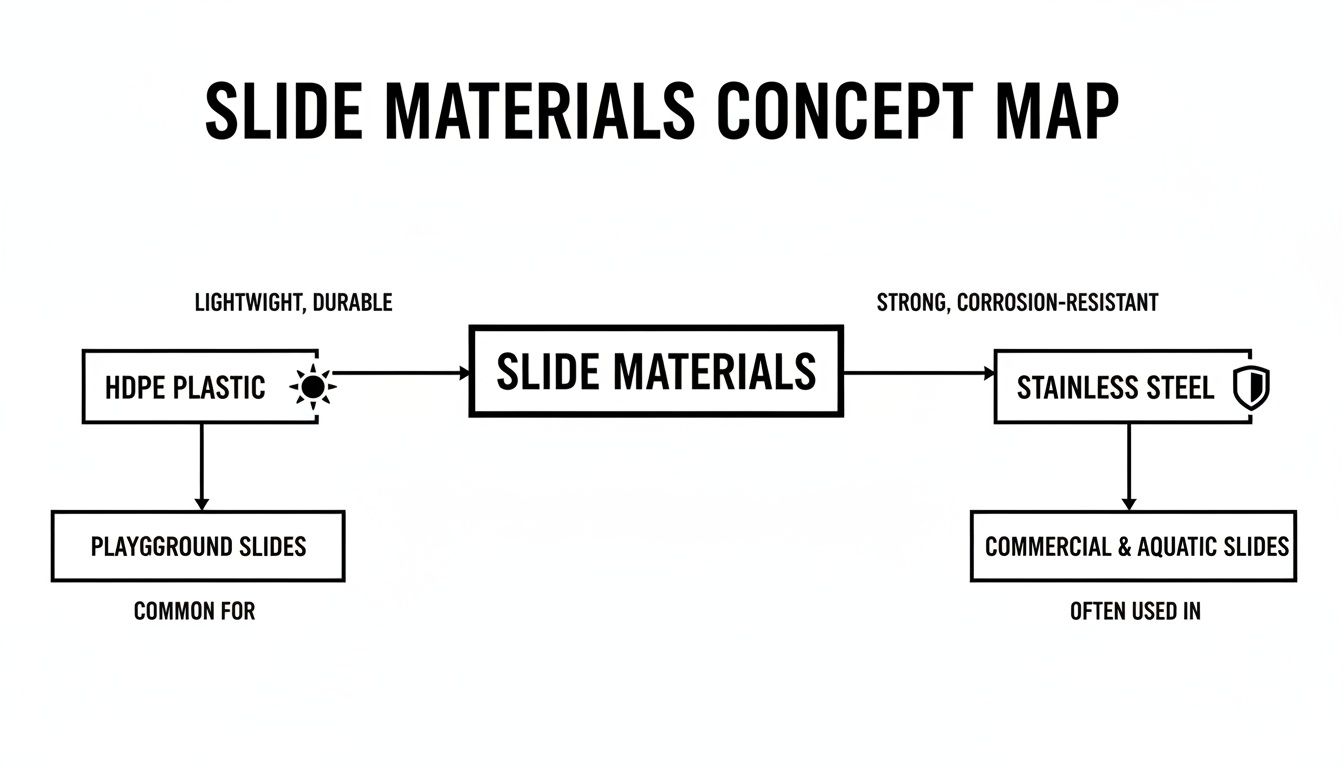
As you can see, materials like stainless steel and HDPE plastic have different properties, especially when it comes to heat. This is a crucial link between your material choice and the slide's final position on site.
Good site planning is about more than just drawing a fall zone on a blueprint. It’s about thinking through how people will actually use the space. A well-placed slide isn't just safer; it's also used more often.
In Australia, the sun is one of your biggest challenges. A metal slide sitting in the direct afternoon sun can get hot enough to cause serious burns. Even modern plastic slides can become uncomfortably hot to the touch.
Here’s what you need to think about when positioning your slide:
Thinking about these things early on is what separates a compliant playground from a truly great one. If you want to get into the nitty-gritty of the regulations, you can learn more about how Australian school playground safety standards shape every decision.
Ultimately, taking the time to plan the site properly doesn't just protect the kids; it protects your school, council, or organisation. It’s the professional diligence that turns a good idea into a safe, successful community asset for years to come.
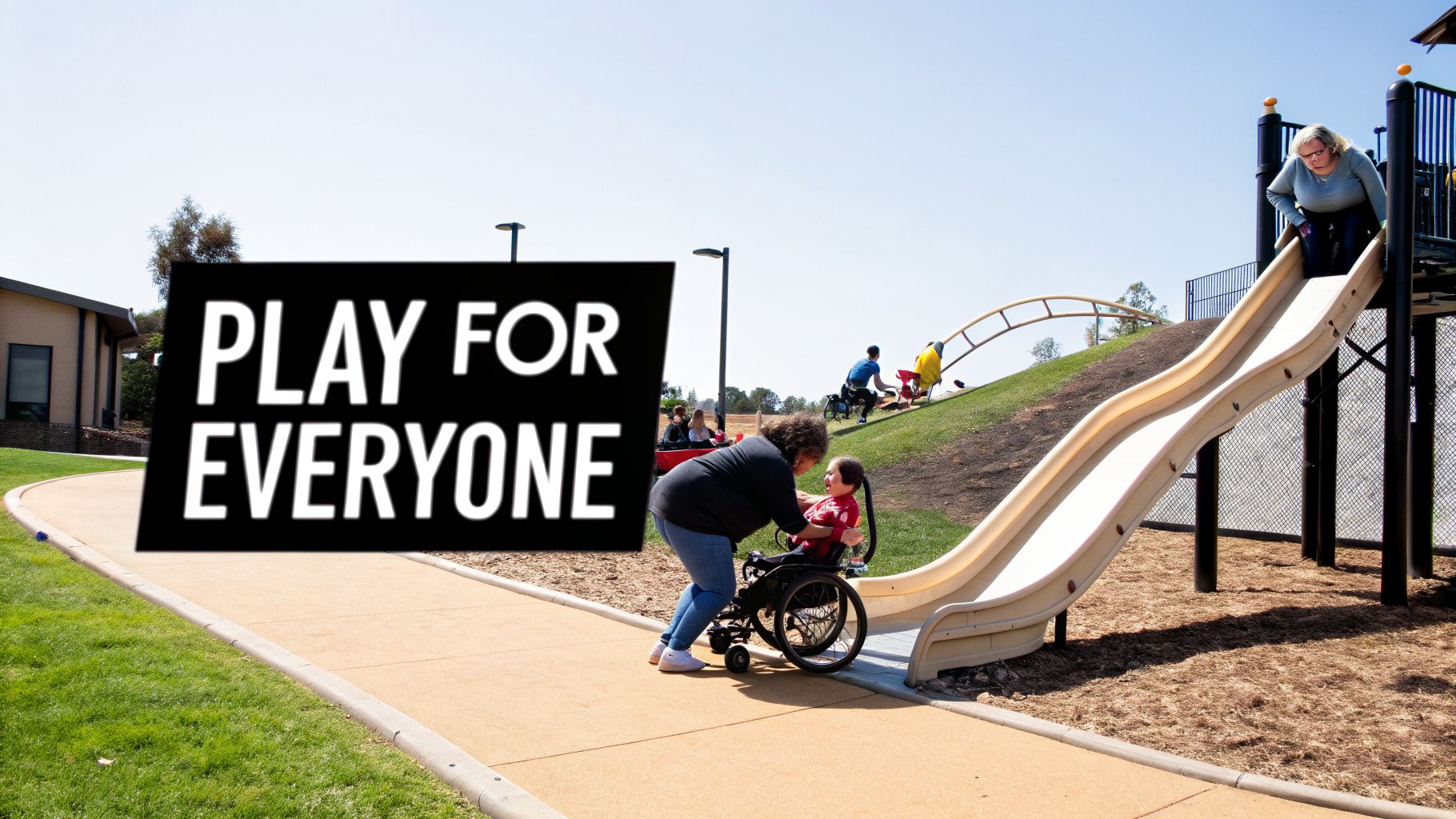
A great playground is one where every child feels like they belong. It’s not just about meeting minimum accessibility standards; it’s about creating a space that genuinely welcomes kids of all ages and abilities to play together. And the slide, often the heart of the playground, is the perfect place to start.
When you're choosing a slide for a playground, the goal isn't to find a single "one-size-fits-all" solution. Instead, think about curating a variety of experiences. This thoughtful approach ensures the playspace meets diverse needs and fosters a real sense of community.
You wouldn't expect a toddler and a ten-year-old to enjoy the same movie, and the same logic applies to slides. The secret to a long-lasting, engaging playground is offering graduated challenges—a range of slides with features suited to different developmental stages.
For the little ones, typically 2-5 years old, it’s all about building confidence. Think gentle slopes, shorter runs, and low, easy-to-access platforms. These designs provide a safe and manageable thrill that encourages them to try again, mastering a new skill at their own pace.
Older kids, aged 5-12 years, are chasing a bigger thrill. They’re ready for the excitement of taller, faster, and more dynamic slides. Placing a gentle toddler slide near a more daring spiral or wave slide means your playground has something for everyone and stays relevant as children grow.
Think of a well-designed playground as a ladder of skills. It offers a secure first rung for the youngest children while providing higher, more exciting rungs for older kids to reach for when they’re ready.
True inclusion goes far beyond a ramp. It’s about ensuring every child can actually play and share in the fun once they arrive. Applying Universal Design principles can transform a slide from an isolated feature into a hub for social interaction.
This means rethinking the slide itself to remove physical and social barriers. Small adjustments can make a world of difference, opening up the joy of sliding to children with mobility challenges, sensory needs, or those who just need a hand from a parent or carer.
Key Inclusive Slide Features:
For more ideas on building a truly welcoming playspace, take a look at our detailed guide on what to install in an inclusive playground.
By weaving these elements together, a simple slide becomes a powerful tool for connection. It creates moments where children of different abilities can share an experience, and it allows families to play together. Ultimately, it helps ensure no one is left watching from the sidelines.
It’s all too easy to look at the price tag on a new slide and think that’s the final number. But the reality is, the equipment cost is just one piece of the puzzle. To build a truly accurate budget, you need to think about the total cost of ownership—from the first shovel in the ground to the routine checks you'll be doing a decade from now.
Thinking this way from the very start isn't about making things more complicated; it's about avoiding nasty surprises down the track. Spending a bit more on quality materials and a professional build often saves a fortune in repair bills and replacement costs later on.
So, what are the hidden costs? A complete budget for any playground slide project really breaks down into a few distinct stages. Getting each one right is essential for a safe, compliant, and long-lasting result.
Initial Investment Beyond the Slide:
While a high-quality, professionally installed slide might look more expensive on paper, it's a far smarter financial move. A well-built slide from a reputable supplier will give you a solid 15-20 years of service. Cheaper options can start showing major issues or even need a full replacement in as little as five years.
The installation itself is far more than a construction job; it's a critical safety process. A professional crew manages everything from the groundworks to the final assembly, but their most important job is organising the final safety audit.
This independent check confirms that every little detail—from the angle of the slide to the clearance in the exit zone—is perfectly compliant. This sign-off isn't just a piece of paper. It’s your proof that you’ve met your duty of care, giving you complete peace of mind that the equipment is ready and safe for everyone to enjoy.
Once your new slide is in the ground and signed off, a simple but consistent maintenance plan is the key to getting the most out of it. Ignoring routine care doesn't just shorten the equipment's lifespan; it creates very real safety hazards for children.
A straightforward checklist is the easiest way to keep on top of it.
By planning your budget around both the initial project costs and a simple maintenance schedule, you ensure your slides for playground equipment deliver years of safe fun and maximum value for your community.
When it comes to choosing equipment for a community space, the small details make all the difference. We get asked a lot of questions by schools, councils, and landscape designers, so we’ve gathered the most common ones here to give you clear, practical answers.
Think of this as a cheat sheet from the experts, designed to help you confidently navigate the big decisions around safety, materials, and making sure every child gets to play.
It’s all about the landing. The single most important safety feature isn’t part of the slide itself, but the fall zone beneath and around it. This is the area, especially at the slide’s exit, that must be completely free of any obstacles—no footpaths, fences, or other play equipment.
More importantly, this entire zone needs to be covered with a certified impact-absorbing surface like wet pour rubber, specialised mulch, or sand. The depth and type aren't a guessing game; they must be rated to cushion a fall from the slide's specific height, as required by Australian Standard AS 4685. This is your number one defence against serious injuries.
The secret isn't finding one 'do-it-all' slide. A much better approach is to offer a variety of slides that create graduated challenges for different ages and abilities.
In a country like Australia, this is a big one. For almost any outdoor playground, rotationally-moulded High-Density Polyethylene (HDPE) plastic is the way to go. This material is made with UV stabilisers that stop it from going brittle or fading in our harsh sun. Critically, it doesn’t get scorching hot like metal does, making it a much safer bet for kids on a summer's day.
While stainless steel is incredibly durable and vandal-resistant, it can become dangerously hot in direct sunlight. We only ever recommend it for spots that are fully and reliably shaded all day long.
Inclusivity is about more than just physical access; it's about creating shared experiences. Thoughtful design choices can turn a simple slide into a powerful tool for social connection, ensuring no child is left on the sidelines.
At Kidzspace, we partner with councils, schools, and designers to create play environments that are safe, engaging, and built to last. Our team can help you navigate these choices to select the perfect slides for your community. Explore our range and get a free playground consultation today.


Copyright © Kidzspace. All Rights Reserved.
Copyright © Kidzspace. All Rights Reserved.