



You’re probably here because the brief sounds simple and its implementation proves challenging. A principal wants an inclusive play area. A council has funding for a park upgrade. A childcare operator needs a space that works for a wider range of children, carers and educators. Then the questions start. What counts as sensory play? What has to comply? What can sit on grass and what needs certified surfacing? How do you avoid buying equipment that looks good in a brochure but creates headaches in installation, supervision and maintenance?
That’s where most sensory playground projects succeed or fail. Not at the concept stage, but in the handover between vision, standards, budget and procurement.
A strong sensory play space isn’t a collection of add-ons bolted onto a standard playground. It’s a planned environment. The best results come when equipment choice, safety compliance, circulation, surfacing, maintenance and inclusion are considered together from day one. That’s especially true for stakeholders planning sensory playground equipment australia projects, where local conditions, standards and public-use expectations shape every decision.
A lot of clients begin with the same phrase: “We want something inclusive.” That’s a good starting point, but it’s still vague. Inclusion in playground design isn’t achieved by adding a ramp and one panel at the edge of the site. It comes from giving children multiple ways to enter play, stay engaged, regulate themselves and participate alongside others.
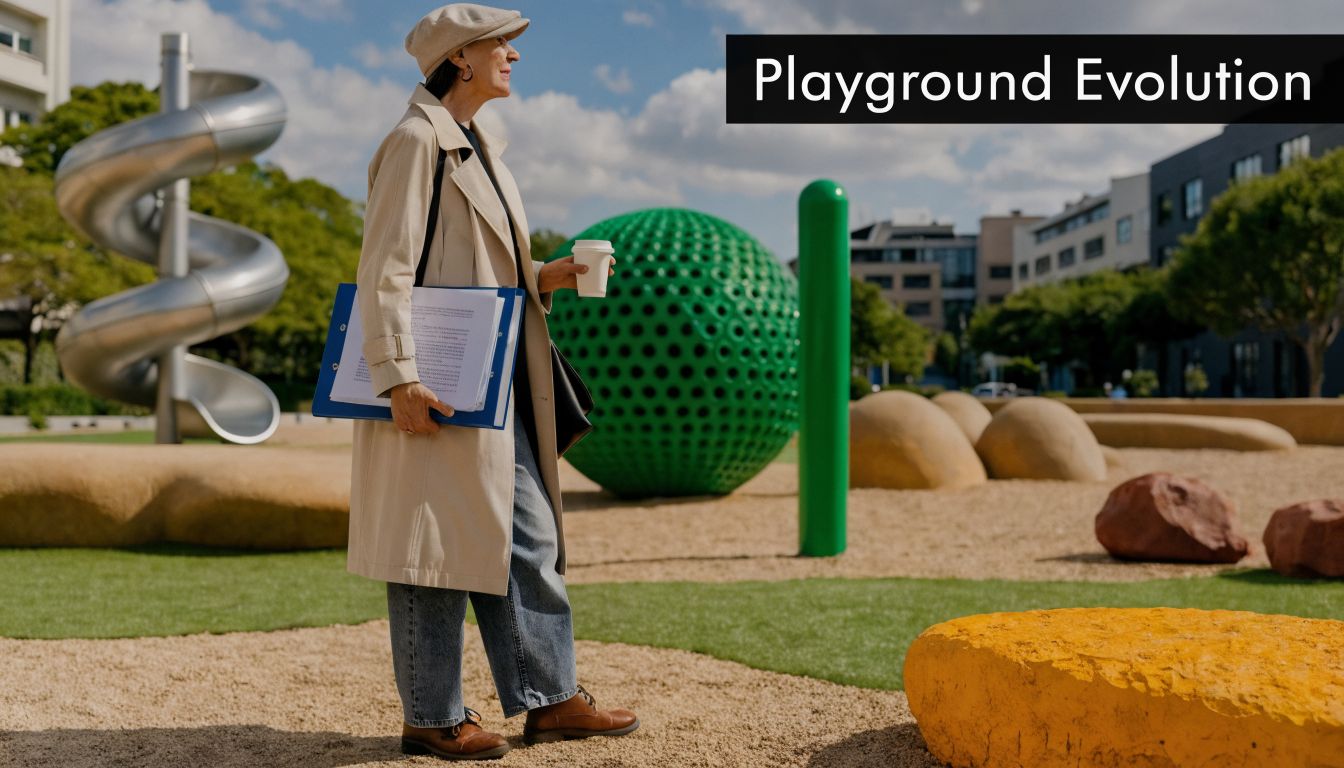
Sensory playground equipment sits at the centre of that shift. It supports children who seek movement, children who avoid noise, children who need tactile feedback to engage, and children who benefit from quieter, repeatable play experiences. It also improves the space for everyone else. Musical elements, textured surfaces, balance challenges, accessible play panels and calm nooks don’t divide users into “special needs” and “everyone else”. They widen the range of play available.
Australia isn’t moving towards sensory-inclusive design by accident. The need is obvious. The Asia Pacific region, including Australia, is projected to see the highest growth rate for inclusive playground equipment at 8.0% CAGR, and one in 10 Australian children has a developmental delay or disability, which is driving demand for more inclusive public spaces, according to inclusive playground market data for Asia Pacific and Australia.
That market growth matters, but the practical implication matters more. More clients are no longer asking whether they need sensory features. They’re asking how to commission them properly.
In Australian projects, sensory play has moved well beyond the old model of swings, slides and climbers with a token activity board attached. Current sensory spaces often include:
For many first-time clients, it helps to think of sensory design as the operating system of the playground, not a category of product. That’s why resources on the importance of sensory play tend to resonate so strongly once a project team moves beyond the initial wish list.
Practical rule: If a playground only serves confident, fast-moving, high-energy users, it isn’t inclusive, no matter how modern it looks.
Children don’t experience a playground as a catalogue of products. They experience it through input. Movement. Pressure. Texture. Sound. Light. Social proximity. Challenge. Recovery. When those inputs are planned well, the space helps children organise their bodies and attention, not just burn energy.
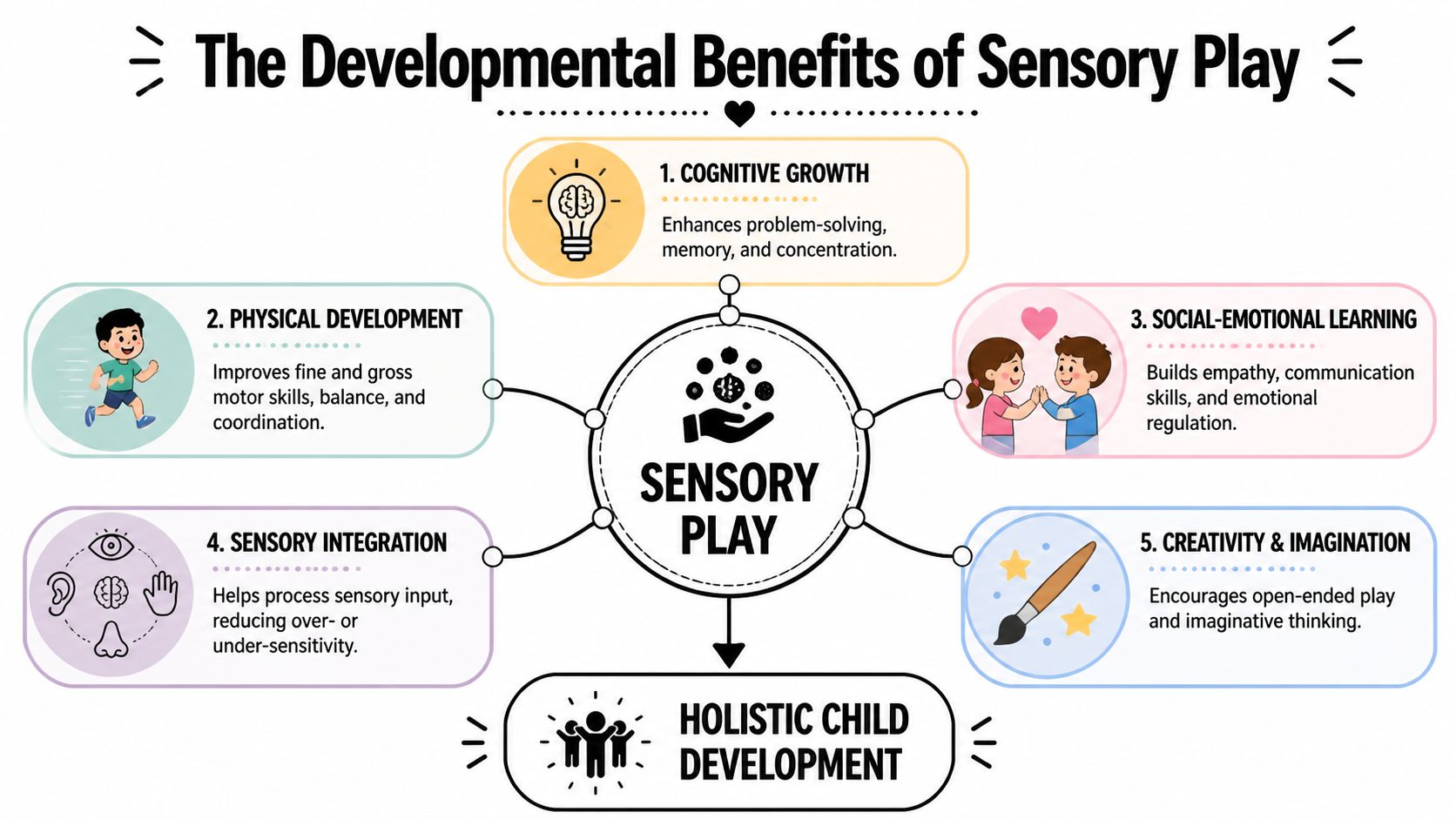
The vestibular system is the body’s movement and balance system. It’s engaged when a child spins, rocks, sways, glides or changes level. Swings, spinners, angled balance paths and gentle carousels all feed this system in different ways.
Some children actively seek this kind of input. Others need it in smaller, more controlled doses. That’s why a good layout usually includes both high-motion and low-motion options, rather than assuming one style suits all.
The proprioceptive system helps children understand where their body is in space and how much force to use. Climbing nets, inclined ramps, overhead grips, stepping pods and resistance-based play all build this awareness. This is often the difference between a child looking “clumsy” and a child gradually becoming more organised in movement.
Proprioceptive play is especially useful because it often has a regulating effect. Equipment that involves pushing, pulling, climbing, hanging or steady resistance can help some children settle and focus after more stimulating activity.
Tactile, auditory and visual inputs are often the first things clients think of when they hear “sensory equipment”, and they do matter. Textured panels, moving parts, sand and water play, chimes, drums, pattern boards, colour contrast and visual tracking features all support exploration. They also give children who may not want fast physical play another meaningful way to participate.
A good sensory play space doesn’t overload these inputs. It sequences them.
The best sensory playgrounds support children with autism, sensory processing differences, physical disability and developmental delay. They also support children who are tired, shy, impulsive, cautious, energetic or learning to play cooperatively.
Good universal design doesn’t create a separate play experience for a few children. It creates multiple successful entry points into one shared environment.
That’s why sensory equipment shouldn’t be isolated in a corner labelled “inclusive zone”. If you want broader social play, sensory opportunities need to be distributed across the site. A tactile panel near a pathway, a sound feature beside a gathering node, a spinner adjacent to climbing and a quiet nook near the main circulation route all help children choose how they participate.
A common mistake is specifying only static panels and calling the result sensory design. Panels matter, but sensory development also depends on movement, effort and spatial challenge. Another mistake is overbuilding intensity. Too many loud, bright, active elements packed together can make the space hard to use for the very children it aims to support.
A more reliable formula is mix, contrast and control:
That’s where the developmental value sits. Not in novelty, but in well-managed sensory choice.
Once the developmental goals are clear, equipment selection becomes easier. The key is to stop thinking in single items and start thinking in sensory roles. Every product should do a job in the overall experience.
Auditory play works best when children can cause an effect and repeat it. Outdoor chimes, drums, resonance tubes and speaking tubes give immediate feedback. They encourage turn-taking and side-by-side interaction, which is useful for children who don’t always join group play verbally.
Tactile equipment is broader than many briefs suggest. It includes textured panels, shaped forms, sand interaction, water movement, movable components, tracing surfaces and accessible ground-level features. A tactile wall can be especially useful in entry zones because it offers low-barrier engagement from the moment a child arrives. For example, a touch wall designed for interactive sensory engagement can support exploratory play without requiring a child to commit to climbing or high-motion activity.
Visual play should support orientation and curiosity. Pattern panels, colour contrast, peek-through elements, themed structures and motion-responsive components can all help. The strongest visual elements don’t just decorate the site. They support wayfinding, role play and attention.
Vestibular equipment includes swings, spinners, gliders, rocking units and any element that changes a child’s head position or movement pattern. These pieces are popular, but they need spacing, supervision planning and careful matching to user age and tolerance.
Proprioceptive equipment often delivers the deepest long-term value because it supports strength, coordination and regulation. Climbing walls, rope structures, balance trails, crawl tunnels, overhead traverses and resistance-based elements all fit here. These are the pieces that often help children organise themselves physically before they join larger group play.
| Sensory System | Equipment Examples | Primary Developmental Benefit |
|---|---|---|
| Tactile | Textured panels, sand tables, water play features, tactile walls | Exploration, fine motor control, sensory discrimination |
| Auditory | Chimes, drums, musical stations, talking tubes | Cause-and-effect learning, listening, shared play |
| Visual | Pattern panels, colour-contrast features, themed play elements, light-responsive details | Attention, orientation, imaginative play |
| Vestibular | Swings, spinners, rockers, gliders | Balance, movement confidence, regulation |
| Proprioceptive | Climbing nets, rope bridges, rock walls, balance trails | Body awareness, strength, coordination |
The strongest briefs usually balance three categories:
One mistake I see often is buying several products that all serve the same user profile. For example, a site may include multiple active movement items but almost no tactile, calm or ground-level interaction. Another common error is placing all quiet equipment as an afterthought in leftover space near a fence line.
If every item competes for attention, children who need choice and predictability often disengage first.
A better approach is to test each proposed item against a short project question: what input does it provide, who can use it easily, and what play opportunity does it add that the site doesn’t already have? That keeps the equipment schedule purposeful instead of repetitive.
Safety compliance should shape the design from the first sketch, not after procurement. If you leave standards until the end, the project usually becomes more expensive, slower to install and harder to certify.
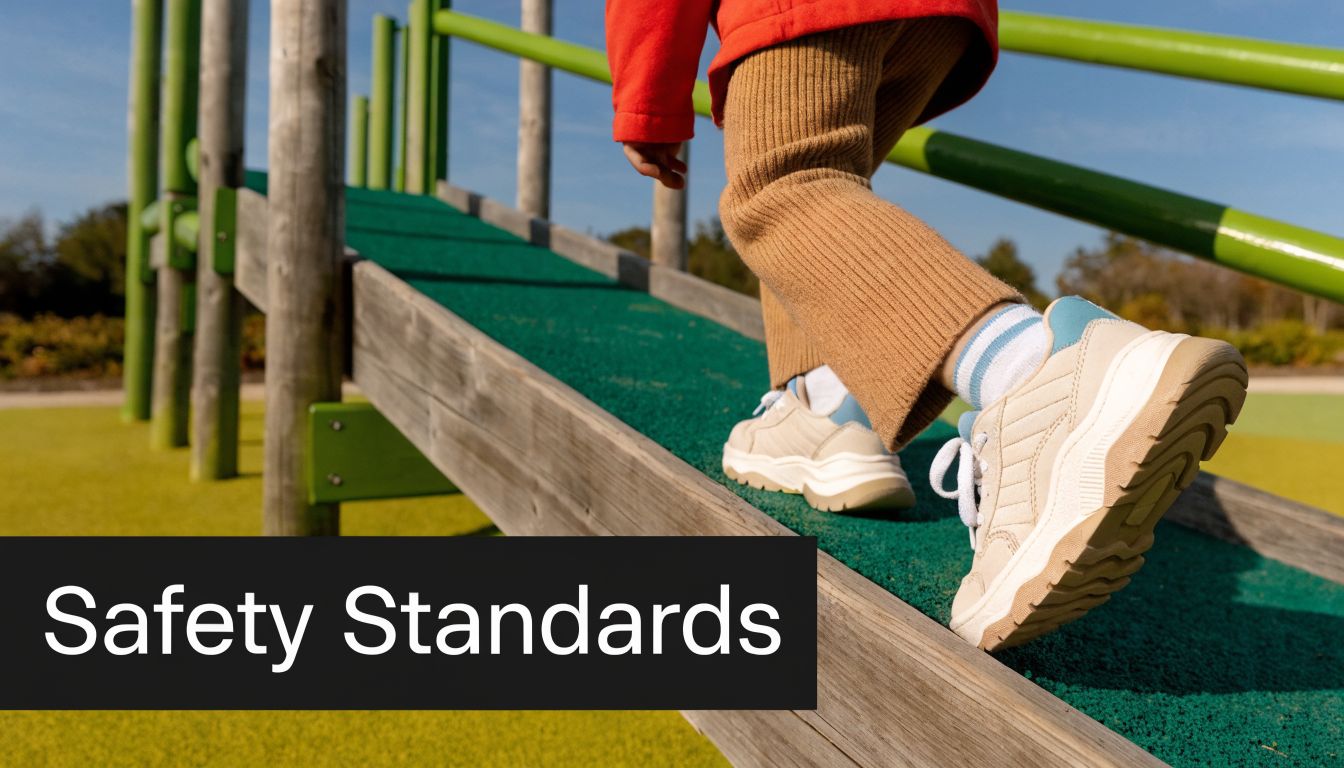
For sensory playground equipment australia projects, the key reference point is AS 4685.1-6:2021. In practical terms, that means equipment must be assessed for issues such as entrapment, access, movement safety and fall risk. Sensory equipment in Australia must comply with this standard, and many sensory panels have a Free Height of Fall below 600mm, which means they often don’t require certified impact-attenuating surfacing. That can reduce installation costs by up to 30% compared to high-activity equipment, as noted in Australian guidance on playground equipment and surfacing considerations.
That one point changes early budgeting decisions. Ground-level and low-height sensory features can sometimes be integrated more readily than raised play systems, provided the full compliance context supports that approach.
Safety rules aren’t paperwork for its own sake. Playground injuries remain a real issue. According to Victorian injury surveillance findings on playground equipment-related harm, playground equipment-related injuries account for 6% of all injuries presenting to emergency departments. Climbing equipment is implicated in 35% of cases, slides in 19%, and swings in 18%. In Victoria, approximately 1,000 children are admitted to hospital each year after playground equipment falls, with an average annual admission rate of 114 per 100,000 children. Almost two-thirds of admitted children are aged 5-9 years, and 75% of injuries are upper limb fractures.
Those numbers should affect how you assess risk concentration on site. If the project piles most of its budget into high-fall-height equipment and leaves little room for lower-risk sensory engagement, you create a narrower play offer with a steeper supervision burden.
Accessibility doesn’t stop at wheelchair entry. A sensory space should be usable by children and carers with different mobility, communication and sensory needs.
Look for these questions in every design review:
The video below shows the kind of inclusive access thinking that should be part of early planning, not a late retrofit.
You don’t need to be a standards specialist, but you do need to ask direct questions.
If a supplier can’t explain these points in plain English, the project team will carry unnecessary risk later.
A sensory playground can have excellent equipment and still fail because the site planning is poor. I’ve seen well-specified products installed in locations with no shade strategy, poor drainage, awkward access routes and no distinction between active and quiet use. Children notice those flaws immediately, even if the adults don’t during procurement.
Before finalising equipment, assess how the land behaves through the day and through the seasons. Sun and shade patterns affect dwell time. Wind exposure changes how comfortable the quieter areas feel. Drainage affects surfacing performance, accessibility and maintenance frequency.
A useful planning sequence is:
Children don’t all arrive in the same state. Some run straight to motion equipment. Others need to watch first, touch something simple, or stay close to a carer. A strong layout accommodates both patterns.
That usually means creating distinct but connected zones:
A quiet area shouldn’t feel like exile. It should feel like part of the playground with a lower sensory load.
Surfacing is where design intent meets compliance and daily use. The right choice depends on the equipment selected, the expected users, maintenance capacity and access goals. If your team is comparing options, a practical reference on playground surfacing materials and their trade-offs can help frame the decision.
In practice, the common trade-offs are straightforward:
The mistake is choosing surfacing as an aesthetic layer. It’s an operational decision. It affects wheeled access, drainage, cleaning, replacement cycles and how much of the site remains usable after rain.
Most playground budgets fail in one of two ways. Either they focus too narrowly on equipment price and underestimate everything around it, or they overdesign early and then cut the wrong items late. Both outcomes usually come from separating budgeting from design and compliance.

A realistic project budget should account for more than the product list. At minimum, clients should allow for:
This layered approach helps avoid the common procurement shock where the chosen equipment seems affordable until the site costs land on the table.
Schools, councils and developers don’t all buy the same way. Some need a formal tender. Some can use pre-qualified suppliers or cooperative purchasing pathways. Smaller organisations may source directly, but still need a disciplined process.
The procurement method matters because it affects:
| Procurement approach | Main strength | Main risk |
|---|---|---|
| Public tender | Clear process and broad market testing | Lowest-price submissions can hide lifecycle risk |
| Direct sourcing | Faster and easier to coordinate | Scope can stay too vague if the brief is weak |
| Pre-qualified or panel buying | Administrative efficiency | Product fit can suffer if panel options drive the design |
This matters more in Australia than many first-time buyers expect. UV, heat, salt exposure, heavy public use and inconsistent maintenance all affect how long a playground performs well. While suppliers often emphasise local durability, there’s little public data on long-term maintenance costs. As a rule of thumb, organisations should budget an estimated 5-10% of the initial equipment investment annually for upkeep, inspections and repairs, based on industry commentary on sensory equipment durability and maintenance budgeting.
That number shouldn’t scare buyers. It should sharpen the brief.
If two options are close in capital cost but one uses finishes, fixings and construction methods better suited to Australian conditions, the cheaper-looking option may not be cheaper after a few years of inspections, replacement parts and downtime. This is also where project support matters. Some suppliers, including Kidzspace, offer consultation on planning, customisation and project support so the equipment schedule, site conditions and long-term upkeep are considered together rather than in isolation.
Cheap equipment is often expensive work deferred.
In practice, long-term value tends to come from three things:
That’s the financial lens worth using. Not “How much does the playground cost?” but “What will this site ask us to manage over time?”
A realistic project journey usually starts with a client who knows the outcome they want, but not yet the right pathway. Think of a primary school upgrading an ageing play area. The leadership team wants inclusion, the educators want calmer re-entry spaces for children who get overwhelmed, and the grounds budget still has to cover installation, surfacing and ongoing upkeep.
The first useful conversation isn’t about product codes. It’s about site use. Who uses the area now, who avoids it, what the supervision pinch points are, where the access problems sit, and how the school expects the space to function during breaks, transition periods and outdoor learning.
From there, the brief usually gets tighter around practical questions:
That kind of front-end work prevents a familiar mistake. Teams often jump to a favourite feature before they’ve defined what the site needs to do.
Once the functional brief is clear, the equipment mix becomes easier to test. A school may combine tactile and interactive panels near the main path, movement-rich equipment in a controlled active zone, and a quieter sensory area near seating and shade. If the site supports thematic play, the concept can also support learning goals.
A projected trend for 2026 is the integration of sensory equipment with STEM learning outcomes, driven by curriculum updates and funding increases. That approach aligns well with themed systems such as aircraft or vehicles, which can connect sensory play with ideas like coding and physics, according to Australian school playground inspiration focused on educational play.
That doesn’t mean forcing classroom outcomes onto every item. It means using layout, theme and interaction in a way that gives the site more than one job.
A well-run project has a few clear characteristics:
The smoothest projects aren’t the ones with the biggest budgets. They’re the ones where decisions are made in the right order.
That’s the value of an experienced consultation process. It turns a broad ambition like “we need an inclusive sensory space” into a buildable brief that works for children, staff, carers and asset managers.
If you’re planning a new sensory play space or upgrading an existing one, Kidzspace offers free consultations to help schools, councils and community organisations clarify scope, budget, compliance needs and design direction before procurement starts.


Copyright © Kidzspace. All Rights Reserved.
Copyright © Kidzspace. All Rights Reserved.