





On a hot afternoon, the weakest part of many parks is easy to spot. The shade is full, the swings are taken, and the empty hardstand near the amenities block is doing nothing for families except radiating heat. Councils and schools often look at that space and think about adding “something fun”. The better question is whether that space can work harder for the community over the next decade without becoming a maintenance headache or a compliance risk.
That’s where water playground equipment earns its place. Done well, it turns a dead zone into a destination. Done badly, it becomes an expensive collection of corroded fittings, slippery surfaces, and service calls. The difference usually isn’t the theme or the colour palette. It’s whether the project team understands total cost of ownership, Australian standards, water management, and material performance in local conditions.
By 11 am on a January day, many Australian parks have already lost the battle against heat. Metal slides are too hot to touch, exposed rubber softens underfoot, and families start looking for somewhere cooler without paying pool entry fees. A well-planned water play area keeps that park usable for longer, but its real value is broader than relief on a hot day.
Water play gives councils and schools a practical way to keep outdoor spaces active in a climate that is getting harder on unshaded, hard-finished sites. It suits the Australian pattern of intense summer heat, high UV, and long school holiday periods when demand for free public recreation rises sharply. It also supports a wider age range than many fixed play items. Toddlers can engage with gentle sprays, older children stay interested when there is cause-and-effect play, and carers can supervise without the hazards that come with standing water.
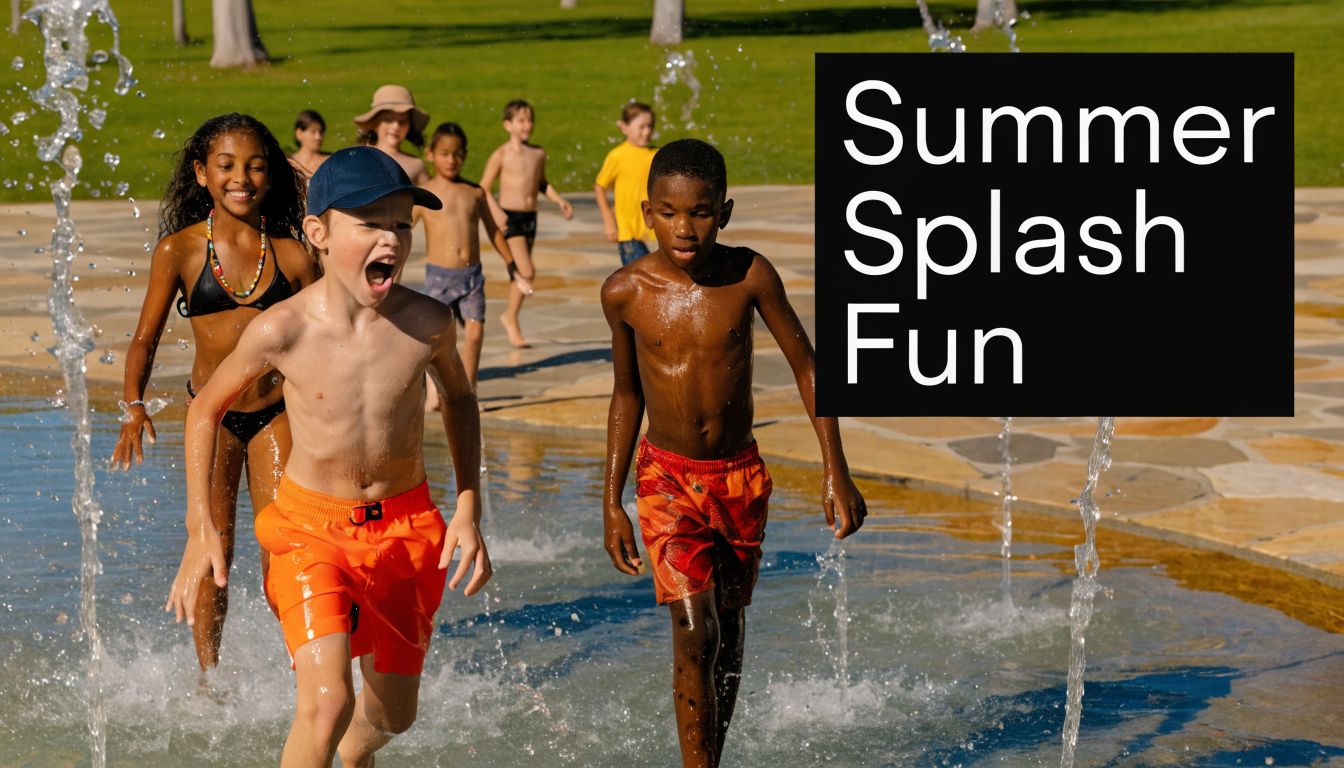
For asset owners, the case is strongest when water play is assessed as climate-responsive public infrastructure rather than a novelty feature. A conventional playground upgrade may add capacity, but it does not always solve the summer use problem. Water play can. In the right location, it increases dwell time, spreads use across more of the day, and makes adjacent shade, seating, toilets, and picnic areas work harder.
That said, the Australian case does not boil down to "hot weather equals splash pad." The project only stacks up if it suits local operating conditions. Councils need to weigh water restrictions, treatment requirements, drainage, slip resistance, shutdown procedures, and maintenance access from the start. Regional inland sites, coastal foreshore reserves, and school settings all carry different risks and running costs.
A practical assessment usually comes back to four questions:
Committees often misjudge the opportunity. They compare a water play zone with a standard dry play item on upfront cost alone, then conclude that water play is the expensive option. In practice, the better comparison is between a site that sits half-empty through summer and one that continues to attract families, support longer visits, and justify the surrounding investment in amenities and external works.
The reverse is also true. A poorly scoped water play project can become a recurring problem if the site has weak drainage, little shade, unreliable servicing, or no realistic allowance for treatment and maintenance. Australian buyers need financial clarity as much as design flair.
Used carefully, water playground equipment helps public spaces stay relevant in hotter conditions while giving councils a clearer return on land, infrastructure, and maintenance spend.
Most buyers start with a vague category and then get overwhelmed by supplier brochures. It helps to sort water playground equipment by function first. Once you know what kind of play outcome you want, the shortlist becomes much clearer.
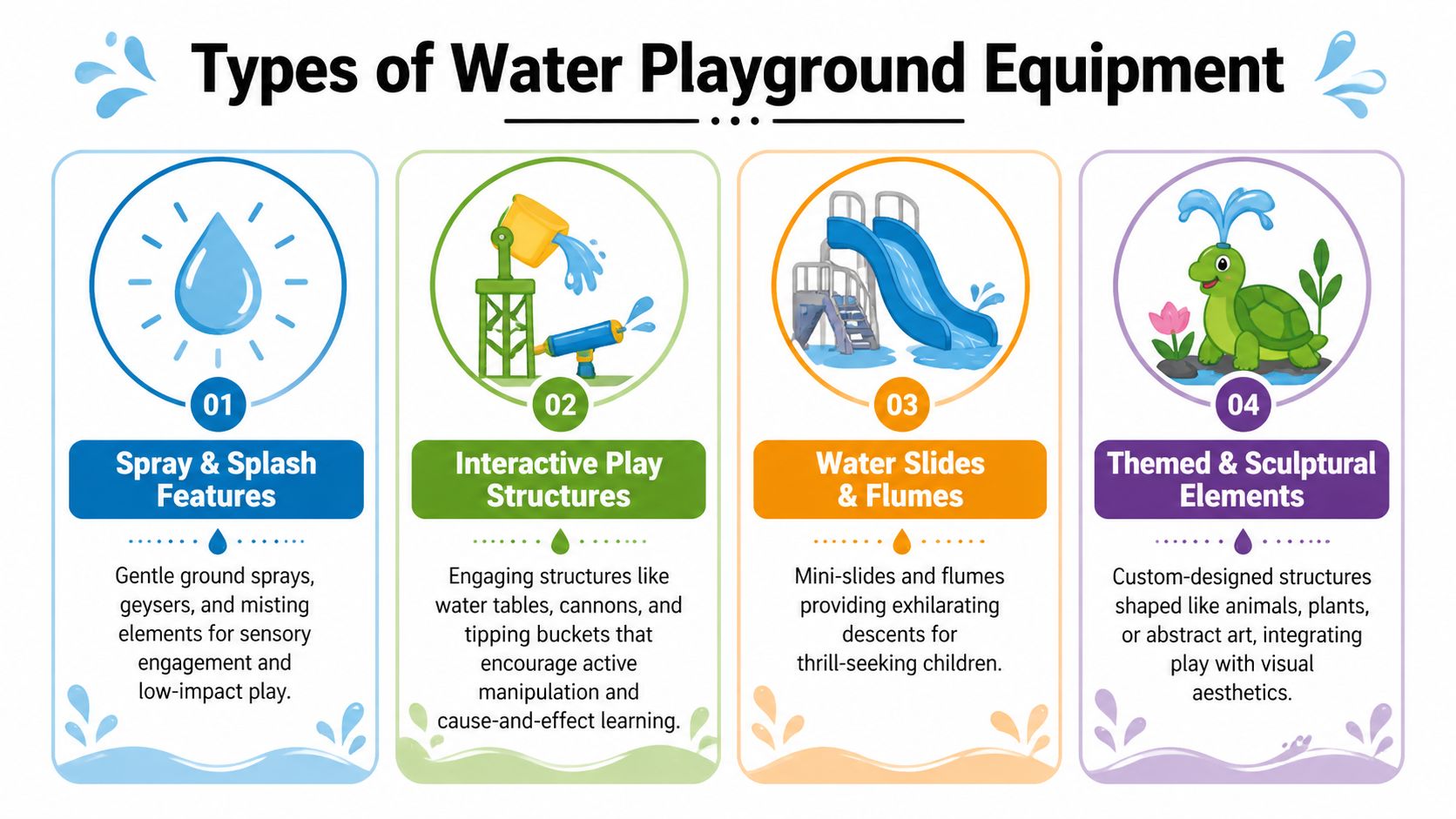
Think of these as the entry point. They include ground sprays, pop jets, misting elements, arches, and simple geysers. They’re usually the easiest category to integrate into compact sites and they work well where you want broad age appeal without a large above-ground structure.
They’re also useful when the brief prioritises visual openness. Parents can supervise easily because there are fewer visual barriers and no raised elements.
Best fit includes:
Cause-and-effect becomes the main attraction. Water cannons, tipping features, play tables, channels, gates, and directional nozzles invite children to manipulate water rather than just run through it.
These systems create stronger social play. One child diverts flow, another waits at the end of a channel, and a third works out how to trigger the next effect. They’re especially useful when a school or council wants the space to support cooperative play and basic problem-solving.
The trade-off is operational complexity. More moving parts and more active user interfaces usually mean more inspections, more wear points, and more opportunities for downtime if components aren’t specified well.
These features suit larger destinations, not every suburban reserve. They add excitement and movement, but they also narrow the user group and increase design coordination.
For some sites, that’s the right call. A regional park with toilets, shade, staff oversight, and strong holiday visitation may justify a more dramatic offer. A small local reserve often won’t.
These can be animal forms, plant forms, abstract sculptures, or custom pieces that combine placemaking with water effects. They’re useful when the project has a clear identity brief, such as a foreshore, nature play precinct, school setting, or civic park with a strong visual language.
The caution here is simple. Custom doesn’t automatically mean durable. A sculptural feature still has to cope with UV, corrosion, wet-surface safety, and maintenance access.
| Equipment Type | Ideal Age Group | Typical Footprint | Relative Cost | Maintenance Level |
|---|---|---|---|---|
| Spray & splash features | Toddlers to primary age | Small to medium | Lower | Lower to moderate |
| Interactive play structures | Preschool to upper primary | Medium | Moderate to higher | Moderate to higher |
| Water slides & flumes | Primary age and older children | Medium to large | Higher | Higher |
| Themed & sculptural elements | Varies by design | Small to large | Moderate to higher | Moderate |
The strongest layouts usually mix categories rather than relying on one. A good civic splash pad might pair low ground sprays for younger users with one or two interactive features for older children. A school installation may lean more heavily into channels, tables, and controlled flow elements because they support supervised group play.
A quick selection filter often helps committees make sense of options:
Start with user mix
If the site serves toddlers and early primary, ground-level effects and simple interaction points usually outperform taller, more dramatic pieces.
Check the operating model
If maintenance staff are stretched, avoid systems with too many bespoke moving elements.
Match scale to destination value
A district park can justify landmark features. A pocket park usually benefits from simpler equipment with lower service demands.
Choose the equipment type that the site can support for years, not the one that looks best in a concept render.
Good water play design doesn’t begin with the catalogue. It begins with the question, “Who can use this comfortably, confidently, and repeatedly?” That’s where many projects either create genuine community value or fall back into a narrow version of accessibility.
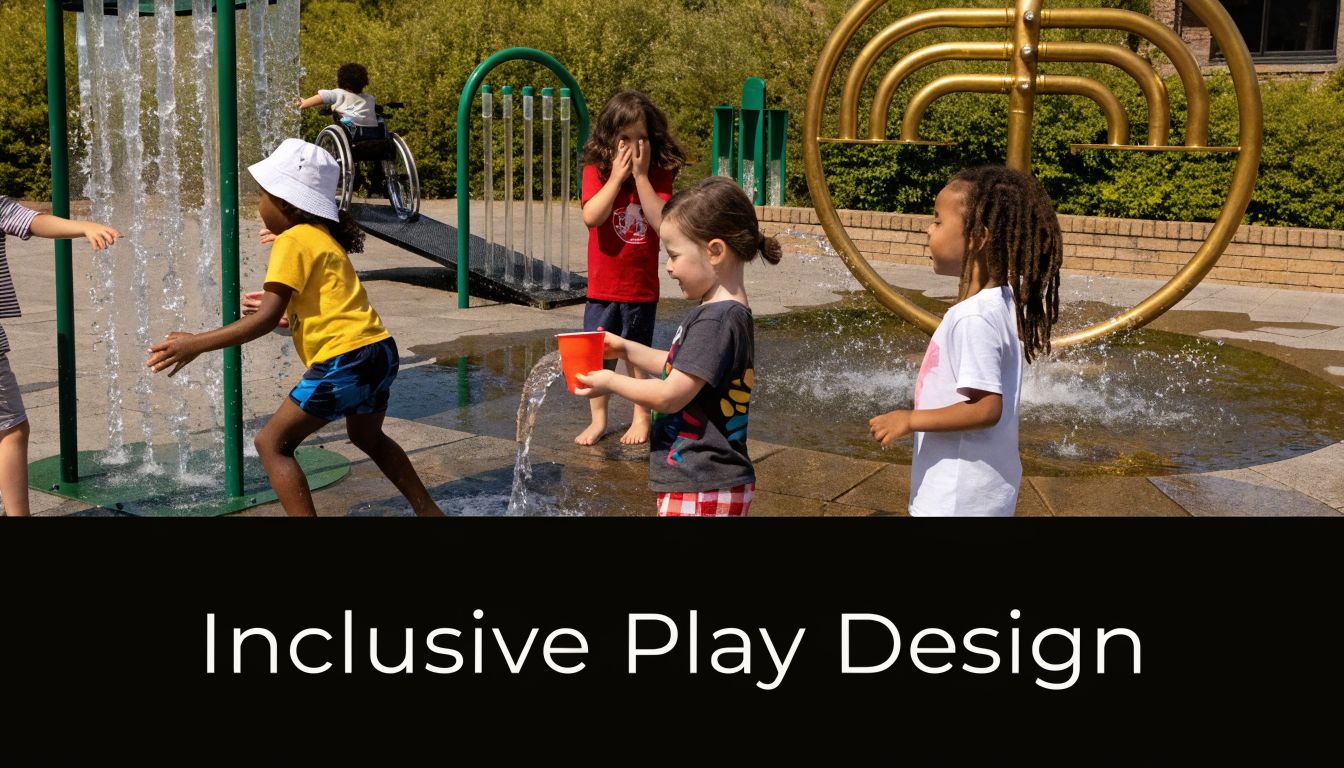
Inclusive water playground equipment should work at ground level, offer choice in how children engage, and avoid forcing every child into the same sensory intensity. Some children run straight into a spray arc. Others approach slowly, test a hand under a jet, or prefer tactile flow elements at the edge of the zone.
Zero-depth entry matters because it removes a physical barrier, but inclusive design goes further than that. The best schemes combine different water behaviours so children can choose what feels right for them.
Useful combinations include:
A busy splash pad shouldn’t feel like a single loud event. It should feel like a collection of play invitations.
Water is one of the best informal teaching tools in a playground because children can see the result of an action immediately. Block a channel and the flow changes. Turn a wheel and a spray activates. Redirect a stream and another child responds.
That’s not abstract developmental language. It’s practical design logic. If you want the space to support learning as well as cooling, include elements that reward experimentation.
Features that often support educational play well include:
Later in the design process, it helps to show stakeholders what these spaces look like in use.
The easiest projects to regret are the ones built around a hero feature. They look exciting at handover, but they exclude part of the user group and wear thin quickly because there isn’t enough depth in the play experience.
A more successful layout usually includes several engagement levels. Children can observe, test, manipulate, retreat, and return. Carers can understand the zone at a glance. Teachers can use it for structured play. Families with mixed ages can stay in one place without one child being left out.
Design test: If the only obvious way to use the space is to run through it at full speed, the layout is too narrow.
Many procurement processes falter because committees ask whether the equipment is “safe”, suppliers say yes, and the conversation moves on. That isn’t enough for an Australian project. You need to know which standards apply, what they require, and how the supplier proves compliance.
The key baseline is AS 4685.6-2007 for water play equipment. According to the water playground safety reference used in industry guidance, Australian water playgrounds must comply with this standard, including critical fall heights not exceeding 2.5m and impact attenuating surfaces that absorb forces up to 200g peak deceleration under AS 4422-1996 testing protocols.
Critical fall height isn’t a paperwork exercise. It affects what can be installed, how raised elements are treated, and what surfacing system sits underneath or around the play zone.
Impact attenuation matters just as much in wet settings because slips and sudden falls are more likely where children are moving quickly on a lubricated surface. If a supplier talks only about the visual finish and not about test performance, keep asking questions.
The compliance review should cover:
Councils and schools should ask suppliers to provide more than a compliance statement. Ask for documentation that shows how the system was tested, what materials were specified, and which standards the full assembly meets once installed.
A good specification set usually asks for:
Standard references by clause or product category
General assurances aren’t enough.
Third-party or laboratory evidence where relevant
This matters for surfacing, impact performance, and water-contact components.
Installation responsibilities
A compliant product can become a non-compliant installation if levels, drainage, or clearances are wrong.
Inspection and maintenance requirements
A committee should know what has to be checked after handover.
For broader context on playground compliance obligations in educational settings, it’s useful to review school playground safety standards in Australia.
A compliant water play product isn’t the same as a compliant water play site. Procurement documents need to address both.
Even when the visible equipment is straightforward, the operating system behind it matters. Recirculating systems, drainage layouts, run times, shutoff controls, and maintenance access all affect safety outcomes.
Local conditions are a key consideration. Drought restrictions, coastal corrosion, and heavy holiday use all place stress on a system in different ways. A design that works in a glossy overseas brochure can still fail a local operator if the controls are hard to service or the wet areas become slick under real use.
The safest projects are usually the least vague. They define standards early, spell out evidence requirements in the tender, and insist on site-specific review before approval.
A splash pad can still look impressive on opening day with the wrong materials. Three summers later, the story is different. Faded plastics, tea-stained fixings, bubbling coatings, and service calls after every school holiday quickly turn a low upfront price into a high-cost asset.
Australian conditions expose weak specifications early. High UV levels shorten the life of poorly stabilised plastics. Salt air attacks metals well beyond the beachfront. Bore water, hard water, and disinfectant dosing all put pressure on finishes, seals, and welded joints. For councils and schools, material choice is not just about appearance. It directly affects maintenance budgets, closure risk, and how often parts need replacing.
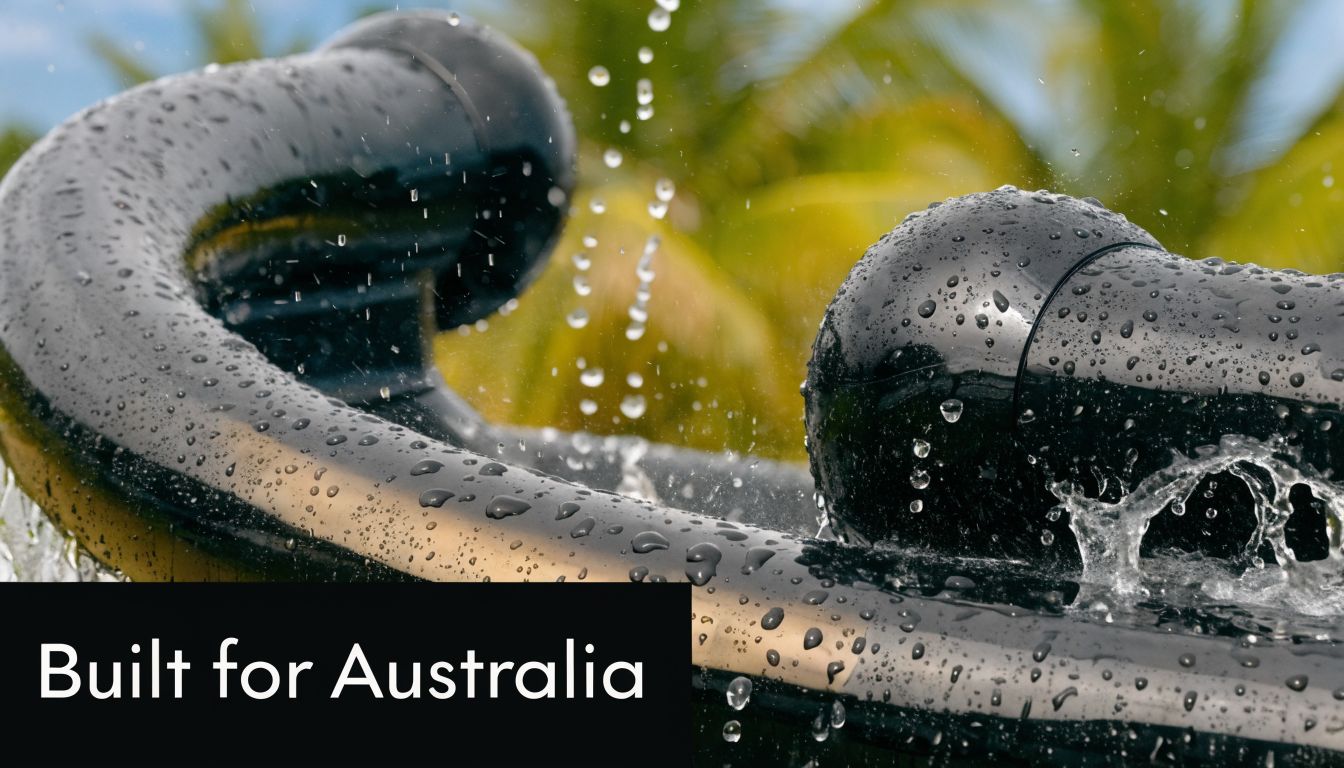
Stainless steel is the clearest example. In coastal or saline locations, suppliers should identify the exact grade for exposed wet components. Generic references to “stainless” leave too much room for substitution during procurement, and that often shows up later as pitting around nozzles, fixings, and splash features.
The right material depends on the site, the water source, and the maintenance model. A metro park on treated town water has different exposure risks from a regional facility using bore water near the coast.
A practical comparison looks like this:
| Material choice | Strength in AU conditions | Common risk if underspecified | Best use |
|---|---|---|---|
| 316L stainless steel | Strong corrosion resistance in wet and coastal settings | Pitting, staining, and shorter service life if a lower grade is used | Nozzles, fittings, fasteners, user-contact wet components |
| UV-stabilised HDPE | Good resistance to sun and moisture when properly specified | Fading, chalking, brittleness, or warping if UV protection is inadequate | Panels, guards, themed elements |
| Powder-coated metal | Useful where the coating system is durable and well-applied | Chips at edges, corrosion creep around penetrations, higher touch-up needs | Selected structural and decorative elements away from constant splash |
| Untreated or lightly protected steel | Poor choice for exposed wet play | Fast corrosion, more shutdowns, frequent replacement | Generally avoid in splash zones |
Powder-coated steel is often selected for cost reasons. Sometimes that is reasonable. The trade-off is maintenance. Once the coating is damaged, corrosion can spread from edges, bolt holes, and welds, especially where water sits after operation. For heavily used public sites, councils usually get better long-term value by reserving coated metals for lower-exposure elements and keeping primary wet components in higher-grade stainless steel.
Plastic selection also deserves more scrutiny than it usually gets. UV-stabilised HDPE performs well, but the specification should cover thickness, colourfastness, and expected exposure. Dark colours can absorb more heat. Thin panels can deform. Cheap moulded components may look acceptable in a brochure and age poorly in western NSW or north Queensland.
Supplier documents should explain how the material will perform on your site, not just list a marketing label. Ask for grade, finish, thickness, and any exclusions that apply in coastal or chemically treated environments.
Useful questions include:
Surfaces also need the same level of scrutiny. The equipment may last, but the asset still underperforms if the wet zone becomes slippery, patchy, or difficult to maintain. Wet pour rubber surfacing for Australian playgrounds is often considered because drainage, wear rate, cleaning, and slip performance all affect operating costs over time.
Projects that age well usually share the same plain, disciplined choices. Marine-grade stainless steel where exposure justifies it. UV-stable plastics with clear product data. Simple detailing that sheds water instead of trapping it. Components that maintenance staff can remove without dismantling the whole feature.
Projects that age badly are just as predictable. Decorative metalwork with too many joins. Coatings chosen mainly for colour. Imported specifications that ignore Australian UV and saline exposure. Assemblies that hide corrosion until the site has to close for repairs.
Materials rarely fail because the concept was poor. They fail because the specification did not match the climate, water quality, and maintenance reality of the site.
A council signs off on a splash pad in February. By the second summer, the pump room is hard to access, replacement nozzles are on a long lead time, water use is under scrutiny, and the site closes during peak holiday demand. The original quote did not cause the problem. The brief did.
Water play budgets work best when procurement is treated as an operating decision, not just a capital purchase. In Australian conditions, the long-term cost sits in water management, inspections, cleaning, parts supply, shutdown risk, and how well the system handles local compliance requirements, including drought settings and public health controls. A lower upfront figure can become the more expensive option if it creates frequent closures or depends on specialist servicing that regional teams cannot get quickly.
A realistic budget for water playground equipment needs to cover more than supply and installation. It should reflect what the asset will cost to run, maintain, and renew over its service life.
Include these layers:
Site readiness
Existing drainage, available services, ground levels, soil conditions, and construction access often shift the budget early. Retrofits can be far more expensive than they look on concept plans.
Water system and controls
Recirculating and flow-through systems carry different approval, treatment, and operating implications. Councils also need a clear approach to timers, sensors, isolation points, and shutdown procedures during restrictions or faults.
Surface and supporting works
Wet-zone surfacing, falls, drainage gradients, shade, seating, fencing where required, and paths from nearby amenities all affect performance and maintenance demand.
Maintenance, inspections, and parts
Ask what staff will inspect daily, weekly, and seasonally. Confirm which parts are consumables, which are proprietary, and how quickly replacements can be supplied in Australia.
Renewal and end-of-life
Some systems allow individual components to be swapped out as they wear or standards change. Bespoke features can look impressive on day one but cost more to refurbish later.
Tender documents should make suppliers price the operating reality of the asset. If the request only asks for a feature count and a lump sum, the comparison will favour what looks good in a render rather than what holds up in service.
A stronger tender asks for:
Warranty exclusions deserve close attention. Coastal exposure, aggressive water chemistry, bore water, cleaning chemicals, and high-UV conditions can all change what is covered.
For committees setting budgets, it also helps to compare water play against broader outdoor play spending. This commercial playground cost guide for Australian buyers gives useful context on how site conditions, material choices, and scope affect the final figure.
When two proposals appear similar, the better option is usually the one that reduces operational risk.
| Question | Why it matters |
|---|---|
| Can council staff isolate faults and restart the system without waiting for a specialist? | Faster recovery means less downtime and fewer frustrated families |
| Is the system designed around local water restrictions and seasonal shutdowns? | Approval and ongoing operation depend on it |
| Are spare parts stocked in Australia, or ordered from overseas? | Long lead times can close the site for weeks |
| Can individual play elements be replaced without removing major infrastructure? | Targeted repairs are cheaper and less disruptive |
| Has the supplier priced commissioning, training, and handover properly? | Poor handover often creates avoidable faults in the first year |
One sentence in a tender can save thousands later. Require bidders to identify every proprietary component and state the expected replacement pathway for each.
The strongest projects usually have operations staff involved before the tender goes out. They know which access routes work, how often filters will really be cleaned, what local water quality does to equipment, and whether the parks team can service the system with existing skills.
Councils and schools also get better outcomes when bids are compared on a simple whole-of-life basis. Capital cost matters. So do expected maintenance demand, water and energy use, ease of compliance, parts availability, and likely closure risk in peak season.
That is the standard worth applying. Water play should deliver public value over many summers, not just pass procurement on the first quote.
A council can approve a water play project with the right intentions and still end up with a site that costs too much to run, closes during peak heat, or struggles to satisfy local operating conditions. The better Australian examples avoid that outcome because the brief, the equipment, and the long-term maintenance plan all line up from the start.
Good precedent projects are rarely defined by size alone. The useful lesson is how clearly the design matches the role of the site, the local climate, the likely maintenance capacity, and the budget after opening day.
A common scenario is a neighbourhood reserve that already has a dry playground, some shade, and enough passive surveillance, but becomes unattractive through hot periods because the surrounding hardscape stores heat. In that case, a compact splash play area can lift summer use without creating the cost base of a regional destination facility.
Ground sprays, low-height interactive elements, and simple push-button or sensor activation usually suit this brief well. They are easier to supervise, easier to service, and often easier to shut down or stage during water restrictions. For councils, that matters. A modest installation that runs reliably through summer usually delivers better public value than a larger scheme with frequent faults or high water treatment demand.
Schools tend to get stronger outcomes from water play that supports structured learning, small-group use, and clear staff oversight. Channels, weirs, hand pumps, sluice gates, and accessible water tables give teachers something they can use during supervised sessions.
The trade-off is that school projects need tighter control over circulation, drainage, wet area boundaries, and changeover between classes. A visually impressive layout is less useful if staff cannot move a group through it efficiently or if the surface stays wet longer than the timetable allows. In practice, the better school installations are often quieter in appearance and stronger in function.
Regional parks near the coast can justify a larger water play offer because they serve tourists, local families, and school holiday demand. These sites often carry more civic expectation as well, so visual impact does matter.
What separates a successful coastal project from an expensive problem is specification discipline. Salt air, UV exposure, windblown sand, and heavy seasonal use will expose weak material choices quickly. Stainless steel grade, coating systems, fastener selection, access to plant, and replacement pathways for wet-play components all need careful review before procurement. If those decisions are left too late, the council often pays for it through corrosion, closures, and difficult warranty discussions.
Across parks and schools, the projects that hold up well usually share the same habits:
That last point is often where weaker projects come unstuck. Opening day photographs can look excellent, but the long-term test is simpler. Can the asset stay compliant, open, and affordable to run over many summers?
If you’re planning a water play project and want practical guidance on specification, compliance, surfacing, and long-term value, Kidzspace can help you scope the right solution for your site. Their team works with schools, councils, and community clients across Australia to design play spaces that suit local conditions, budgets, and operational realities.



Copyright © Kidzspace. All Rights Reserved.
Copyright © Kidzspace. All Rights Reserved.