





A school orders a sand table, fills it with whatever bagged sand is easiest to get, and assumes the job is done. A few weeks later, staff are dealing with dust on nearby surfaces, damp clumping after rain, tracked sand through walkways, and awkward questions about hygiene, accessibility, and whether the material is suitable for children.
That situation is common because sand gets treated like a minor consumable. It is not. The right sand for sand table use affects respiratory risk, cleaning workload, play quality, drainage, accessibility, and whether the installation stands up to Australian conditions.
For schools, councils, and early learning centres, this is a facilities decision as much as a play decision. Cheap sand can become expensive once staff time, complaints, top-ups, and replacement cycles are factored in. Good sand, properly specified and maintained, supports safe sensory play and reduces avoidable problems from the start.
A poor sand table usually fails in predictable ways. The sand is too dusty, too coarse, too dirty, or too unstable. Children lose interest because it does not mould well. Staff lose confidence because it spreads, smells stale, or collects debris faster than expected.
A good one feels different on day one. It is clean, low dust, easy to shape, and simple to supervise. It invites open-ended play without creating a maintenance headache.
Sand tables are not a passing trend. Sand tables have been documented as educational tools since at least the 1890s, with formal pedagogical guidance emerging in teacher manuals, and by the early 1900s they were widely used in classrooms and homes for geography and storytelling, according to this historical timeline of sand table use. That long history matters because it reminds facilities managers that sand play has always been tied to learning, not just mess.
The practical value is still the same now. Children use sand to pour, scoop, shape, sort, bury, reveal, and collaborate. Those actions support sensory engagement, imaginative play, and shared problem-solving. If you need a broader view of why these environments matter, the role of sensory play in child development is worth considering alongside the compliance issues.
Choosing sand for sand table applications influences several areas at once:
The cheapest sand on the invoice is rarely the cheapest sand to operate.
Facilities teams usually do best when they treat sand as part of the equipment specification, not as an afterthought purchased at the end.
A school replaces the sand in a table on Friday because the old fill looked dirty and dusty. By Monday, staff are dealing with complaints about grit in classrooms, children rubbing irritated eyes, and a supplier who cannot tell them exactly what was delivered. That is a procurement problem, not a cleaning problem.

For Australian schools and councils, the safer approach is to specify play sand as carefully as any other piece of play equipment. Ask for material intended for children’s play, washed for low dust, and supported by supplier documentation that aligns with the playground impact attenuation requirements in AS 4422 where relevant to the broader playspace, rather than accepting a generic “clean sand” description. For access and participation, also consider how the sand table sits within the surrounding path network and circulation space under AS 1428.1. The sand itself is only part of the decision.
For most sand table applications, washed play sand from a supplier that can provide a product data sheet or test information is the strongest starting point. It is usually more consistent in texture, cleaner to handle, and less likely to create nuisance dust than general construction sand.
The next check is particle behaviour. Good sand table sand should pour freely, feel comfortable in the hand, and still hold a simple shape when lightly damp. If it is too coarse, children struggle to mould it. If it contains too many fines, it becomes dusty when dry and claggy when wet. An Australian supplier guidance note from Playground Centre on selecting playground sand is a useful practical reference when comparing local products and supplier descriptions.
Some sites consider washed river sand or washed mineral sands. These can perform well, but only if the supplier can confirm consistency, washing, and intended use. River sand varies widely by quarry and region. Mineral-based products can be durable in high-wear outdoor settings, yet some are unpleasantly sharp or too dusty for close hand play. I would not approve either option on description alone.
Certain materials create immediate risk or management problems:
| Sand type | Typical strengths | Typical issues | Suitability for sand table use |
|---|---|---|---|
| Certified play sand | Lower dust, more consistent, better for moulding | May cost more upfront | Best fit for most school and council settings |
| Washed river sand | Pleasant feel, often good for digging and pouring | Quality varies by source | Can work if supplier can verify suitability |
| Crushed granite or similar washed mineral sand | Can suit harsh conditions and some outdoor applications | Needs careful checking for fines and feel | Conditional, site-specific |
| Builder’s or general hardware sand | Easy to find | Variable, often dusty, often unsuitable | Not recommended |
Use a written specification. It keeps purchasing staff, maintenance teams, and suppliers aligned.
At minimum, require sand that is clearly identified for children’s play use, washed, and supplied with documentation on composition and suitability. If the supplier cannot explain the source material, washing process, likely dust behaviour, and intended application, choose another supplier. In Australia, that level of traceability matters because schools may need to show they selected materials with reasonable care, especially after an incident or complaint.
Grain size also affects play value. Sands with a narrow, comfortable grading usually behave better in table play than highly mixed products that separate, compact unevenly, or leave excessive residue on hands and clothing. Rather than relying on marketing terms, ask for the product data sheet and, if possible, a sample bag for a hand test on site.
To see examples of sand texture and handling in a practical setting, this short video is useful before you lock in a specification:
The lowest price per bag rarely reflects the true operating cost. A cheaper sand that tracks badly, dusts in summer, or turns to sludge after rain increases staff time and shortens replacement cycles.
Site conditions in Australia change the decision. An exposed inland site may need a product with better moisture tolerance and lower dust potential during hot, dry periods. A coastal school should pay closer attention to corrosion around frames, cover hardware, and nearby fittings. For inclusive settings, I also look at transfer space, reach range, and the firmness of the surrounding surface so children using mobility aids can approach and use the table with less assistance.
Paying more for a clearly specified play sand is usually the sensible trade-off. It reduces avoidable safety concerns and gives children a material that supports sustained play.
A school usually notices ordering errors only after the sand arrives. The table is half full, the base is exposed by morning tea, or the purchase order has paid for far more material than the table can hold. Measuring properly before you buy avoids all three problems.
Start with the inside of the table, not the external frame. Measure the internal length, internal width, and the target sand depth, then calculate volume:
V = l × w × d
Use metres for each measurement so the result is in cubic metres. Then convert that volume to weight using the supplier’s bulk density from the product data sheet. For washed play sand, suppliers commonly express this as kilograms or tonnes per cubic metre. If a supplier cannot provide bulk density, moisture condition, and intended use, the quote is not detailed enough for school procurement.
For sand table use, depth should match the way children play and the way staff supervise the area. In schools and early learning settings, I usually see the best results from a moderate fill that allows digging and moulding without creating constant spillover.
A useful working range is:
Deeper is not always better. Extra depth adds weight, increases spillage, and can make hygiene management harder if the table drains poorly.
Sand is sold by bag, bucket, or bulk supply, but the table only cares about volume and density. A simple example shows the process:
A table with an internal area of 0.6 m x 0.6 m filled to 0.15 m holds 0.054 m³ of sand.
If the supplier’s data sheet lists the sand at about 1.5 to 1.6 t/m³, that works out to roughly 80 to 86 kg of material before allowing for normal variation in moisture and compaction. That is substantially more than many buyers expect from a small table, which is why rough visual estimates often fail.
Order a small surplus. Ten to twenty per cent is usually enough to cover settling, top-up after installation, and early loss from active play. More than that ties up budget in stock that can become contaminated in storage.
Australian schools should be careful here. Product names such as “washed sand”, “white sand”, or “play sand” do not confirm compliance on their own.
Request:
A product data sheet
This should identify the material, grading or particle range, bulk density, and intended application.
Evidence the product is suitable for children’s play settings
For Australian projects, ask specifically how the sand aligns with AS 4422 and whether the supplier has provided the same product to schools, councils, or playground contractors.
Information relevant to dust and hygiene management
Fine content, washing process, and storage conditions all affect how the sand performs in hot, dry Australian conditions.
Confirmation of supply consistency
A compliant sample is useful, but the delivered batch also needs to match it.
Lead time and packaging format
Bags are easier for small top-ups and controlled handling. Bulk supply is often cheaper per kilogram, but it creates more mess on delivery and needs a clean storage plan.
If the table sits within a larger play area upgrade, it also helps to review how the surrounding ground surface will perform for access, drainage, and clean entry to the table. This guide to playground surfacing materials is useful for that broader check.
The safest purchasing path is usually one of these:
General hardware outlets can be suitable for a small domestic sandpit. They are less reliable for a school purchase where compliance, repeat ordering, and product traceability matter.
One procurement habit causes recurring problems. Staff buy whatever looks clean and pale on the shelf, then try to confirm suitability afterwards. Reverse that order. Approve the specification first, then place the order.
For accessible school settings, procurement should also consider the whole use area, not only the sand itself. The table height, transfer space, edge reach, and approach path all affect whether children can participate with less assistance, which is where AS 1428.1 becomes relevant during design review.
Good ordering is simple. Measure the inside of the table, calculate the volume, confirm the supplier’s density and intended use in writing, and buy only what matches the school’s safety and access requirements.
A school can order the right sand, get the right paperwork, and still end up with a dusty, messy table by first break. Installation often decides whether the space starts clean and usable or creates complaints from day one.
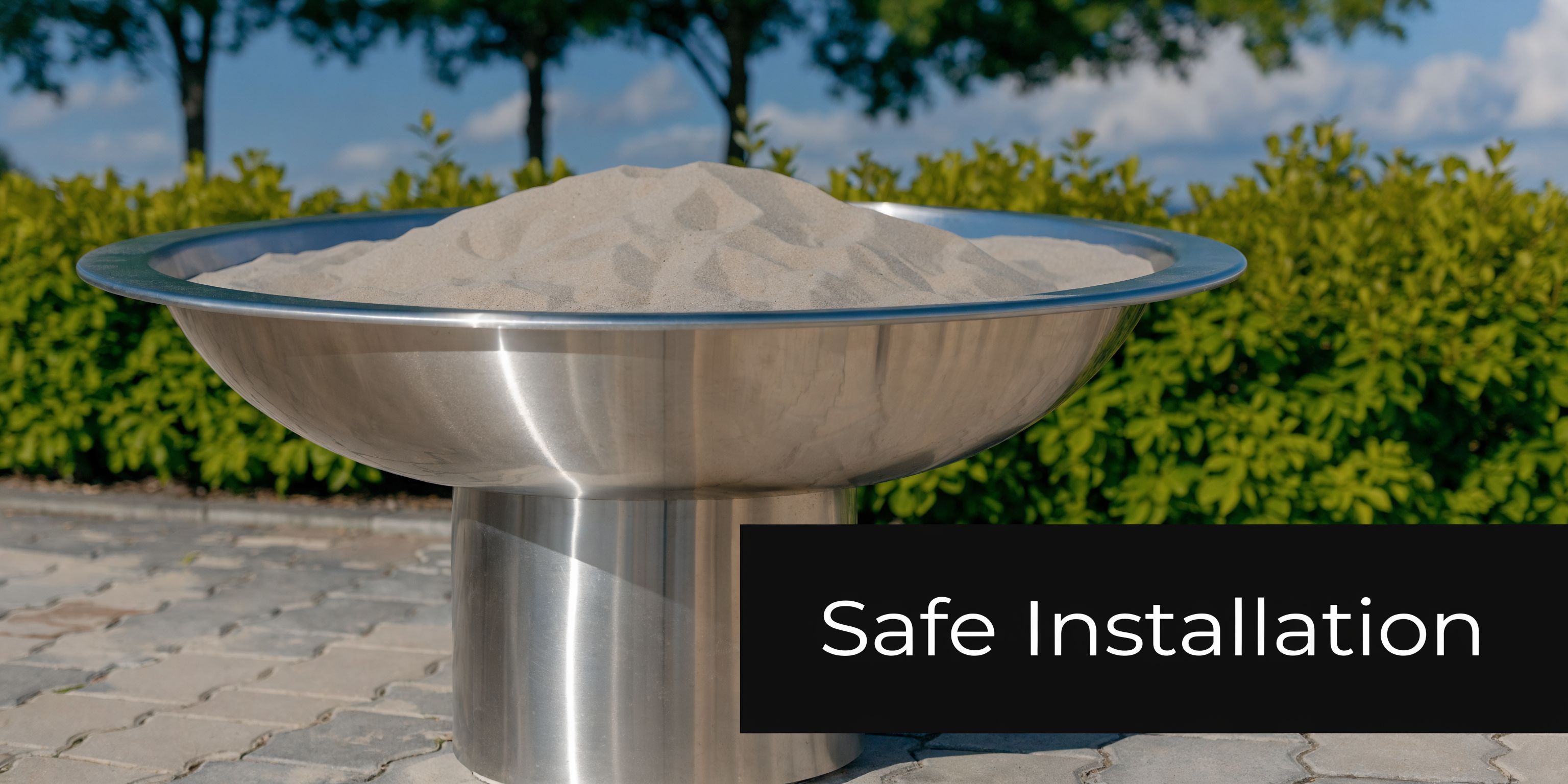
Before delivery, inspect the table itself, not just the sand specification. Look for cracks, sharp edges, loose fixings, blocked drains, and residue left from storage or packaging. Check the cover as well. A poor-fitting cover usually leads to leaf litter, animal contamination, and extra labour within the first week.
Placement matters just as much. Keep the table clear of roof drip lines, garden runoff, and irrigation overspray. If the sand table sits inside a larger play area upgrade, review the adjoining surface at the same time. This guide to playground surfacing materials helps with that broader site check.
Clean out the basin fully before the first load goes in. Remove dust, leaves, packaging scraps, and any standing water. Test drainage points with a small amount of clean water so you know they are clearing, not just looking open from above.
Then confirm the practical details that affect daily use. Staff need enough room to fit and remove the cover without dragging it through the sand. Access paths should stay firm and slip-resistant. In Australian schools, this also supports safer circulation around the play space and reduces avoidable access barriers for children using mobility aids or requiring closer adult assistance.
Do not tip the whole load into one end of the table. That creates uneven depth, more airborne dust, and more time spent correcting the surface by hand.
A controlled fill works better:
The goal is simple. Start with sand that is settled, even, and comfortable for play.
For schools in dry inland areas, a light mist during installation can help suppress nuisance dust. In humid coastal settings, use less water and check that the table drains properly before opening it for use. Local climate changes the setup. The method should suit the site, not a generic overseas checklist.
Freshly installed sand should feel slightly damp, not soaked. It should hold shape briefly in a child’s hand and then break apart without sticking to every surface. If water is pooling or the sand is clumping heavily, the table has been overwatered.
That creates practical problems straight away. Wet sand tracks further onto paths, compacts faster, and can make hygiene harder to manage if the basin stays damp for long periods.
The same faults show up repeatedly on school sites:
Before students use the table, complete a short commissioning check. Confirm that the fill depth is even, the surface is free of sharp or foreign material, and the surrounding path is clear of spilled sand. Fit the cover once, remove it once, and make sure staff can do both without contaminating the basin.
For schools and early learning settings in Australia, installation should also support the broader compliance picture. The table needs to be safe in use, easy to supervise, and practical for children with different access needs. That includes checking approach space, reach range, and circulation around the unit alongside the sand condition itself. AS 4422 and AS 1428.1 are relevant at this stage because the finished setup, not just the product invoice, is what affects safety and access in practice.
A careful install saves rework. It also gives staff a cleaner baseline for supervision, hygiene, and compliance checks.
At 8:30 on a Monday, the cover comes off, staff see a few leaves on the surface, and the table looks fine. By morning tea, a child has uncovered damp, compacted sand in one corner and a buried food wrapper near the edge. That is how a manageable cleaning task becomes a supervision and hygiene problem.
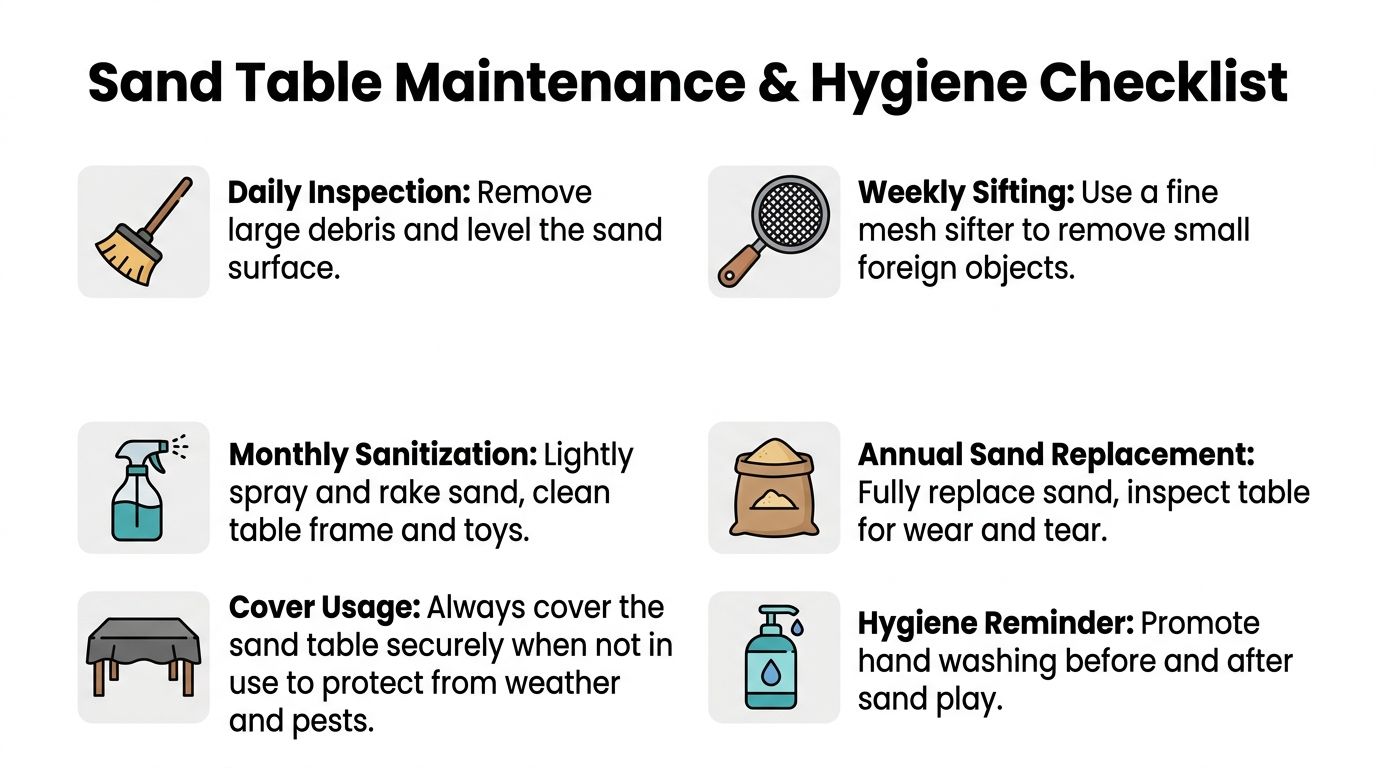
Good sand condition depends far more on routine than on the original purchase. In schools and early learning settings, the practical question is simple. Who checks it, how often, and what triggers closure or replacement?
For Australian sites, that routine should sit inside the broader risk and inspection system used for playgrounds and outdoor learning areas. If your staff already follow a scheduled school playground safety standards inspection process, add the sand table to that cycle rather than treating it as a standalone toy.
A pre-use check should happen before children arrive at the table, not once play has started. This takes minutes if the table was left in good order the day before.
Check these items first:
High-use tables also need contact-point cleaning. Wipe rims, edges, scoops, funnels, and nearby touch surfaces as part of normal cleaning rounds.
Weekly maintenance is where sites either stay in control or slowly drift into repeated complaints from staff and families.
Use the weekly check to look below the surface and around the table, not just at the top layer. Corners, edges, and low spots tend to collect damp material, buried loose parts, and organic matter. Covers also need attention. A cover that sags, tears, or traps water often creates the hygiene problem it was meant to prevent.
A practical weekly routine includes:
Schools do not need an elaborate protocol copied from a US product page. They need a documented cleaning method that suits the table design, the local climate, and the setting's infection control procedures.
A sensible periodic hygiene process includes emptying or isolating the sand, sieving out debris, cleaning the basin and contact surfaces, allowing the material to dry properly, and replacing any sand that cannot be restored to a clean and acceptable condition. The exact disinfecting products and cleaning steps should align with the setting's approved procedures and manufacturer instructions. For education and care services, use maintenance and infection-control practices consistent with guidance from the NSW Department of Education.
Drying matters in much of Australia. In humid coastal areas, sand that looks dry on top can stay damp underneath for days. In shaded southern sites through winter, a table may need longer out of service after cleaning. In hotter inland regions, the opposite problem appears. Fine dry material can become dusty quickly and may need moisture control through cover management and more frequent inspection.
Top-up decisions should be based on condition, not calendar dates.
Top up the sand if the main issue is gradual loss through play, tracking, or cleaning and the remaining material is still clean, free-draining, and suitable for use. Replace it when contamination is persistent, odour returns after cleaning, the texture has broken down, or the sand stays compacted and damp despite maintenance. After animal intrusion or repeated organic contamination, replacement is often the lower-risk choice.
That choice costs more upfront, but it can save staff time and reduce the chance of repeated closures.
Top up when:
Replace when:
Even clean sand becomes difficult to manage if the operating rules are loose. Keep food and drink away from the table. Require handwashing after play. Store tools off the surface, not buried in the sand overnight. Refit covers properly every time.
The best-run sites make closure decisions clear. If contamination is found, staff know who to notify, how to isolate the table, and when it can reopen. That clarity protects children, keeps the area usable, and makes compliance much easier to demonstrate if an incident or complaint is investigated.
A sand table can be technically safe and still exclude children. That is the compliance gap many sites miss. They focus on the sand inside the basin and forget the route to it, the surface around it, the reach range, and whether a child using a wheelchair or mobility aid can participate without assistance.
In Australia, accessibility is not a decorative extra. It sits alongside safety and risk management. The relevant framework includes AS 1428.1 for access and mobility and obligations under the Disability Discrimination Act 1992. For school and public projects, this should shape table selection and site layout from the start, not after procurement.
A lot of online advice about sand tables comes from US product pages and parenting blogs. Those sources often focus on toy use or indoor sensory setups. They do not deal properly with Australian public-space obligations.
That gap matters. A source discussing this issue notes that 2025 data from Play Australia indicates 28% of public playgrounds fail accessibility audits due to loose sand surfacing, highlighting the need to address Australian requirements directly in sand table design and placement, as outlined in this discussion of accessible playground sand guidance in Australia.
The point is not just legal exposure. It is practical inclusion. If the surrounding surface is unstable, the table might as well not exist for some users.
Accessible sand play depends on more than table height.
Key considerations include:
For broader context on site obligations and safer design thinking, this overview of school playground safety standards is a useful companion reference.
Minimum compliance often produces a technically passable result that still feels awkward in use. A better result comes from asking a more direct question: can children with different abilities reach, use, and enjoy the sand table with dignity?
A compliant sand table should not require a child to ask for a workaround before they can play.
That may influence the shape of the basin, the surrounding circulation space, the position of loose tools, or the decision to pair sand with adjacent sensory elements that broaden participation.
Facilities managers should watch for these recurring issues:
The best Australian projects treat accessibility as a design input, not a retrofit. That approach usually improves supervision, circulation, and general usability for everyone on site.
No. Beach sand brings too many unknowns. Salt, organic matter, contamination, and inconsistent grain behaviour make it a poor fit for educational or public play settings. Even if it looks clean, it is not a controlled play product.
It is a poor choice in most cases. Builder’s sand is bought for construction outcomes, not child contact, dust control, or sensory play quality. It may be coarse, variable, or carry fines that make maintenance harder.
It affects it more than many buyers expect. General US-focused guides often miss Australian climate impacts, and emerging 2025 trends cited in one source report a 22% increase in sand replacements in humid regions due to bacterial growth, while fine play sands can compact poorly in 40°C+ heat and show 40% faster erosion than coarser AU-specific granite washes, according to this discussion of climate-related issues in playground sand selection.
In plain terms, humid locations need closer hygiene control, and very hot sites need careful attention to how quickly fine sands dry out, shift, or break down.
Treat it as a site maintenance issue, not just a sand issue. Remove the table from use, inspect the surrounding ground and adjacent structures, clean out affected material if needed, and fix whatever is attracting or harbouring pests. Covers, drainage, and food control often matter as much as the sand itself.
There is no single replacement interval that suits every site. Usage levels, exposure, weather, hygiene controls, and local contamination risks all change the answer. Replace based on condition and risk. If the sand remains clean and functional, top-up may be enough. If contamination or breakdown is recurring, replace it.
The same safety principles apply, but indoor settings usually demand stricter dust control and tighter housekeeping. Outdoor settings place more pressure on drainage, covers, runoff management, and weather exposure. For indoor use, low-dust behaviour should sit high on your specification list.
Buying on price and appearance alone. If the supplier cannot clearly explain compliance, intended use, and material characteristics, the sand is not a safe procurement decision for a child play environment.
If you are planning a new sand play area or upgrading an existing one, Kidzspace can help you assess layout, accessibility, safety, and long-term practicality so the finished space works for children, staff, and site managers alike.



Copyright © Kidzspace. All Rights Reserved.
Copyright © Kidzspace. All Rights Reserved.