



You’re probably looking at a site plan, a budget line, and a shortlist of suppliers that all claim their sand and play table is “commercial grade”. On paper, they can look similar. In practice, they’re not.
For a school or council, a sand and play table isn’t a casual add-on. It’s a high-contact public asset that has to handle weather, constant use, maintenance realities, and accessibility expectations without becoming a hygiene issue or a replacement problem two summers in. The right unit supports child development and earns its place. The wrong one turns into a warranty argument and a failed audit.
A committee usually starts with the same question: what will get used? Slides and climbers grab attention first, but when a playspace opens, staff often notice the same pattern. Children return to the sensory zone repeatedly because it supports open-ended play, mixed ages, and social interaction without needing instruction.
That matters when you’re specifying for an early learning centre, a primary school, or a public park. A good sand and play table gives children something they can shape, share, test, pour, fill, sort, and negotiate around. It doesn’t dictate one outcome. It creates many.
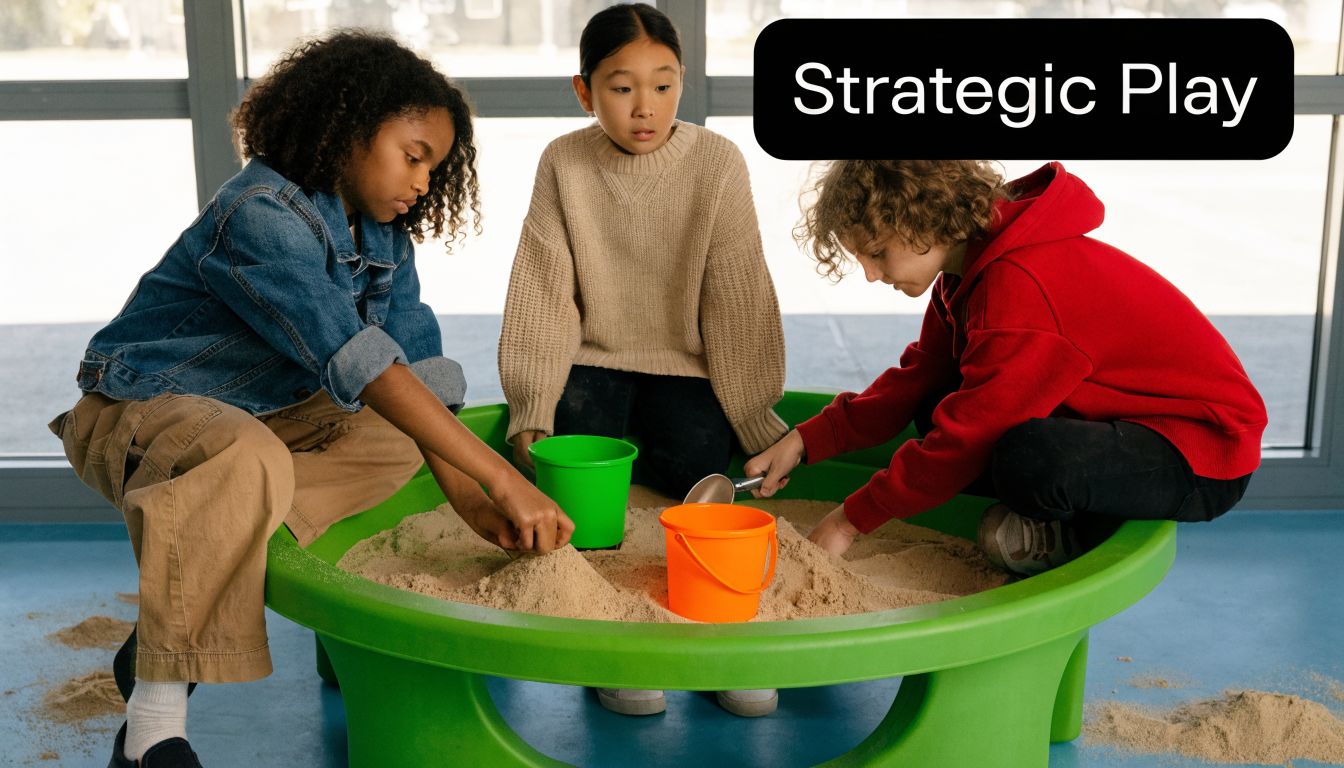
The developmental case is stronger than many procurement teams realise. A 2021 University of Sydney study on sand and water play found that regular access to sand and water tables increased fine motor skill development by 32% and gross motor coordination by 28% compared to non-sensory play areas. That’s a practical outcome, not a soft claim.
Children lifting buckets, scooping material, tipping containers, and manipulating smaller tools are building hand control and coordination. At the same time, they’re making decisions. How much will fit. What happens when wet sand changes texture. Which channel will carry water further.
These aren’t separate benefits. They stack.
Practical rule: If an item supports solo play, parallel play, and group play in the same footprint, it usually delivers better long-term value in a public setting.
There’s also a planning advantage. A sand table can serve children who aren’t ready for more physically demanding equipment, and it gives educators and carers a space for guided activities. That’s one reason sensory equipment remains central in modern play planning, as discussed in this overview of the importance of sensory play.
Procurement decisions often get distorted by unit price. That’s understandable, but it misses the point. You’re not buying a tray on legs. You’re buying a durable, safe, inclusive platform for repeat use.
A well-specified sand and play table can do work that several lower-value items can’t. It supports developmental outcomes, broadens age appeal, and keeps children engaged for longer periods through flexible play rather than fixed play sequences. That’s why it belongs in the same conversation as shade, surfacing, circulation, and accessibility. Not as an afterthought.
A domestic sand table and a public-use sand and play table have about the same relationship as a home oven and a commercial kitchen range. Both can do the job in a basic sense. Only one is built for relentless use, rough handling, cleaning cycles, and compliance scrutiny.
That distinction matters because many products marketed online look suitable until you review the details. Lightweight frames, shallow pans, weak fixings, poor drainage, and exposed edges might pass in a backyard. They won’t hold up in a school yard or council park.
A commercial-grade unit is designed for frequency, supervision realities, and group interaction. It assumes several children will use it at once. It assumes adults won’t be able to stop every hard knock, tool scrape, or climbing attempt. It assumes weather will be unforgiving.
Here are the features that usually separate proper public equipment from dressed-up domestic stock:
The educational value also improves when several children can use the table together. A Monash University study on school sand table use found that primary school children using sand tables at least three times a week showed 25% higher social competence scores, with cooperative play instances rising by 35%. In procurement terms, that supports a larger point: group-capable design isn’t a luxury feature. It’s part of the product’s purpose.
Procurement officers don’t need to become playground engineers, but a few terms are worth pinning down before any quote comparison.
| Term | What it means in practice |
|---|---|
| Load-bearing capacity | How much static force the unit can tolerate without distortion or failure |
| Vandal resistance | Resistance to loosening, tampering, surface damage, and component theft |
| Drainage design | How the unit sheds water and avoids stagnant residue |
| Surface durability | How finishes respond to UV, abrasion, and repeated cleaning |
| Accessible reach | Whether children with different mobility needs can actually use the table |
The same failure patterns come up repeatedly.
A shallow plastic tub dropped into a timber surround looks economical, but it often loosens, warps, or traps grime around the lip. Thin coated steel can chip, then corrode. Flat-bottom pans without proper outlets hold dirty water. Decorative timber elements can become maintenance-heavy if they weren’t chosen for external exposure.
Commercial-grade means the product has been designed around misuse, weather, and time. If a supplier only talks about appearance, keep asking questions.
There’s also a scale issue. A table can be technically sturdy and still fail operationally if only two children can use it comfortably in a setting where eight gather around it. Crowding leads to conflict, tool swinging, and side-loading that the product may not have been designed for.
Ask suppliers to explain the unit as an asset, not a catalogue item. How is it fixed? How is it drained? Which parts wear first? What’s the cleaning method? What happens after years outdoors, not just on delivery day?
If those answers are vague, you’re probably not looking at a true commercial sand and play table.
In Australia, materials decide whether a sand and play table ages well or starts failing early. The issue isn’t just heat. It’s the combination of UV, humidity, wind-blown grit, salt exposure in coastal sites, and inconsistent maintenance across busy public settings.
A supplier can present a tidy render and still specify the wrong material mix for your region. That’s why material selection should be written into your procurement criteria, not left as a generic note about “suitable for outdoors”.
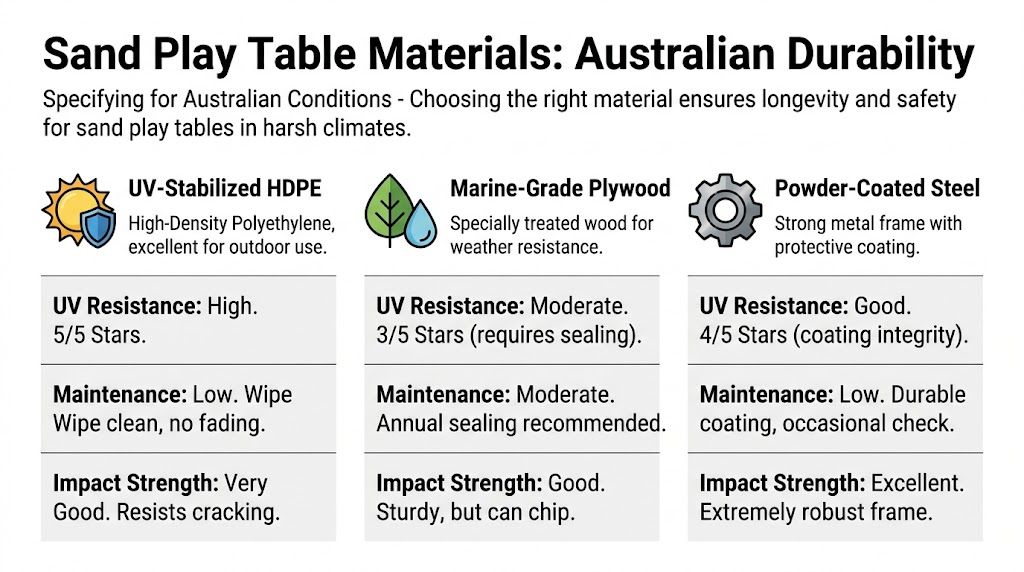
For tops, side panels, and contact surfaces, UV-stabilised HDPE is often the safest all-round specification. It handles wash-down well, doesn’t rely on paint integrity for appearance, and generally asks less from maintenance teams. In centres where staff need quick cleaning and consistent presentation, HDPE is hard to beat.
For frames and structural members, powder-coated steel can work well if the coating system and fabrication quality are right. The main risk isn’t strength. It’s coating damage at edges, welds, and fixing points. Once that barrier is compromised, the maintenance burden rises fast, particularly in coastal air.
Timber, especially robinia in well-designed commercial applications, brings a different value. It sits naturally in naturally-oriented projects and can soften the visual feel of a playground. But not all timber is equal, and not all treatments are suitable for the same exposure conditions.
The most dependable specifications are the ones tied to known performance standards. For sand tables in Australia, UV-stabilised HDPE or robinia timber treated to AS/NZS 1604.5:2021 are critical material choices. The same source notes that robinia exhibits 25% higher compressive strength and retains 95% structural integrity after 10-year exposure to 40°C+ temperatures, based on CSIRO trials.
That’s useful because it shifts the conversation away from vague claims like “weather resistant”. Procurement teams need to know what happens after repeated exposure, not just what looks solid in a brochure.
| Material | Best use | Strengths | Trade-offs |
|---|---|---|---|
| UV-stabilised HDPE | Pans, side walls, touch surfaces | Low maintenance, good UV performance, easy cleaning | Can look utilitarian if detailing is poor |
| Powder-coated steel | Frames, supports, brackets | Strong, rigid, suitable for heavy-use structure | Needs careful coating quality and inspection in corrosive environments |
| Robinia timber | Feature surrounds, natural play aesthetic | Strong, durable, landscape-friendly appearance | Usually higher upfront cost and needs smart detailing to avoid moisture traps |
A coastal council site and an inland school don’t need the same material priorities. Near salt air, coating quality and stainless hardware matter more. In high-humidity areas, drainage and rot resistance move up the list. In exposed western sites, UV stability becomes paramount.
Generic imported products often fall short. They may be fine in milder climates, but Australian conditions are less forgiving. If the supplier can’t explain how the product handles UV exposure, moisture, and cleaning agents, assume the burden will shift to your maintenance team.
Specify the environment, not just the product. “Outdoor use” is too broad to protect you.
Material selection doesn’t stop at the frame and pan. Fill material affects wear, drainage, hygiene, and how children use the equipment. For projects considering different aggregates and textures, this practical guide to sharp sand is useful background. It helps distinguish construction-oriented sand types from materials better suited to play contexts.
In public play settings, the wrong fill can increase abrasion, compact badly, or create cleaning headaches. The table itself may be durable, but the play experience still degrades if the contents don’t suit the design intent.
For most schools and councils, a sensible baseline is straightforward:
A cheap material decision rarely stays cheap. It usually reappears later as fading, splitting, rust staining, swelling, or early replacement.
A sand and play table can look harmless because it sits low to the ground and doesn’t involve height or speed. That’s exactly why some buyers underestimate the compliance side. Public-use sensory equipment still needs rigorous attention to drainage, edges, surfacing, access, and hygiene.
Meeting the minimum standard is the starting line. It isn’t the whole job.
Procurement teams often focus on visible risks and overlook hidden ones. On sand and water units, poor drainage is one of the most common specification failures. Standing water creates slip risk, hygiene risk, and material stress at the same time.
The performance difference is not minor. Compliance with AS 4685.6-2017 and integrated drainage design is vital because tables with integrated drainage reduce water retention by 85%, help prevent bacterial growth that can reach 10^6 CFU/m² in poorly drained models, and extend material lifespan by 40% under intense UV. That one detail affects safety, maintenance, and replacement cost.
A supplier saying “built to Australian standards” isn’t enough. Ask what that means in the installation, not just on the brochure.
Key points to verify include:
If you need a broader compliance reference point before signing off specifications, this guide to school playground safety standards is a useful operational checklist.
The unit itself can be compliant on paper and still be unsafe in service if the drainage, surfacing, or access route is wrong.
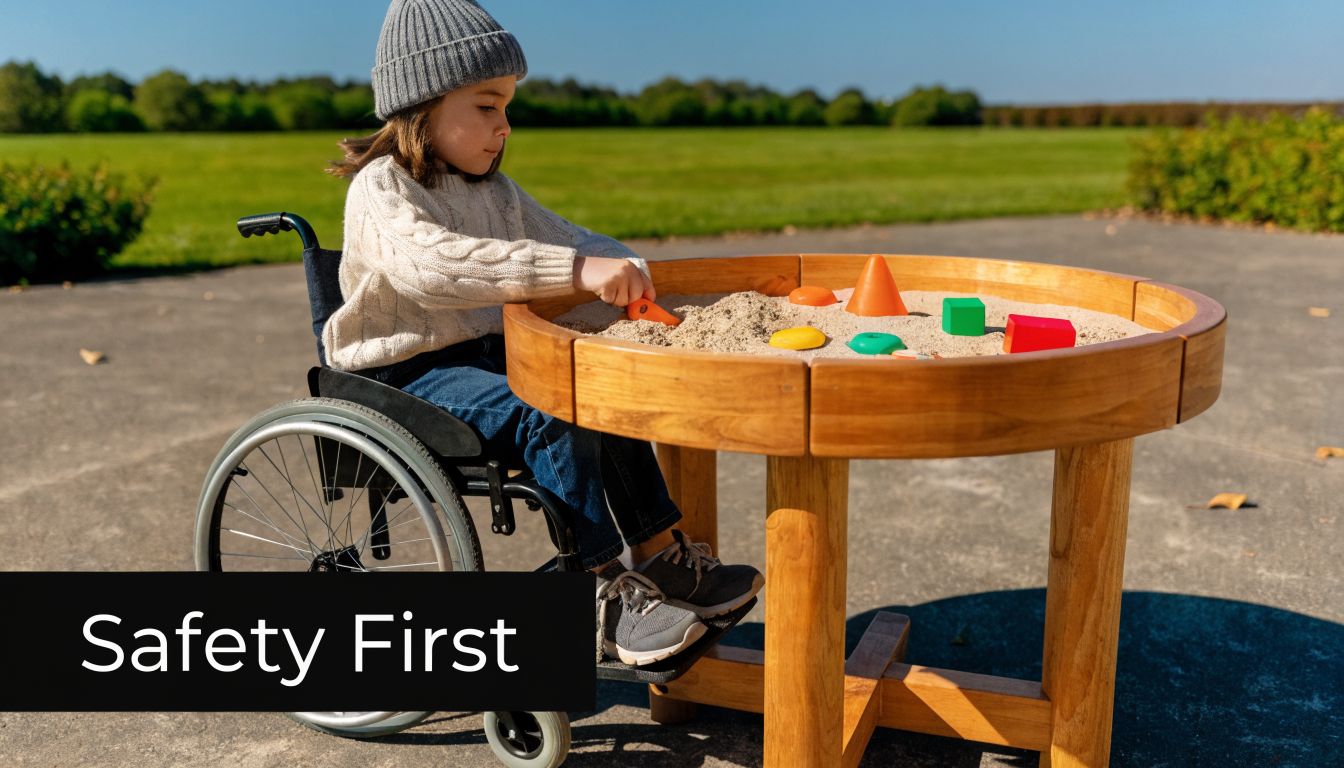
True safety includes access. A table that some children can’t reach, approach, or use comfortably isn’t serving the public role it was bought for.
That means looking beyond token inclusion. An accessible sand and play table should allow approach without awkward turning conflict, offer usable edge access, and provide enough knee and reach space for children using mobility devices. The table height and lip depth matter. So does the surrounding path.
Just as important, inclusive design should consider children who need predictable sensory feedback. Some children benefit from calmer layouts, simpler tool storage, and fewer unnecessary obstacles around the play zone. Inclusion is often won or lost in these small design decisions.
A short-term procurement mindset asks, “Will this pass?” A better question is, “Will this still be safe and workable after years of use?”
The difference shows up in the details:
| Minimum approach | Better long-term approach |
|---|---|
| Basic outlet with awkward cleaning access | Drainage system designed for frequent flushing and inspection |
| One nominal access point | Multiple usable access positions for mixed abilities |
| Finish chosen for appearance | Finish chosen for hygiene, UV stability, and safe touch |
| Standard footprint | Layout that supports carers, educators, and mobility access |
The standard matters. So does judgement.
Choose designs that reduce maintenance risk, support inclusive use, and make inspection simple. If staff can clean it properly, children can reach it properly, and water doesn’t sit where it shouldn’t, you’re already ahead of many public installations.
The right sand and play table on the wrong site still underperforms. Sizing and placement decide whether children can use it easily, whether supervision works, and whether the table becomes a busy hub or an awkward obstacle.
Generic catalogue selection often falters. A model might be structurally sound and fully compliant, yet still be a poor fit because the approach path is cramped, the height is wrong for the age group, or the water source is impractical.
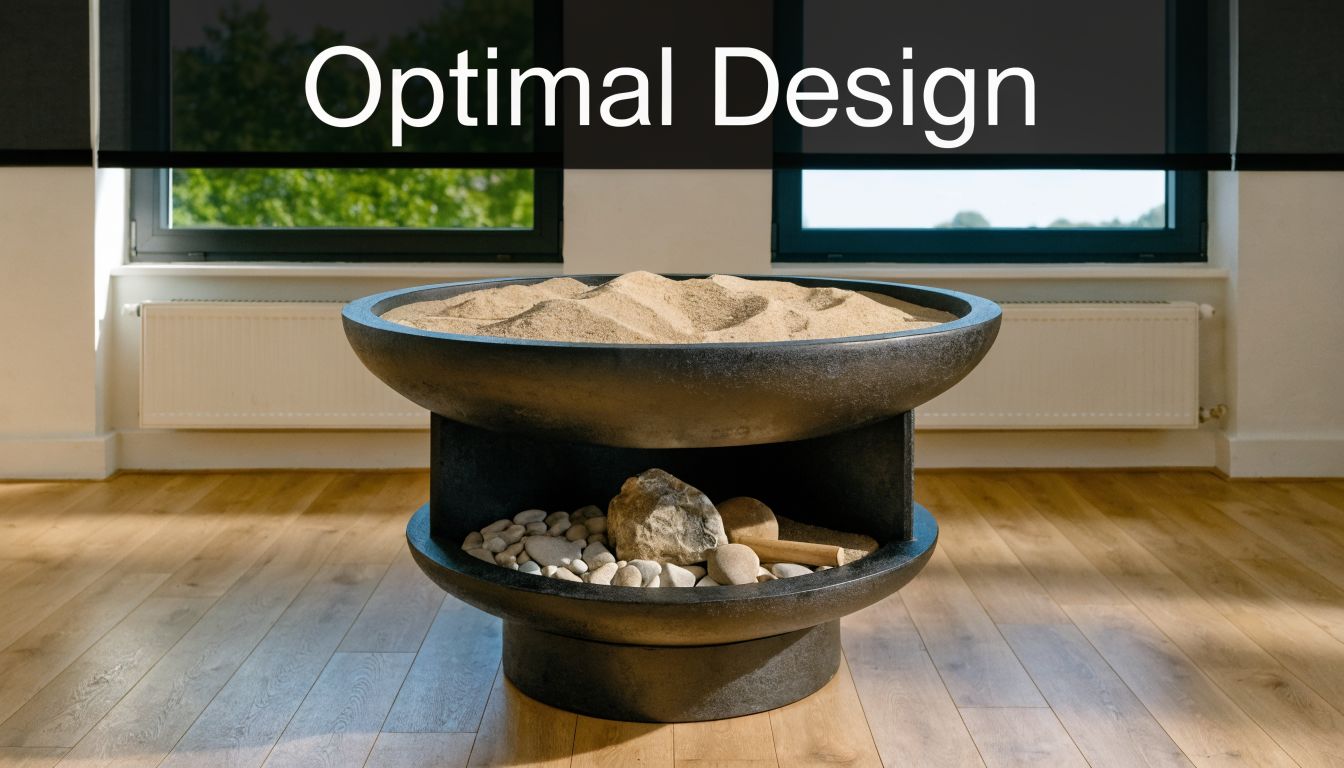
Early learning centres usually need lower profiles, simpler edges, and broad perimeter access so educators can assist without crowding the children. Primary schools can support more complex formats, including divided zones for sand, water, and loose-part play.
Inclusive design should be part of sizing, not bolted on later. A projected trend for 2026 is stronger demand for sensory-inclusive tables for neurodiverse children, who represent 1 in 20 Australian children, including adjustable-height, wheelchair-accessible tables and designs aligned with council mandates for inclusive play, as noted in this overview of sensory table design trends. Since that’s forward-looking, treat it as a procurement direction rather than a current compliance shortcut.
Round, square, and rectangular tables each produce different use patterns.
A circular unit often supports more equal access around the perimeter and can reduce “ownership” of corners. Rectangular layouts can work better where the site is narrow or where one side needs to remain open for mobility access. Split-level or dual-basin tables are useful when educators want separate activities, but they also add cleaning complexity.
Some commercial units are designed to accommodate a clear number of simultaneous users. As a practical benchmark from the verified data, a 2.5 m x 2.4 m unit can support 8 to 11 children in shared use when designed properly. That’s useful, but it shouldn’t be treated as a universal formula.
A better site-based approach is to ask three questions:
If the path to the table is awkward, the table isn’t accessible, no matter what the product sheet says.
The best installations usually get the ordinary things right.
Councils sometimes want the most feature-rich unit available. Schools sometimes do the opposite and under-specify to avoid mess. Both can miss the sweet spot.
A better choice is the table staff can supervise, children can share, and cleaners can maintain. That usually means a strong form, sensible scale, clear access, and just enough complexity to support different play patterns without making the unit hard to operate day to day.
At this stage, many otherwise sound projects lose value. The product may be right in principle, but the procurement process doesn’t force clear answers, and the maintenance plan is left too vague. Months later, the table is difficult to clean, missing minor parts, or being questioned during an inspection.
A good sand and play table should be bought like any other public-use asset. That means documented compliance, known maintenance tasks, and a realistic view of total ownership rather than just purchase price.
Many generic sand tables fail council audits because they’re missing features required by Australian Standards, especially drainage details that prevent bacterial growth, as noted in this article on arranging and equipping sand and water areas. That should make procurement officers cautious about broad supplier claims.
Use a checklist that pushes past marketing language:
A cheap unit can become expensive if it needs frequent sanding, sealing, drain clearing, repainting, or parts replacement. Procurement officers should compare total cost of ownership, not just the invoice total.
That means weighing:
| Cost factor | Low upfront product | Better lifecycle product |
|---|---|---|
| Cleaning time | Higher if design traps residue | Lower if access and drainage are well resolved |
| Surface upkeep | More touch-up work | Less frequent intervention |
| Parts replacement | Harder if components are proprietary or flimsy | Easier if wear parts are standardised |
| Service disruption | More likely | Less likely |
The best maintenance plans are simple enough that staff will follow them. Complex procedures usually collapse under daily workload.
A practical routine looks like this:
For teams that need a broader asset-care framework, this playground maintenance checklist is a practical reference.
Buying a better table without budgeting for inspection and cleaning is only doing half the job.
When I review quotes, I look for how a supplier answers ordinary operational questions. Not just the polished ones.
Ask these directly:
Weak suppliers drift back to appearance and general reassurance. Strong suppliers answer with detail.
Write your essential requirements into the brief before quotes come in. If you wait until comparison time, cheap non-compliant options have already shaped the conversation.
That one discipline usually leads to better outcomes than any last-minute negotiation.
A public-use sand and play table earns its keep when it does three things well. It meets Australian safety expectations, survives Australian conditions, and welcomes the broadest possible range of children into play.
That requires more than picking a shape and colour from a catalogue. You need to look closely at drainage, fixings, accessible reach, surface durability, material behaviour in heat and humidity, and how the unit will be cleaned by real staff on a busy site. Those details decide whether the table remains an asset or becomes a maintenance issue.
The strongest projects also recognise that sensory play is not secondary play. It supports fine motor development, group interaction, experimentation, and imaginative use in a way few fixed items can. That’s why sand tables continue to hold their place in serious school and council specifications.
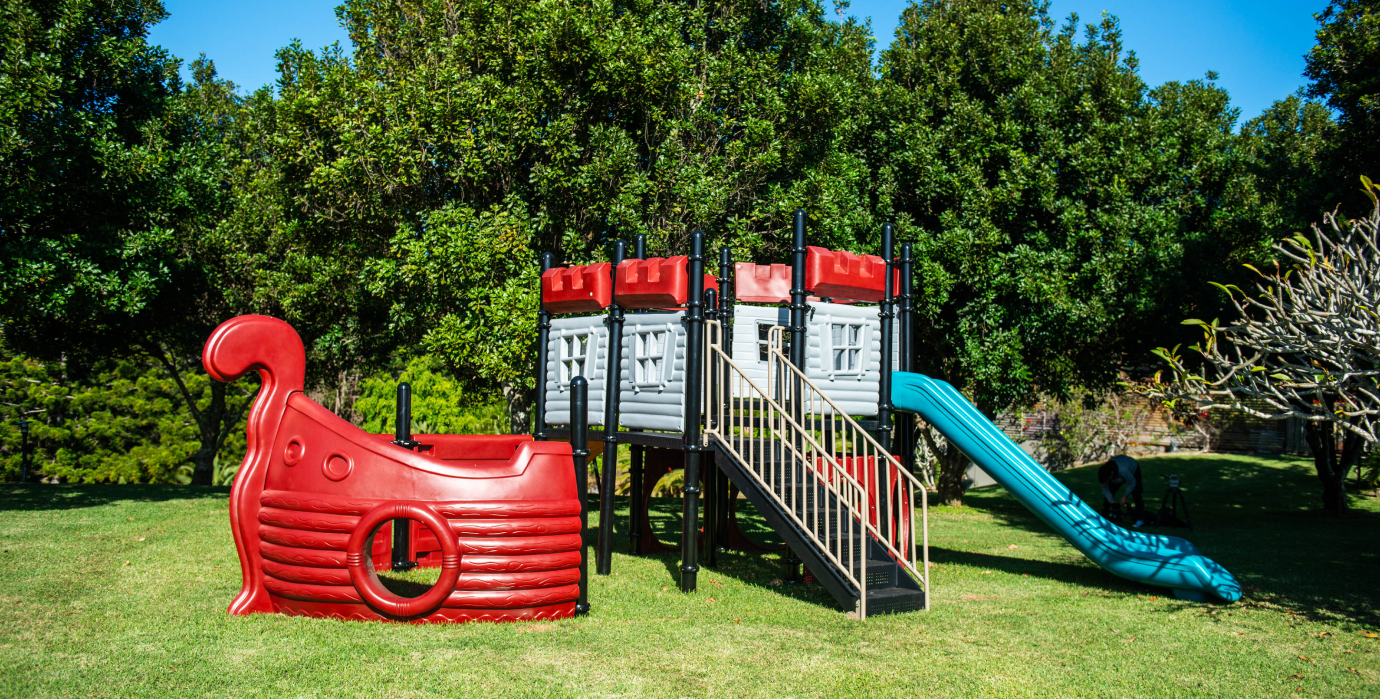
There’s also room to create something distinctive. Thoughtful theming, whether it draws on pirate, forest, vehicle, or other play narratives, can make a sensory zone feel like a destination rather than a filler item. When that creativity sits on top of sound specification, the result is both engaging and durable.
If you’re procuring for a school, early learning centre, or local council, treat the sand and play table as core infrastructure. Write the brief carefully. Ask harder questions. Specify for the site you have, not the catalogue ideal.
Kidzspace helps schools, councils, and community organisations plan and deliver playground equipment that’s durable, compliant, and designed for real use. If you’re weighing options for a sand and play table, a Kidzspace consultation can help you clarify site needs, accessibility goals, material choices, and long-term maintenance before you commit to a purchase.



Copyright © Kidzspace. All Rights Reserved.
Copyright © Kidzspace. All Rights Reserved.