
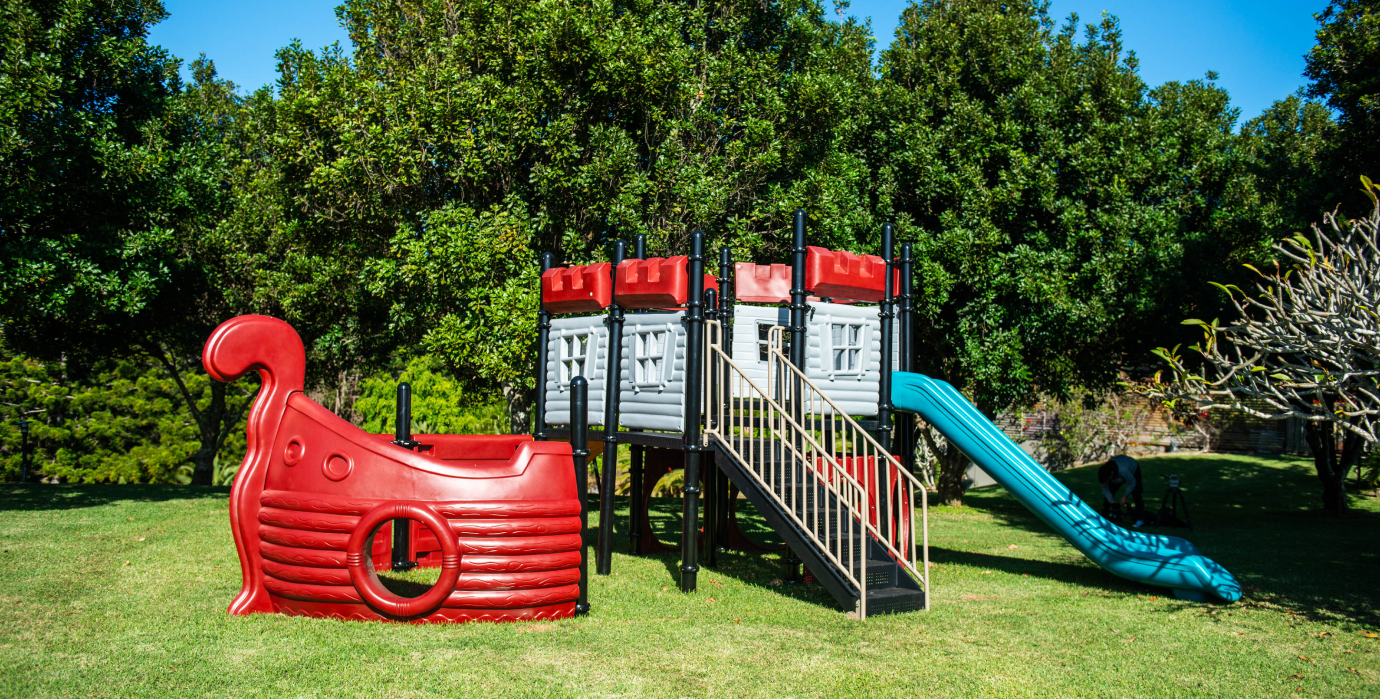

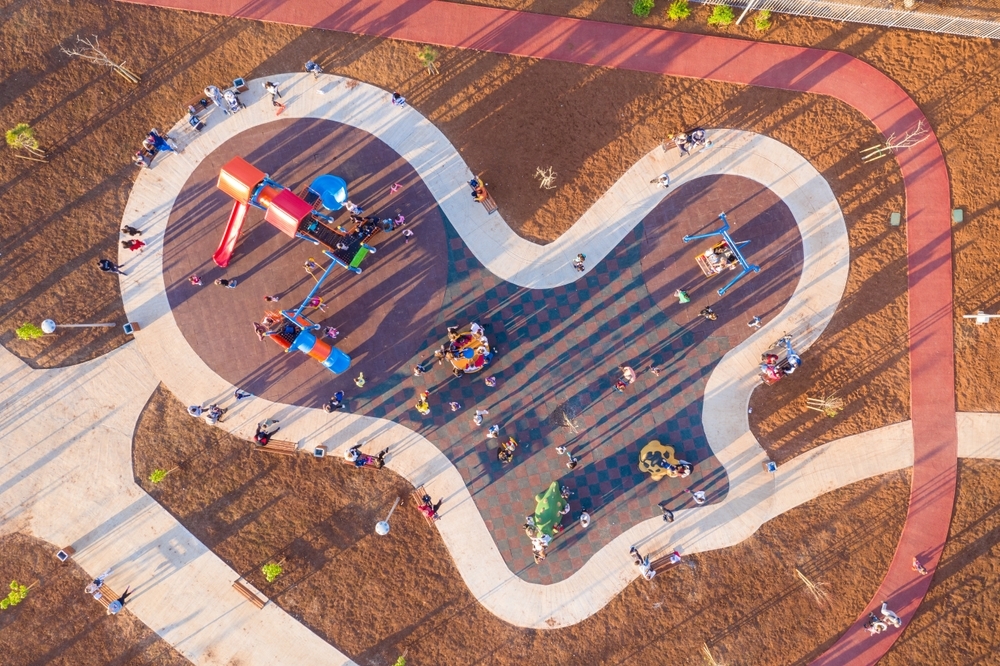



You're often in the same position when a new playground brief lands on the table. The site looks straightforward at first. Then the actual questions start. How do you handle different age groups, school pick-up peaks, shade, access, maintenance crews, sports traffic, and the politics of proving community value to a committee that wants more than a nice concept sketch?
That's why north lakes playground is useful to study. Not because it's a perfect project, and not because every suburb should copy it, but because it shows what happens when play is treated as part of a broader recreation system rather than a token item on a site plan. For councils, schools, and developers, that distinction changes everything.
If you're planning a new park, the first mistake is usually defining the job too narrowly. A committee asks for a playground. What they usually need is a multi-use public space that can absorb daily local use, support different forms of recreation, and still be maintainable after the opening photos are taken.
That is what makes North Lakes worth analysing. A key milestone was the May 2009 opening of the sports complex, which established the site as the largest recreational complex managed by the Office of Parks & Trails at the time, according to this North Lake Regional Park listing. The same listing describes a broad amenity mix that includes a playground, picnic pavilions, restrooms, basketball courts, tennis courts, sand volleyball courts, multiple ball fields, soccer fields, multi-use fields, concession stands, a perimeter trail loop, and exercise stations.
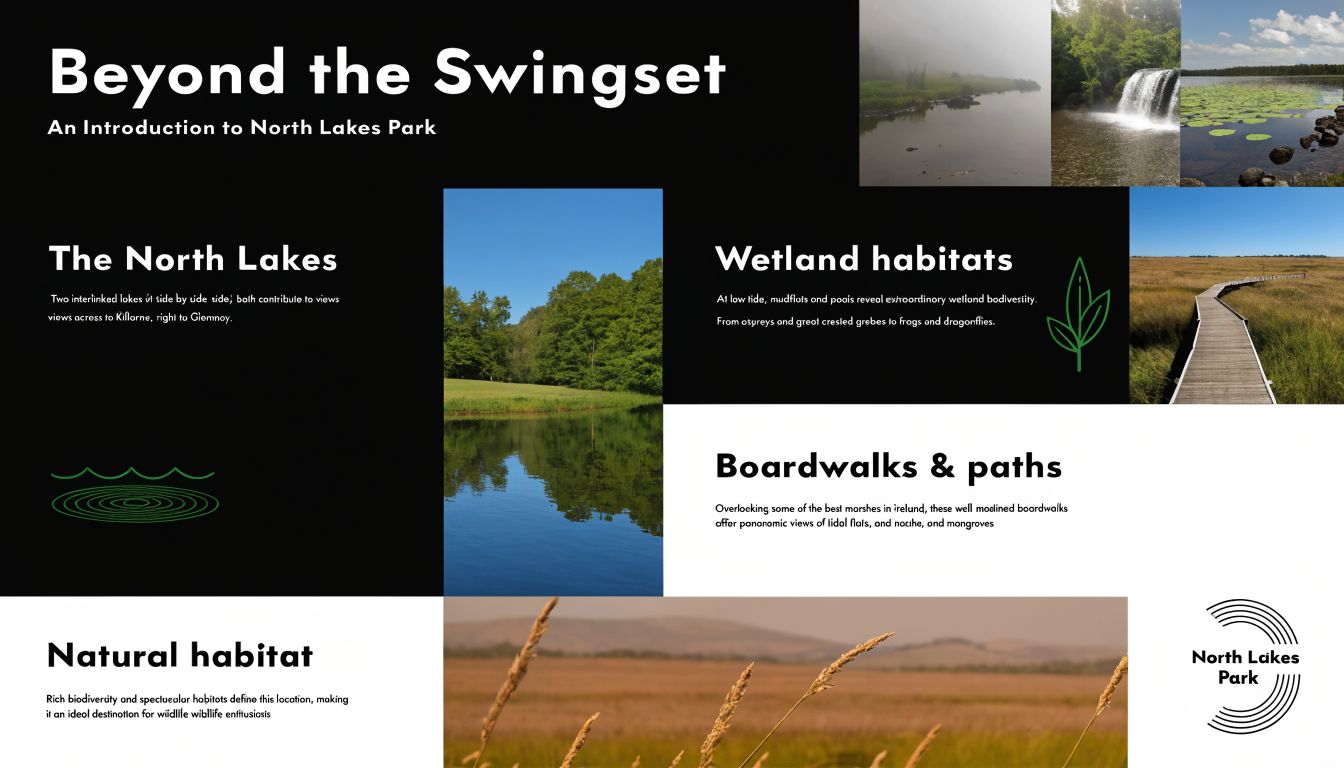
For an Australian audience, the lesson isn't that every suburban site needs sports fields and a trail loop. The lesson is that the park works as an all-ages destination. Children come for play. Older siblings drift to courts and open kickabout space. Parents need seating, sightlines, parking, toilets, and somewhere tolerable to spend time. If those elements aren't planned together, supervision becomes harder and dwell time drops.
I've seen many projects fail because the playground designer solved the play brief but ignored the precinct brief. The result is usually predictable:
A playground isn't a standalone object. It's one component in a movement network, supervision network, and maintenance network.
North Lakes is a stronger case study than a standard park review because it shows how a recreation precinct can support overlapping user groups without reducing play to a leftover inclusion. That's also why councils looking at comparable projects can learn from examples beyond their own municipality, including approaches discussed in this Maitland park playground example.
When committees review projects like this, I usually push them to ask three practical questions. Not “what equipment do we want?” but:
Those questions move the conversation beyond the swingset. That's the right starting point for any serious public play project.
The strongest feature of north lakes playground isn't one hero tower or one signature item. It's the decision to spread play value across multiple zones. According to the North Lakes Town Park at Lake Eden overview, the park has three separate playgrounds, and the main play area was upgraded in December 2023 with a new playground and extra parking.
That matters because play doesn't happen evenly. Toddlers, primary-age children, and older kids use a park differently. If all activity is forced into one concentrated footprint, supervision becomes messy and conflict rises fast. Separate zones give carers options and reduce the feeling that every child has to use the same equipment in the same way.
The reported mix includes slides, climbing structures, swings, in-ground trampolines, a play water pump, and a track rider. That's a deliberate combination of sensory, motor, and social play experiences rather than a single composite unit doing all the work.
Here is the design logic in plain terms:
| North Lakes Play Zones Overview | Target Age Group | Key Equipment & Features |
|---|---|---|
| Distributed play node | Younger children with carers nearby | Slides, swings, lower-intensity play choices |
| Active movement node | Mixed ages, especially children seeking challenge | Climbing structures, track rider, open movement opportunities |
| Sensory and varied engagement node | Mixed abilities and repeat visitors | In-ground trampolines, play water pump, diverse movement and interaction |
A table like this is useful during concept design because it forces the team to think in behavioural zones, not catalogue pages.
A varied equipment mix works when each item has a clear job.
What doesn't work is stuffing all of those into one congested footprint. When designers chase quantity over spacing, the site feels noisy, supervision lines collapse, and circulation paths start cutting through fall zones.
Practical rule: separate high-energy movement items from quieter or younger-user areas unless you want constant conflict at peak times.
Many briefs go wrong at this stage. A council asks for “something for all ages” and the supplier responds with a broad equipment list. That isn't enough. Age suitability is expressed through ramp access, deck height, transfer points, graduated challenge, and where carers can stand without blocking movement.
For committees comparing ideas, I often recommend reviewing broader thinking on outdoor playground design ideas before locking equipment schedules. The right sequence is planning first, product selection second.
There's also value in looking outside formal park infrastructure. For toddler-scale engagement and early movement patterns, a resource on best outdoor toys for toddlers can be surprisingly useful. It highlights a point designers sometimes forget. Young children don't always need more height or complexity. They need repetition, tactile variety, and equipment they can understand quickly.
Three separate playgrounds create flexibility. Families can choose a quieter node. Schools can split groups. Siblings can occupy different spaces within one broader destination. From an operations point of view, distributed play also spreads wear across the site instead of punishing one softfall area and one bank of shade structures.
That's a better long-term strategy than building one crowded centrepiece and hoping the rest sorts itself out.
Safety and inclusivity are where polished concepts usually meet operational reality. A playground can look contemporary, have strong play value, and still underperform if circulation is poor, transfer points are awkward, or carers can't comfortably supervise from shaded positions.
That's why committees should treat safety compliance and inclusive access as design drivers, not end-stage checks. If those decisions are left too late, the project often ends up with token fixes rather than a coherent layout.
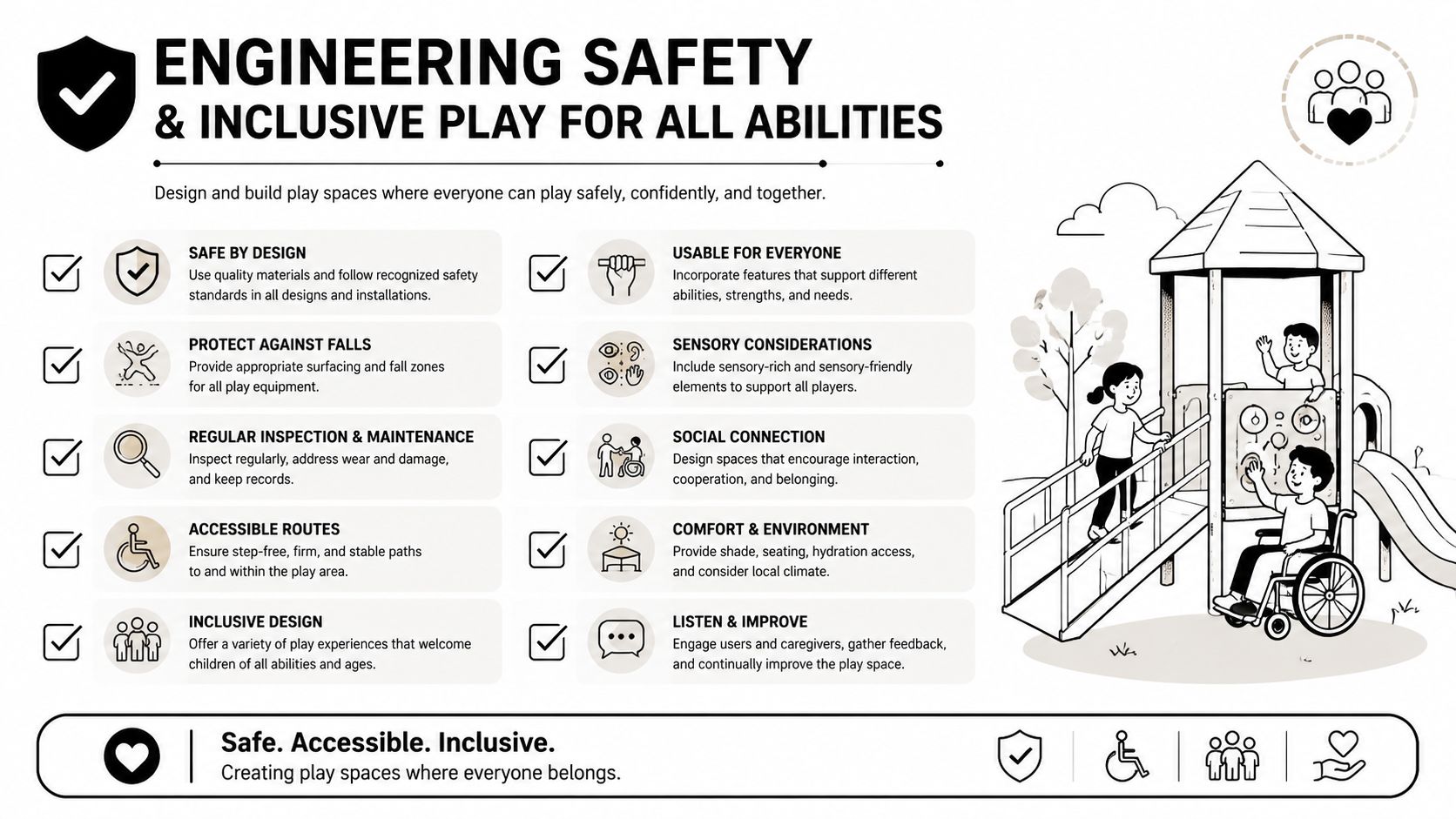
Public information notes the addition of the Lily Cantú All-inclusive Playground, but the project page leaves many of the practical details unanswered. That gap is common. The announcement signals inclusive intent, but families and asset managers still need to know how mobility devices move through the site, what shade is provided, how sensory experiences are balanced, and when the space is operational.
That missing detail matters because inclusion isn't delivered by naming a playground “inclusive”. It's delivered by the technical decisions underneath it.
A proper review should test questions like these:
The most common failure isn't one big error. It's a chain of small compromises. A ramp exists, but it leads to a narrow turning point. An accessible path reaches the edge of the playground, but not the most popular equipment. Shade covers seating, but not the transfer area or queue point.
Inclusive play works when children can participate without being funnelled to a reduced side offer.
In practice, I look for four layers working together:
Arrival
Parking, kerb transitions, gradients, entry width, and obvious wayfinding.
Movement inside the play space
Continuous accessible routes, stable surfacing, and enough width for passing and turning.
Participation
Equipment variety that supports physical, social, sensory, and imaginative play.
Support infrastructure
Shade, seating, toilets, drink access, and manageable supervision positions.
Councils know the basics. Impact zones, equipment spacing, entrapment checks, softfall depth, and maintenance logs aren't optional. But safe design also depends on how people use the site. A track rider placed too close to a toddler route creates conflict. Climbing pieces placed where carers can't see landings create anxiety, even if they technically comply.
For committees developing similar projects, it's worth grounding the discussion in broader all-abilities play space principles such as those outlined in this all-abilities play space resource. The point isn't to copy one formula. It's to avoid adding accessibility as a finishing layer after the layout has already locked in exclusion.
The best outcome is straightforward. Children with different abilities can arrive, move, play, pause, and rejoin the group without needing special workarounds. If the design can't support that, it isn't inclusive yet.
A park starts proving its value long after construction ends. You see it in the ordinary rhythms of a suburb. Families stop there on the way home. Older children use the wider precinct while younger siblings stay near play. Weekend visits become routine because the space offers enough variety to justify the trip.
That pattern is easier to understand at North Lakes because the surrounding locality was planned with recreation embedded into daily life. A North Lakes neighbourhood fact sheet describes 562 homes, plus a passive park or gazebo, a BBQ or picnic area, a community pool with fountains, and an adjacent city playground or park within the locality, as shown in the neighbourhood facts and figures page.
That level of residential catchment matters because it creates regular local demand, not just destination use. When homes, passive open space, picnic areas, and play are planned together, the playground becomes part of the suburb's daily routine. That has direct design consequences. Surfaces wear faster. Seats and bins need to cope with repeated use. Shade and inclusive access stop being “nice to have” because families rely on them often.
For developers, this kind of planning supports liveability. For councils, it supports a stronger case for capital spend because the asset serves more than one recreation purpose. For schools and community groups, it creates a nearby setting that can support informal gatherings, after-school use, and intergenerational activity.
The strongest community parks create overlap between uses rather than separation by user type. A parent might bring one child for the playground and another for open kickabout space. Grandparents may choose the site because it offers seating and passive viewing. Carers meet each other because the layout allows them to stay in one place while children circulate.
That's the practical version of “community hub”. It isn't branding. It's repeated social contact supported by competent spatial planning.
A few elements usually make that possible:
Parks become neighbourhood anchors when people can use them without making a special effort.
North Lakes shows why suburban recreation planning shouldn't isolate the playground from the rest of the public realm. If the surrounding neighbourhood is built for daily family life, the open-space network has to carry that load too. That means designing for repeated wear, mixed age groups, and ordinary social use, not just occasional destination trips.
For committees thinking about activation beyond physical design, community operators often face a similar challenge in digital settings. A practical reference is this guide on driving enterprise member engagement, which reinforces a simple idea that applies equally to parks. Participation grows when people have repeated reasons to return, not just one launch event.
In physical space, that repeated reason to return is usually variety plus convenience. North Lakes appears to understand both.
The most useful lessons from north lakes playground aren't visual. They're operational. Many public park descriptions still leave out the information that determines whether a project works day to day. As noted on the North Lakes Park exploration page, public descriptions often don't answer how busy the park gets, whether shade is sufficient in hot weather, how close toilets are to play areas, or how mixed-use activities affect supervision and safety.
Those are exactly the issues that decide whether a project feels successful after handover.

Designers often model the site around a typical quiet morning. That's not the stress test. The true test is the busy weekend, the school-afternoon surge, the birthday gathering, or the period when sports traffic overlaps with playground use.
Good planning responses include:
In Australian conditions, shade changes whether people stay, supervise comfortably, and return through warmer months. A beautiful play layout with poor heat mitigation becomes self-limiting.
I advise committees to review shade in layers:
Toilets, water, bins, bike parking, and seats should sit where people need them, not where spare space appeared on the plan. If a toilet block is too far from toddler play, carers end up making awkward supervision choices. If water is detached from the main play zone, children leave and re-enter through crowded routes.
The best amenity layout reduces decision fatigue for carers. They shouldn't have to choose between comfort and supervision.
A project that is hard to maintain will decline quickly, even if the initial specification was sound. That means committees should review access for service vehicles, replacement practicality for high-wear components, edge detailing around softfall, drainage behaviour, and how easily staff can inspect hidden corners.
Common mistakes include:
The best public projects don't rely on one hero element to carry the site. They create a range of reasons to visit. That includes active challenge, quiet play, social pause spaces, parent comfort, and easy movement between uses.
If I were translating the North Lakes case study into a briefing note, I'd reduce it to this checklist:
That's the difference between a playground people admire and one they keep using.
A committee rarely approves a playground because of equipment alone. It approves a project because the proposal shows a credible response to public need, site conditions, operational pressure, and long-term value. North Lakes is a useful case study because it demonstrates that those outcomes come from joined-up planning.
The strongest lesson is simple. Good public play space isn't accidental. It comes from disciplined choices about zoning, circulation, age range, comfort, inclusion, and maintenance. When those decisions are coordinated, the result supports far more than play. It supports daily family routines, neighbourhood connection, and broader recreation use.
There's also a caution in the case study. Public information often celebrates amenities but leaves out the practical details that matter most once the space opens. Committees should push harder on those details. Ask how the site performs in heat. Ask where carers stand. Ask how separate user groups overlap. Ask what the maintenance team will need in year three, not just opening month.
For schools, councils, and developers, that's where legacy projects are won. Not in the concept render. In the quality of decisions made before procurement, during design development, and through delivery.
If your goal is to build a park or school play space that lasts, start with the right scope. Don't ask for “a playground”. Ask for a site that handles real behaviour, supports real inclusion, and keeps working under real Australian conditions. That framing leads to better briefs, better procurement, and better public outcomes.
If you're planning a new community park, school playground, or shared recreation space, Kidzspace can help you turn an early idea into a practical, durable, and inclusive design brief. Their team works with councils, schools, and developers on equipment selection, custom layouts, safety-led planning, and project support, so you can move from concept to a space that performs well long after opening day.



Copyright © Kidzspace. All Rights Reserved.
Copyright © Kidzspace. All Rights Reserved.