
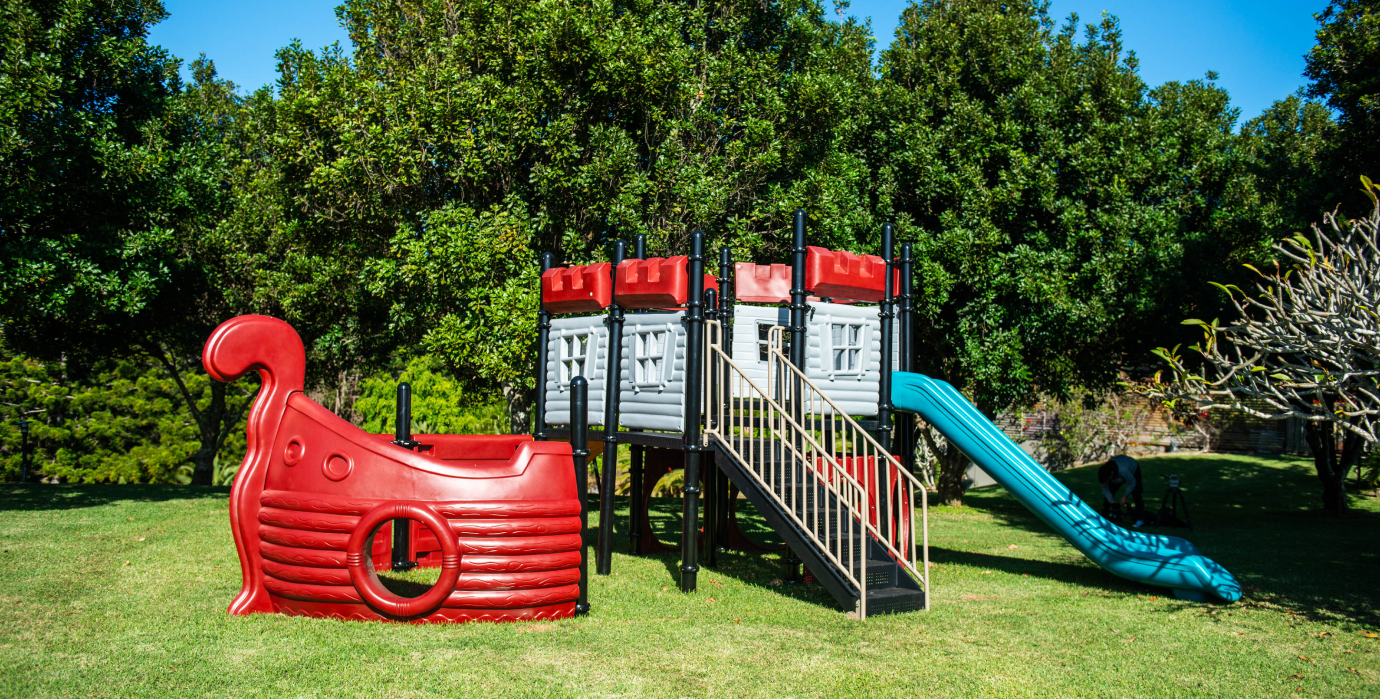





By Friday afternoon, a lot of us are after the same thing. Somewhere easy to get to, easy to manage, and good enough that the kids don't start asking to leave after ten minutes. If you've got children at different ages, that job gets harder. One wants a proper climb, one needs a safe little slide, and you just want shade, toilets, and a coffee nearby.
That's where maitland park playground stands out. It's one of those spots that works well for a quick play, but it can also carry a whole morning if you plan it right. It already has strong family appeal, and with the council-backed expansion on the horizon, it's also becoming a useful example of how public play spaces can serve both families and the wider community.
If you're deciding whether maitland park playground is worth the drive, the short answer is yes, especially if your usual local park isn't cutting it anymore. The setting gives you more than just play equipment. You've got a proper park atmosphere, room to move, nearby sport and aquatic facilities, and enough variety that siblings don't all have to want the same thing.
What makes this place easier than many playground outings is that it balances fun and function. Parents usually care about a different set of details than kids do. Children notice climbing walls, slides, and play roads. Adults notice fencing, shade, drink bottles running low, and whether the toilet is going to be a trek at the worst possible moment.
A practical visit here usually works because the park supports a few different outing styles:
Practical rule: Pack for a longer stay than you expect. A park with multiple play options often stretches from “just half an hour” into most of the morning.
The other reason maitland park playground is worth knowing well is that it isn't static. The site is part of a larger community story, with approved plans for major expansion and a stronger focus on inclusive, nature-based play. That matters to local families now, and it matters even more to schools, councils, and planners looking at what good public space can become.
The easiest way to make a playground trip feel smooth is to remove the little decision points before you arrive. Know where you're aiming, know where you'll park, and know your backup plan if the closest spots are full.
Maitland Park is a well-known local recreation area, and the playground sits within the broader park precinct near Maitland Aquatic Centre and nearby sporting areas. If you're meeting another family, that's the landmark to mention first because it's easier than relying on a vague “near the trees” text message.
Use your maps app to search for Maitland Park Playground or Maitland Park, Maitland NSW. Once you're in the precinct, slow down and look for signs to the playground and aquatic centre area rather than assuming the first car park is the best one.
Weekend timing matters more than anything else here. If you arrive early, you'll usually have a simpler walk in and a better chance of settling the kids before the area gets busy.
If you've got a toddler who bolts, don't unload everything at once. One adult gets the child, the other gets the gear.
The park is bigger than many suburban playground sites, so some families expect the play area to be obvious from every angle. It isn't always. You may need a short walk from parking to the main play zone, and that's normal for a regional park setting.
A few practical notes help:
| Need | Helpful approach |
|---|---|
| First visit | Aim for a quieter morning so you can get your bearings |
| Pram access | Stick to the main pathways into the park precinct |
| Group outing | Send one person ahead to identify the exact meet-up spot |
| Add-on activity | Bring swimmers if you may head next door afterwards |
Opening hours and any temporary access changes can vary by facility or maintenance schedule, so it's smart to check current council or venue information before leaving home rather than assuming every area runs the same timetable year-round.
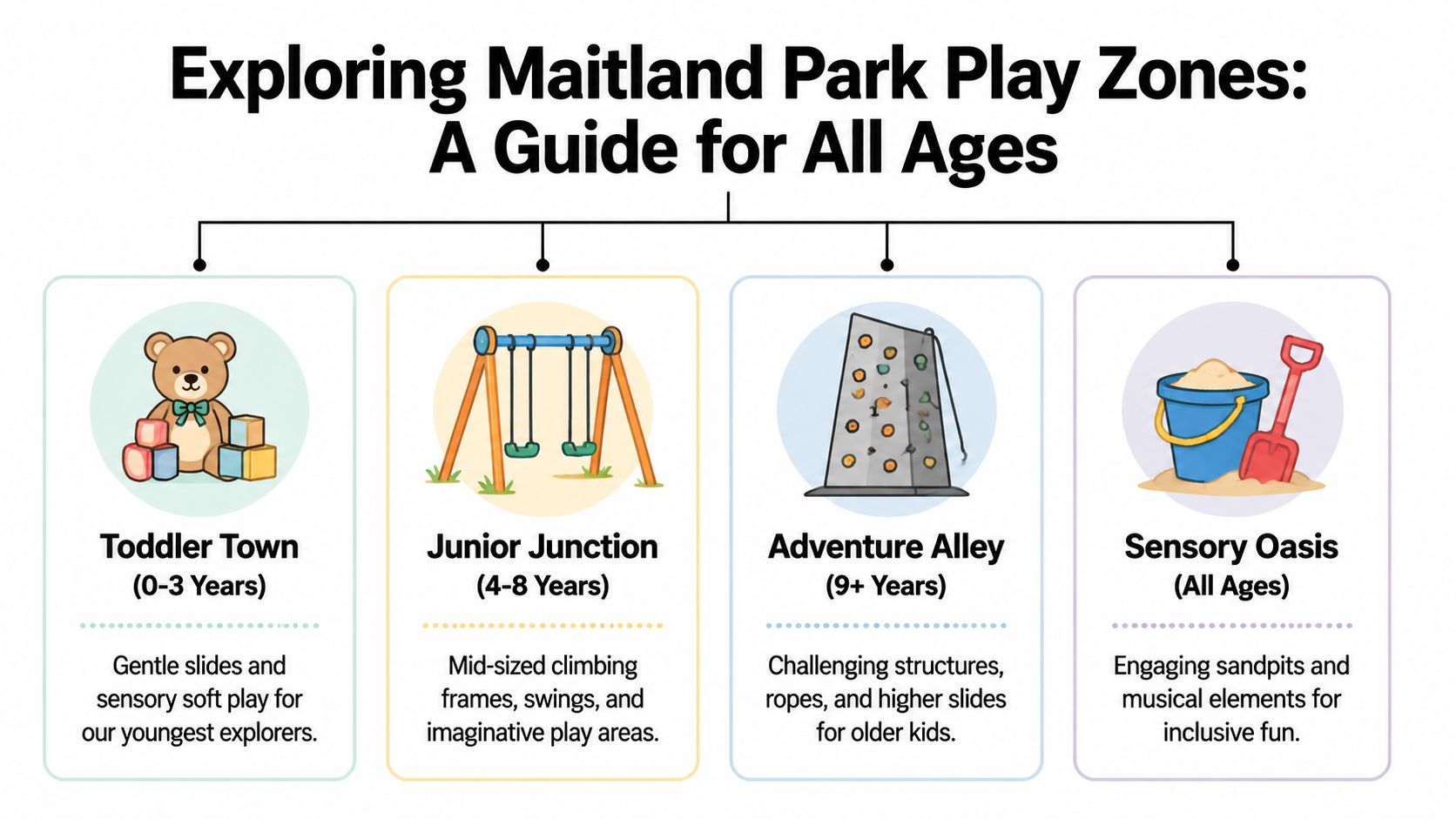
The best way to understand maitland park playground is to think of it less like one structure and more like a set of smaller experiences inside one destination. That's why it works for mixed ages. A toddler doesn't need to compete with a confident climber for the same kind of play.
The standout area many families talk about is the Magic Garden. According to the Newy with Kids guide to Maitland Park Playground, this zone includes a fully shaded, fenced enclosure with a pretend play road, toddler-specific bridges and slides, and climbing walls. The same source notes that its soft-fall zones are calibrated to offer superior critical fall height protection, contributing to higher gross motor scores in children aged 5 to 10.
If you're visiting with little ones, the fenced and shaded parts of the playground do a lot of heavy lifting. You're not spending the whole outing hovering at the edge of a big open area, and that changes the mood immediately. Children can explore in shorter loops, then return to you without crossing the entire park.
The pretend play road is especially helpful for this age because it gives structure to play. Kids don't need to invent everything from scratch. They can follow signs, stop at a refuelling station, or push along in a way that feels purposeful.
For younger children, look for:
Older children usually spot the climbing elements quickly. The climbing walls and balance-style challenges in the Magic Garden area give them a more active task than simple up-and-down play. That matters because older kids often leave a playground disappointed if everything feels designed only for preschoolers.
What I like from an educator's perspective is that the equipment invites different types of movement. Some children test strength. Others test balance, coordination, or confidence. That's one reason well-planned play environments hold interest longer than playgrounds built around only one kind of structure.
Some children want speed. Others want repetition. The strongest playgrounds make room for both.
For families interested in broader inclusive play ideas, it's worth browsing examples of sensory playground equipment in Australia to see how sensory, imaginative, and physical play can work together in one space.
A simple rhythm tends to work best:
That last step sounds small, but it matters. Kids often cope better with leaving when they feel they had one final go on their favourite part.
A good playground becomes a great one when the practical details are easy. Maitland park playground already has a big advantage here because it sits in a broader recreation hub rather than feeling isolated. That means your day doesn't depend on the play equipment alone.
For families, the features that ease pressure most are the simple ones. Nearby toilets, room to sit, drink fountains, fencing in the younger area, and pathways that don't turn every pram push into a battle.
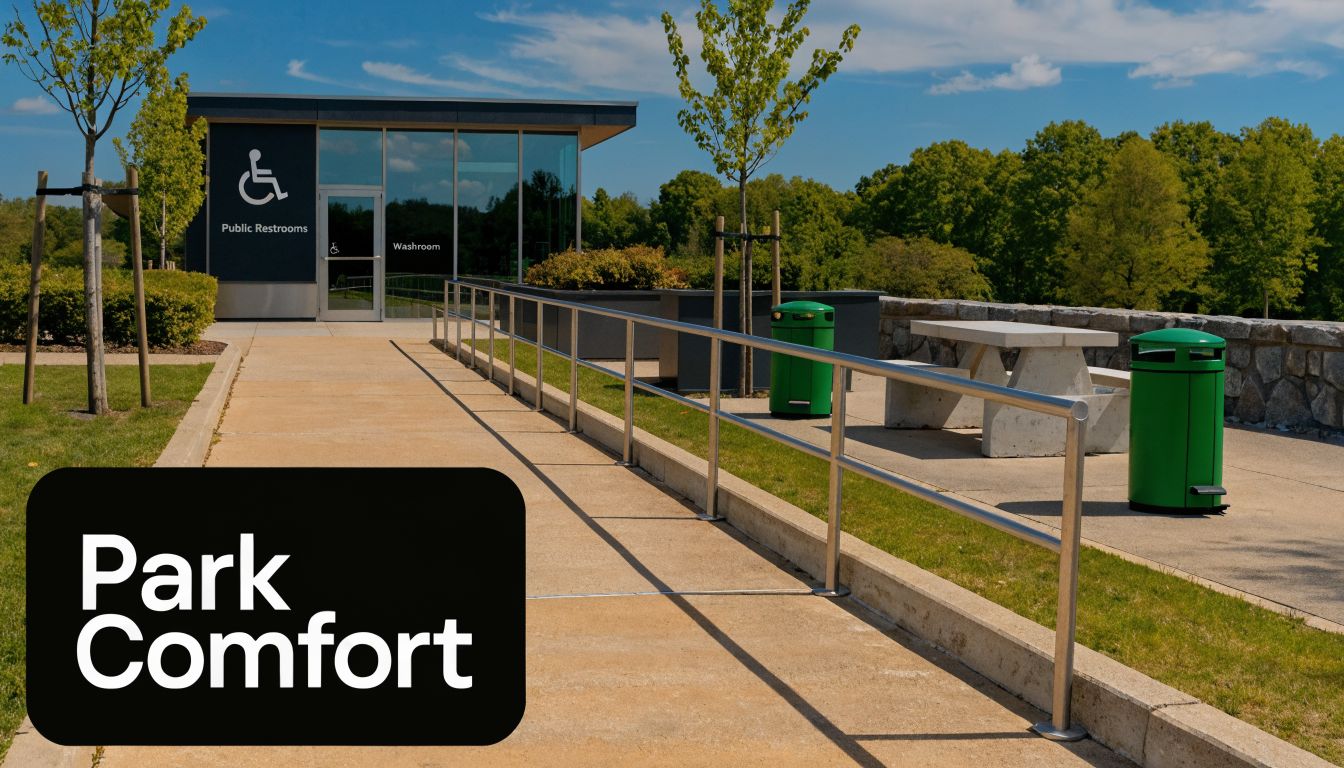
The fenced Magic Garden enclosure is one of the most parent-friendly features in the park. It gives younger children a more contained area to play, and it gives adults a little breathing room when supervising more than one child.
When you arrive, it helps to do a quick scan for these essentials:
If you're bringing grandparents or relatives who prefer a gentler outing, nearby seating and easy paths make the visit much more realistic. Families planning a broader group day sometimes also look at options like Oz Coach Hire bus tours for seniors when coordinating transport for older visitors who want comfort and simpler access arrangements.
Well-designed public play spaces don't only ask, “Can children get on the equipment?” They also ask, “Can families move through the site comfortably, supervise safely, and participate together?” That broader view is what makes a park feel welcoming.
Maitland Park's family-friendly layout points in that direction, especially where access and containment work together. If you're comparing what inclusive park design can look like in practice, all-abilities play space ideas are useful for understanding why paths, circulation, surface choices, and sensory variety matter as much as the hero tower or biggest slide.
Accessibility reminder: The easiest outing isn't always the one with the most equipment. It's the one where every person in the group can use the space with dignity and less stress.
Coffee matters more than people admit on a playground day. Because the playground is next to Maitland Aquatic Centre, many families turn it into a combined outing and grab food or a cold drink nearby if they're heading between activities. If you prefer certainty, bring your own snacks and treat any nearby food option as a bonus rather than the whole plan.
That one habit avoids the classic problem of hungry children melting down while adults debate where to go next.
One reason maitland park playground keeps coming up in local conversation is that it isn't just a good park now. It's also moving toward something much bigger. According to Maitland City Council's Maitland Park Playground concept design page, council has approved an initial concept plan to triple the size of the existing Maitland Park playground.
That's a major shift in how the site will function. It signals that the park is being treated not just as a neighbourhood play stop, but as a broader community destination with stronger recreational and event value.

The approved concept points toward a more inclusive, accessible, and creative playspace. Planned features include natural play elements such as timber structures, log steppers, balance logs, mud and sand pits, water fountains, and animal sculptures.
That matters because nature-based play feels different from standard catalogue equipment. It asks children to test texture, sequence, balance, and imagination in a more open-ended way. A log stepper doesn't tell a child exactly what to do. A mud area doesn't produce only one kind of game.
Families often hear the phrase “nature play” and wonder whether it just means more timber and less bright plastic. It's more useful than that. The council material notes that playing in nature helps develop creativity, symbolic play, problem-solving, and intellectual development, while also building gross motor skills and eye-hand coordination.
You can see how that translates on the ground:
The most memorable play spaces usually give children something to interpret, not just something to queue for.
For local families, the benefit is obvious. A stronger playground gives children more reasons to be outdoors and gives adults a more reliable destination. For councils, schools, and designers, the project is a live example of where public play is heading. Inclusive planning, natural materials, creative loose-ended play, and community use are all being treated as part of the same conversation.
That's a healthy direction. It suggests the future of maitland park playground won't only be bigger. It should also be more flexible, more thoughtful, and more valuable to a wider cross-section of the community.
Maitland Park works as a family destination because several design decisions come together at once. The successful parts aren't accidental. They reflect the basics of strong public-space planning: clear circulation, age-appropriate challenge, parent visibility, comfort features, and room for imaginative play.
For decision-makers, that's the bigger lesson. A popular playground rarely succeeds because of one hero piece of equipment. It succeeds because the whole site works as a system.
A serious playground brief usually needs more than “something fun for kids.” The more useful questions sound like this:
If your project also includes surrounding hardscape, it's worth looking at green paving options that support a more sustainable landscaping approach without treating paving as an afterthought.
The strongest projects move from community need to sketch, then from sketch to tested layout. That's where visual planning helps. For schools, councils, and park development teams, reviewing a drawing of a playground can make early conversations far more concrete because everyone can see circulation, zoning, and supervision lines before manufacturing starts.
That process is often what separates a decent playspace from one the community adopts. Families feel the difference straight away. They might not name the design principles, but they notice when a park is easier to use, safer to supervise, and more rewarding for children with different needs.
A great public playground should do two jobs at once. It should feel effortless to visit, and it should stand up to years of hard use while still inviting children to explore.
If Maitland Park's evolution has sparked ideas for your own school, council, or community project, Kidzspace can help turn those ideas into practical, durable, inclusive play environments. Their team works across planning, customisation, and delivery to create playgrounds that suit Australian conditions and real community use.


Copyright © Kidzspace. All Rights Reserved.
Copyright © Kidzspace. All Rights Reserved.