



If you're on a school leadership team, a council project group, or an early learning committee, the conversation usually starts the same way. You need a swing at playground level that children will use, but you also need to satisfy safety obligations, fit the site, stay within budget, and avoid creating a maintenance problem that drags on for years.
That mix of joy and responsibility is exactly why swings deserve more careful planning than they often get. A swing bay can become the most loved part of a play space, yet it can also become the part that causes the most trouble when spacing, surfacing, siting, or inclusivity are treated as afterthoughts.
In Australian projects, those decisions are rarely simple. Sites are often tight, weather exposure is harsh, and many organisations now want equipment that supports neurodiverse children and mixed-age use, not just a standard seat hung from a frame. The difference between a good outcome and an expensive mistake usually comes down to how early those realities are built into the brief.
A well-planned swing at playground scale does much more than fill a spare corner of the yard. It supports movement, sensory development, confidence, and social play in a way few other standalone items can.
Australian observation data shows children spend an average of 224.70 seconds per session on swings, making swinging one of the more prominent forms of playground activity. The same research notes that moderate swinging can raise heart rate by 20 to 30%, and inclusive swing options were associated with a 25% gain in coordination in diverse child cohorts, according to the published Australian playground activity study.
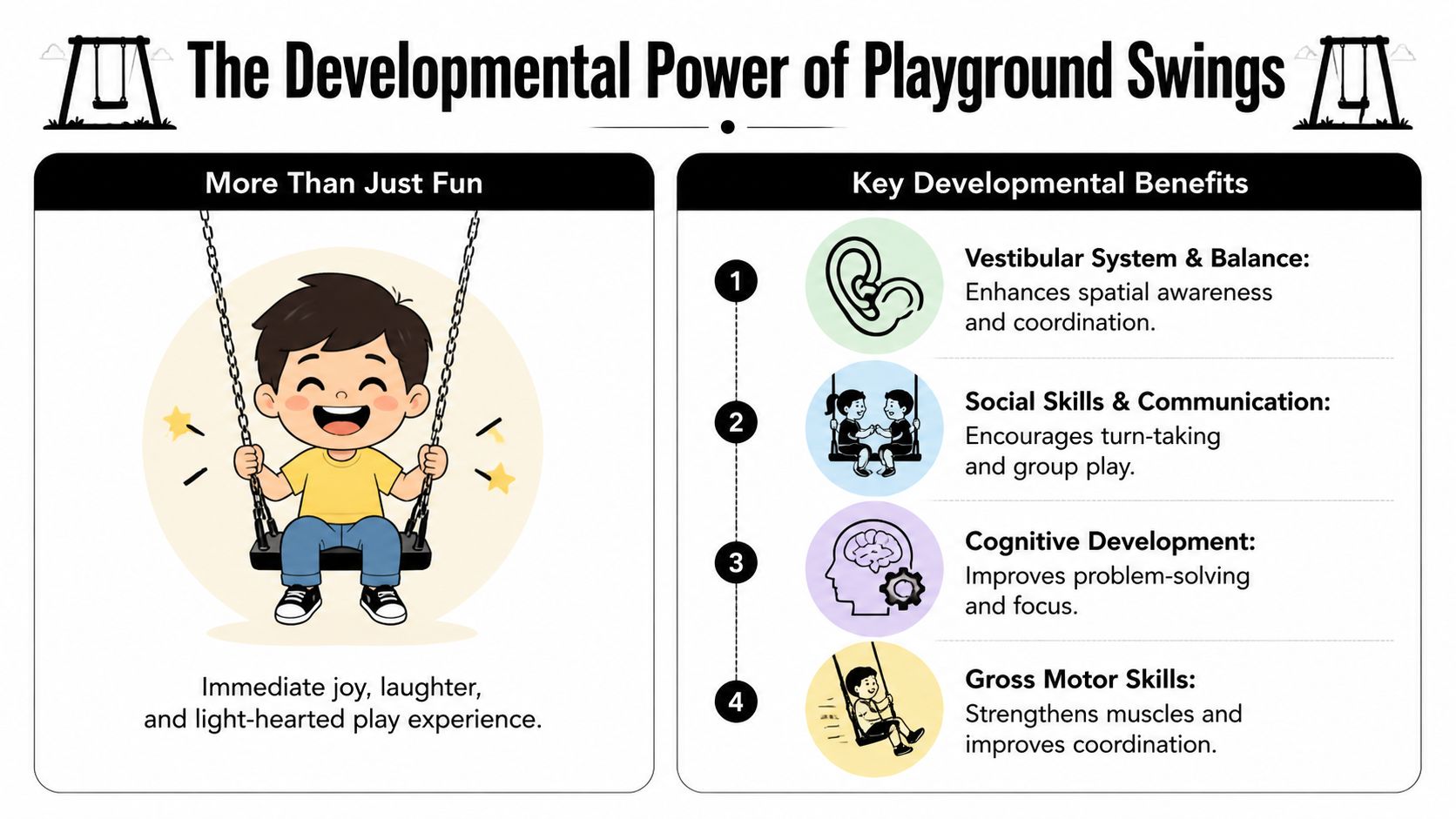
Swinging gives children immediate feedback. They shift weight, pump legs, grip, lean, slow down, and try again. That loop matters because it ties enjoyment directly to body control.
For schools, that has practical value. Equipment that children repeatedly choose helps build fundamental movement skills without needing a structured lesson. For councils, it means the swing bay often carries a lot of play value from a relatively simple piece of equipment, provided the design suits the users and the site.
The vestibular side is just as important. The back-and-forth motion helps children process movement, position, and balance. That affects how secure they feel in space, how they regulate themselves, and how confidently they engage with other equipment afterwards. Teams planning broader sensory outcomes often connect swings with other forms of sensory play in outdoor environments, rather than treating them as a separate feature.
Swings earn their place when they support repeated, self-directed movement for a wide range of users, not just a quick turn and move on.
The mistake I see most often is specifying “a swing set” as if all swings do the same job. They don’t. Seat type changes who can use the space, how long they stay there, and what kind of developmental benefit the equipment delivers.
A practical way to think about selection is to match the swing style to the intended users:
That last point matters. A modern swing at playground scale should be part of an inclusion strategy, not just a standard purchase. Some children seek stronger movement input. Others need more control, more support, or a calmer motion pattern before they can engage comfortably.
Swings are one of the few playground elements that naturally create short social rituals. Children wait, negotiate turns, push each other, watch each other’s timing, and set informal challenges. Those interactions are small, but they build confidence and communication.
That social layer is why mixed swing banks tend to outperform one-format installations. A row of identical seats can be efficient, but it doesn't always serve the broadest user group. A combination of seat types usually creates better circulation, better inclusion, and fewer disappointed users standing at the edge.
| Swing type | Best suited to | Main value |
|---|---|---|
| Strap seat | School-age users | Independent movement and coordination |
| Toddler seat | Early years settings | Supported first experiences of swinging |
| Basket swing | Inclusive public sites | Shared use and broader accessibility |
| Pod-style or supportive seat | Sensory-sensitive users | Added security and gentler engagement |
If the brief only says “install swings”, the result is usually basic. If the brief says the site needs to support movement skills, mixed-age use, and sensory inclusion, the design improves immediately.
That’s the true developmental power of swings. They’re not a nostalgic extra. They’re one of the clearest opportunities in a play space to support physical confidence, vestibular development, and social connection through repeated everyday use.
The fastest way to get a swing project into trouble is to focus on the frame and ignore the space around it. Compliance for a swing at playground level is mostly about movement path, surfacing, clearance, and documentation.
That’s not red tape for its own sake. In Australia, swings are linked to approximately 20% of playground-related hospitalisations for children, and compliant layouts under AS 4685 can require over 700 square feet of protective surfacing for a single two-seat swing bay, according to this swing safety and standards summary. If a school or council underestimates that footprint early, the whole layout can unravel.
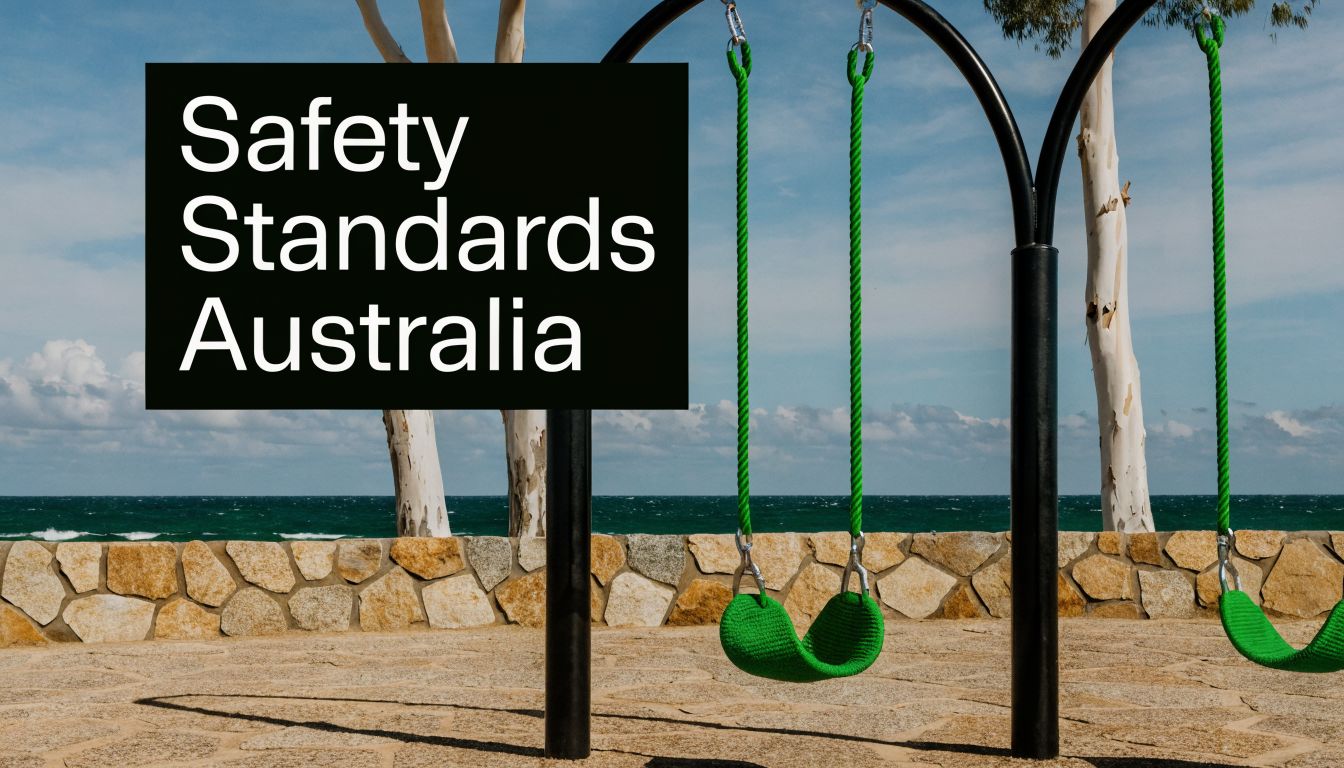
Many committees begin by asking how many seats they can fit. The better question is whether the site can safely carry the required use zone without crowding paths, fences, shade structures, or other play items.
On paper, a swing bay can look compact. In reality, the occupied area is much larger once full forward and rear movement, side clearance, and impact surfacing are included. That’s why small parks and constrained school yards often struggle with swings more than with climbing units. The active footprint keeps extending long after the frame dimensions seem settled.
A useful discipline during concept design is to assess the swing as a moving hazard zone, not a static object. That changes decisions about orientation, adjacent equipment, and pedestrian routes.
Practical rule: Never sign off on a swing layout until the use zone is drawn at full scale over the actual site plan.
Schools and councils don’t need to become standards specialists, but they do need to ask sharper questions. A compliant procurement process should get beyond catalogue images and into certifiable details.
Use this as a working checklist:
Many committees also benefit from reviewing a broader overview of school playground safety standards before tenders go out. It helps align the brief, the supplier questions, and the internal approval process.
The most common budgeting mistake is treating soft fall as a separate line item that can be trimmed later. It can’t. Protective surfacing is part of the system.
The engineering logic is straightforward. A child on a swing reaches peak speed at the lowest point of the arc. If that child falls or exits badly, the surface beneath and beyond the seat path must absorb impact across the likely landing area. Surfacing depth, spread, and maintenance all matter because worn or displaced material changes how that impact is managed.
A second practical issue is migration of loose-fill material. High-use swing bays push surfacing out of the highest traffic area very quickly. Even a compliant installation can drift out of spec if nobody owns the maintenance routine.
Not all swings move the same way, so spacing rules vary. Swing types with unrestricted lateral movement need more separation than those with limited sideways motion. In mixed-age sites, that affects both safety and user experience.
The same applies to pivot point heights and under-seat clearances. Toddler-use swings, preschool swings, and school-age swings require different physical relationships between frame, seat, and ground. A “one height fits all” approach usually creates one of two outcomes. Either younger children struggle to use the swing properly, or older children overload a layout that was never intended for them.
A simple comparison helps committees avoid vague discussions:
| Design issue | What good practice looks like |
|---|---|
| Use zone | Drawn early and protected from encroachment |
| Surfacing | Specified with the swing, not added later |
| Seat spacing | Matched to swing motion type |
| Age zoning | Deliberately separated where needed |
| Documentation | Available before procurement sign-off |
The organisations that handle swing projects well usually share one habit. They stop asking how to “get swings in” and start asking how to make the site safely support them over time.
That shift changes everything. It leads to better concept plans, fewer redesigns, fewer procurement surprises, and clearer handover responsibilities. Compliance then becomes part of good project management, not a late-stage obstacle.
Once the layout is safe and compliant, the next decision is asset quality. A swing at playground scale has to cope with repeated dynamic loading, rough treatment, weather exposure, and long periods outdoors without becoming a constant repair job.
The cheapest option on paper often costs more in staff time and replacement cycles. For schools and councils, the better test is whether the equipment will still look and function properly after years of sun, rain, grit, and heavy daily use.
Galvanised steel usually makes the strongest case for commercial settings because it handles exposure and repetitive use well. Good finishes also matter. Corrosion resistance and UV stability aren't cosmetic concerns in Australia. They directly affect service life and presentation.
Timber can suit particular sites and heritage-sensitive settings, but it asks more of the maintenance team. It needs closer monitoring for weathering, surface deterioration, fastener movement, and appearance drift over time. That doesn’t rule it out. It just means the site owner should choose it with eyes open.
Composites and mixed-material systems can solve some visual and maintenance concerns, but they still need careful review around hardware quality, wear points, and replacement part availability.
When committees compare options, they often line up the quoted equipment cost and stop there. That misses the bigger picture.
A more useful comparison looks like this:
| Option | Upfront impression | Long-term consideration |
|---|---|---|
| Basic low-cost frame | Looks economical | May increase maintenance burden and shorten replacement cycle |
| Commercial galvanised steel | Higher initial outlay | Better suited to intensive public or school use |
| Timber-led aesthetic solution | Strong visual character | Requires more active upkeep |
| Modular swing system | Flexible staging | Can help phased upgrades and future additions |
A modular arrangement is particularly useful where the site may expand later, or where the organisation wants to add inclusive seats in a later stage rather than replacing the whole bay.
A swing isn't just an item of equipment. In a public park or school yard, it also shapes how the place feels.
Themed elements, colour choices, and the overall character of the frame can make a space feel generic or memorable. That doesn’t mean adding decoration for its own sake. It means recognising that children and families respond to play spaces with identity. Animal themes, transport themes, or cleaner contemporary forms can all work, depending on the surrounding site language.
One practical resource when weighing seat types, layouts, and future flexibility is this guide to buying the right swing for your playground. Kidzspace is one supplier that offers commercial swing options across different themes and formats for schools, councils, and early learning settings.
A durable swing should still feel appropriate to the place. The best installations do both jobs at once.
What holds up best is usually uncomplicated. Strong frame material, dependable hardware, replaceable wear components, and a finish suited to local exposure outperform novelty features that add weak points.
What tends not to work is specifying a swing purely by appearance, then expecting maintenance staff to solve the consequences later. If a committee wants long-term value, durability and placemaking need to be judged together at selection stage, not split into separate conversations.
A swing at playground level succeeds or fails partly before the first footing goes in. Siting decides how the equipment behaves in daily use, how safely children move around it, and whether maintenance crews can keep it in good condition.
That matters even more on uneven ground. A 2024 Play Australia report highlighted that 68% of public playgrounds in regional NSW and Queensland face slope-related safety issues, and 22% of swing-related injuries in a recent 12-month period were linked to uneven foundations, according to this report summary on sloped swing set installation.

The best swing installations feel obvious once built. Clear approach paths. No conflict with main circulation routes. Enough distance from fences, trees, edges, and other active play. Reasonable supervision lines from classrooms, paths, or seating areas.
Poor siting creates repeated friction. Children cut through the movement zone. Surfacing gets kicked into adjacent paths. Caregivers stand in awkward places. Maintenance teams struggle to top up soft fall because access is too tight. None of those issues are solved by buying a better swing frame.
For Australian sites, orientation also deserves attention. Afternoon sun, prevailing weather, drainage patterns, and local wear points can all influence how well the swing area performs over time.
Many concept plans treat slope as something the installer will sort out later. That’s where projects start to go wrong.
A swing needs stable geometry. If the ground falls away, the relationships between seat height, surfacing depth, footing alignment, and the child’s movement path can all shift in ways that compromise use and compliance. On a sloped site, “close enough” usually isn’t good enough.
Where the ground is uneven, the reliable approach is usually one of these:
If the site is difficult, solve the ground first. Don’t ask the swing structure to compensate for a planning problem.
Standards for swing spacing depend on motion type. Single-axis and laterally unrestricted swings don’t ask for the same clearances, and mixed swing banks need careful layout to stop users crossing into each other’s travel paths.
The same principle applies to surrounding elements. A swing bay should not be squeezed between popular through-routes or next to equipment that encourages children to dart across the front. In schools, I’d rather see a swing moved farther from the central yard than forced into a busy corridor just because it fits on the plan.
A practical site review should test these questions:
Committees sometimes treat installation as a separate downstream trade matter. In reality, installation quality is part of the design outcome.
Footings, levelling, anchoring, drainage response, and final surfacing profile all affect whether the swing performs properly. On a difficult site, the installer and designer need to work as one team. If the project waits until construction to resolve slope, access, or retaining details, avoidable compromises usually follow.
That’s why strategic siting deserves as much attention as equipment selection. A well-chosen swing can still fail on the wrong patch of ground. A well-sited swing on a tough site, by contrast, often becomes the part of the playground people use most confidently and maintain most easily.
Most swing problems don’t begin with dramatic failure. They begin with drift. Surfacing thins out under the seats. A connector starts wearing earlier than expected. The frame stays sound, but the small components and the impact area slowly move away from the condition the site owner originally accepted.
That’s why maintenance should be treated as asset protection, not as a reactive task. For a swing at playground scale, your maintenance plan is part of your safety plan.
The highest-wear points are predictable. Moving connections, seat condition, fixings, frame stability, and surfacing all need regular attention. The frequency will depend on traffic and setting, but the categories don't change much from site to site.
A practical inspection routine usually includes:
According to the CPSC public playground safety guidance, fall zones for a standard single-axis swing must extend a distance equal to twice the height of the pivot point, and high-traffic areas under swings may need quarterly raking or top-ups to keep impact-absorbing material compliant and effective.
It’s usually the surfacing. Everyone notices a damaged seat. Fewer people notice that loose-fill soft fall has migrated out of the highest impact area until the bay has already lost performance.
That matters because the swing may still look serviceable while the landing area no longer performs as intended. A site manager who checks depth and profile consistently will prevent far more trouble than one who waits for visible equipment damage.
Budget for the ground under the swing with the same seriousness as the swing itself.
A realistic budget includes more than supply. The full project cost usually includes site preparation, surfacing, installation, access constraints, inspections, and future upkeep.
That doesn’t mean every project needs a premium specification. It means every committee should compare options on total ownership, not just purchase price. A lower upfront quote can stop looking attractive once the maintenance burden, surfacing losses, and replacement timing become clear.
A simple procurement lens helps:
| Budget line | Why it belongs in the first budget |
|---|---|
| Equipment supply | The visible asset, but only one part of the spend |
| Site preparation | Ground conditions often decide actual install cost |
| Protective surfacing | Required for safe use, not an optional add-on |
| Installation | Correct assembly and set-out affect compliance |
| Inspection and maintenance | Preserves safety and extends useful life |
| Replacement parts planning | Reduces downtime when wear components need changing |
Good procurement documents ask suppliers to describe not only the equipment, but also the expected maintenance regime, part replacement pathway, and any site assumptions built into the quote. That helps project teams compare like with like.
For grant applications or internal funding requests, the most persuasive case usually focuses on safety, inclusive access, lifecycle value, and site suitability. A committee that can explain why the chosen swing type, surfacing approach, and maintenance plan belong together will make a stronger case than one focused only on headline cost.
In practice, well-maintained swings often become some of the most reliable assets in a play space. Poorly maintained swings become recurring expense lines and recurring risk. The difference is rarely accidental.
The clearest way to judge a swing at playground proposal is to test it against real project conditions. Not abstract ideals. Actual conditions such as limited space, sloping ground, mixed ages, sensory needs, and staged budgets.
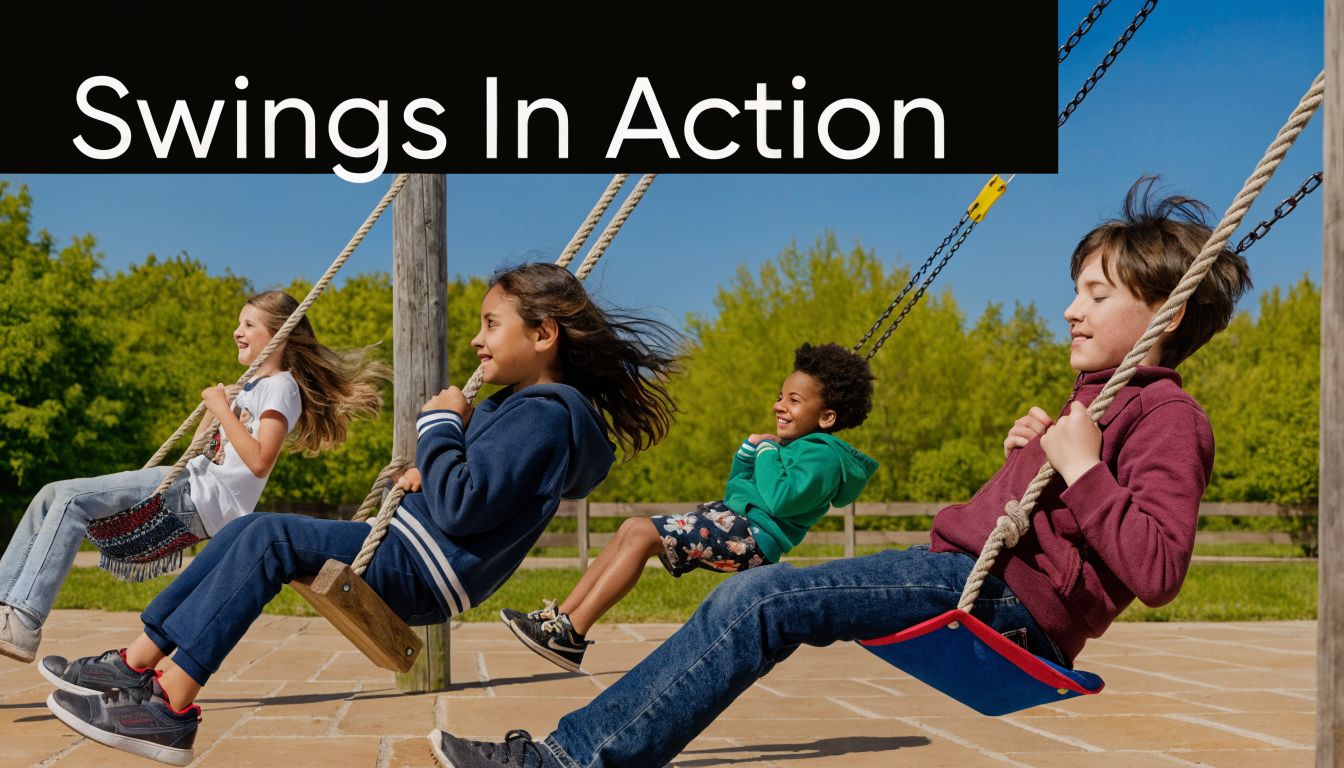
An early learning centre wanted swings, but staff were concerned that a standard layout would exclude some children and dysregulate others. That concern was well founded. A 2025 Royal Children’s Hospital Melbourne study found traditional swings were overstimulating for 41% of autistic children, while cooperative basket swings boosted positive engagement by 62% in trials, as outlined in this vestibular-inclusive playground design article.
The strongest response in that situation is usually not “more swings”. It’s a better mix of movement experiences. A cooperative basket swing can support shared use, carer-assisted use, and gentler vestibular input. Pairing that with a second, more conventional seat gives educators choice without forcing every child into the same sensory experience.
What worked was the operating logic behind the layout. Staff could guide some children toward calmer shared motion, while others used a more independent seat when ready. The swing area became easier to supervise because the equipment reflected different regulation needs instead of ignoring them.
A regional site had enough room for swings but not enough level ground in the obvious location. The first concept placed the bay on a mild slope because it seemed close enough to flat. On review, that would have created exactly the sort of ongoing problem many public sites run into: awkward seat heights, difficult surfacing retention, drainage complications, and a bay that never quite felt right under use.
The better outcome came from accepting the site reality early. The council shifted the swing precinct to a terraced platform with a clear edge treatment and simpler access route for maintenance. That did reduce flexibility elsewhere in the park, but it protected the swing area from becoming a permanent defect.
This is the kind of trade-off committees need to be willing to make. Keeping the original location might have preserved the first concept drawing. It would not have preserved long-term safety or usability.
A short demonstration of swing use and play behaviour can help non-technical stakeholders visualise why these decisions matter in built spaces:
A school wanted to improve break-time activity but couldn’t justify a major one-stage redevelopment. The common mistake here is to buy the smallest possible swing frame and hope it somehow meets every need.
A better approach is to choose a swing setup that can sit comfortably as a first stage and still make sense later. In practical terms, that often means selecting a durable commercial frame in a location with enough room around it for future additions, then choosing seat types that serve the current student mix.
The school outcome in this kind of scenario is rarely flashy at first. That’s fine. If the initial installation is compliant, maintainable, and popular, it gives the school a clear case for later expansion rather than forcing replacement of a compromised first purchase.
The most successful swing projects aren't always the biggest. They're the ones that match the site, the users, and the organisation's capacity to maintain them properly.
These examples all point to the same lesson. There isn’t one perfect swing answer for every Australian site. The right solution depends on who will use the space, what the ground is doing, how the area will be supervised, and whether the organisation is planning for the full life of the asset rather than just the opening day.
If you're planning a new swing area or reviewing an existing site, Kidzspace can help you assess layout, compliance, inclusivity, and long-term practicality before you commit to a specification.


Copyright © Kidzspace. All Rights Reserved.
Copyright © Kidzspace. All Rights Reserved.