





A lot of outdoor gym Melbourne projects start the same way. A council team has a park upgrade on the books, or a school has a patch of underused land near the oval, and someone says, “Let’s add fitness equipment.” The intent is good. The risk is that the project gets reduced to a few pull-up bars, a catalogue order, and a handover date.
That approach rarely gives a community what it needs.
The better brief is broader. You’re not just installing equipment. You’re shaping how teenagers train after school, how parents stay active while supervising children, how older residents feel welcome in public space, and how families use a park for more than a quick pass-through. If the project is planned well, the result feels natural and busy. If it isn’t, the gear can sit there looking compliant but underused.
Melbourne already has a strong base for outdoor exercise. The city has at least 10 prominent outdoor fitness spots, including Royal Park, Fitzroy Gardens, Albert Park and Jells Park, and a statewide survey found 90% of responding Victorian LGAs had installed outdoor fitness equipment (Melbourne outdoor fitness network and Victorian uptake). That matters because an outdoor gym Melbourne project no longer needs to prove the category. The category is already established.
What needs proving now is the project brief.
A simple adult calisthenics zone can work in the right location. Near a running trail, close to an existing training culture, with good passive surveillance, it can attract a steady group of regular users. But many councils and schools are now dealing with a different question. They don’t just want a spot for fit adults who already know how to train. They want a space that broadens participation.
That’s where many briefs start to change. Instead of asking which bars or machines to buy, the better question is who should feel comfortable using the space on an ordinary weekday.
For a school, that could mean:
For a council, it often means a wider mix:
A lot of current Melbourne installations still lean toward adult-only formats. If you’re reviewing options early, it helps to understand the broader advantages of outdoor fitness stations in terms of accessibility, informal recreation, and year-round use, not just exercise intensity.
A successful park gym isn’t defined by how hard the strongest user can train. It’s defined by how many different people feel invited to use it.
The most useful project briefs are specific about behaviour, not just equipment. They describe how the site should function. They set expectations around access, supervision, age range, circulation, shade, surfacing, and maintenance. They also accept a basic trade-off. The more inclusive the space, the more carefully the layout has to be curated.
That’s the opportunity in Melbourne right now. The city already has outdoor fitness culture. The next wave of projects should focus less on adding another adult workout station and more on building multi-generational spaces that work on a wet Tuesday, a school afternoon, and a family weekend.
Most problems in an outdoor gym Melbourne project begin before procurement. They start when the site is chosen because it’s empty, when the user group is assumed instead of tested, or when the brief is written around available products rather than actual local behaviour.
That’s why the early discovery work matters more than is often understood.
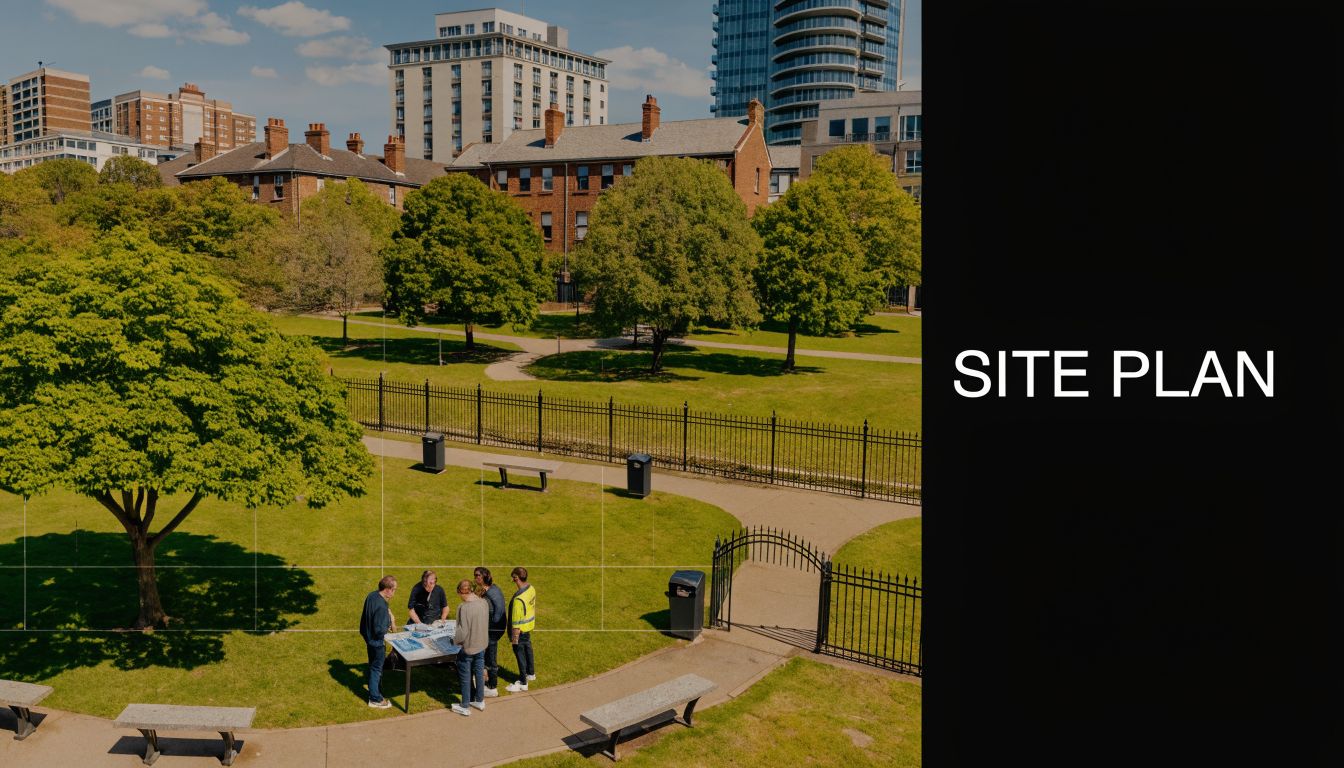
A site walk should answer practical questions first. Is the area easy to find without signage overload. Can carers supervise children from nearby seating. Does the ground fall create drainage or compliance issues. Will users feel exposed, hidden, or safe after school hours.
Good sites usually share a few traits:
The site also dictates construction complexity. Ground conditions, access width, nearby tree roots, existing services, and drainage can change the scope quickly. If your project team needs a plain-English primer on the civil side before equipment goes in, this overview of excavation for foundation success is useful because it frames the groundwork issues that often affect programme and cost.
One of the clearest warnings comes from a 2024 Melbourne study on outdoor fitness equipment installed for older adults. The target group showed minimal use, with barriers linked to design flaws and lack of guidance (Melbourne older-adult outdoor fitness study). That finding is important because it challenges a common project mistake. Teams often specify equipment for a user group in theory, then discover the design doesn’t match the way that group moves, socialises, or learns.
A school can make the same mistake if it buys senior-school style strength stations for a broad year-level cohort. A council can make it if it places equipment for older residents in an isolated corner with no social pull and no instructions.
Practical rule: If the design relies on users already knowing what the equipment does, you’ve narrowed your audience before the project even opens.
Instead of broad labels like “family friendly” or “all ages”, define use cases. That gives designers and suppliers something real to solve.
A useful workshop will usually map things like:
Who uses the site now
Walkers, parents with younger children, teens, sports clubs, older residents, supervised school groups.
Who you want to invite in
Families who currently stop at the playground, students who need structured movement options, less confident users who avoid adult gym culture.
How they’ll use it
Short bursts before pickup, circuit sessions during PE, intergenerational use on weekends, low-impact movement near seating.
What could stop them
Poor shade, confusing equipment, no passive surveillance, awkward surfacing transitions, or layouts that make beginners feel exposed.
Surfacing decisions often get left too late. They shouldn’t. Surface choice affects compliance, comfort, drainage, accessibility, maintenance, and how finished the whole space feels.
For many public and school sites, wet pour rubber is considered because it can support consistent access routes, colour zoning, and easier movement between stations. If your team is comparing options, this guide to wet pour rubber surfacing is a practical place to start.
A short pre-design checklist can save months later:
The teams that answer those questions early usually avoid the most expensive kind of redesign, the one that happens after opening, when everyone can see the original assumptions were wrong.
A council opens a new outdoor gym beside a playground. The bars look good in the concept renders, the install is tidy, and the photos from opening day are strong. Six months later, the same two stations get used, parents stand outside the area with prams, older residents walk past, and children are told not to touch anything. That outcome usually starts with the equipment schedule.
Equipment choice decides who feels welcome, who can participate without instruction, and whether the space serves the whole community or a narrow group of confident adult users.
Pull-up bars, dip bars, and inclined benches still have a place. They are durable, familiar, and cost-effective for capable users. The problem is relying on them as the full offer on a site that also serves families, schools, and casual park users.
On mixed-use sites, adult-only training stations create predictable gaps in use:
I see this often at brief stage. A client asks for an outdoor gym, but what they need is a public movement space that works for teenagers, adults, carers, grandparents, and children moving through the same park.
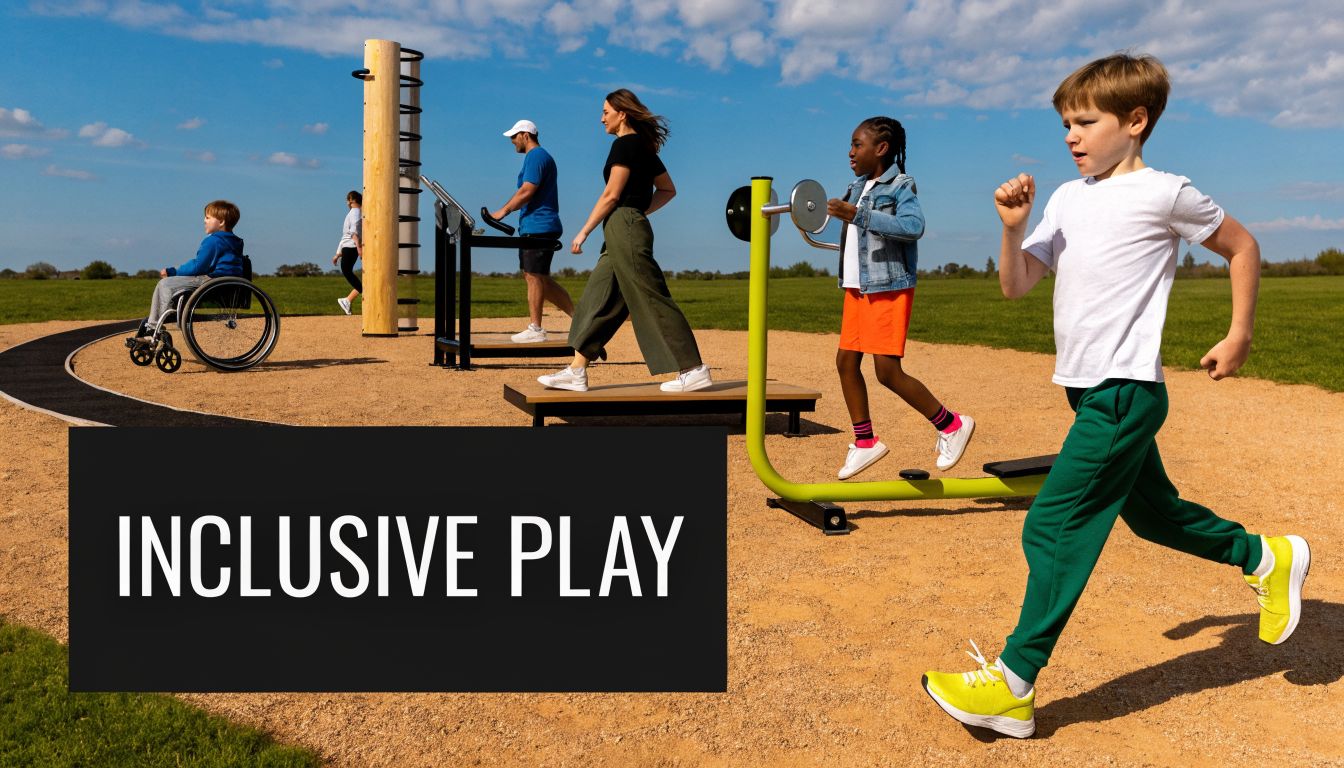
The strongest schemes give users more than one way in. Some people want a training effect. Others want light movement, balance work, a warm-up station, or something they can use while supervising children.
A practical mix often includes:
That last point matters more than many teams expect. If supervision forces adults to choose between sitting with children or using the equipment, the area will not function as a family space.
Separate zones can work, but they often fragment the site and weaken passive supervision. Shared layouts usually perform better where the goal is community use across ages.
A parent can use a mobility or cardio station while a child uses adjacent low-risk movement equipment. Teenagers can move toward harder bodyweight stations without being isolated from younger siblings. On school sites, the same layout can support free play at recess, warm-ups for sport, and structured circuit activities in class time.
Equipment form helps here. Pieces that read only as "gym gear" tend to attract people already comfortable with exercise. Forms that invite climbing, balancing, reaching, and rotation broaden the user base. On some projects, themed elements also help councils and schools avoid the awkward split between playground and fitness area, especially where younger children are part of the brief.
If families stop at the edge and ask whether children are allowed to use the space, the equipment selection has already narrowed community value.
Durability still matters. In Melbourne conditions, coatings, fixings, drainage around footings, and replacement part availability all affect lifecycle cost. Powder coating that chips easily, proprietary parts with long lead times, or stations that need frequent adjustment can become expensive after handover.
Layout still has more influence on use than hardware strength alone. A heavy-duty station placed away from desire lines or grouped with advanced-only equipment will underperform. Good equipment in the wrong arrangement becomes dead capital.
At specification stage, I also look closely at what the contractor or outdoor works team can price clearly. If the package is hard to quantify, variations usually follow. Tools such as Exayard landscaping estimating software can help project teams set up clearer quantities and compare installation assumptions before procurement locks in.
Before approving the final schedule, test the mix against actual use conditions, not just catalog appeal.
| Selection question | Why it matters |
|---|---|
| Can a first-time user work out the station quickly? | Casual users will not wait for formal instruction |
| Is there a clear spread of difficulty? | The site needs progression without excluding beginners |
| Can children and adults be active in the area at the same time? | Shared use supports family visits and passive supervision |
| Will the equipment suit programmed sessions as well as casual use? | Councils and schools often add classes or guided activity later |
| Are parts, finishes, and maintenance responsibilities easy to verify? | Lifecycle issues usually appear after defects periods end |
A short product video can also help teams assess layout logic and user flow before they commit to a final specification.
The projects that hold up best usually layer difficulty, support shared use, and stay readable from the path.
That means a confident user can train properly, a beginner can start without embarrassment, and a child can participate in age-appropriate ways without turning the whole area into a playground. For councils, that wider participation improves the return on the footprint. For schools, it gives staff more than one use case. For the community, it produces a space that feels open rather than exclusive.
That is usually the difference between an outdoor gym people admire and one they actively use.
Compliance and cost are where many outdoor gym Melbourne projects either become disciplined or drift into expensive ambiguity. The best way to keep control is to treat compliance as a design input from day one and budgeting as a whole-of-project exercise, not an equipment shopping list.
For outdoor fitness equipment, AS 16330:2021 is the baseline standard that should shape both specification and installation. One of the practical requirements is a 1.5m movement space for equipment with a fall height under 1.5m, and the standard also requires design features that remove crushing and shearing hazards, with the guidance material noting this can prevent up to 85% of common entanglement and impact injuries (AS 16330:2021 compliance summary).
That sounds technical, but the implications are simple enough:
Compliance should narrow choices early. It shouldn’t be a box-ticking exercise after the layout is already fixed.
The common budget error is assuming the quote for equipment represents the project cost. It doesn’t. By the time a public site is complete, your budget usually needs to absorb a longer list of components.
Those can include:
You don’t need a perfect number on day one, but you do need categories that reflect how the project will really unfold. For early planning, I recommend budgeting by proportion, then replacing those provisional allowances with supplier pricing and civil input as drawings firm up.
| Cost Component | Estimated Percentage of Total Budget | Key Considerations |
|---|---|---|
| Site investigation and design | Low to moderate share | Survey, concept development, compliance review, stakeholder revisions |
| Ground works and foundations | Moderate share | Soil conditions, access, drainage, excavation, service avoidance |
| Equipment supply | Major share | Material durability, inclusivity, freight, lead times, replacement pathways |
| Surfacing and surrounds | Moderate share | Compliance, accessibility, edge detailing, drainage, visual finish |
| Installation and certification | Moderate share | Qualified installers, site supervision, final checks, defect close-out |
| Contingency and activation | Modest but essential share | Hidden conditions, signage, launch activities, training, early adjustments |
This type of framework helps clients avoid the trap of overcommitting to a long equipment list before the site realities are priced.
If the brief is multi-generational, the budget needs to acknowledge that. Inclusive spaces often require more thought in layout, transitions, surfacing, furniture, and supporting elements. They’re not necessarily oversized or extravagant. They’re less likely to be solved by dropping a few adult stations onto bare turf.
A school project might also need to fund fencing interfaces, circulation paths, and supervision points. A council site may need wayfinding, accessible approaches, lighting coordination, or park integration works. None of those are glamorous line items. All of them affect whether the finished gym feels coherent.
The safest way to control cost is to make assumptions visible early. If shade isn’t in the approved budget, note it. If drainage upgrades are provisional, note that too. If surfacing extent depends on final compliance geometry, say so in the concept package.
That transparency helps procurement later because suppliers are pricing the same job, not guessing different versions of it.
For teams preparing estimates across broader outdoor packages, a tool such as Exayard landscaping estimating software can be useful for keeping site elements, quantities, and revisions organised during planning. It’s not a substitute for supplier input, but it can reduce the confusion that creeps in when a “small fitness area” starts interacting with paths, edges, planting, seating, and drainage.
Stay strict on compliance, circulation, surfacing performance, and installation quality. Those are hard to fix cheaply later.
Stay flexible on exact station count, thematic detail, and optional add-ons until the enabling works are properly understood. It’s better to deliver a tighter, coherent gym that gets used than a crowded specification that forces compromises in spacing, access, or finish quality.
Once the brief and budget are settled, the job becomes a delivery exercise. That sounds simpler than it is. Procurement and installation are where a well-planned outdoor gym Melbourne project can still be weakened by vague tender documents, poor sequencing, or suppliers who know equipment but not public-space delivery.
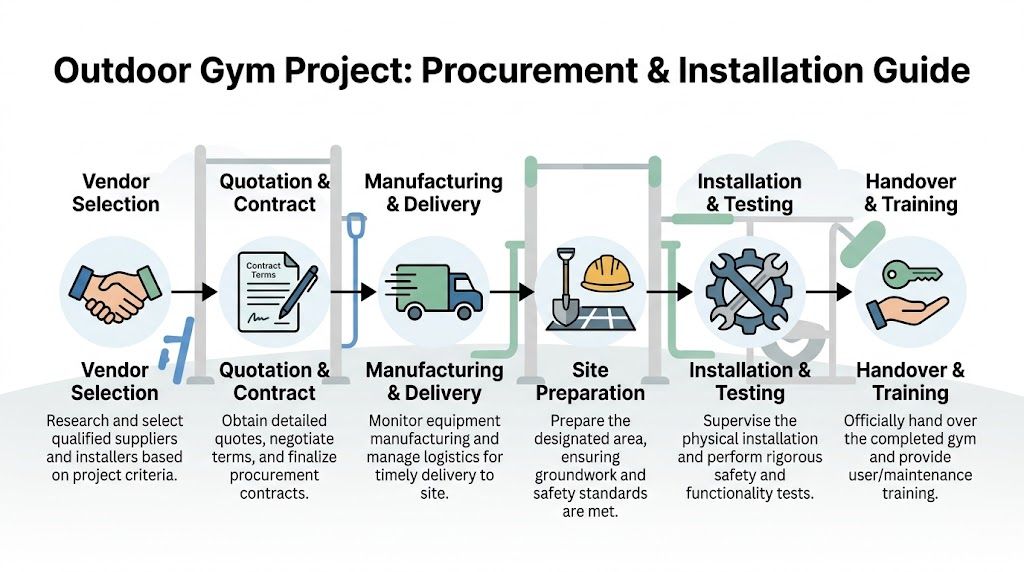
A good RFQ or tender package does two things. It gives enough detail for comparable pricing, and it leaves enough room for suppliers to identify smarter delivery options.
Include clear information on:
If the project seeks inclusive and multi-generational use, say that plainly. Don’t assume a supplier will infer it from a concept image.
The strongest suppliers usually provide more than a product list. They can explain how the equipment will be installed, what site conditions may affect the works, what documentation they’ll provide, and how maintenance should be handled after handover.
Useful selection criteria include:
Relevant public or school experience
Outdoor product knowledge isn’t enough if the team hasn’t managed live sites, staged access, and practical completion processes.
Clear compliance understanding
Ask direct questions about movement zones, surfacing interfaces, and installation tolerances.
Manufacturing and lead-time transparency
You need realistic dates, not optimistic placeholders.
Post-installation support
Maintenance guidance, spare parts, and defect response all matter once the opening photos are over.
One place to benchmark specification types is commercial outdoor fitness equipment options. Even if you’re preparing a broad market approach, reviewing structured product categories can help sharpen the tender brief.
Most installation issues are sequencing issues. The equipment itself is only part of the programme. The ground has to be ready. Access has to be available. Surfacing has to align with final set-out. Certification evidence has to match what was built.
A workable sequence usually looks like this:
The handover date should never be the first time the client learns what changed on site.
The Victorian Department of Health guidance makes an important point here. Proper activation, such as a launch event, can spike initial usage by 40 to 60%, helping turn a passive installation into an active community space from the start (Victorian outdoor fitness activation guidance).
That has practical consequences for procurement. If activation matters, include it in the delivery conversation before the contract is signed. Decide who handles signage, induction support, launch programming, user guidance, or introductory sessions. A quiet handover often leads to a quiet site.
Before practical completion, confirm that:
When those basics are handled properly, installation stops being a stressful scramble and becomes what it should be: the final controlled stage of a project that was already set up to succeed.
Six months after opening, the true test starts. The strongest outdoor fitness spaces in Melbourne still feel clear, safe, and useful once the opening event is forgotten, school routines shift, and winter reduces casual use. That result usually comes from steady management rather than extra capital works.
Long-term value depends on three things. Ongoing use, consistent maintenance, and a layout that keeps serving more than one user group. For councils and schools, that matters even more in multi-generational settings where adults, teenagers, children, and carers share the same space in different ways across the day.
A well-built site can still underperform if it fades into the background after launch. Usage improves when the space stays part of normal programming. In a school, that often means folding it into PE, active recess, staff wellbeing, and supervised senior student use. In a council setting, it may mean linking the area to walking groups, seasonal activity sessions, local health promotion, or family events nearby.
The aim is simple. Remove uncertainty.
People use outdoor gyms more confidently when they understand who the equipment is for, what the stations do, and whether the space welcomes beginners, older adults, children with carers, or mixed-age groups. That is where inclusive value is either reinforced or lost. A site that reads as "for fit adults only" will exclude a large part of the community even if the equipment itself is technically suitable.
Outdoor fitness equipment sits in full weather, attracts heavy contact, and gets judged quickly if it starts to look neglected. Most long-term problems are ordinary ones. Loose fixings, worn decals, pooling water, damaged surfacing edges, faded wayfinding, and planting that blocks sightlines.
A workable maintenance plan usually covers:
Multi-generational sites need tighter discipline here. Once younger children, carers, and older users are part of the daily pattern, small defects create confidence issues fast. If a parent is unsure about surfacing condition or a handhold feels loose, they often stop using the area altogether rather than report it and wait.
Long-term value usually comes from ordinary maintenance completed on time.
Post-installation reviews should include observation, not only inspection records. The practical questions are usually obvious on site. Which items attract repeat use. Which stations sit empty. Where carers wait. Whether teenagers gather in one zone and unintentionally crowd out younger users. Whether an older user can approach and exercise without crossing through fast-moving children.
Those observations often lead to modest changes with a strong return. Add a seat where grandparents already stand. Adjust signage so first-time users know where to start. Improve shade over a waiting area. Rework planting that blocks supervision. Shift programming times if one group dominates after school.
At this stage, many Melbourne projects either mature well or lose community value. Inclusive design is not fixed on opening day. It has to keep working through school terms, weekends, and seasonal changes.
These are not formal case studies or measured performance reports. They are recurring project patterns from the type of school and council work our team reviews.
A primary school may begin with a request for upper-primary or staff fitness equipment near the oval. Once circulation is reviewed properly, the project team often finds that junior students, siblings, and parents will also pass through the area during pickup, sport, and weekend use. In that situation, a layout built only around advanced stations creates supervision and access problems. A better outcome usually comes from mixing challenge levels, keeping sightlines open, and making the zone legible for different ages.
Councils sometimes start with an adult fitness corner separated from the playground. On paper, that can look tidy. In use, it often fails because carers do not want to choose between supervising children and using the equipment. Bringing selected stations into closer relationship with family dwell areas usually improves usage more than adding another bar or bench.
Some sites are delivered on time and to spec but remain underused because the owner treats handover as the finish line. In practice, signs, local communication, simple induction, and occasional programmed use often determine whether the space becomes part of community routine or stays a piece of street furniture.
The thread running through all of these examples is practical discipline. Good outcomes come from clear operating decisions made after installation, not from assuming the equipment will carry the project on its own.
If you’re planning an outdoor gym Melbourne project for a school, council, or shared community site, Kidzspace can help you scope the brief, review site constraints, and shape an inclusive fitness space that fits the people who’ll use it.


Copyright © Kidzspace. All Rights Reserved.
Copyright © Kidzspace. All Rights Reserved.