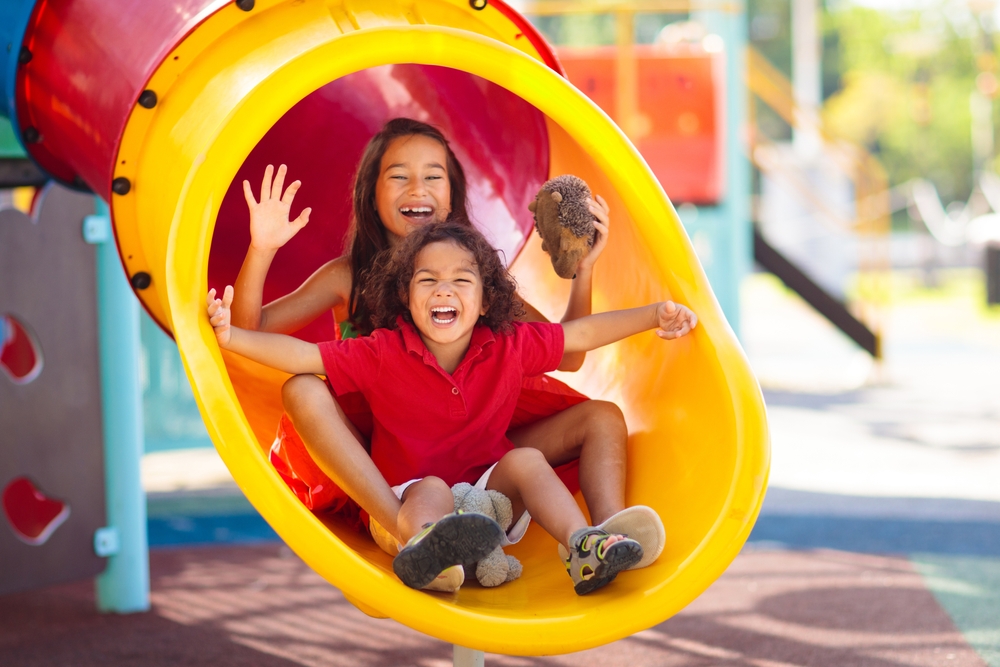
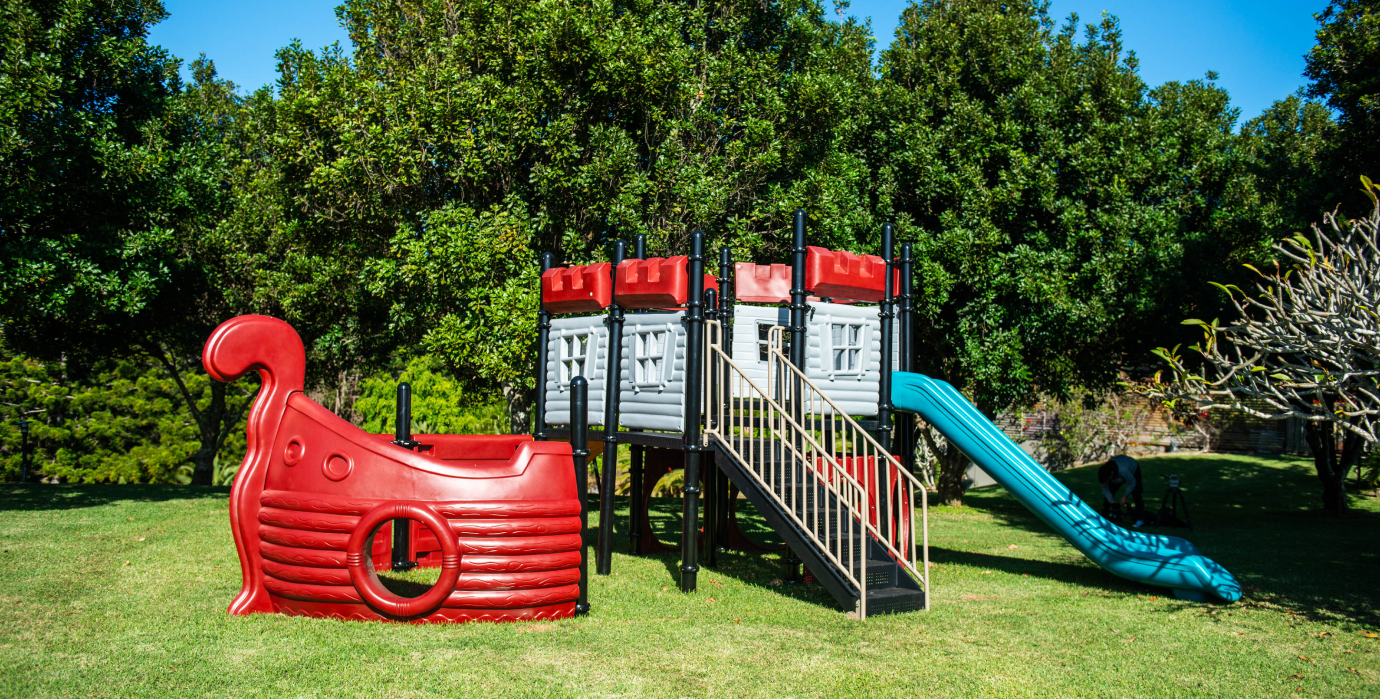

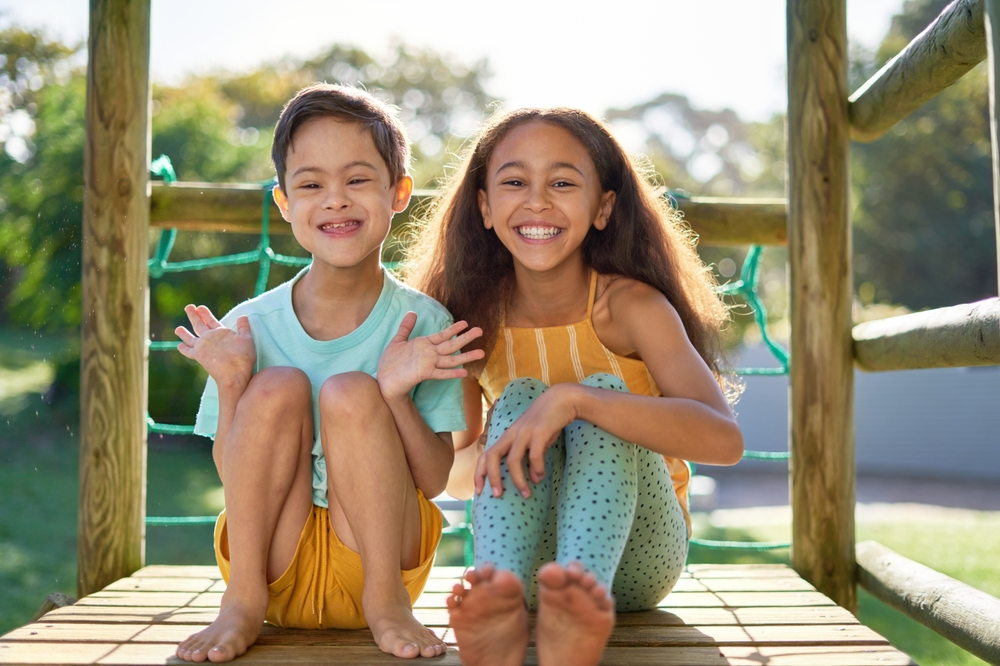


When you type "all abilities playground near me" into a search bar, you're looking for more than just a place with swings and a slide. You're searching for a space where every child, no matter their physical or cognitive ability, can simply be a kid and experience the pure joy of play. This guide will help you find these incredible community assets and understand what makes them so special.
An all abilities playground isn't just a traditional playground with a few accessibility features added on. It’s an entire environment, designed from the ground up so that everyone can play side-by-side.
Think of it less like a standard playground with a ramp tacked on as an afterthought, and more like a community hub built to foster connection, challenge, and fun for all.
This means a fundamental shift in design philosophy. You’ll see smooth, unitary rubber surfaces that are perfect for wheelchairs, walkers, and unsteady toddlers. You’ll find sensory play elements like musical instruments, sand tables, and tactile panels that engage kids on multiple levels. The entire point is to remove barriers—both physical and social—creating a place where every child feels they truly belong.
To really see what sets these spaces apart, a quick comparison can be a huge help.
| Feature | Traditional Playground | All Abilities Playground |
|---|---|---|
| Ground Surface | Often uses loose-fill materials like woodchips or sand, creating barriers for mobility devices. | Features smooth, poured-in-place rubber or turf, allowing easy access for everyone. |
| Equipment Access | Typically requires climbing, with limited ground-level activities. | Includes ramps to elevated structures and a rich variety of ground-level play options. |
| Social Play | Encourages parallel play, where children play alongside each other but not necessarily together. | Designed for cooperative play with equipment like group swings and inclusive spinners that promote interaction. |
| Sensory Experience | Focuses primarily on physical activity like climbing and sliding. | Offers a multi-sensory environment with sound, touch, and sight-based activities. |
This evolution in playground design is everything.
When you're looking for an all abilities playground near me, you're looking for a destination that truly champions inclusive play. It’s a place where a child using a walker can race a friend up a wide, ramped structure, and a non-verbal child can share a moment of joy with others at a musical feature.
It's where differences fade away, and the universal language of fun takes over.
When you type "all abilities playground near me" into a search bar, what are you really looking for? It’s not just about finding a playground with a ramp. A genuinely inclusive space is so much more; it's a place designed from the ground up to support every child's development—physical, sensory, social, and emotional.
Think of it this way: the experience starts before a child even touches the equipment. It begins with the ground they move on. Smooth, firm surfaces like poured rubber or high-quality artificial turf are non-negotiable. They create a stable foundation for wheelchairs, prams, and kids who are still finding their feet, making sure everyone can get right into the heart of the action.
From there, the whole playground is built with a rich variety of experiences in mind, so every single child can find their own unique way to play.
True inclusivity isn't an afterthought—it's woven into the very design of the playspace. It’s about shifting our focus from disability to ability, creating diverse opportunities for everyone to join in. This comes to life through different kinds of play.
Physical Play: This means offering more than just a standard ladder. It’s about including high-back supportive swings that give kids great core stability, ground-level carousels where a child in a wheelchair can spin right alongside their friends, and wide ramps that are part of the adventure, not just a way to get from one level to another.
Sensory Play: Not all play is loud and fast. Many children thrive on activities that engage their other senses. This is where you’ll find musical elements like chimes and drums, tactile panels with different textures to explore, or interactive sand and water tables that offer a calming, creative outlet.
Social and Quiet Play: Let's be honest, playgrounds can sometimes be overwhelming. A thoughtfully designed space accounts for this with quiet nooks or cosy cocoons where a child can take a breather. It also encourages teamwork with equipment like a multi-person see-saw or a group spinner, sparking communication and shared joy.
A truly inclusive playground is one where a child’s ability is not a barrier to entry. It's where smart design has already removed the obstacles, allowing every child to engage on their own terms and create their own adventure, side-by-side with their peers.
You can see how playground design has evolved from the traditional model to these incredible all-abilities spaces in the diagram below.
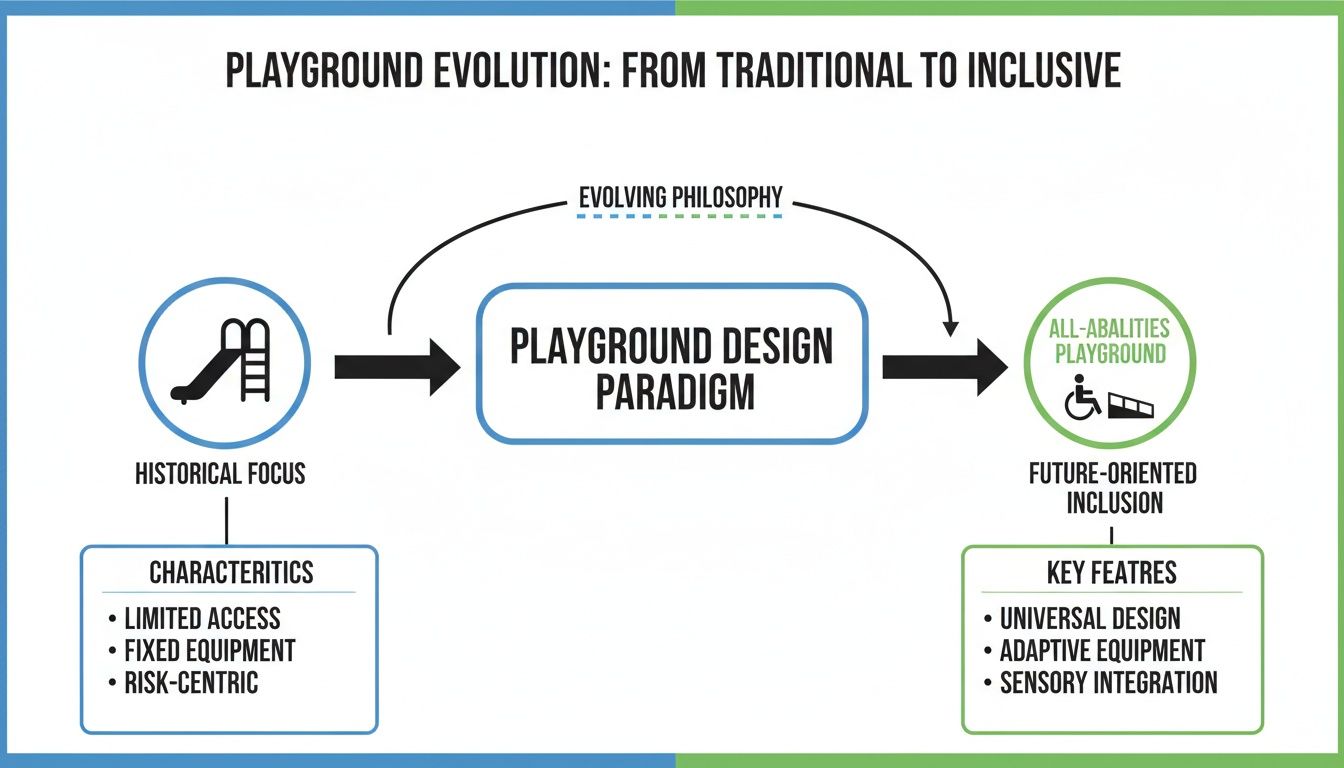
The biggest shift has been moving away from a narrow focus on physical activity to a holistic approach that embraces universal design, social equity, and sensory engagement. You can dive deeper into these elements in our guide on what to install in an inclusive playground. Ultimately, it's this careful combination of features that transforms a playground from being merely accessible into a place that is genuinely welcoming for every family.
If you’ve recently found yourself searching for an "all abilities playground near me", you’re in luck. What you’re tapping into is a powerful movement that’s gaining real traction right across Australia. From our biggest cities to the smallest regional towns, communities are starting to see inclusive play not as a nice-to-have, but as a fundamental right.
This isn’t just a fleeting trend. It’s a genuine shift in how we think about our public spaces and the people who use them. There's a growing understanding that when we design for everyone, the whole community reaps the rewards.
This commitment to inclusive play is now woven into our national policy, which is why we’re seeing a heartening boom in accessible play spaces. This surge is making it easier than ever for families of all kinds to find a welcoming spot to connect and play.
The momentum is undeniable. Data from 2023 showed that over 1,200 public playgrounds across Australia had been upgraded or built from scratch with inclusive features. That’s a massive 35% increase in just five years since 2018.
This growth isn't happening by accident. It's backed by serious federal support, like the National Disability Strategy 2021–2031, which funnelled $25 million AUD directly to local councils for creating these vital spaces. The numbers tell a powerful story of progress, and you can dive deeper into the research on how these inclusive environments foster social participation.
This top-level support is having a real, tangible impact on the ground. State governments and local councils are championing a 'universal design' approach, which means thinking about the needs of every single user right from the project’s blueprint stage.
The results speak for themselves. In New South Wales, for instance, a staggering 68% of new playgrounds developed in Sydney since 2020 were built on universal design principles. This proactive mindset means inclusivity is baked in from the start, not just sprinkled on as an afterthought.
And the payoff is huge, both for social connection and community spirit. Research shows that well-designed inclusive playgrounds attract 40% higher attendance from people across a wide spectrum of abilities. Even more tellingly, 75% of parents at these parks noticed their children were having better, more meaningful social interactions.
It’s simple, really. When you build it for everyone, they will come. People connect, they play, and they help build stronger, more vibrant communities. The growing number of these spaces means your chances of finding a brilliant all abilities playground near me are better than ever. This is a national movement turning possibilities into real, tangible places to play, one swing and slide at a time.
So, you know what makes an incredible all-abilities playground in theory. Now for the fun part: finding one in the real world. A quick search for an "all abilities playground near me" is a great start, but a few insider tricks will help you pinpoint the best local spots much faster.
Let’s get you from your screen to the swings.
Your hunt will probably begin online, but thinking like a playground planner will give you the edge. Google Maps is your first stop, but feeding it the right search terms is the key to unlocking its potential.
These digital tools cast a wide net, which is great. But for the most current and reliable information, sometimes you need to go straight to the source.
Local councils are usually the ones managing public parks, making them a goldmine of information. Their websites are the best place to begin.
Most council websites have a "Park Directory" or "Find a Park" section. These tools often have filters for facilities where you might find options like "all abilities access" or "inclusive play equipment." If the website isn't helping, don't hesitate to make a call. A quick chat with someone in the Parks and Recreation department can give you clear, accurate details you won't find anywhere else.
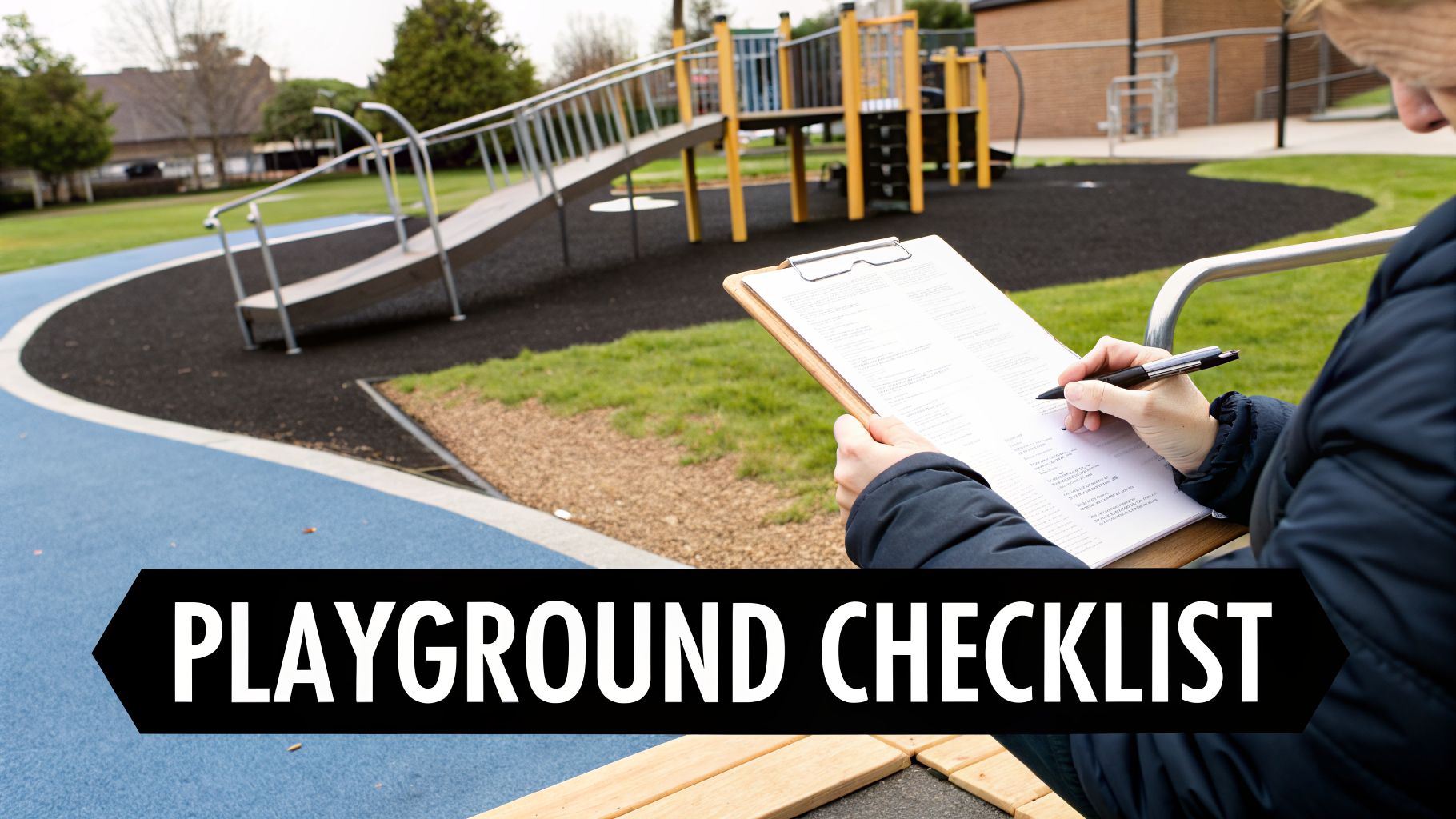
Finding an all abilities playground is the first step. The next is confidently confirming it meets your family’s unique needs. Having a simple checklist can empower you to evaluate a site quickly and effectively.
Once you've identified a promising park, a quick visit is essential. A playground can be labelled "inclusive," but only a personal visit will tell you if it truly works for your family. Think of it as a final quality check.
Use this checklist to guide your walk-through:
1. Arrival and Access:
2. Ground Surfacing:
3. Equipment and Play Variety:
4. Amenities and Comfort:
By combining these strategies, you can confidently move from a hopeful online search to finding the perfect all abilities playground near me—a place that promises a fun, safe, and truly welcoming experience for every single person.
When you search for an "all abilities playground near me," you’re tapping into a movement that goes far beyond just building swings and slides. The benefits of these thoughtfully designed spaces are real and measurable, backed by hard evidence that resonates with everyone from community planners to school principals.
These aren't just feel-good projects. They are strategic investments in a community's health and wellbeing.
The positive effects show up everywhere—in physical health, safety statistics, and crucial developmental milestones. Unlike traditional playgrounds, which can accidentally leave some children on the sidelines, all-abilities playgrounds are built from the ground up to invite everyone in. This simple shift creates a powerful ripple effect of positive outcomes across the board.
One of the most immediate impacts we see with a well-designed all-abilities playground is a massive jump in active play. By removing physical and social barriers, these spaces naturally encourage more children to get moving.
It’s not just a theory; we have the numbers to prove it. A 2022 observational study of 15 inclusive playgrounds right here in Melbourne found that an impressive 71% of children were engaged in active or very active play. This happens because universal design makes it easy for everyone to join in, whether it’s a child in a wheelchair heading up a ramped structure or a toddler exploring a sensory wall.
This thoughtful design has a direct effect on safety, too. According to the Australian Institute of Health and Welfare (AIHW), upgraded playgrounds saw injury rates drop by a remarkable 28% after mandatory accessibility guidelines were introduced in 2019. It turns out that safer surfaces, better spacing, and purpose-built equipment don't just reduce accidents—they maximise the fun.
These playgrounds do more than just get kids moving; they are developmental powerhouses. In these environments, children get unique opportunities to build crucial physical and motor skills in a way that feels completely natural. The sheer variety of equipment challenges them in different ways, fostering growth without them even realising it.
The impact is clear. Data from Brisbane City Council, which logs 450,000 annual visits across its 50 all-abilities parks, showed that 82% of children aged 0–12 demonstrated enhanced motor skills after regular play.
This developmental boost is especially powerful for early learning centres and primary schools. National data has even linked regular access to these environments with a 15% rise in physical literacy scores.
Ultimately, when you build a playground for all abilities, you're building a foundation for lifelong health, confidence, and social connection. The evidence confirms that searching for an all abilities playground near me is the first step toward an investment that pays dividends for the entire community. You can explore more of the findings on inclusive play and its benefits to see just how wide-ranging this positive impact really is.
So, you've searched for an "all abilities playground near me" and come up empty. For a passionate community member, a school P&C, or a forward-thinking council planner, that isn't a setback. It’s an opportunity.
Building an inclusive playground from the ground up feels like a mammoth task, but it’s absolutely achievable when you break it down. Think of it as a roadmap to creating something truly special for your community.
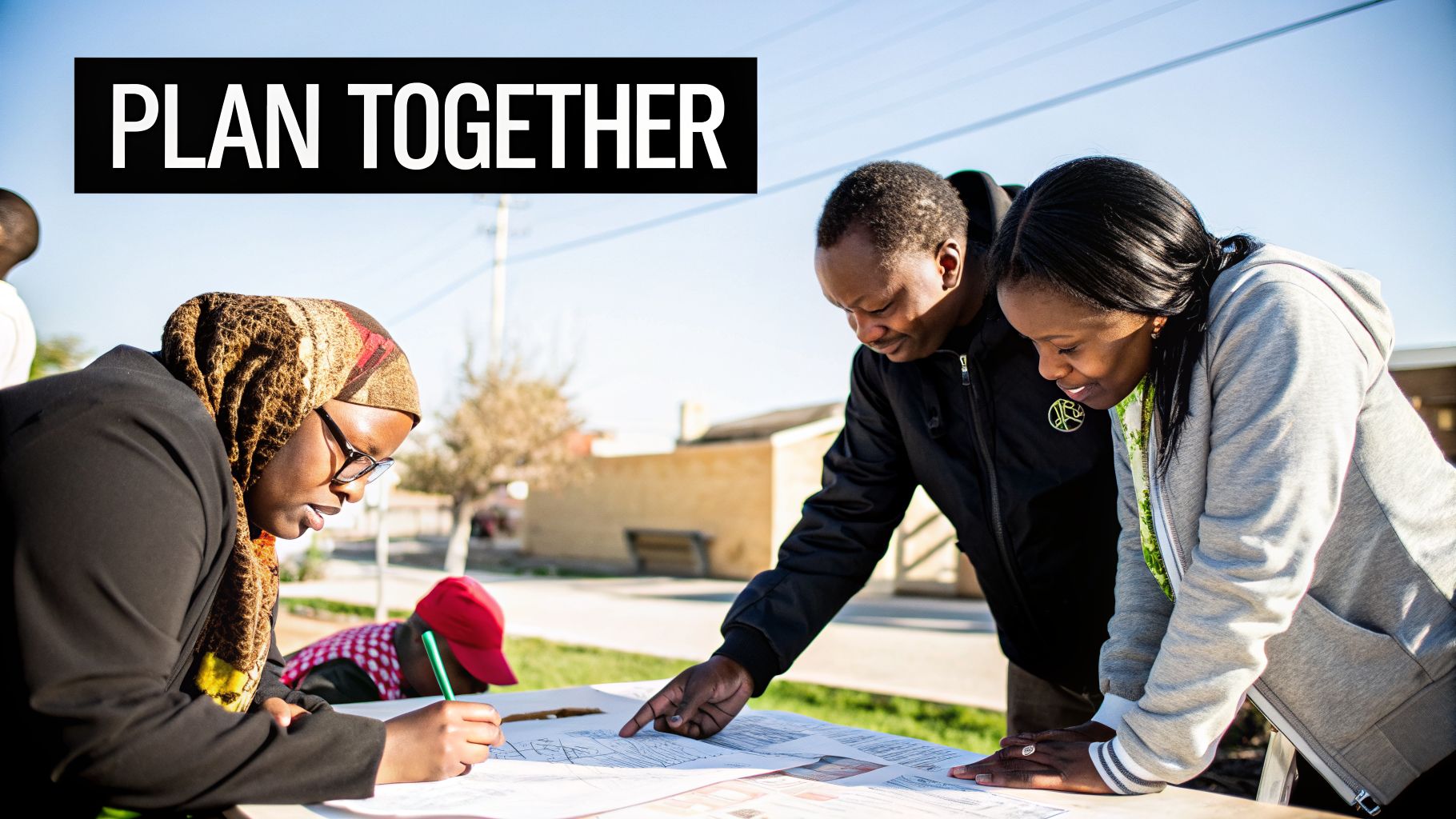
Every great playground begins long before the first post goes in the ground. It starts with a solid plan, turning a big idea into a series of manageable steps.
Your first job is to define what you're actually trying to achieve.
Community Consultation: Who is this playground for? The only way to know is to ask. Chat with local families, connect with disability support networks, and talk to schools. Their real-world feedback is gold—it’s what will make the space genuinely useful and loved.
Site Assessment: Not just any green space will do. You need to look at a potential site with a critical eye. Consider how people will get there, the natural slope of the land, where the sun hits, and whether there's access to basics like parking and toilets.
Budgeting and Funding: Let's talk money. A project of this scope needs a realistic financial plan covering everything from site works and equipment to surfacing and future maintenance. Most successful projects are funded through a mix of council support, grants, and community fundraising. If you're wondering where to start, our guide on how to secure funding and grants for your new playground is a fantastic resource.
With a clear community vision and a potential site, the next phase is where things get really exciting. It’s about bringing that vision to life—safely and creatively. This is where an experienced partner becomes your most valuable asset.
First, the non-negotiables. In Australia, playgrounds must meet strict safety standards. We're talking about the Australian Standards for playground equipment (AS 4685) and surfacing (AS 4422). A professional partner lives and breathes these regulations, ensuring everything from the height of a platform to the cushioning of the ground cover is 100% compliant and safe.
An exceptional inclusive playground is more than just a box-ticking exercise of compliant equipment. It's a cohesive world where a recycling truck slide, a tactile sensory wall, and an accessible globe spinner all feel like they belong together, sparking curiosity and joy.
This is the fun part—the creative design. This is your chance to build something that reflects your community’s character. Whether it’s a whimsical pirate ship, a rustic bushland adventure, or a sleek futuristic spaceport, a specialist design team can turn your ideas into a practical, engaging layout.
They translate community needs and your unique theme into 3D models and plans, carefully selecting equipment that encourages physical, social, and sensory play for everyone. The journey from a sketch on paper to a bustling community hub is complex, but with the right guidance, you can lead a project that will be cherished for decades.
As more people discover the incredible value of inclusive play, we find ourselves answering a lot of great questions. Whether you're a parent on the hunt for a brilliant local playspace or a community champion looking to create one, you're in the right place. Let's tackle some of the most common queries we hear.
This is a big one, and it’s easy to see why the terms get confused. They sound similar, but they come from two completely different mindsets.
Think of an accessible playground as meeting the bare minimum. It might have a ramp leading up to the edge of the soft fall, or maybe one specialised swing. It technically ticks a box, allowing a child with a disability to get to the playground.
An inclusive playground, on the other hand, is about what happens when you get there. It’s designed from the ground up so that everyone can genuinely play together. It’s not just about access; it’s about belonging and shared experiences. We’re talking about a rich mix of sensory, social, and physical activities that kids of all abilities can enjoy side-by-side.
Your voice as a local resident is more powerful than you think. The first step is to connect with like-minded people in your community—gather support from other parents, local school P&Cs, and disability advocacy groups. There is strength in numbers.
Once you’ve formed a group, you can approach your local council representatives with a unified voice. Don't just ask for a new playground; show them what’s possible. Point to successful projects in other council areas and share the well-documented benefits of inclusive play. Most councils have official channels for this, like community grant programmes or public feedback periods for park upgrades, which are perfect opportunities to submit a proposal.
A playground designed for 'everyone' from the outset often sees higher usage and fosters stronger community bonds, making it a valuable long-term asset.
It’s true that the upfront costs for things like specialised equipment and unitary rubber surfacing can be higher than a standard playground fit-out. But framing it as just an "expense" misses the bigger picture.
This is an investment in the health and wellbeing of your entire community. These playspaces are often eligible for state or federal grants designed specifically to fund inclusive infrastructure, which can help offset the initial outlay. More importantly, they become vibrant community hubs that are used more frequently by more families, leading to better health outcomes and a truly welcoming space for every single child. The return on that investment is priceless.
Ready to turn your vision for an inclusive playspace into a reality? The team at Kidzspace offers free playground consultations to help you navigate everything from initial design to final installation. Let's build something amazing together. Find out more at https://kidzspace.com.au.


Copyright © Kidzspace. All Rights Reserved.
Copyright © Kidzspace. All Rights Reserved.