


When you're planning a playground for a school or council, you're making a serious commitment to the wellbeing of children. It’s easy to focus on the colourful equipment, but the truth is, playground floor mats are the single most critical safety system you will install. They’re not an accessory; they're the difference-maker when the inevitable tumbles happen.
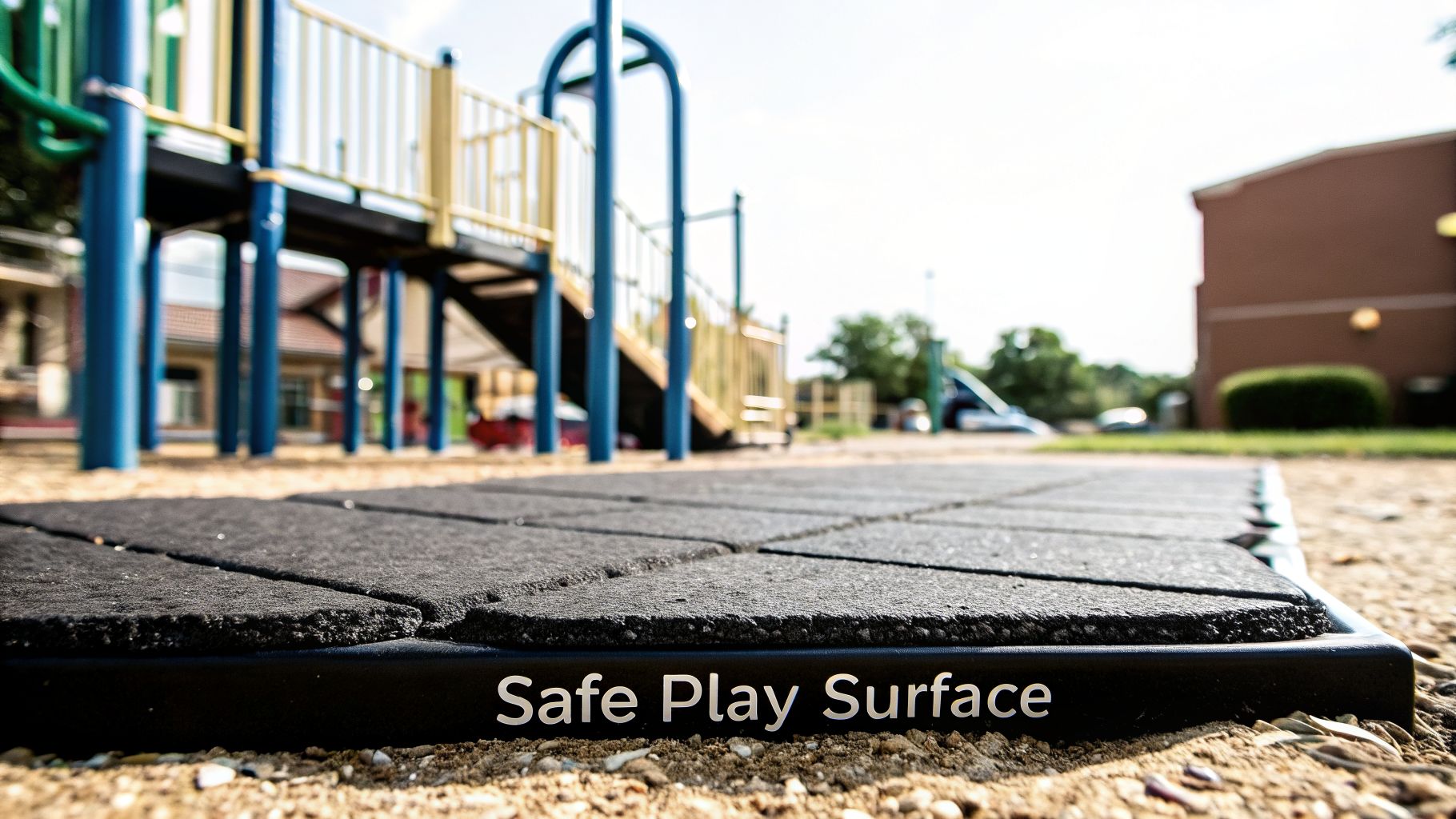
The real responsibility for a safe playspace lies in what’s underfoot. We know that falls are the leading cause of playground injuries, and the ground’s ability to absorb that impact can be the difference between a kid jumping back up laughing and a trip to the emergency room. This is where we get into impact attenuation—a technical term for how well a surface can cushion a fall.
This guide is here to walk you through the entire process, cutting through the jargon. We'll give you the practical knowledge you need to make a confident and compliant choice for your community.
One of the first and most important concepts you need to grasp is Critical Fall Height (CFH). This isn't just a guideline; it's a non-negotiable benchmark set by Australian Standard AS 4422.
Think of Critical Fall Height as the 'safety rating' for your ground cover. It measures the maximum height from which a fall onto the surface is not expected to cause a life-threatening head injury.
In simple terms, your playground surfacing must have a CFH rating that is equal to or greater than the highest point a child can play on. For instance, if the top platform of your slide is 2.0 metres off the ground, your surfacing has to be certified to protect a child from that exact fall height, or higher.
On top of the safety standards, you also have to factor in the unique challenges of the Australian climate. Our intense sun, soaring temperatures, and sudden downpours can destroy inferior materials in a surprisingly short amount of time.
Proper, high-quality playground floor mats are made with UV stabilisers to stop them from fading, going brittle, and cracking under the harsh sun. They're also designed to be porous, so rainwater drains right through instead of pooling on top. This is essential for keeping the playground slip-resistant and ready for play soon after rain—a must-have for any school or public park.
Choosing a surface that’s built for our local conditions isn’t just about making it look good for longer. It's about ensuring safety, durability, and a smart return on your investment for years to come.
Choosing the right playground floor mats is one of the most important decisions you’ll make for your playspace. The surface you pick really sets the tone for everything – safety, looks, accessibility, and how much work you’ll be doing down the track to maintain it. It’s about much more than just picking a colour; it’s about finding a system that truly fits your needs, whether you're managing a busy council park or a small school playground.
Let’s walk through the most common and effective playground surfacing materials we see across Australia. I'll break down the practical differences to help you make a choice you’ll be happy with for years to come.
Imagine a seamless, rubbery surface that’s poured right there on-site, perfectly moulding to the contours of your playground. That’s wetpour rubber. It's built in two layers: a deep, shock-absorbing base made from recycled rubber (that’s the 'cushion' doing the safety work) and a tough top layer of coloured EPDM granules (the 'wear layer' that looks great).
The real magic of wetpour lies in its design freedom. Because it starts as a liquid mix, you can create just about anything you can dream up – intricate patterns, school logos, built-in games like hopscotch, and beautiful, flowing shapes. This makes it a massive favourite for themed playgrounds or any space where you want to make a big visual statement. It’s no surprise high-traffic council parks often go for wetpour to get that seamless finish and creative flair.
If wetpour is custom-moulded, then rubber tiles are like a super durable, modular base. These are pre-made squares or shapes of compressed rubber, designed to lock together to form a uniform and reliable safety surface. They come in different thicknesses, so you can easily match them to your equipment's specific Critical Fall Height requirements.
Rubber tiles are often a more straightforward and predictable option, and their biggest advantage really shines when it comes to maintenance.
This no-fuss practicality makes them a fantastic choice for schools and childcare centres, where easy repairs and predictable performance are top priorities.
To help you weigh these options side-by-side, here’s a quick comparison of the most common playground floor mats.
| Mat Type | Best For | Durability | Maintenance Level | Design Flexibility |
|---|---|---|---|---|
| Wetpour Rubber | Themed playgrounds, high-traffic areas, creating intricate patterns and logos. | Very High | Low-to-Medium | Highest |
| Rubber Tiles | Schools, childcare centres, projects with phased budgets, and DIY installations. | High | Low | Medium |
| Artificial Turf | Playspaces needing a natural, green look that blends with landscaping. | High | Low | Low |
| Bonded Rubber | Natural-themed areas wanting a textured look without loose-fill hazards. | High | Low | Medium |
Each of these surfaces has its place, and the best fit always comes down to the specifics of your site and what you're trying to achieve.
Artificial turf gives you that lush, green look of a perfect lawn without any of the endless mowing, watering, or patching. But on its own, turf doesn't offer the fall protection needed for a playground. To make it a compliant safety surface, it has to be installed over a special underlay called a shock pad.
This two-part system delivers a soft, natural aesthetic that works beautifully in landscaped areas. The shock pad underneath is the real hero here, providing all the impact absorption required to meet Australian safety standards. It’s the ideal solution for playspaces that want to feel green and natural while still guaranteeing safety and year-round use.
If you’d like to explore these material options in greater detail, have a look at our guide on playground surfacing materials for more in-depth comparisons.
For a unique, textured look that feels like woodchip mulch but performs like a modern safety surface, there’s bonded rubber mulch. This material is made from shredded rubber pieces mixed with a strong polyurethane binder. The mixture is then trowelled into place on-site, where it cures to form a single, porous surface.
The key benefit here is that, unlike loose woodchips or gravel, bonded rubber doesn't get kicked around. It stays put, even under swings and at the bottom of slides, which means your fall protection remains consistent without constant raking or top-ups.
This surfacing gives you a more rustic, naturalistic look than smooth tiles or wetpour, but it's still completely wheelchair accessible. It’s a fantastic middle-ground for anyone wanting that textured appearance without sacrificing the low maintenance and dependable safety of a unified surface.
When it comes to playgrounds, safety isn't just about ticking boxes. It’s a genuine commitment to protecting children. For anyone responsible for a playspace, the Australian Standards are the rulebook you simply have to master. Two documents are key: AS 4685, which covers the equipment itself, and AS 4422, which governs the impact-absorbing surfacing under it.
Let's break down what these technical standards mean in the real world. We’ll focus on that vital relationship between the play equipment and the ground, helping you make choices that guarantee true safety, not just compliance on paper.
If there's one term you need to understand inside and out, it's Critical Fall Height (CFH). This isn't just industry jargon; it's the single most important safety metric for your playground flooring. It tells you the maximum height from which a fall is not expected to result in a life-threatening head injury.
Think of it this way: the highest point on your play equipment creates a specific fall risk. The playground matting you choose has a certified safety rating, its CFH. The two must match up perfectly.
To be compliant, the safety rating of your playground floor mats must always be higher than the fall risk of your equipment. A 2.5-metre-high climbing structure requires surfacing with a CFH of at least 2.5 metres—no exceptions.
Getting this wrong creates an unacceptable hazard and a non-compliant space. Always insist that your supplier provides certification proving their product meets the CFH your specific equipment demands. For a deeper dive into these requirements, you can learn more about school playground safety standards in Australia.
So, how does a surface earn its CFH rating? The magic is in a property called impact attenuation—the material's ability to absorb and spread out the force from a fall. It's what turns a simple ground cover into a life-saving safety surface.
This is almost always a function of the material's thickness and what it's made of. For instance, a 50mm thick rubber tile might be rated for a 1.5-metre fall. But to protect against falls from over 3 metres, you might need a 100mm thick layer of poured rubber. The thicker the cushion, the more energy it can safely absorb.
This is exactly why you can't just throw a thin mat under a tall fort and call it a day. The physics don't add up, and it would instantly fail any official safety audit.
Choosing the right type of playground floor mat often comes down to balancing your project’s unique needs, like your design vision versus your capacity for ongoing maintenance. This decision tree can help you figure out the best path forward, depending on what you value most.
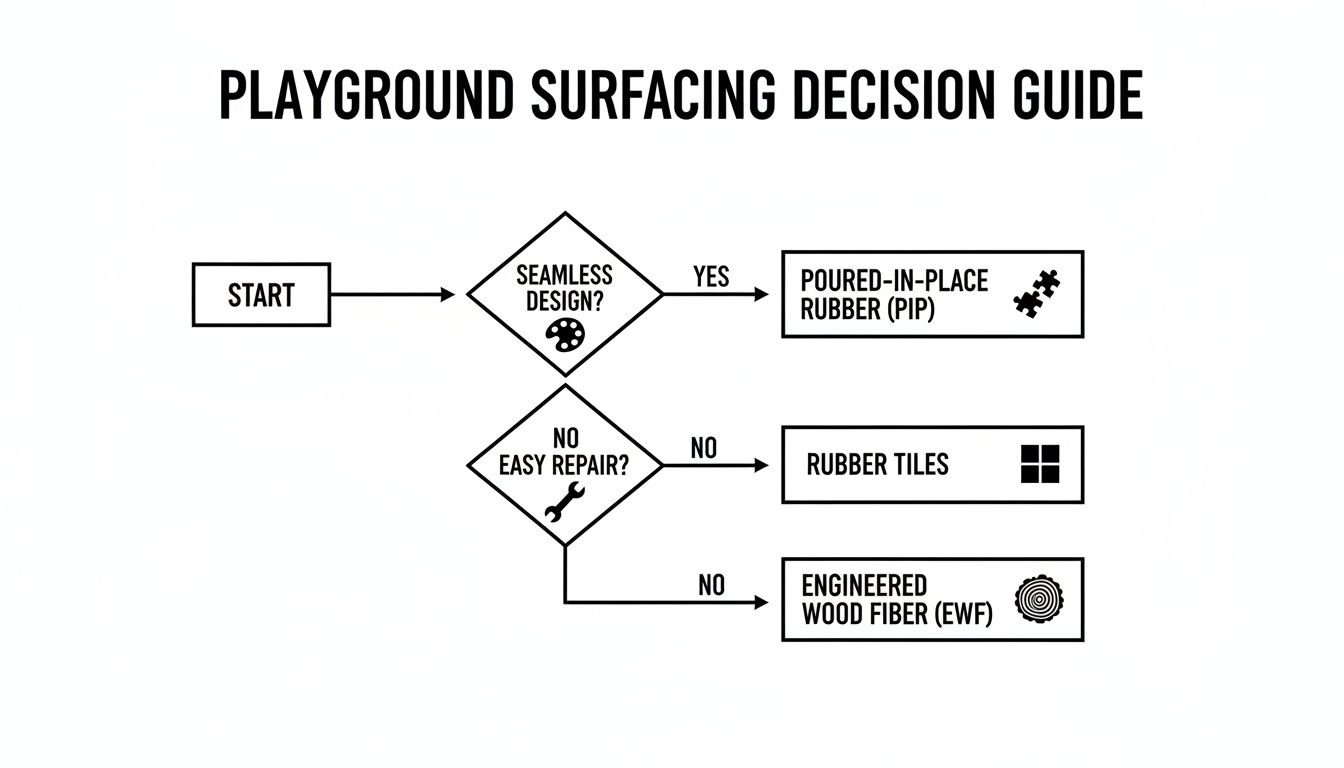
As the chart illustrates, if a seamless, creative design is your top priority, poured rubber is likely your best bet. On the other hand, if you prefer something modular that’s easy to repair, rubber tiles or engineered wood fibre are excellent choices. No matter which route you take, both lead to a safe and compliant playground when they are specified and installed correctly.
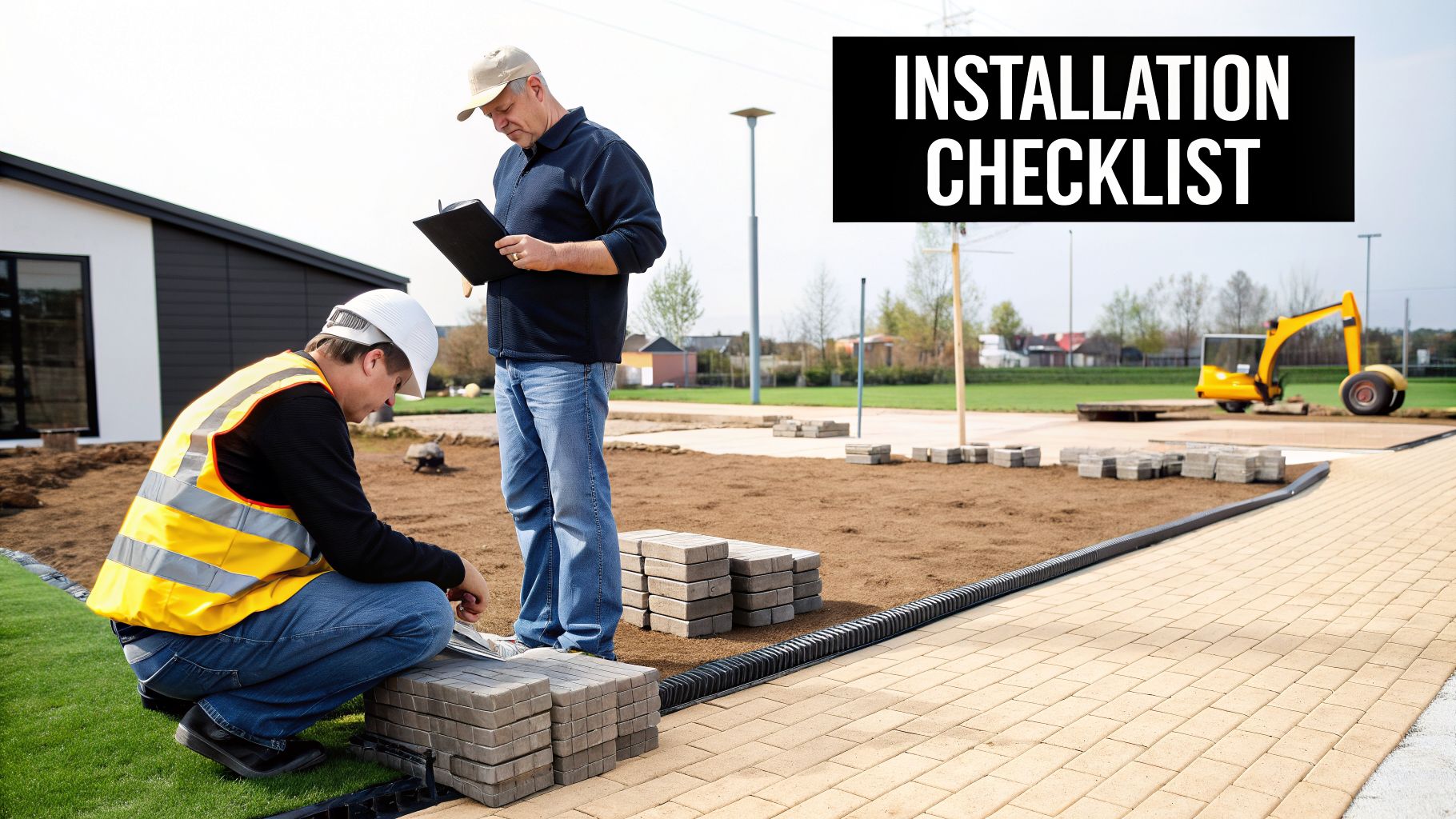
Getting your playground surfacing right is about much more than just picking the right material. The real success lies in the planning and execution. Think of this as your project roadmap, taking you from a patch of bare ground right through to a finished, safe playspace. A solid plan is what stands between a surface that lasts for years and one that fails before its time.
The very first place to start is with a thorough site assessment. I can't stress this enough: you can't just lay compliant playground floor mats over grass or dirt. It’s a recipe for disaster. The surface will fail quickly, creating dangerous trip hazards and trapping moisture that rots the material from underneath.
Proper site preparation isn't just a recommendation; it's the absolute foundation of a compliant, durable, and safe playground.
Before a single mat is laid, the ground itself needs to be prepared with a solid, well-drained sub-base. This is the bedrock of your entire playground. For most projects, this means excavating the area and installing either a compacted layer of crushed rock or a properly poured concrete slab.
The choice between crushed rock and concrete really comes down to the type of surfacing you’ve chosen and the specific conditions of your site.
Think of your sub-base like the foundations of a house. No matter how high-quality the walls and roof are, the entire structure will fail if the foundation is weak. The same principle applies to playground floor mats.
How your playground flooring gets installed will vary a lot depending on what you’ve chosen, and this decision has a big impact on your budget, timeline, and the skills you’ll need on hand.
Interlocking rubber tiles are often seen as the more DIY-friendly option. Thanks to their modular design, a capable school maintenance team can often handle the installation for smaller, straightforward areas. That said, for larger or more complex layouts, I’d still recommend getting the professionals in to guarantee a perfect, seamless fit.
On the other hand, materials like wetpour rubber and bonded rubber mulch are strictly professional jobs. These aren't something you can tackle on a weekend. They require specialised mixing equipment, a precise understanding of binders and granules, and the skilled hand of an expert troweller to get that seamless, compliant finish. Attempting this yourself will almost certainly lead to an unsafe surface that doesn't meet Australian Standards.
Having a clear timeline and budget is essential for keeping your project on track and preventing any nasty surprises. Don't forget that site preparation often makes up a big chunk of the total cost, so it needs to be factored in right from the start.
A good project plan should map out these key stages:
By carefully coordinating these steps, you can minimise disruption and ensure the entire process runs smoothly. A well-managed project is the final, critical step in turning your vision into a safe, inviting playspace that will be a community asset for years to come.
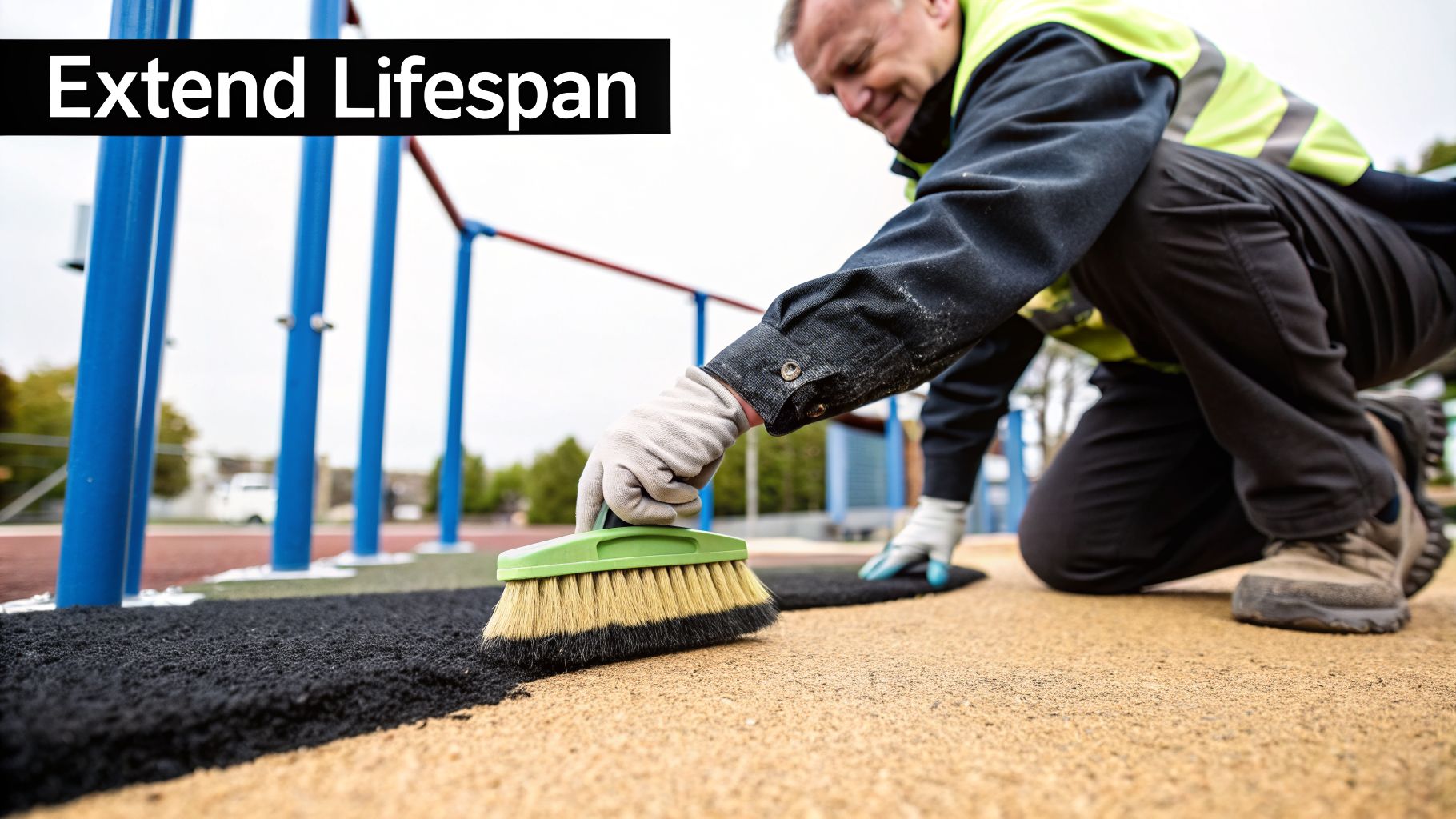
When you're choosing playground flooring, it’s easy to focus on the upfront cost. But the real story of value is told over years, not just on the initial invoice. We always encourage clients to think about the Total Cost of Ownership (TCO), which covers everything from installation and upkeep to repairs and eventual replacement.
Think of it this way: a premium rubber surface might seem like a bigger spend at first. However, its low-maintenance nature often makes it far more economical over its entire lifespan. Compare that to loose-fill options like bark or woodchips, which need constant raking to keep fall zones safe and regular top-ups as the material breaks down or gets kicked out. Those ongoing labour and material costs really start to add up.
A little proactive care goes a long way in keeping your playground surfacing safe, compliant, and looking great. Regular checks are your best defence against small issues turning into expensive headaches.
Here’s what a solid maintenance plan should look like:
Remember, maintenance is about more than just appearances. It’s fundamentally about preserving the critical safety features of the surface—like its impact absorption and slip resistance—which are required under Australian Standards.
The Australian climate is unforgiving. Intense UV radiation and wild temperature swings are notoriously hard on outdoor materials, and your playground surface is on the frontline. That’s why investing in flooring specifically engineered for these conditions is one of the smartest moves you can make.
The best materials use premium UV-stabilised binders. Think of it as a powerful, built-in sunscreen for your playground floor. This crucial ingredient prevents the rubber from going brittle, fading, or cracking under our relentless sun. Cheaper products that skimp on UV protection can start to degrade in just a few years, losing their colour and, more importantly, their safety properties. This can force you into a costly replacement much sooner than you planned.
This emphasis on durable, safe flooring is a major trend across Australia. The demand is huge, with the market hitting USD 4.40 billion in 2023 and forecast to reach USD 6.30 billion by 2030. Quality playground mats are a huge part of this, as they’re essential for meeting safety standards and preventing injuries.
In fact, investing in a single, high-quality mat installation can slash replacement costs by 30% over five years compared to loose-fill options that break down so much faster in our climate.
By choosing a surface built to handle local weather, staying on top of upkeep, and understanding the full lifecycle cost, you’re not just buying a product—you're securing a long-term asset. To get started, download our comprehensive playground maintenance checklist to help structure your routine and protect your investment.
When it comes to playground flooring, a lot of specific questions pop up. We hear them all the time from schools, councils, and childcare centres across Australia. Here are some straightforward answers to the most common queries, drawing from years of experience in the field to help you make the right call.
Choosing the right thickness isn't guesswork—it's a science dictated by safety. The decision comes down to one crucial measurement: your playground's Critical Fall Height (CFH), a non-negotiable requirement under Australian Standard AS 4422.
First, you need to identify the highest point a child could possibly fall from on your equipment. Measure from that point straight down to the ground. That number is your fall height, and your surfacing must have a certified CFH rating that meets or exceeds it.
For example, a small fort with a 1.5-metre platform might only need 50mm thick rubber tiles. But for a tall climbing frame reaching 3 metres, you'll likely need a 100mm deep wetpour surface to absorb the impact properly. Your supplier must provide compliance certificates to prove their product is up to the task for your specific fall height.
This is a great question and a valid concern, especially with Australia’s unpredictable weather. The short answer is that high-quality rubber surfacing is specifically designed to be slip-resistant, even in a downpour.
Think of materials like granulated rubber tiles or poured rubber as a big sponge. They are porous, which means water drains right through the surface instead of pooling on top. This textured, free-draining design is what maintains excellent grip during and after rain.
On the other hand, cheap, non-porous rubber or plastic surfaces can become incredibly slick and dangerous when wet, presenting a risk you simply can't afford to take. Always check that a product has been tested and rated for slip resistance under Australian standards.
A bit of simple upkeep goes a long way, too. Keeping the surface clean and free of moss or algae growth will ensure it stays safe and grippy for years.
When installed correctly using top-tier materials, you can expect a quality rubber playground surface to last for 10 to 15 years, sometimes even longer. Its longevity really boils down to three key things working in harmony.
Naturally, high-traffic zones or areas in constant direct sun will show wear faster. But by investing in a product designed for our climate, you’re giving yourself the best shot at long-term durability.
In a word: no. We can't stress this enough. Trying to lay playground mats directly over grass, soil, or any unprepared ground is a recipe for failure and will create an unsafe play area.
Without a proper foundation, you’re guaranteed to see serious problems, and fast:
Proper site excavation and installing a compacted sub-base, like crushed rock or a concrete slab, is the essential first step. It’s the only way to build a compliant, safe, and durable playground surface that will actually do its job for the long haul.
Ready to ensure your playground is built on a foundation of safety and quality? The team at Kidzspace is here to help you navigate every step, from selecting the right playground floor mats to designing a complete, compliant, and engaging playspace.
Schedule your free playground consultation with Kidzspace today to discuss your project goals, budget, and timeline.



Copyright © Kidzspace. All Rights Reserved.
Copyright © Kidzspace. All Rights Reserved.