


When you think of a parallel bar gym, you might picture an elite gymnast. But in a community park or schoolyard, this simple setup is one of the most powerful tools you can install for building functional, real-world strength. It's the heart of outdoor calisthenics, a dedicated space for bodyweight exercises that strengthen the entire upper body and core.
Think about that underutilised corner of a local park. A parallel bar installation can single-handedly turn it into a hub of positive activity. It's an incredibly democratic piece of equipment—free to use, no memberships required, and zero intimidation factor. It simply invites people to move.
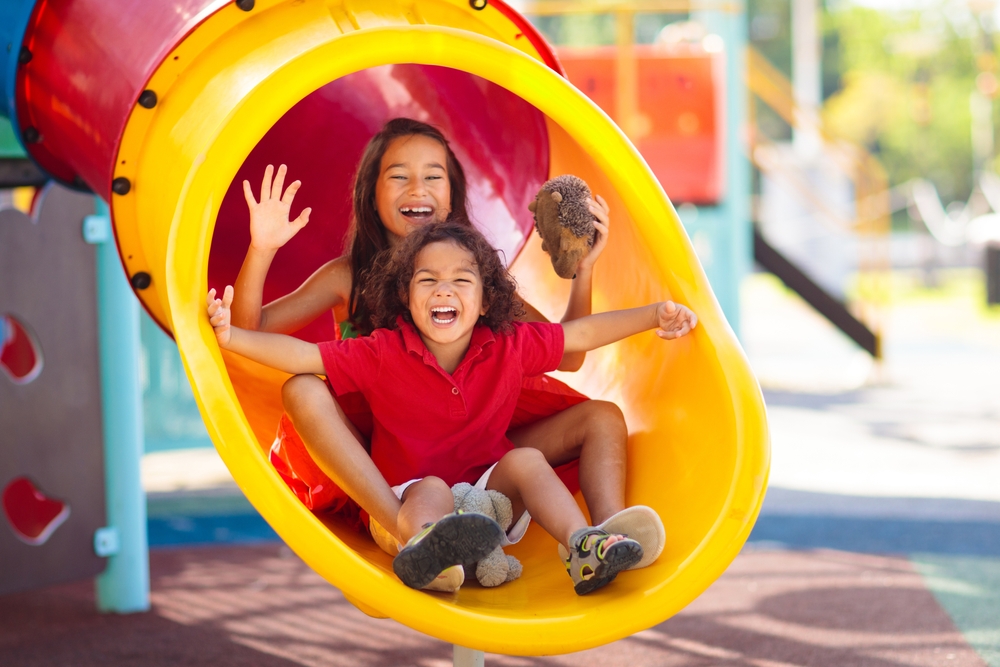
What’s truly remarkable is how it bridges the gap between different age groups. For kids, it’s not exercise equipment; it’s a brilliant play structure. They’ll naturally swing, hang, and practise support walks, building fundamental coordination, grip strength, and spatial awareness without even realising it. It’s physical literacy disguised as fun.
For teenagers and adults, those same bars become a serious training station. They’re the ideal platform for calisthenics, a discipline that uses bodyweight to achieve incredible strength and control.
The focus here is on compound movements. Instead of isolating one muscle at a time, parallel bars force the body to work as a coordinated, powerful unit—the kind of practical strength you use in everyday life.
The benefits quickly ripple out beyond any one individual. A parallel bar gym naturally becomes a gathering point for like-minded people, fostering a real sense of community around health and activity. It’s where training partners can meet up, beginners can get tips from more experienced users, and neighbours can simply connect. That social dynamic is a huge motivator, encouraging people to come back again and again.
This isn't just a niche trend; it's a significant shift in how communities approach public fitness. Across Australia, we've seen parallel bar installations in schools and parks jump by over 40% since 2018. It's a movement backed by a national push for more accessible outdoor fitness options.
In fact, data shows that over 65% of local councils in New South Wales and Victoria now specify parallel bars in their new and upgraded playspace designs, ensuring they meet strict Australian Standards like AS 4685 for safety. You can get a better sense of how this equipment is being used by looking at this preliminary survey of park equipment.
For schools, councils, and developers, it's a remarkably efficient and high-impact investment. It’s a single piece of infrastructure that:
Ultimately, installing a parallel bar gym sends a clear message that your community is committed to health, activity, and long-term wellbeing.
When you're choosing a parallel bar gym for a public space, you're not just buying a piece of equipment; you're making a long-term commitment to your community's health and safety. The materials and design you settle on will dictate how well the unit holds up, how much maintenance it needs, and ultimately, how much it gets used over the next couple of decades.
Getting this choice right is especially important here in Australia, where the combination of intense UV radiation, heavy rain, and salty coastal air can be brutal on outdoor structures. The metal itself is the first line of defence, so understanding the real-world differences between your options is key to a smart, cost-effective decision.
The frame is the backbone of any parallel bar gym, and you'll generally find three common metals used: galvanised steel, stainless steel, and aluminium. Each has its place, but they perform very differently in the field.
As outdoor fitness continues to boom, the pressure is on to select equipment that can handle the increased demand and last for years to come.
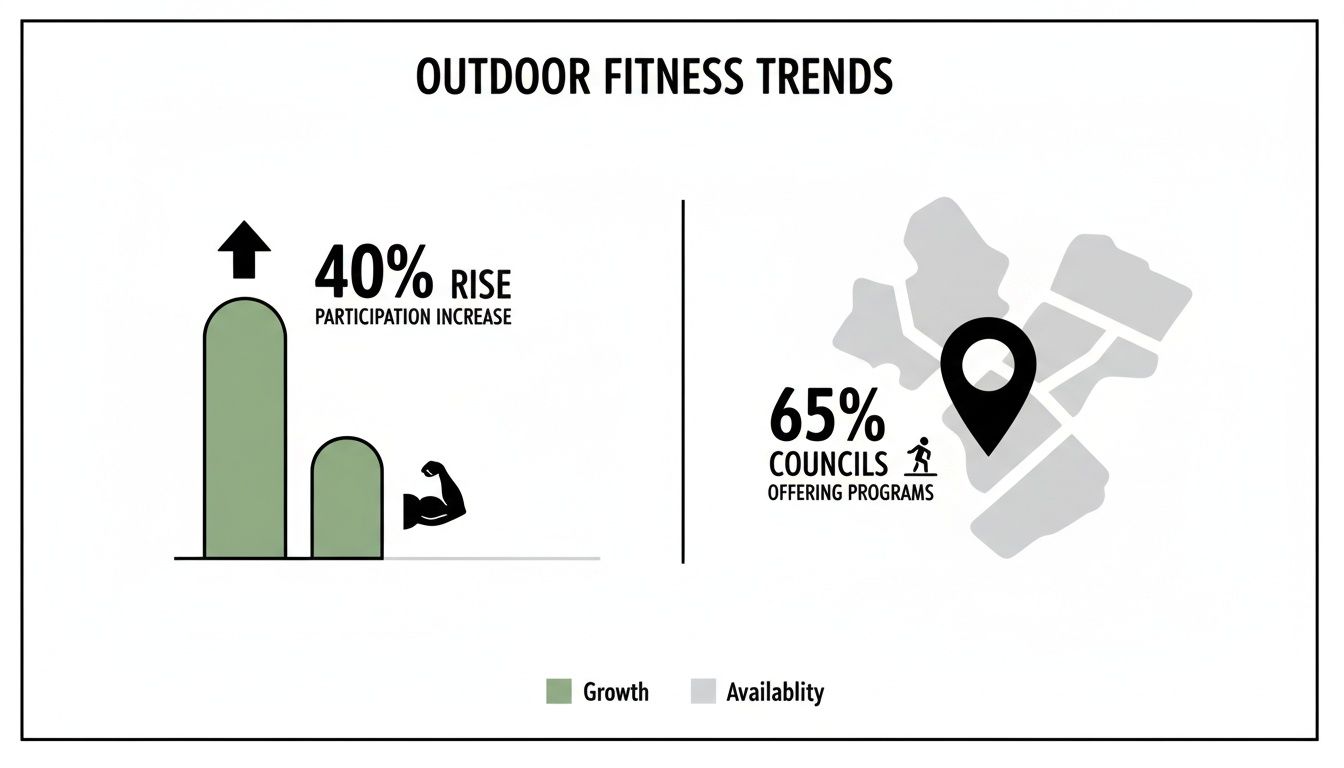
This growing interest really drives home the point: investing in durable, high-quality materials from the start is non-negotiable.
To make the decision clearer, here’s a straightforward comparison of how these materials stack up specifically for Australian conditions.
| Material | Corrosion Resistance | Upfront Cost | Maintenance Needs | Best Use Case |
|---|---|---|---|---|
| Galvanised Steel | Good to Excellent (relies on zinc coating) | Moderate | Low; requires inspection for coating breaches over time | General use in parks, schools, and inland areas |
| Stainless Steel | Excellent (inherent property of the alloy) | High | Very Low; occasional cleaning is usually sufficient | Coastal areas, high-use facilities, and premium sites |
| Aluminium | Excellent (forms a natural protective oxide layer) | Moderate-High | Very Low | Non-load-bearing components; not ideal for bars |
Ultimately, your location and budget will steer you, but for a truly "set and forget" solution in a tough environment, stainless steel is hard to beat.
The finish is what everyone sees and touches, but a quality powder-coated finish is much more than just a lick of paint. It's a critical protective layer. The process involves electrostatically applying a dry powder to the metal and then baking it in an oven. This creates a thick, hard-wearing skin that’s far tougher than traditional liquid paint.
This bonded finish is incredibly resistant to chipping, scratching, and the colour fading you see from constant UV exposure. More importantly, it seals the metal off from moisture, stopping rust before it even has a chance to start. It’s what keeps the equipment looking good and safe for years.
Think of a powder coat as armour for your equipment. It provides the colour and look, but its real job is to be the primary barrier against weather and wear, directly impacting how long the parallel bars will last.
The best parallel bar setup is one that naturally invites people of all ages and abilities to give it a go. A few thoughtful design choices can turn a simple piece of steel into a true community fitness hub.
Here are a few things to look for:
By thinking about both the tough materials under the surface and the smart design features on top, you can ensure the parallel bar gym you choose isn't just built to last, but also built to be loved and used.
For a closer look at equipment specifically engineered for our local climate, check out our overview on corrosion-resistant fitness solutions.
Putting in a new set of parallel bars isn't as simple as digging a couple of holes and dropping them in. To do it right, you need to create an environment that’s genuinely safe for everyone, from curious kids to serious athletes. This all comes down to rigorous safety standards and smart site planning, which work together to prevent injuries and keep your facility compliant for years to come.
Think of it this way: the standards are your rulebook, and the site plan is your game plan. You absolutely need both to succeed.
In Australia, the document you need to know inside and out is Australian Standard AS 4685. These aren't just arbitrary rules; they're a detailed framework designed to minimise risk. For anyone installing public fitness equipment, following AS 4685 isn't just a good idea—it’s mandatory.
Complying with the standard means your parallel bars must tick several critical boxes:
Following these standards is your first line of defence if an accident happens. It’s proof that you’ve done your homework to create a safe space for the community.
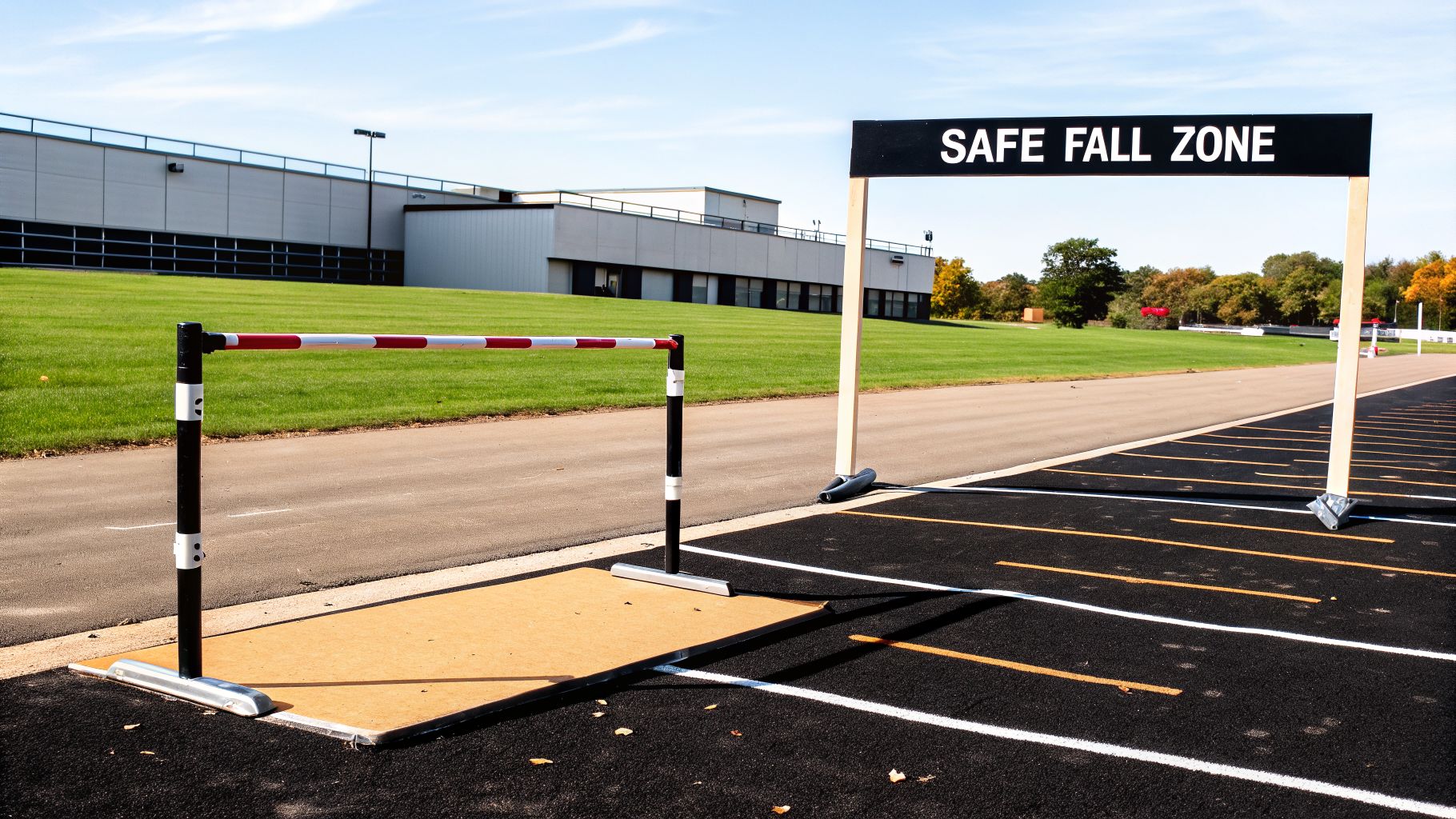
One of the most crucial parts of your site plan is the fall zone. This is the clear, unobstructed space that must surround the equipment, acting as a buffer. If someone slips or falls, this zone ensures they won't hit a nearby fence, bench, or another piece of equipment.
Under AS 4685, the rule of thumb is to have a fall zone of at least 2 metres around the entire perimeter of the parallel bars. This space is non-negotiable and must be measured out before any ground is broken.
Getting this calculation right is the foundation of your site layout. It dictates the total area you'll need and where you can position the equipment in relation to everything else in the park or schoolyard.
The ground within the entire fall zone can’t just be grass or dirt. It needs to be covered with a certified impact-absorbing surface to cushion falls and significantly reduce the chance of serious injury.
Here are the most common options you'll see:
The type of surfacing you choose is a major decision. For a detailed breakdown, check out our guide to playground surfacing materials to see what best fits your project's budget and maintenance plan.
Modern equipment built to these strict standards offers a huge leap in safety. Rigorous testing shows that these installations can lower injury risks by up to 22% compared to older designs, while also standing up to the harsh Australian climate. You can read more about this in these preliminary surveys on their usage. By taking the time to master these standards and plan your site carefully, you’ll create a facility that’s not just fun and effective, but fundamentally safe.
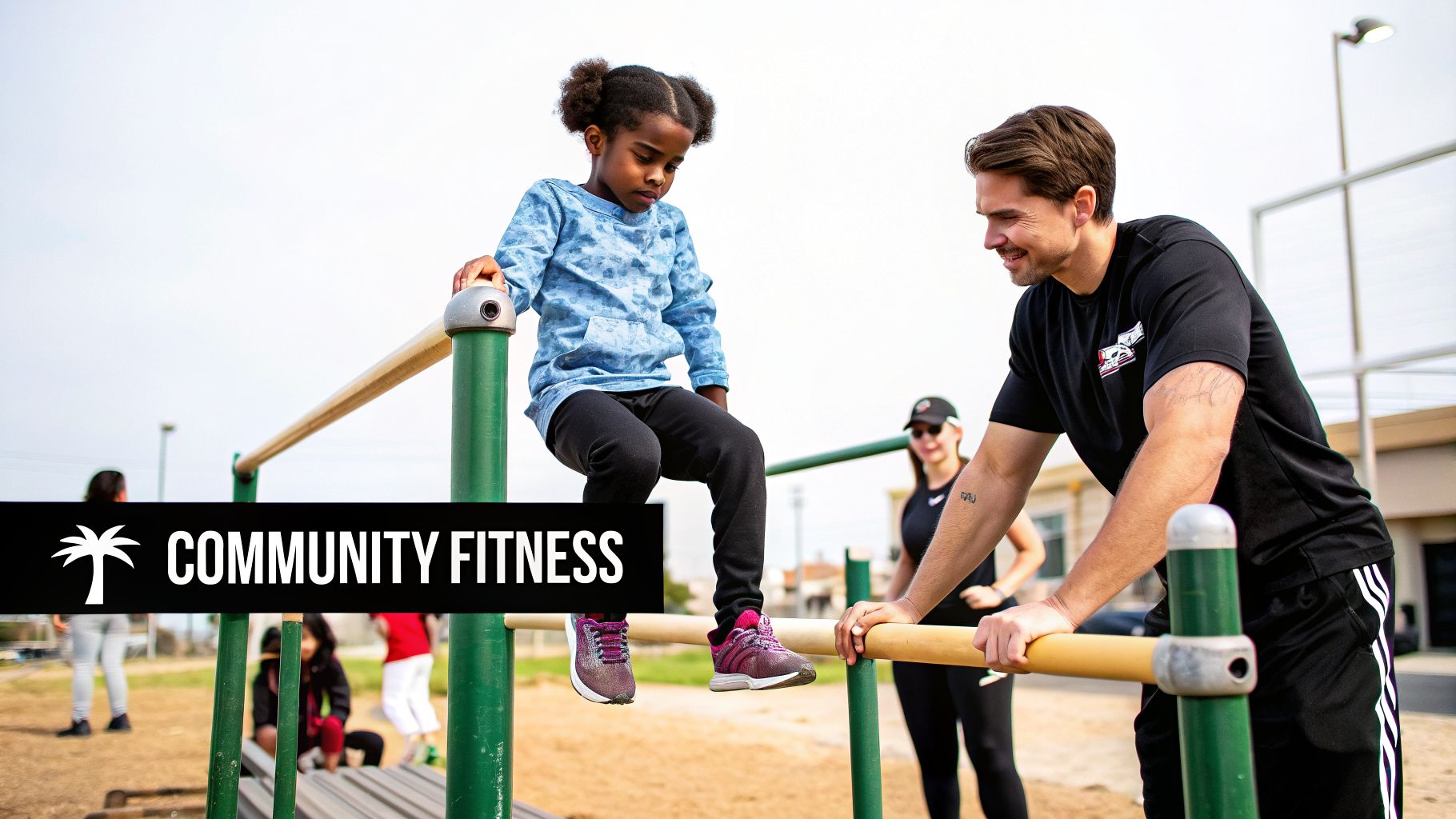
Once your new parallel bar gym is installed and signed off, the real work begins. It’s time to turn that static piece of steel into a buzzing community hub. The difference between equipment that gathers dust and equipment that gets loved is simple: showing people what’s possible.
This is where you shift gears from procurement to programming. It's about giving people a starting point and a path forward, making fitness feel achievable. Let's be honest, a set of parallel bars can look pretty intimidating if you’ve never used them before. A few clear instructions and ideas are all it takes to break down that barrier.
When you get the programming right, the bars become a place where a child builds confidence through play, right next to a seasoned athlete perfecting their form. This is what makes a parallel bar gym such a powerful asset—it brings people of all ages and abilities together.
The great thing about parallel bars is that even the simplest exercises pack a serious punch for building upper body and core strength. Starting here creates a solid foundation for everyone.
For Young Children (Focus on Play and Coordination):
For Beginners and Teens (Focus on Building Strength):
To really bring the space to life, a few organised programmes can make all the difference. They don’t have to be complicated, but they create a reason for people to show up, learn, and connect. The impact is well-documented.
A 2022 Sport Australia study found that primary schools with parallel bars saw a 28% increase in student participation in physical activity during recess. That translated to an average of 15 minutes of extra daily movement per child, all thanks to simple exercises like dips and leg raises. You can explore a similar survey on outdoor gym usage here.
Here are a few practical ideas that work:
To help you visualise how this progression works for different users, here's a sample programme.
| User Group | Beginner Exercise (Focus on Stability) | Intermediate Exercise (Focus on Strength) | Advanced Exercise (Focus on Control) |
|---|---|---|---|
| Primary School Students | Support Holds (holding body weight) | Swinging & Scapular Pulls | Assisted Dips (feet on ground) |
| Teens & Adults (New to Fitness) | Incline Push-Ups | Knee Raises (hanging or supported) | Negative Dips (slowly lowering down) |
| Regular Fitness Enthusiasts | Full Bodyweight Dips | L-Sits (legs extended forward) | Swing to Handstand |
| Advanced Calisthenics Athletes | Weighted Dips | Planche Progressions | Handstand Push-Ups |
This table shows how a single piece of equipment can cater to a huge range of fitness levels, from absolute beginners to elite athletes.
A low-cost, high-impact way to provide ongoing guidance is to install instructional signage near the bars. By showing a clear progression of movements, you empower people to own their fitness journey, long after any launch event is over. For more ideas on building out a complete fitness space, check out our full calisthenics equipment category.
When you’re looking at a parallel bar gym, the price tag is only the beginning of the story. The real cost comes to light over the years, through upkeep and repairs. Thinking about maintenance right from the start isn’t a chore—it’s the smartest thing you can do to protect your investment, keep users safe, and deliver genuine, long-term value to your community.
A little bit of proactive care goes a long way. It means fewer surprise repair bills, a much longer life for your equipment, and far fewer headaches for you. By knowing what to look for during your regular checks and understanding how material choices affect your workload, you can keep your parallel bar gym in top shape for years to come.
Regular inspections are the bedrock of any good maintenance plan. They’re your chance to spot a small issue before it snowballs into a major, costly problem. Whether you check weekly, bi-weekly, or monthly really depends on how much use the equipment gets, but consistency is what truly matters.
Here’s a practical checklist that facility managers can use on their rounds:
The materials you choose when you buy the equipment will pretty much dictate your long-term maintenance schedule. It’s easy to be tempted by a lower upfront price, but that can often lead to a lot more work and expense down the track.
Think about it this way: a high-quality stainless steel parallel bar gym will naturally fend off corrosion from rain and salty coastal air, so it might only need a wipe-down now and then. A cheaper, lower-grade steel unit, on the other hand, could need constant watching for rust spots and might have to be refinished every few years just to stay safe and presentable.
Investing in features like tamper-proof hardware is another savvy move. These specialised fixings stop casual vandalism and prevent people from making unauthorised adjustments. That dramatically cuts down the risk of the equipment being left in an unsafe state and saves you the time and cost of constantly re-tightening everything.
Choosing durability from the outset pays you back in long-term value. For councils planning community parks, this translates into cost-effective assets: one Kidzspace setup can serve 500+ community members annually, fostering inclusive play and teamwork outdoors. These smart choices provide ongoing community wins with minimal fuss, a point reinforced by research in this report on outdoor equipment usage.
By treating maintenance as a proactive strategy instead of a reactive chore, your parallel bar gym becomes more than just a purchase—it becomes a lasting community asset. This kind of forward-thinking ensures it remains a safe, engaging, and valuable feature for everyone to enjoy for many years.
Buying outdoor gym equipment can feel like a minefield. With so many options and technical standards to consider, it's easy to get overwhelmed. We've been through this process with countless councils and schools, and we've distilled it all down into a straightforward checklist.
Think of this as your game plan. It turns a long list of confusing details into a clear set of steps, making sure you don't miss a thing before you invest in your community's health and wellbeing.
Before you even start looking at catalogues, you need to be crystal clear on two things: who will be using the bars, and where they're going to be installed. Getting this right from the start saves a lot of headaches later.
Alright, let's get into the nuts and bolts. This is where you lock in the details that ensure your parallel bars are safe, long-lasting, and right for your local environment.
A non-negotiable point: ask any potential supplier for documented proof that their equipment complies with Australian Standard AS 4685. This is your number one defence for ensuring user safety and limiting liability.
Finally, you need to be confident that the company you choose can deliver on its promises and will be there to support you down the track. A good partner makes all the difference.
Running through these checks is the best way to ensure you end up with a parallel bar gym that's a perfect fit for your community—one that's safe, popular, and built to last for years to come.
Got questions about bringing a parallel bar gym to your school or park? We've put together some straightforward answers to the things we get asked most often, drawing from years of experience on the ground.
For primary schools, it's all about accommodating a wide range of ages and abilities, from preppies right through to year 6. A one-size-fits-all approach just doesn't work. What we’ve found works best is installing a couple of sets at different heights. A lower set, around 1.0–1.2 metres high, is perfect for the younger kids to build confidence. Then, a taller set at 1.3–1.5 metres gives the older children the challenge they need.
The width between the bars is just as important. For smaller bodies, you'll want a much narrower gap than adult bars, typically around 45–55 cm. This spacing is crucial for them to safely learn foundational movements like support walks and simple swings without feeling unstable.
When it comes to safety, there are no shortcuts. You absolutely have to plan for adequate clearance. The Australian Standard AS 4685 mandates a clear, unobstructed 'fall zone' of at least 2 metres around the entire piece of equipment.
This entire zone must be covered with a certified impact-absorbing surface, like rubber or engineered wood fibre. It is vital to confirm the specific equipment dimensions and safety requirements with your manufacturer, as they can vary slightly between designs.
Think of this as a non-negotiable safety bubble. When you're marking out your site, make sure this entire footprint is kept well clear of any paths, garden beds, benches, or other play equipment.
Absolutely! This is where you can get really creative. The days of cookie-cutter metal equipment are long gone. A good supplier can work with you to weave the parallel bars into a larger, imaginative theme that makes your whole space come alive.
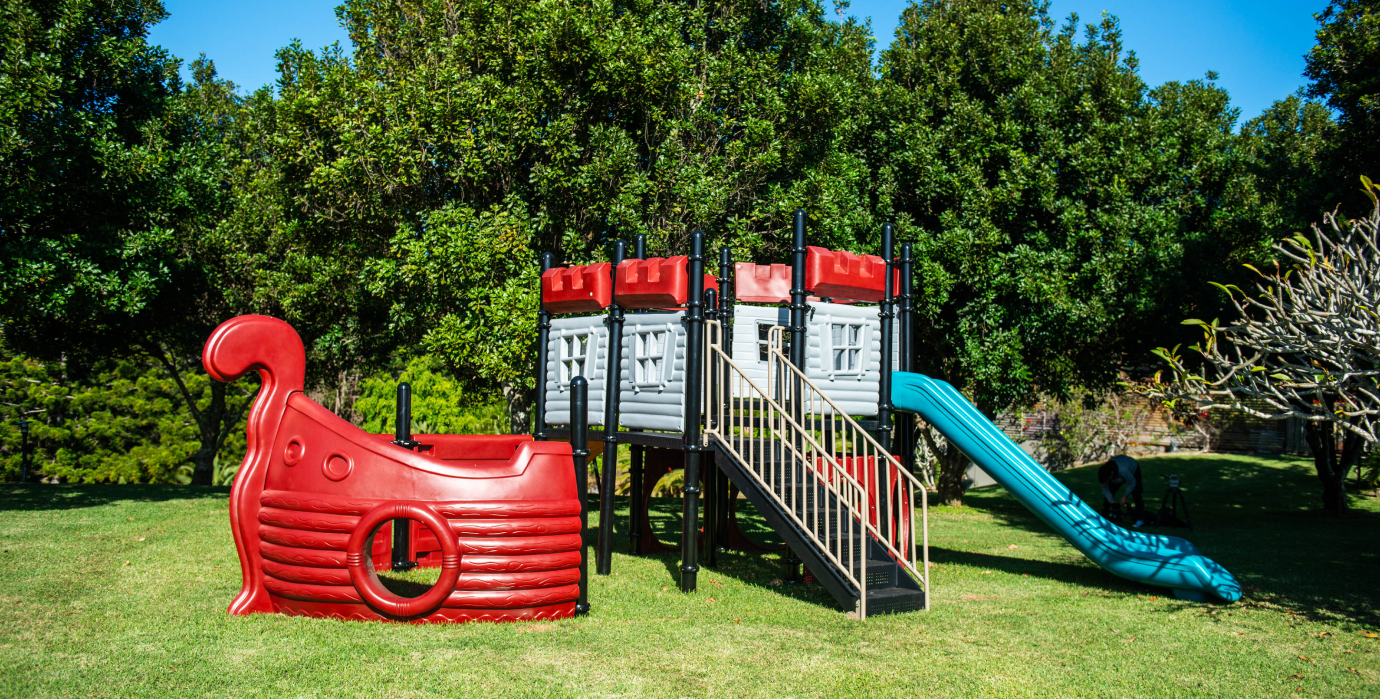
We've seen parallel bars become the rigging on a pirate ship or a tough obstacle in a jungle-themed ninja course. This kind of integration is fantastic for getting kids engaged, because it blurs the line between structured fitness and pure, creative fun. It's how you turn a simple park into a landmark destination for the community.
A quality commercial parallel bar gym is a serious long-term investment. If you opt for robust materials like hot-dip galvanised or stainless steel, you're getting a structure built to withstand years of constant use and the harsh Australian climate. With proper installation and basic, routine maintenance, you should expect a structural lifespan of 15–20 years, sometimes even longer.
The powder-coated finish, which adds colour and an extra layer of protection, might need a touch-up every 5–7 years, depending on the wear and tear and local weather. Starting with high-grade materials from the outset is the key to ensuring long-term value and, more importantly, the ongoing safety of everyone who uses it.
At Kidzspace, we partner with schools and councils to create safe, engaging, and durable outdoor fitness solutions. Explore our customisable options and start planning your project today.


Copyright © Kidzspace. All Rights Reserved.
Copyright © Kidzspace. All Rights Reserved.