



A lot of councils, schools, and community groups arrive at the same point.
A playground needs replacing. The site has good intentions behind it. There may already be a ramp, a path, or a transfer platform. But when staff, families, or students look closely, one question keeps coming up. Can every child join in, stay involved, and feel like they belong here?
That is where an all abilities play space changes the conversation.
It is not only about adding compliant equipment. It is about creating a place where children with different physical, sensory, cognitive, and social needs can play together in ways that feel natural. For decision-makers, that means balancing vision, standards, site limits, budget, and long-term upkeep. For families, it means something simpler. Their child is no longer watching from the edge.
A parent arrives at the park with two children. One runs straight to the climbing frame. The other uses a mobility device and stops at the edge of loose softfall, looking in. The equipment is colourful. The playground is busy. Yet one child is still outside the play experience.
That moment is why an all abilities play space matters.

Many people use these words as if they mean the same thing. They do not.
Accessible often means a space meets minimum access expectations. A child can reach the site, enter it, or use one part of it.
Inclusive means the child can participate in the life of the space. They can move through it, choose activities, play beside others, and enjoy similar levels of challenge, fun, and independence.
A single transfer point onto one platform may improve access. A connected play network with shared sensory, social, and physical experiences is much closer to inclusion.
Inclusive play is often framed as a specialist topic. In practice, it affects the whole community.
Children use playgrounds differently from day to day. One child may need physical support. Another may struggle with noise, unpredictability, or waiting for a turn. Another may be recovering from injury. Grandparents, carers, and educators also need spaces they can move through comfortably.
That broad value shows up in public attitudes. Nearly nine in ten Americans recognise the importance of inclusive play options in their communities, according to the NRPA Park Pulse survey on all-abilities play spaces. For Australian schools and councils, that is a useful reminder. Investment in inclusive play usually aligns with community expectations rather than sitting outside them.
Key takeaway: An all abilities play space is not a special add-on. It is a practical way to make public space work for more people, more often.
When children can access different kinds of play, they build more than strength or coordination.
They practise turn-taking. They test risk. They learn how to approach others, retreat when needed, and come back in. They find activities that regulate, energise, calm, or connect them.
Children without disability benefit too. They grow up seeing difference as ordinary. Shared play builds familiarity, patience, and social confidence in ways no poster or policy statement can.
For schools, that can support belonging in the yard. For councils, it can lift the value of a park from equipment provision to community infrastructure. For community organisations, it creates visible proof that inclusion is not only discussed. It is built.
A strong all abilities play space starts with a way of thinking before it becomes a set of products.
Universal design asks a simple question. Can one environment serve a wide range of people without separating them into different experiences? In a playground, that means designing for participation, choice, comfort, and dignity from the start.
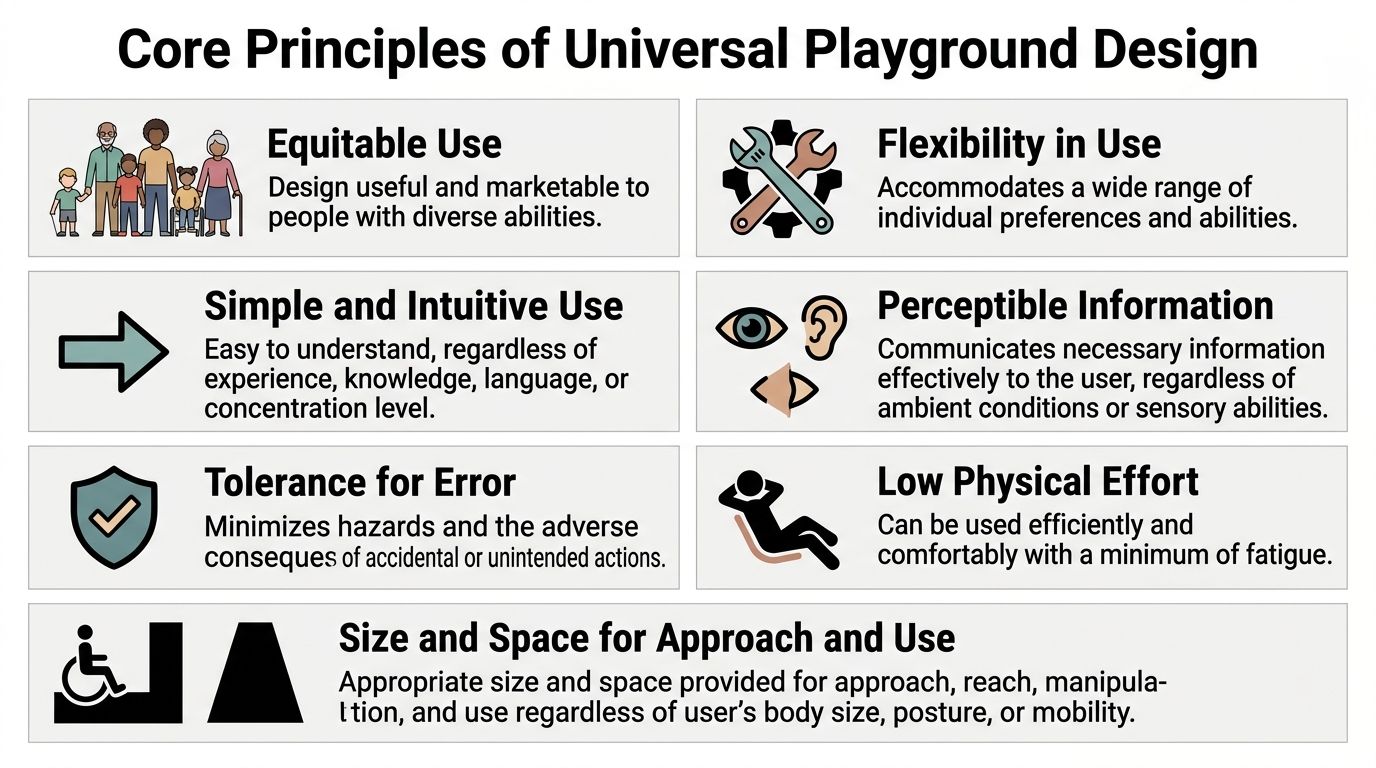
A useful test is this. If one child enters by the main route and another must go around the back, the design may be functional but it is not equitable.
In playground terms, equitable use means children with different abilities can enjoy the same destination or activity in comparable ways. A broad ramped structure with interactive panels, lookout points, and meeting spots invites shared play. It avoids the feeling that one route is the standard route and another is the compromise.
Children do not all engage with play the same way. Some seek movement. Some seek repetition. Some want close contact with others. Some need control over pace and intensity.
A well-designed all abilities play space gives multiple ways to participate. Swings are a good example. One child may use a belt swing. Another may need a moulded seat. Another may benefit from a companion swing that supports shared use. Flexibility does not lower the quality of play. It broadens it.
A playground should not require expert interpretation.
Children should be able to read the space through form, colour, layout, and sequence. If the entry is obvious, the path is clear, and the next activity feels easy to understand, more children can move independently. This matters for younger users, children with cognitive disability, and children who become overwhelmed by complex environments.
Some children rely on visual cues. Others respond better to touch, sound, or strong contrast.
A playground communicates constantly. It tells users where to go, where to stop, what moves, what spins, what is quiet, and what is social. Designers can support this with colour contrast, tactile elements, visual landmarks, and communication-friendly features. Sensory design is not an extra layer after the main concept. It is part of how children understand space. Kidzspace also outlines this well in its guide to the importance of sensory play.
Practical tip: If a first-time visitor cannot quickly tell where active play ends and where a quieter retreat begins, the layout needs more clarity.
Children test boundaries. Good playgrounds expect that.
Tolerance for error means reducing the consequence of unintended actions without removing challenge. This can include clear sightlines, predictable circulation, guardrails where appropriate, and surfaces that support stable movement. The point is not to sanitise play. The point is to let children explore without creating avoidable barriers or hazards.
Many users can manage effort in short bursts but struggle when a site asks for constant force, uneven movement, or repeated lifting.
That is why surface choice, path quality, and approach routes matter so much. A feature may be technically available, but if a child or carer is exhausted before reaching it, practical access has already failed.
This principle often gets reduced to turning circles and widths. Those matter, but the lived experience is broader.
Children need room to approach, pause, turn, transfer, queue, and play alongside others. Carers may need to assist. Wheelchairs, walkers, and prams all shape how space works. Good layouts build generosity into circulation rather than squeezing it in at the edges.
Universal playground design works best when no single feature carries the whole burden of inclusion.
A ramp alone is not enough. A sensory panel alone is not enough. A quiet corner alone is not enough. The space needs layers that work together. Arrival, circulation, equipment choice, comfort, signage, and social interaction all have to support the same goal. Everyone gets a meaningful chance to play.
By the time a project reaches concept drawings, many teams already feel pressure to choose equipment quickly. That is usually the wrong moment to start making inclusion decisions.
The blueprint for an all abilities play space sits underneath the visible play items. It includes surfacing, circulation, amenities, reach ranges, and the practical details that decide whether the finished site feels smooth or frustrating to use.
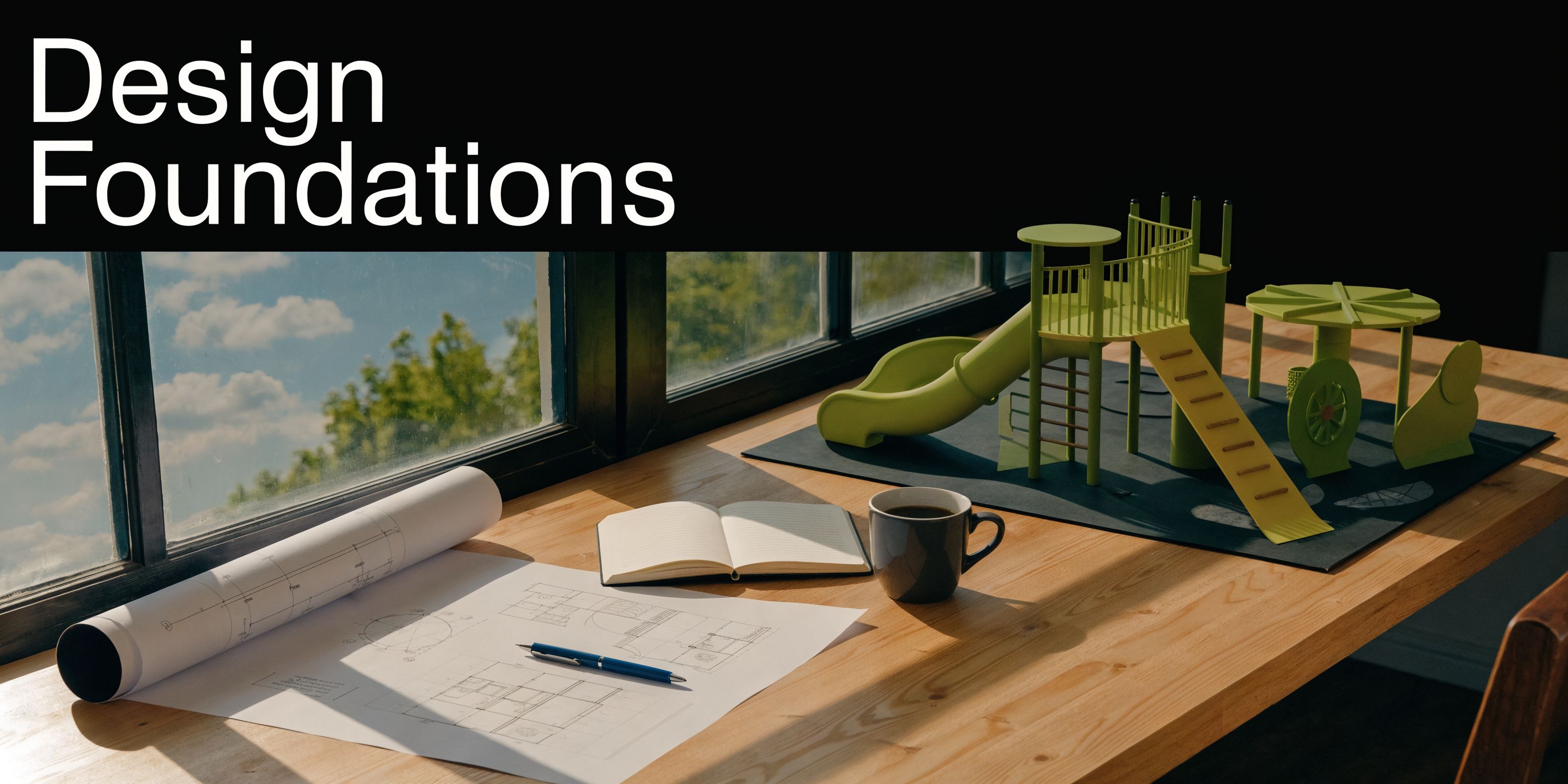
Surfacing often determines whether a playground is meaningfully usable.
Loose materials can work in some settings, but they can also create resistance for wheelchairs, walking aids, and carers pushing mobility devices or prams. Unitary surfaces usually provide a more consistent route through the site and around equipment. They also help create stronger links between active and quiet zones.
For teams comparing options, this overview of wet pour rubber surfacing is a useful starting point for understanding where seamless softfall systems fit within inclusive design decisions.
When assessing surfacing, ask practical questions:
Decision-makers sometimes focus so heavily on play equipment that amenities are treated as secondary. Families do not experience them that way.
A playground can have a generous ramped structure and still exclude users if nearby toilets, doors, fixtures, or support spaces are poorly resolved. Mill Park’s All Abilities Playspace in Victoria shows how precise these details need to be. Its access specifications include toilet cubicle dimensions of 4090mm × 3070mm, 870mm minimum door clearances, and sink heights of 820mm AFFL, as set out in the Mill Park access key document.
Those are not abstract compliance figures. They affect whether a child, parent, or support worker can enter, turn, assist, and leave with dignity.
An all abilities play space works better when the site is organised into connected experiences rather than isolated pieces of equipment.
A useful layout often includes:
Planners, designers, and educators often get clearer results by discussing behaviour, supervision, and comfort before selecting products.
Design tip: If a quiet zone sits beside the loudest motion equipment, it may exist on the drawing but fail in real use.
Australian projects also need to align with relevant standards and local compliance requirements. Teams often hear references to standards such as AS 4685, but the practical question is more immediate. What will the user feel on site?
A well-resolved path feels obvious and smooth. A platform height feels manageable. A handhold sits where a child expects it. A transfer point does not force awkward movement. A communication panel is placed where standing and seated users can both engage.
That is why technical review should involve more than certifiers. Include the people who understand everyday use. Occupational therapists, educators, access consultants, maintenance teams, and families often notice friction points that a drawing set alone will not reveal.
Two projects can appear similar in promotional images and perform very differently once children arrive.
The difference is often found in the hidden decisions. Surface continuity. Turning room. Fixture placement. Shade. Drainage. Seating near play, not far from it. Entry points that welcome all users rather than funnel some toward a side access route.
When those basics are done well, the equipment can do its real job. It can invite challenge, imagination, and shared play rather than compensating for an inaccessible site.
Projects usually slow down for one of three reasons. The site constraints were not understood early. The community was consulted too late. Or the budget covered equipment but not the things that make the playground work.
A reliable project plan keeps those issues visible from the start.
| Phase | Key Action | Primary Consideration |
|---|---|---|
| Site assessment and visioning | Review access, circulation, shade, drainage, supervision, and current barriers | Whether the site can support shared use from arrival to exit |
| Stakeholder engagement and co-design | Consult families, educators, therapists, carers, maintenance staff, and community users | Whether the brief reflects real needs rather than assumptions |
| Budgeting and funding | Set scope, stage works if needed, and identify grant or capital pathways | Whether the budget includes surfacing, amenities, seating, shade, and maintenance |
| Equipment selection | Balance physical, sensory, cognitive, imaginative, and social play | Whether different users can participate with dignity and choice |
| Long-term safety and maintenance | Plan inspections, cleaning, repairs, and replacement cycles | Whether the space will remain inclusive over time |
Before discussing signature equipment, walk the full site.
Notice where people arrive. Check whether parking, drop-off, gates, paths, and sightlines support easy entry. Look at sun, wind, drainage, nearby noise, and whether carers can supervise multiple children without constantly repositioning themselves.
This phase is also where a project needs a clear purpose. A school may prioritise play during breaks, sensory regulation, and social inclusion in the yard. A council may need broader age appeal, destination value, and easy maintenance.
Without that clarity, teams often buy attractive equipment that does not solve the main problem.
The most common mistake in inclusive projects is treating consultation as a confirmation step rather than a design input.
Families often know where current spaces fail. Occupational therapists can explain how movement, sensory load, and transitions affect different users. Educators can describe how children group, withdraw, re-enter, and play across mixed abilities and ages. Maintenance crews know what breaks, what blocks paths, and what becomes difficult to keep safe.
Useful engagement methods include:
Feedback should shape layout, not just equipment colour or theme.
Practical tip: If every consultation group asks for “more accessibility”, keep digging. You need to know whether they mean entry, movement, sensory comfort, toilets, social participation, or supervision.
Inclusive play spaces can be modest, staged, or large in scale. The key is matching ambition to lifecycle cost.
For major regional projects, the investment can be substantial. El Paso’s Community Progress Bond allocated $10 million for a new regional all-abilities playground, according to the City of El Paso regional all-abilities playground project page. That figure should not be copied directly into an Australian budget, but it is a useful benchmark for understanding how significant regional facilities are planned and funded.
In practical terms, budgeting should cover more than play structures. Include:
Councils and schools exploring grant pathways can review new playground funding and grants guidance when shaping staged delivery or external funding applications.
A strong all abilities play space does not try to make every item do everything.
Instead, build a balanced mix. Ask what each element contributes. Some support whole-body movement. Some invite shared play. Some help children regulate. Some reward imagination or problem-solving.
A useful selection process might include:
If a product range is being reviewed, Kidzspace is one example of a supplier that designs and manufactures playground systems and freestanding elements across different themes and site contexts. The important test is not brand familiarity. It is whether the chosen mix supports real use on your specific site.
An inclusive playground does not stay inclusive by accident.
Loose edges develop. Moving parts wear. Signage fades. Surface joins lift. A quiet zone becomes cluttered with furniture or bins. Any one of these can reduce access.
Long-term planning should define who inspects the site, how issues are reported, what gets prioritised, and how worn elements are replaced without compromising the whole design intent. This matters just as much in schools as in public parks.
The strongest projects treat maintenance as part of inclusion. If the route to the swing pod becomes rough, or the accessible toilet is hard to use, the original design promise weakens quickly.
Examples help decision-makers move past abstract goals. Once you can see how different sites solve different problems, the path forward becomes clearer.
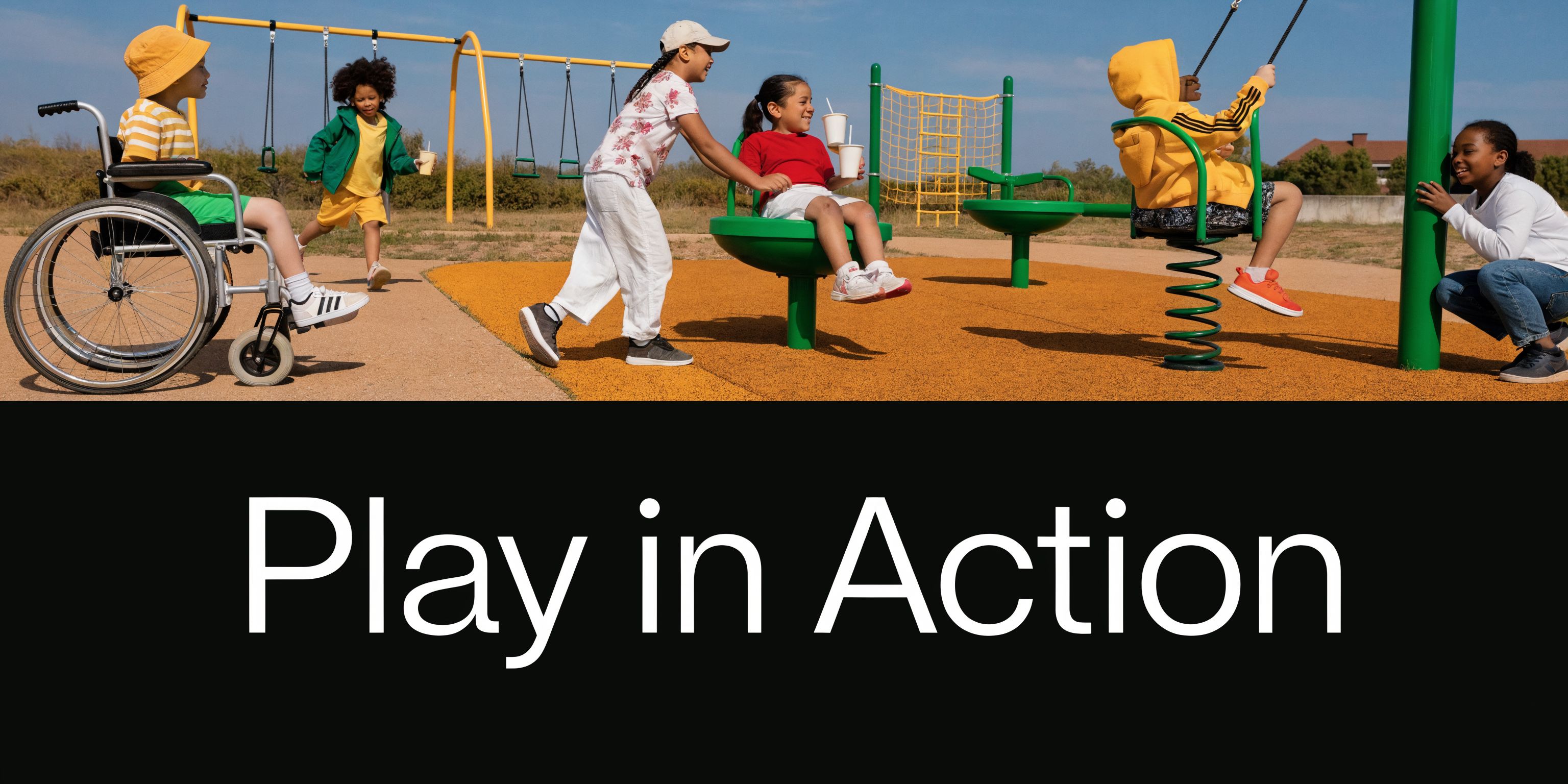
The Play for All Abilities Park in Round Rock is a useful reference because it organises play through distinct zones rather than one single experience. The approach helps families and carers understand the site more easily. It also gives children different entry points into play depending on confidence, mobility, and sensory needs.
One standout example is its Swing Pod. According to Play for All Abilities Park, the pod includes six distinct swing types, including wheelchair, molded, and companion swings. That kind of variety matters because “a swing” is not one experience. Different bodies and support needs require different seat types, postures, and social arrangements.
For councils, the lesson is practical. Instead of asking whether a playground has swings, ask whether the swing offer is broad enough to support different users without separating them into second-choice options.
El Paso provides a different case study. The city already operates all-abilities playgrounds across several existing sites and has planned a new regional facility at Lomaland Park through Proposition B funding.
The design and delivery model is important here. This is not a one-off gesture. It shows a municipality building an inclusive network over time, combining local access with a larger destination site. That approach often suits Australian councils. One neighbourhood site can address everyday use, while a larger regional site can justify more extensive amenities, specialised equipment, and broader community draw.
The biggest lesson from this type of project is organisational, not aesthetic. Inclusive play works best when councils treat it as part of long-term recreation planning rather than as a standalone accessibility line item.
A short video can help stakeholders visualise what successful inclusive play looks like in practice.
Mill Park’s All Abilities Playspace is useful for a different reason. It shows how the surrounding facilities contribute to the quality of the experience.
The access features documented for the site, including detailed toilet and fixture specifications, demonstrate that inclusion does not stop at the edge of the softfall. Families judge the whole visit. Can they arrive easily, stay comfortably, support a child’s needs, and leave without stress? If not, the playground may be admired more than it is used.
Mill Park also reflects another strong design idea. Inclusive sites often work best when active play, sensory engagement, sport, and passive recreation sit together. That arrangement allows siblings, carers, and mixed-age groups to share the same place without everyone needing the same activity.
Key takeaway: The strongest all abilities play space projects do not rely on one special feature. They combine layout, equipment range, and support amenities so the whole visit feels welcoming.
Schools rarely need to copy a regional park. They can still borrow the logic.
Use zones so children can choose different intensities of play. Offer movement experiences with different levels of support. Include retreat spaces near the action rather than far from it. Make circulation easy for staff, students, and carers. Treat nearby amenities as part of the inclusive brief.
That is often enough to shift a school yard from “some children can use this” to “more children can belong here”.
An all abilities play space is one of the clearest ways a school, council, or community organisation can express what it values.
It says that play matters. It says that difference belongs in public life. It says that children should not have to qualify for participation based on mobility, communication style, sensory profile, or confidence level.
The strongest projects do not begin with a catalogue. They begin with a decision. The space will work for more people. It will support dignity, social connection, and everyday joy. Then the practical work follows. Site review. Co-design. Technical detail. Procurement. Maintenance.
That combination of purpose and discipline is what turns inclusive ambition into a place people use.
For decision-makers, the business case is also clear. Well-planned inclusive spaces respond to community expectations, support broader participation, and create assets that serve families for years rather than solving only the brief of the day. They are not only playgrounds. They are long-term community infrastructure.
If you are planning your first inclusive project, the next step is not to have every answer. It is to ask better questions early, involve the right people, and build from a clear understanding of how the space will be used.
If you are ready to scope an all abilities play space, Kidzspace can help you assess your site, clarify priorities, and shape a practical project pathway for your school, council, or community facility.



Copyright © Kidzspace. All Rights Reserved.
Copyright © Kidzspace. All Rights Reserved.