



Working out in a park is about so much more than just getting some fresh air. It’s about transforming our public green spaces into vibrant hubs for community health—places where fitness is free, accessible, and genuinely enjoyable.
Let's face it, the traditional gym environment isn't for everyone. The monthly fees, the sometimes-intimidating atmosphere, and the four walls can be major turn-offs. Working out in a park flips that script entirely, offering a welcoming and effective alternative that weaves physical activity right into the fabric of community life.
The upsides go far beyond just saving money on a membership. Sure, the sunshine and fresh air are fantastic, but research consistently shows that exercising in a natural setting can do wonders for your mental health. It’s proven to lower stress, elevate your mood, and leave you feeling more revitalised than a session indoors ever could. It connects you to your local environment and, just as importantly, to your neighbours.
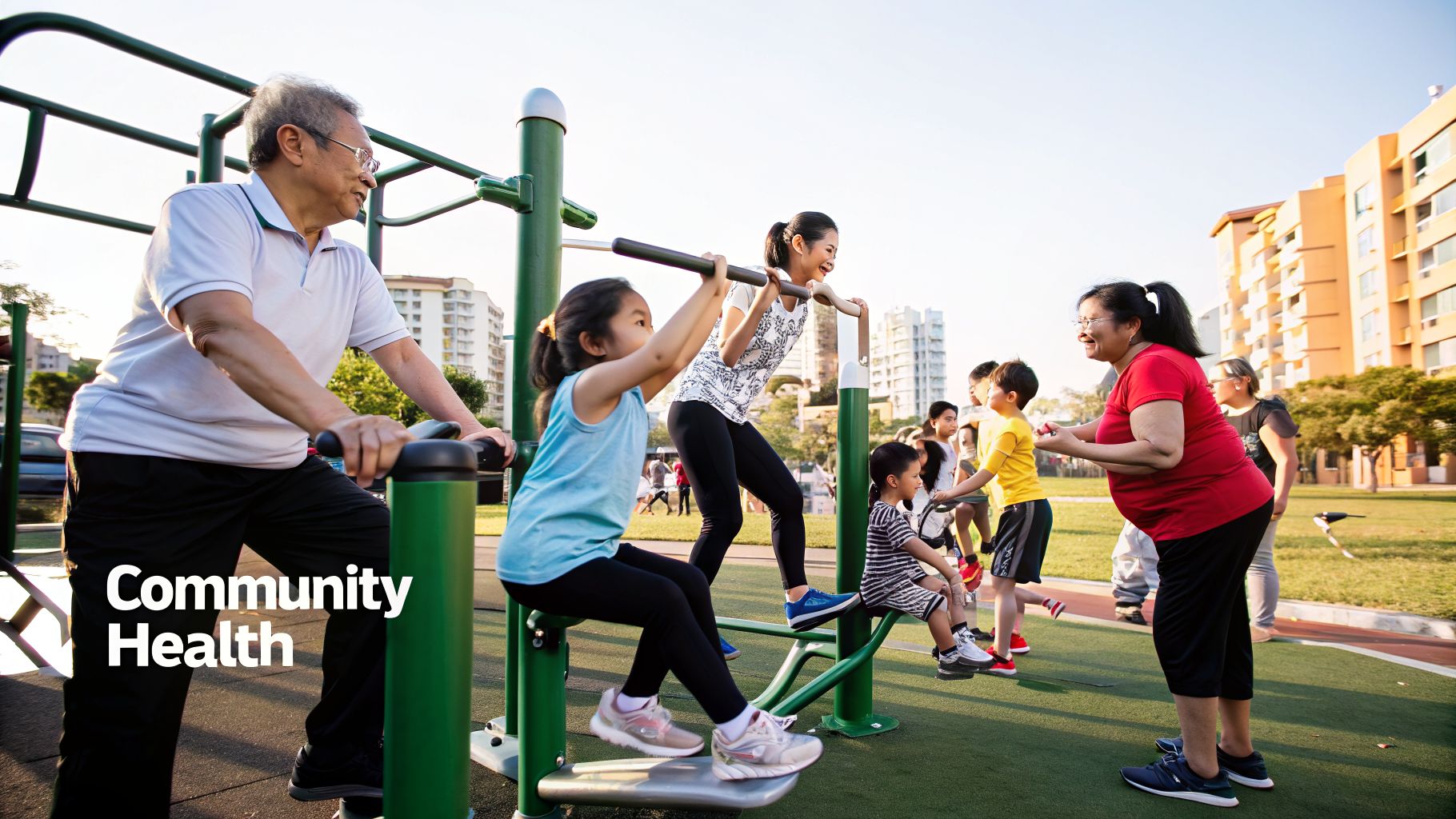
When a local council or school decides to install outdoor fitness equipment, they're making a powerful investment in public health. These fitness zones are brilliant because they systematically knock down the most common barriers people face when trying to get active.
This simple act can turn a forgotten corner of a park into a lively centre for wellbeing. It’s an open invitation for everyone—from parents watching their kids on the playground to seniors enjoying a morning stroll—to add a bit of movement to their day.
Of course, just plonking down a few random pieces of equipment won't cut it. The real magic happens when the space is thoughtfully designed. Getting the right mix of equipment is what turns a quick park visit into a proper workout.
The data backs this up loud and clear. A Queensland study looking at outdoor gym use found that a significant 57.4% of park-goers had used the new facilities. What’s even more telling is that 71.0% of those users said the equipment made them visit the park more often.
The lesson here is simple: when outdoor fitness equipment is well-placed and designed with users in mind, it dramatically increases how much a park is used and loved. It’s all about creating an environment that people are naturally drawn to.
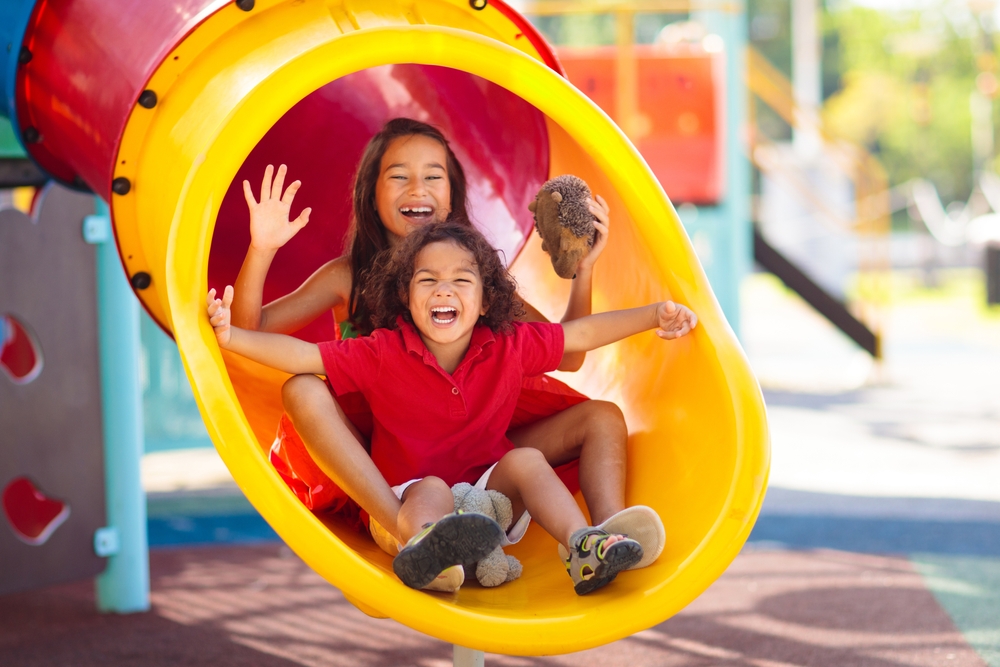
This is where you can get really creative. Imagine a vehicle-themed fitness trail where kids and parents can "drive" stationary bikes or "lift" car-themed weights side-by-side. You can find out more about how this approach really works. By blending play and exercise, fitness stops feeling like a chore and starts feeling like an adventure the whole family can share.
When you look at the big picture, a park workout offers a clear advantage over a gym membership for many people. Here’s a quick breakdown:
| Benefit Area | Advantage of Working Out in a Park |
|---|---|
| Cost | Completely free, no memberships or hidden fees. |
| Accessibility | Open 24/7 and located within the community, often within walking distance. |
| Environment | Fresh air, natural light, and the mental health benefits of being in a green space. |
| Social Aspect | Informal, non-intimidating setting that encourages community connection. |
| Family-Friendliness | Easy to supervise kids or exercise as a family. |
Ultimately, a well-planned outdoor gym democratises fitness. It makes being active a simple, enjoyable part of daily life, fostering healthier habits that create a positive ripple effect throughout the entire community.
There's nothing more disappointing than seeing a brand-new outdoor gym sitting empty. For councils and developers, it's more than just wasted space; it’s a missed opportunity to build a healthier, more engaged community. The secret to avoiding this isn't just installing flashy equipment—it’s about creating a destination that genuinely pulls people in.
A successful design is about building a space where people feel comfortable and motivated. It should feel like a natural part of the park, encouraging social connection while still giving everyone enough room to do their own thing. When you get the design right, you’re not just building a gym; you're building a community hub.
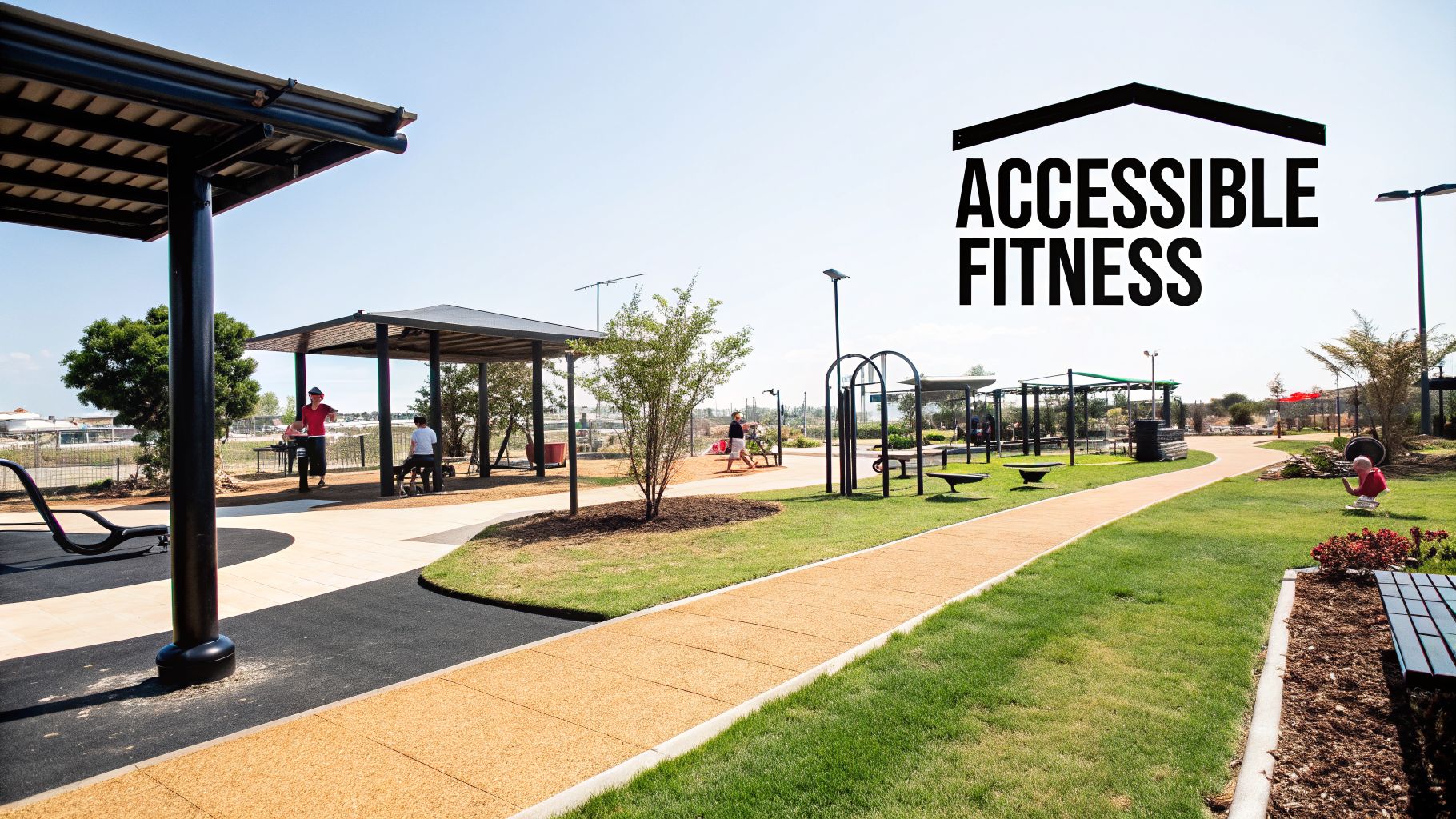
Forget lining up equipment in a sterile row. The most inviting outdoor gyms are broken up into smaller, intuitive clusters or ‘pods’. This simple layout strategy prevents the space from looking like an intimidating sea of steel and lets different groups use the area at the same time without getting in each other's way.
You might set up one pod for strength work with pull-up bars and dip stations, another for cardio, and a separate, quieter zone for stretching and balance exercises. This approach naturally fosters a social vibe. It gives a personal trainer room to run a class, allows a few friends to work out together, or lets a parent squeeze in a workout while still keeping an eye on their kids playing nearby.
A core principle I always come back to is "see and be seen." People need to feel safe and visible, but not like they're on display. This means good lighting is non-negotiable for early mornings or evenings, and you need clear sightlines from nearby paths.
Thinking beyond the fitness gear itself is just as important. Integrating benches for rest, water fountains for hydration, and plenty of bins shows you’ve thought about the entire experience. These small touches are what make a space feel truly welcoming and encourage people to stick around.
One of the biggest mistakes I see is projects that only cater to the super-fit. A truly successful park gym is for everyone—from a teenager attempting their first chin-up to a senior working on their mobility. The solution is to focus on variety and genuine accessibility.
A well-rounded fitness zone should offer a mix of equipment types:
Don't be afraid to get creative, either. We’ve seen incredible engagement when a fitness trail has a theme—like a vehicle-themed circuit—that turns exercise into a game for families. This approach reframes a workout as a shared, fun activity, which is a powerful way to build healthy habits for life. If you're ready to get into the nuts and bolts, this guide on how to build an outdoor fitness station is a great resource for the technical side of things.
Location, location, location. It’s a cliché for a reason. Where you place your fitness zone is half the battle. A well-sited gym becomes a landmark, while one tucked away in a corner will be forgotten. Before you even think about breaking ground, run through this checklist.
Site & Environment Checklist:
| Consideration | Why It Matters |
|---|---|
| High Visibility & Foot Traffic | Position the gym along popular walking or running paths. If people can see it, they're more likely to use it. Out of sight is out of mind. |
| Sufficient Shade | The harsh Australian sun can be a massive deterrent. Use existing mature trees for natural shade or factor shade sails into your plan. |
| Good Drainage & Surfacing | The area must be usable after a downpour. Ensure the ground is level with proper drainage and an impact-absorbing surface. |
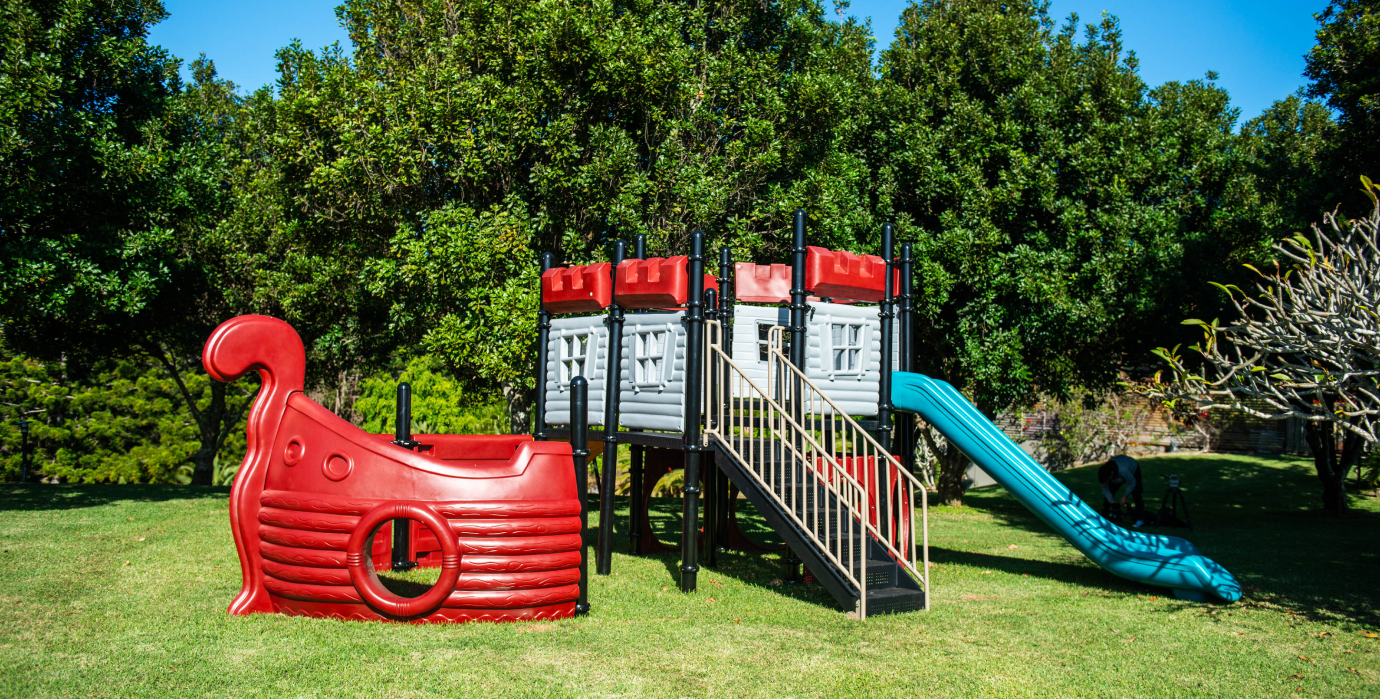
| Proximity to Other Amenities | Placing the gym near playgrounds, toilets, or picnic areas creates a multi-use destination and encourages longer family visits. |
| Accessibility | The site has to be easy to get to. That means flat, paved paths suitable for prams, wheelchairs, and anyone with a mobility aid. |
By focusing on the people who will actually be using the space—from the big-picture layout down to the specific location—you can create an outdoor fitness zone that becomes a vibrant, essential part of your community.
One of the best things about a park workout is that it works for everyone. With a bit of creativity, the same outdoor fitness equipment can give a seasoned athlete a real challenge, become a fun game for a family, or provide a gentle, effective routine for an active senior. It all comes down to knowing how to adapt the movements to your own body and goals.
The trick is to think beyond just one piece of equipment. Instead, think about putting together a complete session. A great park workout should get your heart rate up, build some strength, and finish with a good stretch – all the same ingredients as a gym session, but with a much better view.
To give you an idea of what’s possible, here are a few sample circuits I’ve seen work wonders for different people out in their local parks.
Just starting out on your fitness journey? Fantastic. This routine is all about using your own body weight and some of the more common, low-impact equipment to build a solid foundation of strength and confidence.
What I always tell beginners is to focus on controlled movements and to really listen to their body. The goal isn't exhaustion; it's good form and consistency. Try performing each exercise for 45 seconds, then take 15 seconds of rest before moving on to the next one. After you’ve done all five, take a two-minute breather and repeat the whole circuit two or three times.
The secret to getting kids moving? Turn exercise into a game. This routine is designed for parents and children to do together, creating a bit of fun, shared activity that builds healthy habits without feeling like a chore.
You can frame it as a friendly competition or a team effort. Just set a timer for 10 or 15 minutes and see how many rounds you can complete together.
Expert Tip: The point here isn't a "perfect" workout. It's about creating positive feelings around being active. Laughter and fun are your main goals. Celebrate the effort, not the performance!
For older adults, the focus shifts to maintaining strength, balance, and mobility – all crucial for staying active and independent. This gentle routine uses functional movements that mimic everyday activities, using the equipment for extra support and stability.
Move slowly and deliberately, aiming for 10-12 repetitions of each exercise.
These routines are really just a starting point. The next time you're working out in a park, look at the equipment as a set of tools and get creative in building a session that feels right for you.
So you've built a fantastic outdoor gym. The hard part is over, right? Not quite. From years of experience, we’ve seen that simply installing the equipment isn't enough to guarantee it gets used. The old 'build it and they will come' philosophy just doesn't work here.
Often, the biggest hurdles are a lack of awareness and confidence. To turn a quiet fitness zone into a buzzing community hub, you need a plan to get people excited and show them the ropes right from day one. That initial period after the launch is your golden window for building momentum.
A well-promoted grand opening is the best way to generate that first wave of interest and get your new park on the local map. But don't just cut a ribbon and call it a day—make it an interactive, hands-on experience.
One of the most effective things you can do is partner with local personal trainers or fitness pros to run free ‘come and try’ sessions. This approach works wonders for a few reasons:
If there's one key takeaway from successful park gym projects, it's this: activation isn't an afterthought. It's a core part of the process. Budgeting for a launch event and initial programming is just as crucial as budgeting for the equipment itself.
This visual guide shows just how versatile a park gym can be, offering a great starting point for your own promotional materials.
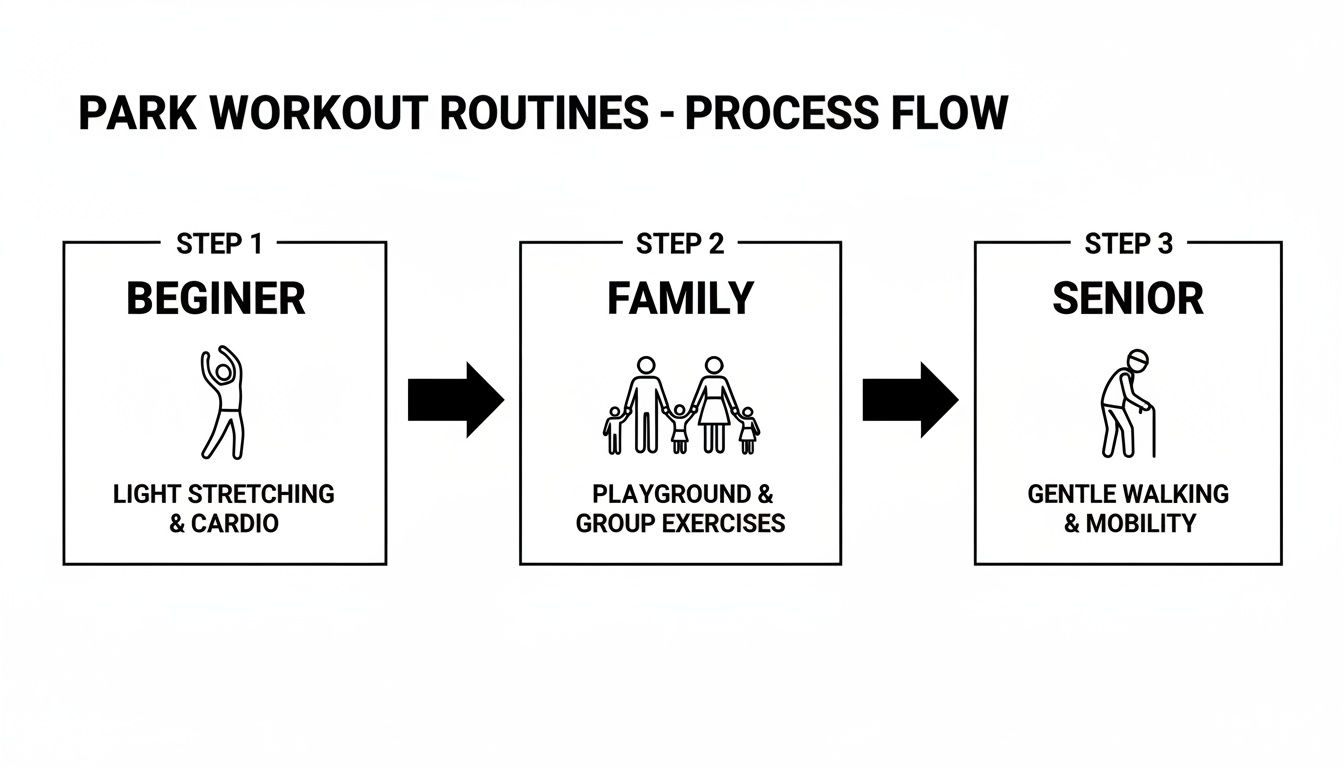
As you can see, the same space can easily be adapted for beginners, families exercising together, or seniors. It’s all about showing people what's possible.
To keep the momentum going long-term, you need to find your local advocates. Training a group of volunteer ‘community champions’ is a game-changer for sustained engagement. These are simply enthusiastic residents who are taught how to use the equipment safely and feel empowered to share that knowledge with friends and neighbours.
This isn't just theory; we’ve seen it work. A study of urban parks in Melbourne found that initial usage of outdoor fitness stations by older adults was quite low. But after a promotional effort that included training local ‘champions’ to demonstrate the gear, usage in one park quadrupled from 0.7% to 2.8%.
While that might seem like a small jump, it proves that even a basic awareness campaign can make a real difference. You can read more about the project in this research on promoting outdoor equipment use. For organisations like Kidzspace, this data reinforces what we’ve long known: user-friendly design combined with community-led training is the recipe for success.
Your promotional work shouldn't stop at the park gates. Use online tools to build and nurture a fitness community around your new space.
By combining an exciting launch with ongoing, community-led support and a smart digital presence, you can ensure your park gym becomes a well-loved and well-used asset for years to come.
A successful park fitness zone is about so much more than the ribbon-cutting ceremony. The real work begins after the launch, in the day-to-day commitment to keeping the space safe, functional, and inviting for years to come. For anyone planning or managing these community assets, this means thinking about the long game of maintenance and safety right from the start.
It all begins with smart material choices. Let's be honest, Australia’s climate is brutal on outdoor structures. Between the intense UV radiation, coastal salt spray, and wild temperature swings, flimsy materials just don't stand a chance. That’s why opting for equipment built from durable, weather-resistant materials like galvanised or stainless steel and high-density polyethylene (HDPE) isn’t just a good idea—it’s a non-negotiable investment.
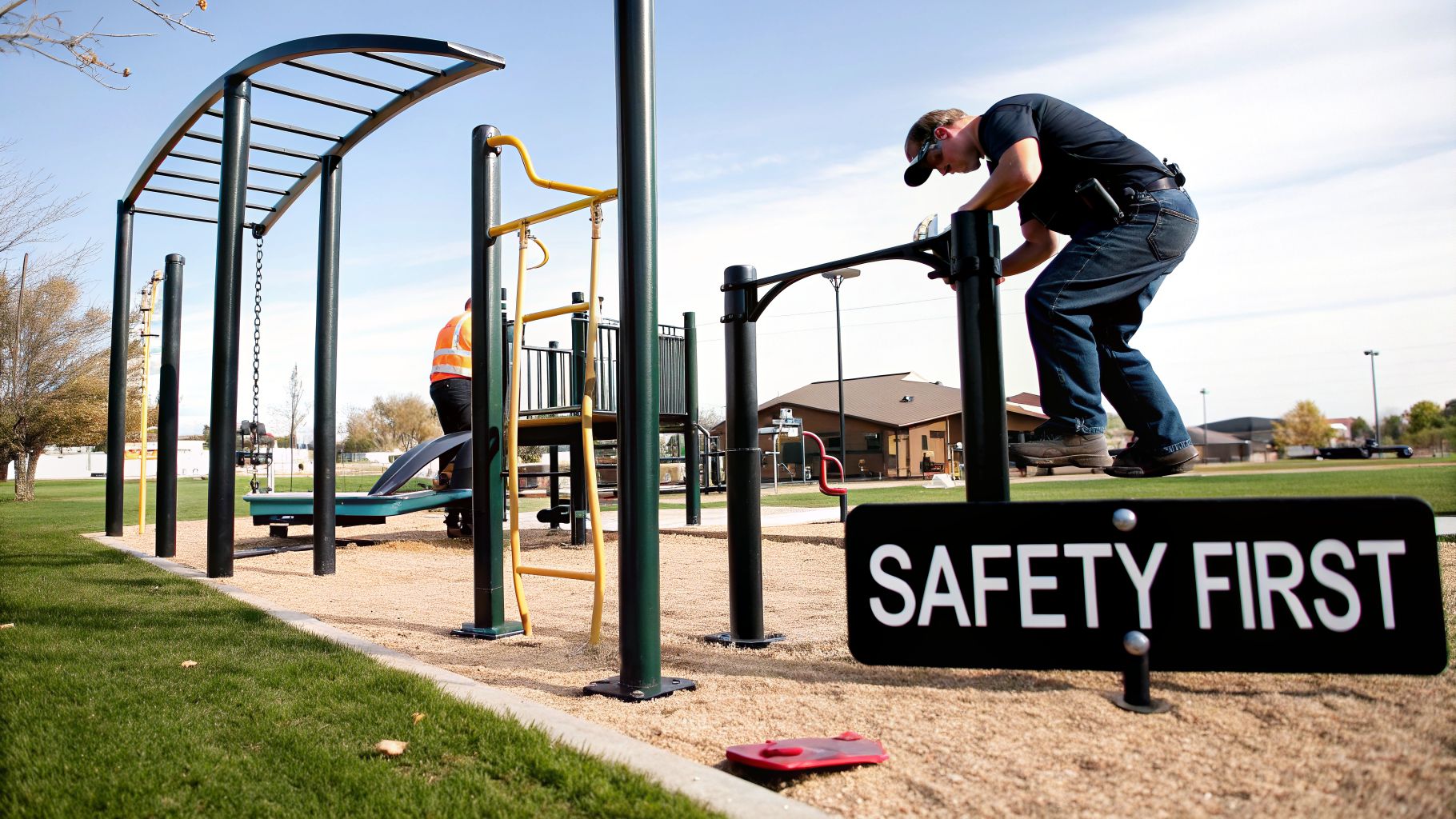
These tougher materials are your best defence against rust, corrosion, and fading. It’s the difference between a vibrant, well-used space and a park that looks tired and neglected after just a few seasons. Ultimately, it means fewer repairs and a much safer experience for everyone working out in a park.
A proactive maintenance plan is your best tool for preventing decay and managing liability. Waiting for something to break is not a strategy; it’s a recipe for unsafe conditions and costly, reactive repairs. A structured schedule ensures nothing falls through the cracks.
Think of it as a tiered approach, breaking down tasks by how often they need to happen:
Remember to document everything. Every check, every repair, every observation. This creates a powerful paper trail that not only helps you manage the equipment's lifecycle but also serves as crucial proof of due diligence if an incident ever occurs. For a great framework, our comprehensive playground maintenance checklist is an excellent place to start.
Beyond the physical nuts and bolts, clear communication is a massive part of your safety strategy. Every piece of equipment needs instructional signage that’s dead simple to understand, no matter someone's fitness level or language.
Great signage does more than just show how to use the equipment. It empowers users to exercise correctly, highlights key safety warnings, and clearly states the intended user group, preventing misuse.
Visuals are your best friend here. Simple diagrams showing the start and end positions of an exercise are infinitely more helpful than a wall of text. Using universally recognised symbols for warnings also helps overcome language barriers, ensuring critical safety messages land every time.
It’s this holistic approach that truly sets a park up for sustained success. A fascinating seven-year evaluation of parks in Perth, Western Australia, found that while outdoor gym use grew, the most popular park was one that also had a playground and a café. That welcoming, family-friendly atmosphere proved just as important as the equipment itself. You can discover more about the long-term study of Perth parks and see how a broader design vision attracts more visitors.
By combining tough materials with a solid maintenance plan and clear, empowering signage, you’re not just building a fitness zone. You’re creating a valuable community asset that will remain safe, engaging, and well-loved for many years.
So, you're excited about the idea of an outdoor gym, but now the practical questions are starting to pop up. That's completely expected. Turning a patch of grass into a vibrant community fitness hub comes with its fair share of details to iron out.
We’ve been through this process countless times with councils and schools, so we’ve heard it all. Here are our answers to the most common queries we encounter, based on real-world experience.
This is usually the first question people ask, and the answer is almost always "less than you think." While a full-scale fitness zone can occupy 150-200 square metres, you can create a brilliant and effective fitness 'pod' in a space as small as 25-50 square metres.
It’s not about having a huge footprint; it’s about smart, efficient design. A compact cluster of three to five well-chosen pieces – think pull-up bars, a sit-up bench, and a cross-trainer – can offer a fantastic, full-body workout without dominating the park.
Think about how your space is shaped:
The bottom line? Even a small, thoughtfully located collection of equipment can have an outsized impact on your community's health.
An excellent and absolutely critical question. For an outdoor gym to be truly useful, people need to feel safe using it during the darker hours of the morning and evening. The responsibility here falls squarely on the park planners, and the most crucial element is lighting.
Good, consistent lighting on the paths leading to the fitness equipment, and directly illuminating the zone itself, is non-negotiable. Modern, energy-efficient LED lighting is the perfect solution, brightening the area effectively without creating unwanted light pollution for nearby residents.
From a personal safety standpoint, always trust your gut. If a park feels poorly lit or you’re uneasy for any reason, it’s better to go during daylight hours or find another spot. Bringing a workout buddy is also a great way to stay safe and motivated.
For councils looking for a sustainable option, solar-powered lighting is a fantastic investment. It’s a cost-effective way to boost safety and extend the hours the gym can be used, which maximises the value of the entire project.
This question gets right to the issue of liability, which is a major consideration for any public facility. While councils and organisations have a duty of care, there are clear, established steps to manage risk and protect against liability claims.
Here's how you establish a safe environment and fulfil that duty of care:
By taking these steps, the operator provides safe, compliant equipment with clear instructions. The responsibility then naturally shifts to the user to follow the guidance and exercise in a way that’s safe for their own body and fitness level.
Ready to turn your vision for an active community space into a reality? The team at Kidzspace specialises in designing and building safe, durable, and engaging outdoor fitness solutions for Australian conditions. From the first idea to the final installation, we’re here to help.
Start planning your project with a free consultation from Kidzspace today.


Copyright © Kidzspace. All Rights Reserved.
Copyright © Kidzspace. All Rights Reserved.