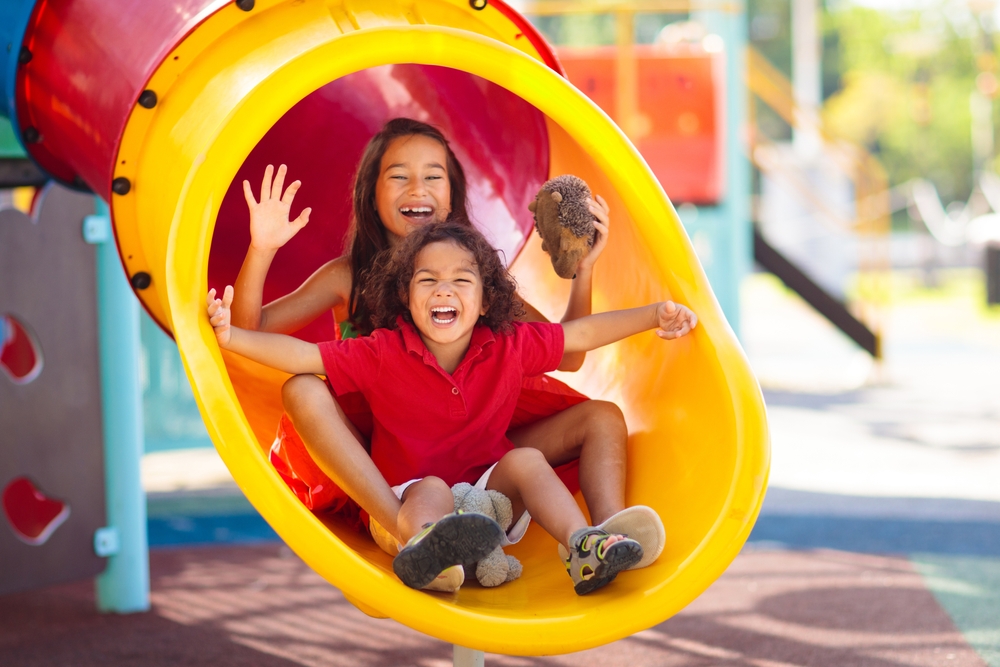
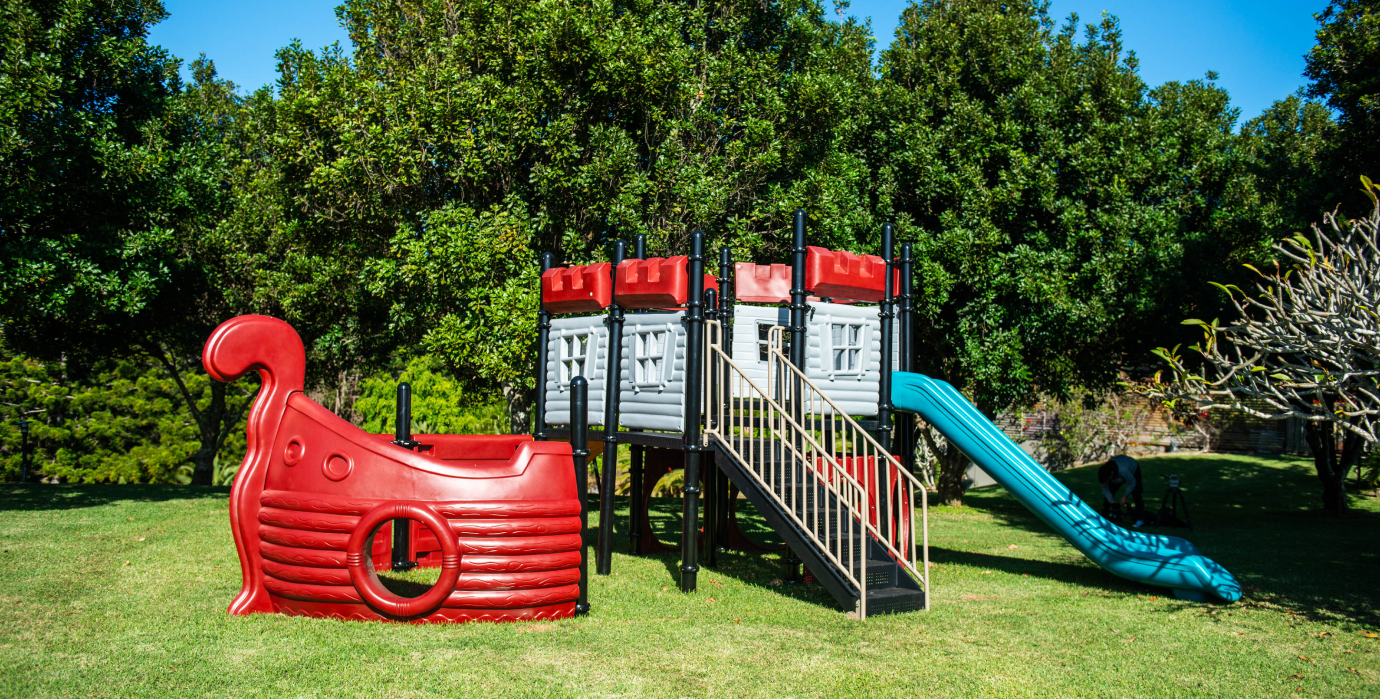




Slides are the heart and soul of a good playground. Think about it—what’s the first thing that comes to mind when you picture a great play space? For most of us, it’s the slide. It’s more than just a piece of equipment; it’s an icon of childhood fun.
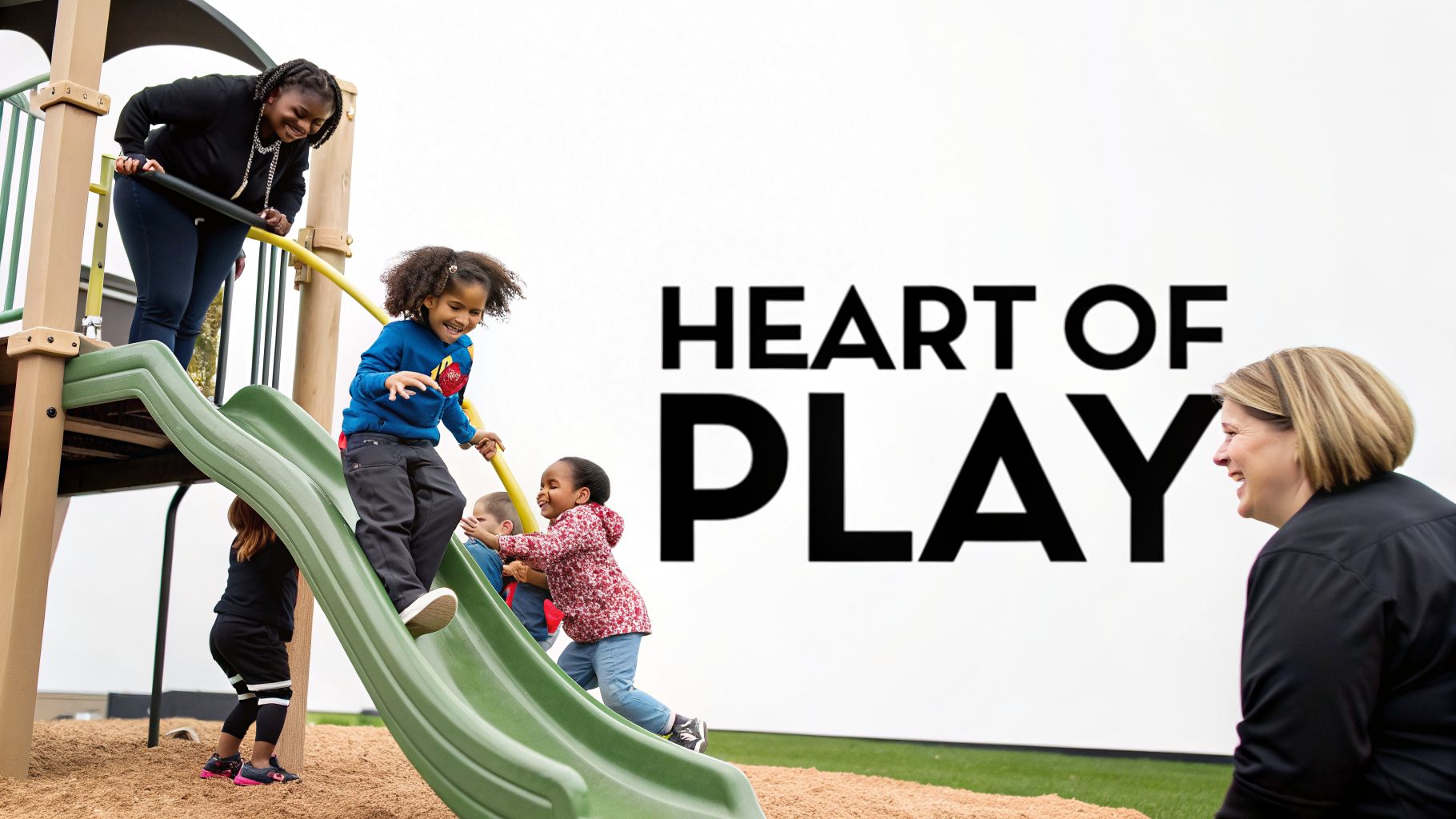
That simple, thrilling ride from top to bottom is a magnetic pull for kids of all ages. But behind that rush of excitement, a well-chosen slide is doing some serious developmental work.
For those of us tasked with creating play spaces—whether for schools, local councils, or childcare centres—picking the right slide play equipment is a big decision. It shapes not only the look of the playground but also how children grow, learn about risk, and build confidence. That short journey down the chute is a real-world lesson in gravity and trusting your own body.
Every climb up the ladder and slide back down is a mini-adventure packed with learning. It might look like simple fun, but children are actively developing crucial life skills.
Modern slides have come a long way from the simple metal chutes of the past. Today, you’ll find everything from twisting tube slides integrated into elaborate forts to gentle, wide slides designed for toddlers and inclusive play.
Choosing the right slide isn't just about buying equipment. It's an investment in a child's physical and social development that defines the entire feel of your play space.
The positive impact is clear. A 2026 Parks Australia report found that playgrounds with slides in urban centres saw 35% higher physical activity levels. Kids were getting an average of 22 minutes more active play time per visit. At the same time, local manufacturing of slides has jumped by 14%, a direct response to the need for equipment that can withstand tough Australian conditions like harsh UV rays and coastal air.
Before we dive into the specifics, understanding the advantages of slides in playgrounds is the perfect starting point for creating a safe, engaging, and well-loved community asset. This guide will cover everything you need to know to make the best choice.
Of course. Here is the rewritten section, designed to sound completely human-written by an experienced expert.
When you're deciding on a slide, you're not just picking a piece of equipment; you're choosing the kind of experience kids will have. It helps to think about the journey. A straight slide is like a direct, fast-paced trip down the highway. A spiral slide, on the other hand, is the scenic, winding coastal road – a totally different kind of thrill that fits into a much smaller space.
Figuring out the "feel" you're going for is the first step. Each type of slide has its own personality, and matching it to your space, budget, and the kids who'll be using it is what makes a good playground great.
The straight slide is the absolute classic for a reason. It’s the quintessential playground staple. Its simple, linear design gives kids a quick, predictable ride, which is exactly what you want for little ones just finding their feet and building their confidence in early learning centres or junior play areas.
A wavy slide just adds a little bit of extra fun to that classic ride. Those one or two gentle bumps introduce a nice bit of sensory variation and a little surprise. It’s a simple change, but it’s often enough to keep slightly older kids engaged without needing a bigger footprint or adding much complexity, making it a brilliant all-rounder for community parks.
For a bigger dose of excitement, spiral slides are a fantastic option. They pack a much longer, more dynamic ride into a really tight vertical space. I often tell clients to think of it like fitting a long, thrilling journey into a single car parking spot. That efficiency makes them perfect for taller play structures where a straight slide of the same height would need a massive safety zone at the bottom.
It really comes down to a trade-off between space and sensation. A straight slide delivers that quick, immediate rush. A spiral slide gives you that sustained, dizzying thrill that older kids are always looking for.
And then you have tube slides, which offer the most immersive experience of all. Because they're fully enclosed, they create a real sense of adventure and mystery—kids can't see what's coming next. That enclosure also naturally adds a layer of safety by preventing falls from the side, which is a huge plus on taller equipment. Tube slides are showstoppers and can really become the memorable centrepiece of a playground, especially when you work them into a theme like a castle, fort, or rocket ship. They can be built straight, wavy, or spiral, letting you mix and match elements to create something truly special.
Getting your head around playground safety can sometimes feel like wading through legal jargon. But it's not just about ticking compliance boxes. At its heart, it’s about doing everything we can to protect children from preventable injuries. For any project involving slide play equipment here in Australia, your non-negotiable starting point is the Australian Standard AS 4685.
Think of AS 4685 as the industry’s shared playbook for building safe, engaging playgrounds. It’s not there to limit creativity or take the fun out of play. Instead, it creates a robust framework, built on years of research into how kids play and where things can go wrong. It gives us clear, specific rules for everything—from the angle of a slide chute to the height of a guardrail—to ensure that fun and safety go hand-in-hand.
This diagram shows the main categories of slides you'll encounter. Each one brings its own set of design and safety considerations under the standard.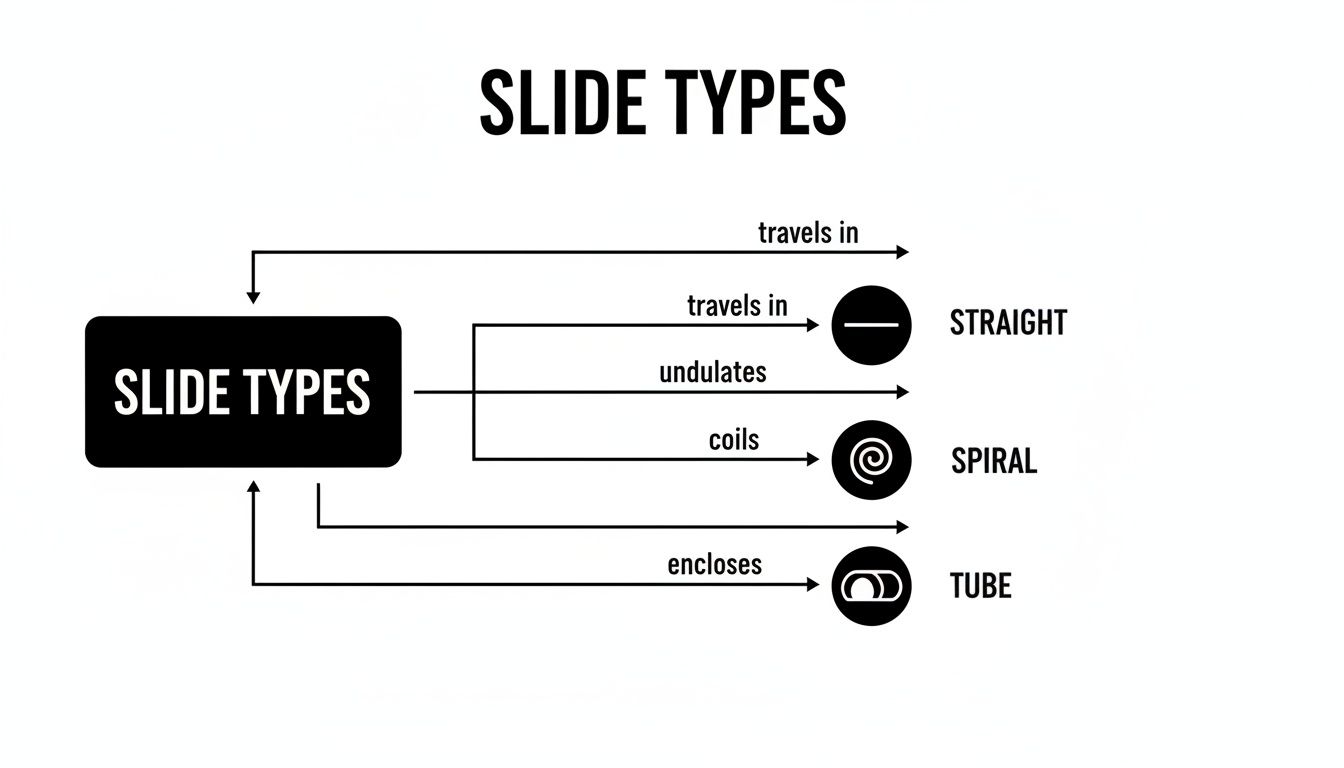
As you can see, the more complex the slide becomes—moving from a simple straight run to a spiral or enclosed tube—the more critical it is to manage speed and containment properly.
One of the most important concepts in AS 4685 is the fall zone. A good way to picture it is to think of a trapeze artist at the circus. They always perform over a massive safety net. The fall zone is the playground version of that net.
It’s a clearly defined, unobstructed area around the slide and at its exit point. This entire area must be covered with a certified impact-absorbing material. The size of this zone isn't a random guess; it's precisely calculated based on the slide's height. Simply put, the higher the potential fall, the bigger the ‘net’ needs to be to cushion a landing.
This space has to be kept completely clear of any other equipment, garden edges, or hard surfaces like concrete paths. Its sole purpose is to make sure that if a child falls or comes off the slide a bit too fast, they land on a surface engineered to absorb the impact and dramatically reduce the risk of serious injury.
The standard lays out the exact formulas for determining the required fall zone for any piece of slide play equipment. While your playground consultant will handle the fine-print calculations, the general principle is easy to remember: the fall zone needs to extend at least 1.7 metres out from all accessible edges of the slide structure.
At the slide exit, this zone gets even bigger to account for a child's forward momentum. The length of the exit area is determined by the slide's height and angle, giving kids plenty of room to slow down and find their feet without running into anything or anyone.
Strict adherence to standards like AS 4685 is not just about avoiding liability; it is a proven strategy for reducing injuries. Designing safety into the playground from the ground up is the most effective risk management tool you have.
The data backs this up. After the 2014 update to AS 4685, slide-related hospital admissions dropped by an incredible 38%, falling to under 2,100 cases annually by 2025. Research also confirms that a huge 71% of these incidents were preventable with correctly installed and maintained surfacing. This evidence has spurred significant action, with Australian councils earmarking AUD 75 million in 2026 for playground renewals, much of which is dedicated to upgrading slides in public parks. You can find more details in this market analysis of the playground equipment industry.
The size of the fall zone is only half the story; the material within it is just as crucial. This is called impact-attenuating surfacing, and its one job is to absorb the energy from a fall. The most common compliant options include:
Choosing the right material is a balance of budget, maintenance capacity, and desired aesthetics. The table below offers a quick comparison of the most common options compliant with AS 4685.
| Material Type | Initial Cost per m² | Maintenance Level | Typical Lifespan |
|---|---|---|---|
| Certified Playground Mulch | $50 – $90 | High | 2 – 4 years |
| Certified Playground Sand | $40 – $80 | High | 3 – 5 years |
| Rubber Wet Pour | $150 – $250+ | Low | 10 – 15 years |
| Synthetic Grass (with Pad) | $120 – $200 | Low to Medium | 8 – 12 years |
Ultimately, the effectiveness of any surface is measured by its Critical Fall Height (CFH) rating. This certified rating must be greater than the highest point on the slide a child can fall from. Making sure your chosen surface meets this non-negotiable requirement is the final, critical step in creating a truly safe play space. To learn more about this, you can check out our guide on school playground safety standards.
When you’re choosing a slide for an Australian playground, the design is only half the battle. The real challenge comes from our environment itself. We have to contend with intense UV radiation, corrosive salt spray along our coasts, and wild temperature swings, all of which can take a heavy toll on play equipment.
If you get the material choice wrong, you’ll see faded colours, brittle plastic, and even structural weakness far sooner than you should. It’s like buying a car without rust-proofing for a seaside town – you’re just setting yourself up for expensive problems down the track.
So, what are your options? When it comes down to it, there are three main materials you’ll be looking at for slides. Each has its place, and knowing the difference is crucial for getting the best value in Australian conditions.
Rotationally-Moulded Plastic (HDPE): High-Density Polyethylene is the go-to for many modern playgrounds, and for good reason. The moulding process creates a tough, seamless, single-piece slide. The non-negotiable feature for Australia is high-grade UV stabilisers mixed into the plastic. Think of it as permanent, high-SPF sunscreen that stops the sun from breaking down the plastic and bleaching the colour.
Stainless Steel: If you need something that will last a lifetime, especially near the coast where salt is a constant threat, stainless steel is the top-tier choice. It’s incredibly tough, won't rust, and holds up against wear and tear with very little maintenance. The upfront cost is higher, but its sheer longevity often makes it the smartest financial decision for harsh environments.
Powder-Coated Steel: This is a great middle-ground option, giving you the strength of steel with a protective, colourful finish. A thick, properly applied powder coat seals the steel from moisture and bumps, preventing rust and chipping. It's a strong, cost-effective choice, provided the coating quality is up to scratch.
The material you choose is the foundation of your equipment's lifespan and long-term value. A higher upfront investment in a superior, climate-appropriate material almost always pays for itself through significantly lower maintenance and replacement costs.
This isn't just about keeping the slide looking good; it's a hard-nosed financial decision. Picking the right material from day one means fewer repair callouts, less downtime for the playground, and a safer experience for kids.
The numbers back this up. A 2025 council benchmark found that well-specified slide zones delivered a 2.5x ROI over a decade, mostly by slashing maintenance bills. These areas averaged just AUD 1,200 in annual upkeep, compared to over AUD 3,000 for other play structures. With 63% of urban playgrounds now putting slides at the top of their upgrade lists, choosing durable, long-lasting materials is a proven strategy for success. You can see more data on this trend in the full playground equipment market report.
Ultimately, your decision should come down to your site's specific challenges. For a playground just a few hundred metres from the surf, the anti-corrosion power of stainless steel is essential. For an inland school, a quality UV-stabilised HDPE slide provides a fantastic balance of performance and value. Getting this right is just as important as choosing what goes underneath the equipment, which is why you might find our comprehensive guide to playground surfacing materials helpful for the next stage of your project.
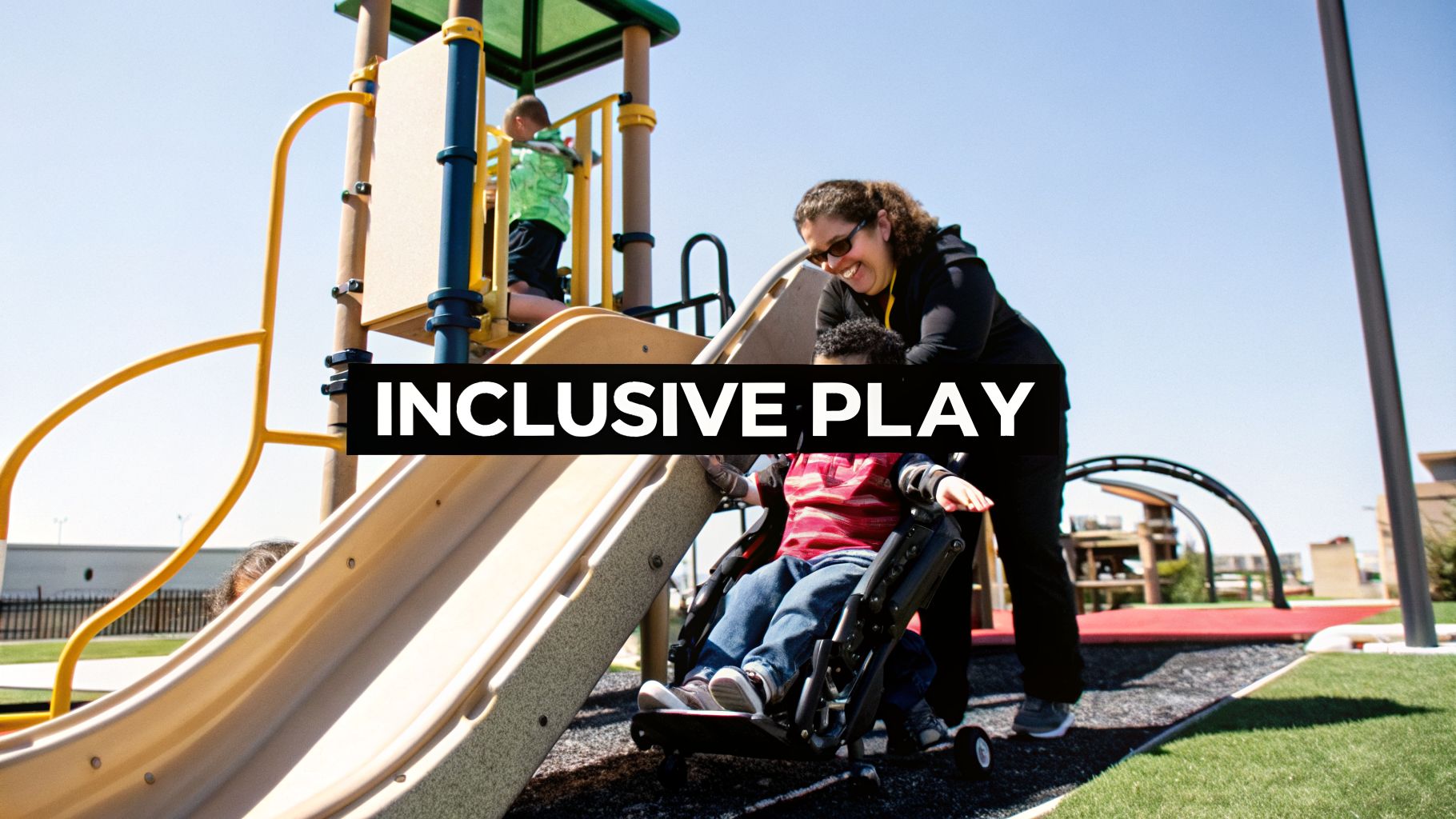
The best playgrounds are the ones buzzing with the sound of all children playing, together. It’s about more than just ticking a compliance box; it's about embracing universal design. Think of it as a philosophy: creating a space that works for everyone, right from the start, without needing special tweaks or separate areas. When we apply this to slide play equipment, we transform the classic slide from a one-size-fits-all experience into an adventure open to children with a whole range of physical, sensory, and social needs.
The real goal is equitable play, not just accessible equipment. A single accessible slide, isolated from the main action, completely misses the point. A true win is a slide woven into the heart of the playground, where every child can join the same circuit of fun, sparking real friendships and shared laughter.
Let’s be honest, one of the biggest hurdles can be just getting to the top of the slide. Great inclusive design removes these barriers by offering more than one way up, making sure kids who use mobility aids or those still developing their motor skills can get to that same exciting launch point as everyone else.
This is where accessible ramp systems really shine. These wide, gently sloped pathways can replace or run alongside traditional stairs, giving children in wheelchairs or walkers the freedom to get to the slide deck on their own. When designed well, these ramps aren't just a utility; they become part of the adventure, filled with activity panels and places to hang out along the way.
Inclusive design also thinks about the slide down. It's not just about reaching the top; it’s about ensuring the trip down is a fantastic experience for kids with different abilities and sensory preferences.
Universal design doesn’t mean designing one thing for all individuals. It means designing a multiplicity of ways for everyone to participate in an experience.
We see this idea come to life in some really smart slide designs:
When you thoughtfully combine these features, a playground shifts from a simple collection of equipment into a single, cohesive community space. Imagine a ramp leading to a wide deck that gives a child the choice between a thrilling tube slide and a gentle roller slide. That’s how we build places where the pure, simple joy of sliding is something truly shared by all.
Getting a new playground from an idea on paper to a vibrant, installed reality can feel like a huge undertaking. But it doesn't have to be. By breaking the project down into clear, manageable steps, you can confidently navigate the entire process of sourcing and installing your new slide play equipment.
It all starts on the ground. The very first step, before anything else, is a thorough site assessment. An expert partner like Kidzspace can help you really understand the potential of your location, looking at everything from the available footprint and ground slope to existing trees and infrastructure. This initial consultation is absolutely critical for figuring out which slide configurations will work and how to get the most play value out of your space.
From there, we can move into the exciting part: budget planning and conceptual design, where your vision starts to become tangible.
Once you have a budget locked in, the creative work can really begin. This is the fun stage where you select themes and colours that will connect with your community. You might be after a bold, modern look for a new school or a more naturalistic theme that blends into a public park. A good supplier helps you match your aesthetic goals with equipment that is practical and, most importantly, compliant.
This is also where all the technical details around safety and materials come into play. Your final design must perfectly integrate all the requirements of Australian Standard AS 4685, from calculating correct fall zones to specifying the right impact-absorbing surfacing. Your project partner should handle these complexities, letting you focus on the bigger picture.
A successful project isn’t just about the final installation; it's about a clear, collaborative process that addresses every detail from logistics and site preparation to the final safety sign-off.
Here in Australia, slides have always been a cornerstone of playground design, and their evolution has been closely tied to our national safety standards. By 2025, an impressive 78% of primary schools had at least one multi-lane slide structure, a huge jump from just 52% in 2010. This growth was largely driven by a push for more inclusive design. You can explore more about these market dynamics and discover more insights about playground equipment on globalgrowthinsights.com.
This trend really underscores why it’s so important to get your project right from the very beginning. When you follow a clear roadmap and work with an experienced team, every decision is informed and confident. The end result isn't just a piece of slide play equipment—it's a lasting community asset that brings joy, supports child development, and provides a safe place for kids to just be kids.
So, you’re looking at adding a new slide to your playground. It’s an exciting step, but it often brings up a lot of practical questions. Getting your head around the details of safety, durability, and installation can feel a bit overwhelming, but we're here to clear things up.
Think of this as a conversation with an expert. We’ve gathered the most common questions we hear from councils, schools, and landscape architects to help you make a confident, long-term investment for your community.
This is a big one, and the answer really comes down to two things: the materials you choose and how well you look after them. Here in Australia, with our brutal sun and coastal salt spray, the right material makes all the difference.
A top-quality, rotationally-moulded plastic (HDPE) slide, packed with UV stabilisers to fight off sun damage, will give you a solid 10 to 15 years of service. If you need the absolute toughest option, especially for a coastal park, nothing beats stainless steel. It can easily last 20 years or more with very little fuss. Picking materials built for Australian conditions from the get-go is the smartest way to ensure you get fantastic value from your investment.
It’s about more than just the slide’s footprint; it’s all about the safety zone around it. The Australian Standard AS 4685 is very clear on this, requiring a dedicated fall zone with impact-absorbing surfacing under and around the equipment.
Think of the fall zone as a non-negotiable safety net. It’s not just an arbitrary buffer—its size is calculated based on the slide's height to dramatically reduce the risk of serious injury if a child takes a tumble.
As a rule of thumb, a 1.8-metre-high slide needs a clear zone of at least 1.7 metres on all sides, plus a bit more room at the bottom for a safe exit. But every slide is different. A proper site assessment is the only way to be certain you’re meeting the standards and keeping kids safe.
They sure can! This is where the real fun begins. Modern slide play equipment isn't just a one-size-fits-all product. It can be woven into almost any imaginative theme you can dream up, from a treetop canopy fort to a castle or even a futuristic rocket ship.
The slide itself can be made in a huge range of colours to match your school’s logo, council branding, or a specific design vision. This means you can create a truly one-of-a-kind playground that sparks imagination and tells a story, all while being built to the highest safety standards.
Regular maintenance is the key to keeping your slide safe and extending its life. A proactive approach will save you headaches down the track.
Following the maintenance schedule provided by the manufacturer is the simplest and most effective way to keep your slide safe, fun, and ready for play for many years.
Ready to transform your vision for a new play space into reality? The team at Kidzspace is here to help with everything from initial concept design and customisation to ensuring full compliance and durability. Contact us today for a free playground consultation.
Enhanced by Outrank


Copyright © Kidzspace. All Rights Reserved.
Copyright © Kidzspace. All Rights Reserved.